

One day in the snow in the Sierra Nevada. The view was worth the drive and the extra chill.

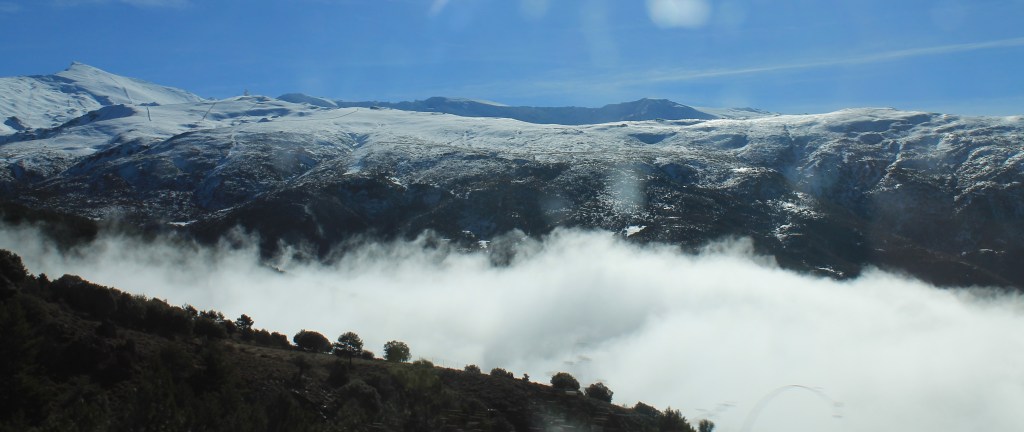



One day in the snow in the Sierra Nevada. The view was worth the drive and the extra chill.
If anyone would have a perfect family tree, it would be sweet baby Jesus, right? No one who wants to rule the earth can hide skeletons in their closet. Any politician can tell you that.
In the end of the Old Testament book of Ruth, the writer gives a summary of Jesus’ lineage up to King David. First mentioned is Perez, son of Judah. Instead of a squeaky clean Old Testament saint, we find that Perez was the result of Judah mistaking his daughter-in-law for a prostitute (Gen. 38). Any good journalist would have sniffed out that scandal in a heartbeat and plastered unflattering pictures on the front page of every newspaper.
But that’s not all. This genealogy also mentions Boaz’s father, Salmon. But who was Boaz’s mother? None other than the heathen prostitute, Rahab (Josh. 6). Shocking.
Boaz marries Ruth, a Moabitess. Where did the Moabites come from? Well, when Lot is told to flee the city of Sodom, he and his daughters escape to a cave. There, the daughters conspire to preserve their father’s line and the eldest gives birth to her father’s child, Moab (Gen. 19). A sensational story that only God had the guts to write.
The family tree leaves more scars as generations march into history. Why didn’t God hide these skeletons in His Son’s closet instead of recording them for all people for all time? He had set up His Son for political failure.
But Jesus wasn’t a politician. His goal was not to erase the past, but to redeem it. God could have chosen a purer heritage for His Son; instead, He painted a stunning picture of redemption. These broken relationships in Jesus’ lineage wounded the heart of God, but out of them came Jesus, Healer of broken relationships, Hope of the hurting world.
Merry Christmas!
My roommate, a friend, and I spent a chilly afternoon on the beach before checking out what Christmas looks like in Almería. We sampled roasted chestnuts, feasted on chicken and potatoes, tried to find an elusive tea shop, browsed through a Christmas market, and walked and walked and walked until I was sure we had worn holes in the soles of our shoes.



I leave tomorrow. I’m excited and almost ready. But right now, Spain seems far away. Maybe life as it is now will go on forever: me almost leaving, a surgery here, a new job there, a new baby a state or two or three away.
To not be part of this ever-changing cycle at home is unfathomable. And when I do fathom, I burst into tears. My nostalgia remembers the days, weeks, and maybe even months that used to pass dry-eyed.
The other evening, I stretched out on the carpet with my head next to Clark’s. I stared into his bright face and could not cherish the moment. Neither could I reject the moment to protect my heart. The moment just was and I watched it pass.
Later as my nephews were leaving, Albert got zipped up in his too-big, puffy coat. Soon he will fill up that coat and I will not be here to see him do it.
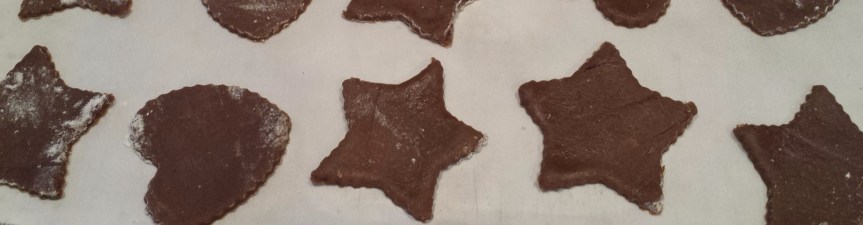
I made gingerbread cookies. My sister made coffee. We hung out with Christmas music. And at night when I crawled into my own little bed, all I could do was cling to the ghosts of those memories and cry my tears of regret that I hadn’t experienced them more fully. Or sealed off my heart from loving.
And I cried out, “Oh God, why do I have to follow You?” There was no answer. I knew, and He knew that I knew. There was no warm, fuzzy peace either. Just a calm that felt more like resignation as I braced myself for more goodbyes.
I hope tomorrow things will look different. But this is what leaving looks like today.
“What child is this?” We sing the words of that Christmas carol every year as if we don’t know what Child “this” is.
Do we?
Is Jesus the sweet baby in the manger “no crying he makes”?
“For I was hungry and you gave me food, I was thirsty and you gave me drink, I was a stranger and you welcomed me, I was naked and you clothed me, I was sick and you visited me, I was in prison and you came to me.”
(Matt. 25:35-36)
God’s greatest Gift to man didn’t stay in a manger. So let’s not pretend He’s still there.
“Truly, I say to you, as you did it to one of the least of these my brothers, you did it to me.”
(Matt. 25:40)
When I heard that a nearby university was hosting a Christmas carol festival, I didn’t need any other motivation to jump in a taxi and go. After all, North Africa isn’t the easiest place to celebrate Christmas. There are no Salvation Army bell ringers, no Christmas flyers or billboards announcing unbeatable sales, no Christmas lights, no store aisles filled with Christmas candy, hardly any Christmas shopping at all.
You may write off those things as obnoxious, an assault to your everyday life. But for me, those little things help remind me of God’s greatest Gift to mankind. This year I don’t have those reminders, and it’s hard to fully enjoy the season.
But now, in this university auditorium, I could overlook the giant poster of the country’s king on the wall and remember the coming of another King.
There were beautiful classic carols, contemporary carols, worship songs, gospel songs, touches of opera, and Bible readings. Children and adults took turns on stage, representing the evangelical churches of the country.
Some songs filled the auditorium with life, eliciting applause and cheers. In the wake of one particularly lively group, a Spanish monk walked up to the podium and read the Christmas story. The irony of the moment was stifled by the beauty of it.
Is this what heaven will be like?
After this I looked, and behold, a great multitude that no one could number, from every nation, from all tribes and peoples and languages, standing before the throne and before the Lamb, clothed in white robes, with palm branches in their hands, and crying out with a loud voice, “Salvation belongs to our God who sits on the throne, and to the Lamb!”
(Rev. 7:9-10)
Worship isn’t uniformity, but it is unifying. The variation of style, genre, and the mix of at least eleven languages was remarkable…but inconsequential. We were there to celebrate the birth of the Savior.




 My Thoughts From Afar |