We’re going on a house hunt

We’re going on a house hunt.

We’re going to catch a big one.

What a beautiful day!

We’re not scared.

Or was I? 

House hunting during a Spanish lockdown was agonizing. 

Swishy swashy! Swishy swashy! Swishy swashy! went the first few weeks. Not too bad. I mostly strolled around the town (this was between the two lockdowns), trying to find my way around and which area would be my preferred place to live.

I looked at online ads and then I started making phone calls. The online ads were rarely current; real offers were snatched up within hours. I realized I might need to adjust some of my ideals. But I had time. It was only January. Splash splosh! Splash splosh! Splash splosh! 

I found one that I wanted and seized the opportunity. But when the realtor contacted the owner again, she had already rented it out to someone else. Squelch squerch! Squelch squerch! Squelch squerch! And that was only the beginning.

The more realtors I contacted, the fewer the options seemed to be. Thus began a series of realtors who pretended to be helpful and passive-aggressively stopped responding to my messages or phone calls. 

Prices soared. The demand was so much greater than the supply. Meanwhile, everyone knew that there were empty apartments all around the city, but no one wanted to open their doors to renters, especially of the immigrant variety. I learned to ask in a roundabout way if the place was legal. I learned to carry papers with me that showed I was indeed earning money and indeed a legal resident. I even learned a few self-defense tips along the way. Stumble trip! Stumble trip! Stumble trip!

At this point, I decided that I didn’t care what the place looked like. I am creative and could deal with that later. Just please. Something.

In the middle of all of the realtors who took great pleasure in ignoring me, there were a few who promised to call me with options and then did. I teared up the first time that happened. The place was on the opposite side of the city from teammates, but I didn’t rule it out right away. Instead, I begged the realtor to let me work with her in the future (I didn’t tell her she was the practically the only one who was willing to work with me). Hoooo woooo! Hoooo woooo! Hoooo woooo!

Time wore on. I lost hope. Or very close to it. My emotional pendulum clattered unpredictably between “God, You’ve got this under control” and “The sky is falling!”

Even as towns shut down again due to covid, I continued contacting the faithful few until I became a dripping faucet. 

“Are there any new apartments for rent?”

“Have you found anything new?”

“Could you please tell me if you find a new apartment?”

Drip. Drip.

Then it happened. 

A realtor contacted me and said his friend wanted to rent out her place to a single female. NO MEN ALLOWED. Within a week, I was in contact with the home-owner. And we met, despite the travel restrictions. (Don’t ask too many questions; as far as I know, it wasn’t transgressing the law, but I’m not asking questions either.) I saw the place and realized it was better than the grainy pictures she had sent me. 

She was hesitant because of the nature of my work, afraid that suddenly she would find the floors lined with makeshift beds full of the city’s homeless, namely MEN. And since men weren’t allowed to move in, she told me she would have to think about it.

I was stuck in the middle, wondering whether or not I should keep looking. I didn’t. Not because I had great faith that I would get the place, but because I was too tired to keep on. I offered the home-owner a few references and she took me up on them. “I like you as a renter, but I don’t want your friends.”

Tiptoe! Tiptoe! Tiptoe!

And then one morning, she told me she was in Immigrantville and could she stop by? Was this a sneaky way of seeing inside of our current apartment? I swept our not-very-dirty floor just in case. She clarified a few things and smiled all over. “I will tell you tomorrow morning, but I think it will be you. The other girl is from town and she will have a boyfriend move in with her, I know.”

So, my friends, it seems that abstinence has won the day.

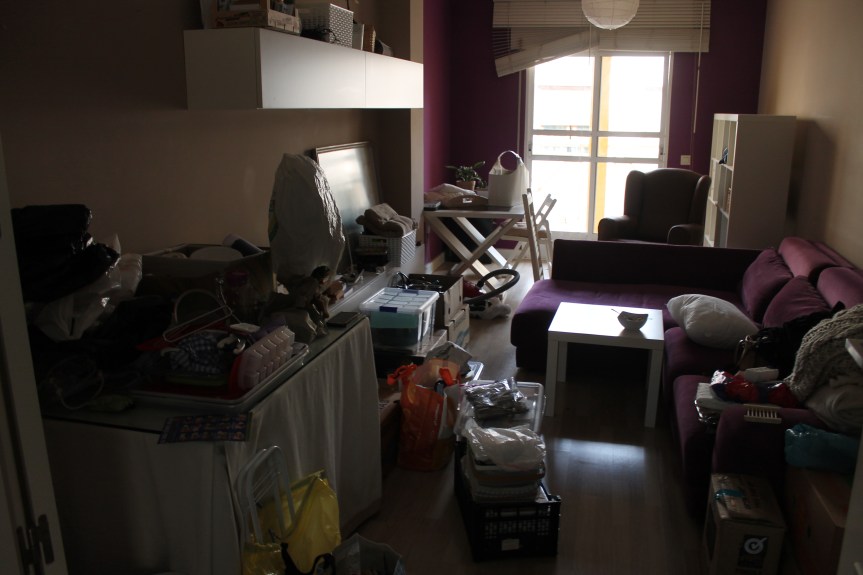
And I have won an apartment in downtown Mytown. As I settle in this week, I keep finding quirks that may one day drive me crazy, but still, it’s a beautiful day!


Note: Italicized words are from the children’s book We’re Going on a Bear Hunt by Michael Rosen and Helen Oxenbury

Room with a view

Lord willing, in a few short days, I plan to move. As excited as I am about this next step, I am sad to leave Immigrantville behind. There are lots of things I will miss. Some things are big, but I will miss the small things too… like the daily view from my bedroom window.

I have been snapping photos, trying to enjoy the view to the fullest before I start waking up to a view of my new neighbors’ windows. 

So enjoy the photos with me.

Prepositionless laughter

A friend was telling us about someone she knew who got a fine for not wearing a mask. “The police gave him a fine for 300 euro and 50 cents.”

“Fifty cents?” I asked.

She nodded vigorously. “Yes. Three-hundred euro and 50 cents.”

We giggled and speculated where the 50 cents came from. Disobeying the law isn’t something to laugh at, but the ludicrousness of the amount caught me off guard. In Spain, indecent exposure has nothing to do with nudity on the beaches and everything to do with not putting a piece of cloth on your face. 

I told my family, “I get tired of wearing a mask all of the time, but I found a way to amuse myself. Yesterday, I made a beaver face almost the entire time I was in a store. It gave me this strange and private satisfaction.” 

So we laugh because sometimes we are helpless to do much else. Except maybe go crazy. A friend told me that when she worked in the Alzheimer’s ward. The pain, the sadness doesn’t disappear with a laugh, not even close. But the day we lose our sense of humor, we are treading close to insanity. 

Maya Angelou said, “I don’t trust anyone who doesn’t laugh.” 

A couple of weeks ago, I was standing in line, waiting to get onto our late bus back to Immigrantville. A man who had just disembarked, stood in front of the bus and snapped a photo. He didn’t look angry or particularly devious. A little high, maybe, but I didn’t bother accounting for his mental state. He looked non-confrontational enough. 

That is, until he approached the bus driver’s window. Shouting echoed through the hollow bus station. I still didn’t pay attention; Spanish culture is usually loud and abrupt.

But I gasped when coins suddenly showered the bus floor. The man had reached through the driver’s window and flipped the coin drawer. I didn’t hear everything that went on, and I’m probably glad I didn’t because as the man slinked away, the driver bounded off of the bus, bellowing a word I won’t record for posterity. 

There in the bus station waiting room, one pummeled the other with a “caution wet floor” sign. Then one threw the other against the glass wall with a thud. It was impossible to tell who was winning, but they were planning to kill each other, I was sure.

With the other stunned observers, I started toward the action with absolutely no clue how to help. Someone had the presence of mind to flag down a passing police van and a crew of armed officers piled out to join the action. 

Shouting, police removed curious onlookers. I was praying aloud from behind my mask. The anger was real, hot, coming from somewhere deep that had risen to the surface after being suppressed for too long.

As we waited for the information to be gathered and fines to be issued, passengers gathered the coins that had scattered, whether to help or to help themselves was a little unclear. Others returned to the bus, laughing. 

Wait. Laughing? What was wrong with these people? Had they no respect? Maybe not. But maybe, the incident was just enough to push them to their own edge and they had two options: lose it or laugh. 

In Arabic, there is an important distinction between laughing at and laughing with. In those near-crazy moments, the distinction isn’t so clear. Sometimes it’s just prepositionless laughing, laughing to keep your nose above the murky waters of life until your flailing arms snag the rescuing hand of Hope.


Photo by Stormseeker on Unsplash

Recipe: harira

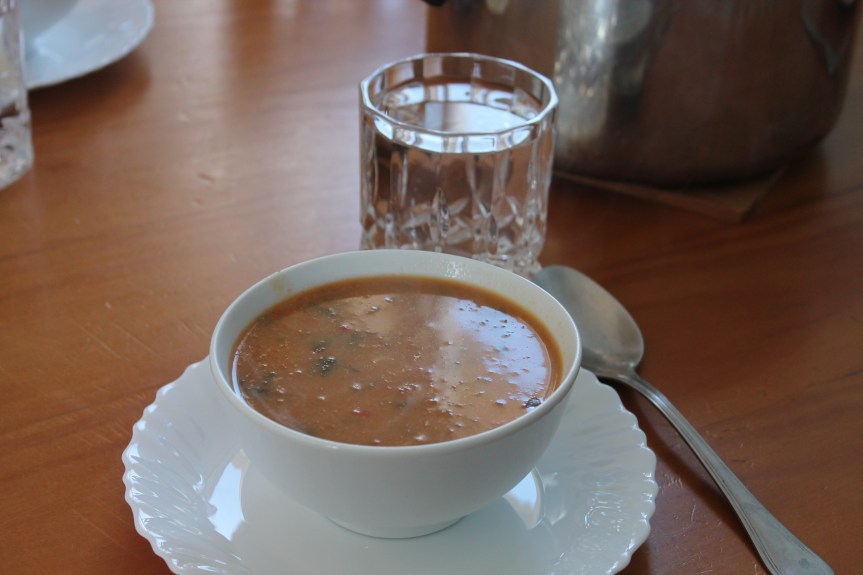
This tomato-based soup is a classic North African dinner, served especially in the winter and during Ramadan. Although unfamiliar as a dish, you might find something familiar in the mild, comfortable flavor. Harira tastes like a food I grew up with, even though I didn’t.

After tasting many versions of this soup in both North Africa and Spain, it’s the aroma that gets me every time. Nostalgia creeps in around the time I add the parsley and cilantro.

The recipe isn’t hard, but note that it takes a lot of stovetop time!

  • 225 g (1/2 lb.) beef, diced into tiny pieces
  • 3 tbsp. olive oil
  • 2-3 beef soup bones
  • 1 kilo (2 lb.) tomatoes, cooked and pureed
  • 1 handful garbanzos, soaked but not cooked
  • 1 large onion, grated
  • 1 tbsp. salt
  • 1 tbsp. ground ginger
  • 1½ tsp. black pepper
  • 1 tsp. ground cinnamon
  • 1/2 tsp. turmeric powder
  • 2 handfuls dry lentils
  • 3 tbsp. tomato paste combined with 2 c. water
  • 1 stalk celery (with leaves), chopped
  • 1 small bunch parsley, chopped
  • 1 small bunch cilantro, chopped
  • 3 tbsp. broken vermicelli (I like to use whole wheat)
  • 1/2 c. flour combined with 1 c. water (Although it’s not traditional, I use oat flour.)
  • water

Brown the beef in the olive oil.

Add the soup bones, pureed tomatoes, garbanzos, onion, spices, and 3 cups of water. Bring to a boil, cover, and simmer for an hour.

Add the lentils, tomato paste mixture, celery, parsley, cilantro, and 2-3 cups of water. Bring to a boil, cover, and simmer for 90 minutes.

Add vermicelli and simmer until tender.

Thicken the soup to a silky, cream-like consistency by gradually adding the flour and water mixture, stirring constantly. Simmer soup for 10 minutes, stirring occasionally.

Add salt, pepper, or any of the other spices to taste. Serve in small soup bowls with large soup spoons… or slurp it right out of the bowl! Serves about 8.

Note: If you want a soup with a louder flavor, go light on the water that is added throughout the recipe. Everyone has their way of preparing this dish, so feel free to be creative.

Spanish healthcare chronicles: the doctor

Well, I finally did it. When I had some pretty serious heart palpitations, I got more serious about getting my fatigue checked out. In fact, I basically promised my nurse friends I would. That was during lockdown. So I waited. But then it occurred to me that if it was anything complicated, I wanted it sorted out before returning to the States for the summer. So I finally scheduled a video appointment. 

I had jotted down notes in Spanish, but I was still nervous. The doctor appeared, a doting grandfather, who was a wee bit patronizing as if his days were filled with patients who had thought of nothing but their health problems during lockdown.

Regardless, he jotted down a request for an EKG and a prescription for something I couldn’t read to research. When I took it to the pharmacist, she calmly informed me that it was a relaxant to soothe anxiety. I smiled, said, “No thank you,” and continued on my way.

I have no idea how health systems work either in the States or in Spain. I’ve only been to the doctor once in my adult life and that was only to get a paper verifying I was free from specific diseases in order to obtain my Spanish visa. (Unless I count the time my parents hauled me into prompt care after 2 months of my wheezing and slouching around the house.)

Anyway, I braved the clinic in the neighboring town for my EKG. That’s when I found out that the doctor’s illegible scrawls had also requested another analysis and thus, another appointment was set up for the next morning. The next morning, COVID schedule buses insoportable, I walked to my appointment.

The nurses take for granted that everyone understands the healthcare system. It’s unfathomable not to go regularly to the doctor. I asked about my EKG and the blood analysis and what was I supposed to with the results? 

“When you get the results, give them to your doctor.’

Ah! There’s the rub! I let that settle as she stuck my vein and scarlet flowed into the little vials. (It was painless. I drank almost a gallon of water before my 9 a.m. appointment. It worked.)

“I had a video consultant,” I finally ventured. “I don’t have a doctor.”

The nurse’s busy hands stilled as my words sunk in. “Don’t have a doctor?! What? Are you crazy?!” Well actually, she said quite calmly, but with a level of understanding that almost earned her a hug: “Then when you get the results, set up an appointment. We have a doctor here at the clinic every day.”

Since then, I’ve made several returns to the doctor to check on an ineffective vitamin D3 prescription and blush over my cholesterol numbers (due to a volatile marriage of genetics and cheese). A waste of time? Maybe, but it feels more like a journey to grow confidence in the Spanish healthcare system and to eradicate hypochondria.

But my stomach seems a little distended of late. Is it Christmas leftovers… or a tumor?


Photo by National Cancer Institute on Unsplash

It’s quiet here

It’s quiet here.
Above, the sun comes and goes
More going than coming
Behind stubborn clouds.
Below is small but grinding
With a today of
Abuse and addiction
Suffering and slavery
In our own town, in our own people.

But it’s quiet here,
Here in my heart:
A mountain reaching up from a dark sea
To that sun swallowed by haze.

In a world gone mad
We long
We laugh
But we live following.
Because behind a cloud
The sun is quiet like the moon,
Searchable, findable.

Photo by Timothy Dykes on Unsplash

War and journey

Someone was telling me about his 100-year-old grandmother who has lived through myriad wars, including the Spanish Civil War when neighbors became traitors. This grandmother was identified as republican and the family was sent away. When they returned, neighbors were using the family possessions. She could hear their heirloom steel mortar and pestle next door and see their sheets waving on the neighbor’s lines. 

“If you’re not for me, you’re against me.” It’s no wonder they hid in their houses and trusted no one. And these were the lucky ones: the ones that survived.

Can this nation ever heal? An acquaintance thinks it will take only a few more generations, when those who lived through the Civil War and the Franco era are no longer around.

But sometimes, I look at the elderly and wonder: What were their lives like? What have they seen and experienced? And in what ways have these dear people passed the searing baton of their pain to the next generation? 

How can we expect a country to recover in only one or two generations? Healing takes time. When we try to rush it, it doesn’t happen at all. That’s true for my country where we still see the effects of slavery, if no longer in laws, then in hearts. Pain like that doesn’t heal just because we tell it to or because we ignore it. 

That’s true for me, someone who would like to be a perfect Christian, but finds herself wallowing in pain and besetting sins year after year. 

Although our Savior is the one who “knew no sin,” don’t forget that He became sin for our sake (2 Cor. 5:21). Yes, and He is delighted to travel the healing road with us, shaping us into His likeness and loving us even in the moments we least resemble Him.

Our lives will never be painless nor will we ever be perfect no matter how many years we live… that is, until years no longer count. So keep journeying, but have patience with yourself today, because He does.


Photo by Museums Victoria on Unsplash

Recipe: chai

Looking for a warm drink to carry you through winter? This is still one of my favorite drink recipes, although it’s more American than Asian. (I am still learning how to make the real stuff.)

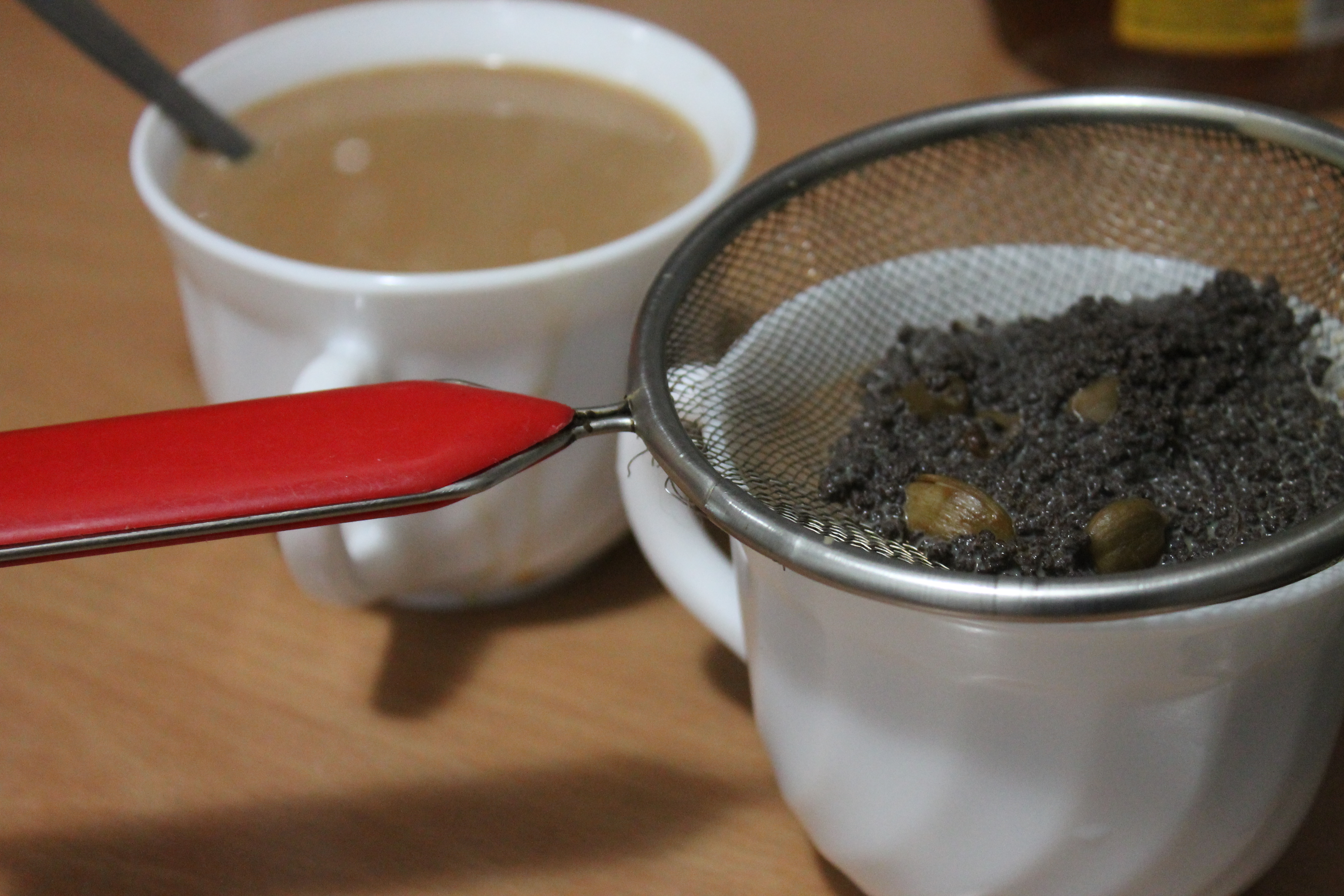
sieve with chai and cardamom seeds
  • 2 c. water
  • 2 chai or black tea bags , or 2 Tbsp. (4 g) if using loose leaf tea
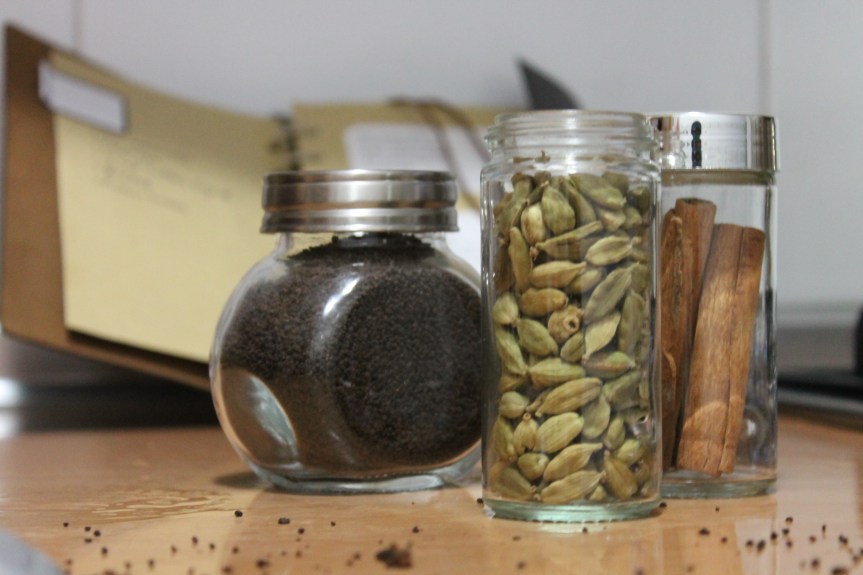
  • 1 cinnamon stick (or 1/4 tsp. ground)
  • 6 cardamom seeds, crushed (or 1/2 tsp. ground)
  • 1 whole clove (or 1/8 tsp. ground)
  • 1/4 tsp. ground ginger
  • 2 1⁄2 c. milk
  • 1/4 – 1/3 c. (50-67 g) sugar

Combine everything except milk and sugar. Bring to a boil, reduce heat, cover and simmer for 5 minutes. Stir in milk, return to a boil for 1 minute. Stir in sugar (to taste) and strain before serving. Garnish with whipped cream, if desired.

Spanish healthcare chronicles: the optometrist

Now that you know I have bad teeth and a bad back, you might as well know that I have bad eyes too. That’s why I waited until very recently to update my contacts and glasses. I was panicky and Spanishless when I entered the office down the street just to make the appointment. I forced myself to ask a few logical questions and then raced home to dread the day of my appointment. 

Well, the optometrist had accidentally put me down on a holiday. I dutifully wore my outdated and headache-inducing glasses for a full 24 hours before traipsing to the appointment where I fully expected to be told I was careening toward unpreventable blindness. Instead, the office was closed. I called the number on the sign. Oops, he had indeed scheduled me on a day they were closed. Could I come on Monday instead?

Grumpy, I went home and put in my contacts. At least the news of my impending blindness would wait for one more weekend. 

On Monday, he didn’t even gasp at my prescription, but gave the standard line that I could see well for how bad my eyes are. No blurriness. No floaters. Etc. Maybe that line isn’t so standard, but it has been in my experience. 

After the first few letters of the chart, he noted that my hesitancy was not due to my inability to see but my inability to rattle off Spanish letter names. “Just say them in English,” he suggested. “I’m learning English.”

We talked about glasses and contacts and I realized that, for the first time in my eye doctor history, I wasn’t ashamed of my poor eyesight. Was it due to my book worminess? The failure to catch astigmatism early enough when I was a kid? A stray gene from a nearly-blind ancestor? Whatever the case, that’s the way it was. Feeling unashamed helped me gather my wits and ask the questions that mattered to me. He was patient. Spaniards aren’t so concerned with calling people an anomaly. They’re pretty good at accepting the “weird” as normal. 

When I got home, something broke inside of me. Something so deep that I’m not sure yet what it was. But my tears were tears of gratefulness for the gift of sight that I still have. 

A week later, I had my sample contacts. I went in the next day to get them tested. Apparently, this verification is standard procedure here, and quite thorough. My one eye wasn’t focusing as well as it should have been. After verifying the prescription was correct, he squirted a yellow dye into my eye, made me flutter my eyelashes, and kept saying, “Good. Good.” while he shone a light in.  I went home and blew neon yellow snot out of my nose. 

A couple of days later, I was back. I ordered contacts and glasses in one shot. Less than a week later, they were ready. I tried them on and they told me to come back in a day or so to have them adjusted. So, the next day I trotted back down the street for yet another appointment. 

The glasses I chose had bright pink sides. Note: “had.” It’s amazing what a bit of nail polish can do!


Photo by Wesley Tingey on Unsplash

Recommended books for you

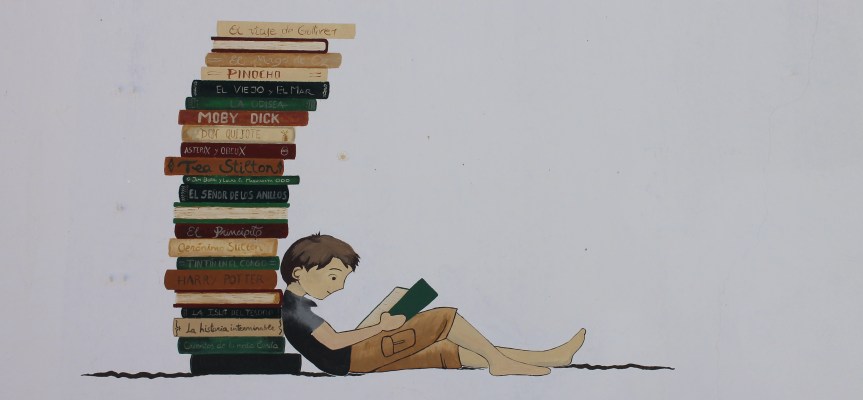
Well, 2020 is fading but the sighs of relief are tinged with anxiety. What will 2021 bring? Well, on the bright side, just in case you find yourself isolated from the rest of the world for any amount of time, here are some book recommendations:

Spiritual Enrichment

The Next Right Thing: a Simple Soulful Practice for Making Life Decisions by Emily P. Freeman is a book full of practical help on decision-making. Enjoy Freeman’s humorous and deep perspective, cut into bite-sized pieces.

Anxiety Interrupted: Invite God’s Peace into Your Questions, Doubts, and Fears by Rachael Dymski inspires readers to ponder who God created them to be, not just in spite of anxiety, but with anxiety problems woven into their story. This book gives a hopeful look at life with all its uncertainties. 

Gold by Moonlight: Sensitive Lessons from a Walk with Pain by Amy Carmichael is a beautiful book. At times, it can be poetic and hard to follow unless you’re engaged. Then suddenly, a thought punches you in the gut with stunning reflection of your own life. Best advice: DON’T SPEED READ THIS ONE. Why? Because it’s worth your time.

Liturgy of the Ordinary: Sacred Practices in Everyday Life by Tish Harrison Warren, an Anglican priest, is a call to worship, even in the ordinary things of our everyday lives. The writing is poetic but practical, powerful but flavorful.

White Picket Fences: Turning Toward Love in a World Divided by Privilege by Amy Julia Becker is an outstanding look at white privilege and racism. It is the kind of look that leaves you with hope rather than the suffocating knowledge of an unchangeable world.

Counterfeit Gods: The Empty Promises of Money, Sex, and Power, and the Only Hope that Matters by Timothy Keller is an excellent read. As usual, Keller does quite a bit of stomping on toes, but he never presents a sin issue without also presenting the Help for the solution.

Memoir / Non-Fiction

For the Glory: The Untold and Inspiring Story of Eric Liddell, Hero of Chariots of Fire by Duncan Hamilton is an awing and at times horrifying read of the life of Eric Liddell, a man we think of as a runner, an Olympic gold medalist, but who was so much more.

The Spy Wore Red by Aline Countess of Romanones is a story of a female spy during World War II. It’s set mostly in Spain, which, of course, makes it that much more interesting! Note that this is a read that transports the reader to another world. Also note the presence of some strong language.

George Washington’s Secret Six: The Spy Ring that Saved the American Revolution by Brian Kilmeade and Don Yaeger is for history lovers. It is a history of the Revolution that goes far beyond the Battle of Bunker Hill and Nathan Hale. That said, it’s not an overwhelming read, nor for all it’s factualness is it one bit boring.

The Color of Water: A Black Man’s Tribute to His White Mother by James McBride is an excellent read and a beautiful tribute. The two stories of mother and son are woven into one hopeful journey. Be prepared to be moved.

Fiction

(Oops! Not a lot in this category this time!)

Still Alice by Lisa Genova is an engaging novel about a middle-aged professional woman facing early-onset Alzheimer’s disease. Warning: you will feel like you need a diagnosis by the time you’re done with this one!