

Made in God’s image: thoughts on sexual harassment- Part 2

Last time, I shared some of my own experience with sexual harassment, including a few of those inner reactions. If you haven’t read part 1, please do so before reading part 2. 


Regardless of how others respond to your experience, it still happened. 

SO NOW WHAT?

Gain control. 
A huge part of the emotional aftermath is due to feeling powerless. I experienced a marked difference in two street harassment encounters. After the first encounter, I didn’t even know if teammates would be on my side. The second encounter ended at the police station. Knowing that the power was indisputably on my side decreased the fear I felt on the street afterwards. 

In a case of street harassment, involve people nearby. Responding in some way as soon as possible helps alleviate the painful emotional aftermath. Don’t argue with the offender, but if you are able to, include bystanders. 

To be honest, although gaining control is one of the most important factors, I am a lame example. Often, I first respond with denial, doubting the experience is real until it is past, thus hindering my opportunity for an appropriate response. I guess I still struggle because I am still learning. 

Even if the incident is already past, take control by setting up precautions for your future self. Being passive means setting yourself up for victimization again.

“If it feels wrong, it probably is,” was some of the best advice I got when I moved to North Africa where some form of harassment was expected every time one left the house. One North African day, a rug vendor wanted to show me more of his wares. He led me to the back of the shop, to a quiet room full of rugs. My gut told me we were too alone, especially when he started making subtle preparations to keep out other customers. I thanked him for showing me his rugs and marched out of the shop, despite his protests. 

Don’t be afraid to be angry…
…but also realize that anger is often, if not always, a secondary emotion. There is still something else underneath. Give yourself time to sort out what you’re feeling and as soon as possible, take those emotions–fear, shame, vengeance or whatever else it may be– to God because He’s not afraid of what you’re feeling, even if you are.

Realize that your emotions are part of the process. 
You will face a lot of emotions, some of them unexpected. If you don’t face them head on, they will gnaw away at your sense of worth as God’s image bearer. 

After harassment incidents, I do a lot of journaling. It helps me honestly examine what I’m feeling. It launches a talk with God and prepares me to talk with a mentor. 

I was in a moderately healthy place when a follow-up incident occurred. Twenty-four hours later, I was still in turmoil when I journaled this: 

     And here I was, wishing I were not. Wishing I had the strength to say, “It is well with my soul” and feeling that anger-turning-shame…
     Shame that in my inner longings for approval, I had stumbled across a sickened version of it and should have I already slain that longing? Shame that now I was the one in the spotlight and how did this happen and could it be my fault? But it wasn’t. It isn’t…
     And where was Jesus in this picture? He was here, wrapping His arms around me when all I could do was swim through memories of past hurts and wish God would just turn men like this one into piles of ashes. I don’t know it because I felt Him there; I know it because I know it. Today that is enough.
     And as for the shame. It has a name now and soon I’ll be ready to confront it rather than live with it.

Run to your Ultimate Protector. 
After a recent incident, I was able to gain control of the situation, which ended in the man jumping off at the next bus stop, presumably in an effort to get away. I like to think so, at least. 

The next evening, I was praying about an unrelated topic when God said, “You know that man who touched you last night? I was there.” And I knew He was telling the truth. No, He hadn’t smote the offender–not then anyway. But He is the God who sees and will deal with sin in His perfect timing. 

(This is not a statement that higher earthly authorities should never be involved. In passing incidents, use discernment. In repeated or ongoing incidents, those higher earthly authorities should definitely be involved! Read Romans 13.)

Find out who you really are. 
Ask yourself: “Who am I in the eyes of God?” If you don’t strip away your pretenses before a loving and perfect Father, you most certainly will feel the additional pain as you face a world of opinions about the incident. 

After a particularly frustrating day of feeling unprotected by someone I thought should have protected me, I cried out to God in the middle of that shame and heartache. “Just tell me what to do!” I wailed. 

And He said, “You are my child.” He offered no solution to the events, but spoke to the bigger problem. I had lost grip on my intrinsic worth and instead was clinging to the lie that I wasn’t worth protecting. But He reminded me that I belonged to Him and that was enough.

Find someone who will hear without judgment. 
Find someone who will listen to your muddled thoughts and feelings and hear what’s behind all of that. If you don’t take it somewhere, it will come out, often in unexpected and uncontrolled settings. 

Make sure it is someone with whom you can be completely honest about the situation. (Note that multiple debriefings could be helpful as your emotional waves ebb and flow.) Don’t lie about your role if you had one; that doesn’t make the offender innocent. Admitting the whole truth will help you get to the root of your shame. 

Allow for repentance. 
Is the offender truly sorry and truly repentant? I’m not talking about an “I’m sorry” to please authorities, but a humble apology and a true life change. Forgive. Don’t hold on to it. You will probably have to do this many times. But do it. Don’t let his or her power hover over you when you can be free.

However, there is no biblical basis that forgiveness looks like trust. Trust must be earned, not offered indiscriminately. If you have been sexually harassed by this person, in most cases, it’s okay to stay away or make them stay away from you, even if you have forgiven. 

Let God be Lord of your sexuality. 
You are a sexual being. God created you that way. And remember, He said “very good.” But in my experience as a single (especially in a culture where women are particularly vulnerable), sexuality feels more like a burden than a blessing. Something I need to hide and control rather than a gift to express. 

There was a moment after many of the aforementioned incidents that I felt the invitation to surrender my sexuality and I saw the outstretched arms of Jesus, glad to embrace me. There was instant relief when I thought of Him piloting my sexuality. I felt safe. Like that part of me was no longer my enemy. 

This has not been a once-and-done surrender, but no longer do I fight the enemy alone in this area of my life. 

In surrender, there is freedom. Surrendering your sexuality might feel restrictive, but true freedom is being restricted in certain areas to enjoy fullness in others. Rather than being a slave, it is being a child of God and living in the fullness of that relationship. As a child, you give up the right to govern your own life or “call the shots.” Yet, the richness of sonship is so much better than living in the “freedom” of going your own way and finding you are a slave after all. 

CONCLUSION

I don’t pretend to know everything there is to know about this topic. I write from my limited experience. I don’t respond well each time. Sometimes, it’s hard to forgive. Sometimes, I’m still surprised by the spectrum of emotions an incident will elicit– all of the way from pleasure to disgust. 

Yet, I can cling to the truth that I am “very good” and when someone tries to diminish that value in the form of sexual harassment, it is not okay with me because it’s not okay with God. 

May you cling to that truth as well. God made you in His image. That heavy load of shame you’ve been carrying? That isn’t yours to carry anymore. Unpack it, hurt through it, but ultimately leave at the feet of the One who has already carried it for you. And He did because you, His child, are worth that much.


Photo by Priscilla Du Preez on Unsplash

Made in God’s image: thoughts on sexual harassment- Part 1

I hesitate to approach this topic because I have so much to learn. Yet, my silence isn’t much use to anyone. So, I’m lunging forward, hoping that victims of sexual harassment will grasp the power of knowing that harassment cannot touch their intrinsic worth. 

MADE IN GOD’S IMAGE

“So God created man in his own image, in the image of God he created him; male and female he created them… And God saw everything that he had made, and behold, it was very good.” (Gen. 1:27&31a)

God made man and woman–He made you— in His image. And He called you “very good.” Although “very good” included the human body, God wasn’t just talking about the shape of your nose or how pleasing your figure might be.

At a deeper level, God’s image on your being–the rational, moral, and spiritual–is what gives you beauty and worth. You are “very good” because you were created in God’s image. It’s integral; you cannot be separated from it.

But you can choose not to believe it. 

When someone’s value as an image bearer is undercut, there is pain. It’s the sort of pain that no amount of “I must have done something to deserve this” can take away. We can bury it, but we can’t really hide it. And after a while, we start to believe that we are no longer worthy of God’s image. 

Today, the discussion focuses on sexual abuse, a much more intricate and painful topic. But sometimes in our haste to address the big issues, we skim over the lingering pain of those who have been harassed but not abused. 

“Harassment is normal,” we think. Indeed, we have normalized harassment to the degree that we don’t bother addressing it. Even as a victim, this was my approach… until recently. 

IS SEXUAL HARASSMENT OKAY?

Harassment is common, not normal, and the more we normalize it, the more we give the message that it’s acceptable to harass and to be harassed. 

During my first experience with harassment, I thought I was overreacting because everyone else ignored it. So, after a few fumbled attempts at addressing it, I accepted it as par for the course in my work environment. 

Only recently have I been able to say, “This is not okay.” Why not? Because someone is trying to cheapen the image of God in me. God’s image is being objectified for the sake of someone’s pleasure or lust for power.

Clearly, harassment isn’t something we should dwell on; but, until we find healing, we will dwell on it, like it or not. By “dwell,” I don’t mean in conscious thought only; much of our “dwelling” can happen in the subconscious realm. My first incident was set aside and rarely thought of. Yet, inside of me there was a simultaneous shrinking from and hunger for the positive attention of men. 

MY EXPERIENCE

I didn’t know how much my first experience with sexual harassment had affected me until another incident occurred. Suddenly, I was dealing with the emotional aftermath of two incidents instead of one. 

But the emotions didn’t come from the incidents themselves as much as from the shame that wound its way through the memories. 

  • It is my fault. Someone implied that I had been too friendly, too familiar. 
  • I have to get over it. It wasn’t a big deal. Nobody else thought I was worth standing up for. Nobody seemed to think he should get into trouble. I tried to ignore it, but week after week of the same issue left my defenses ragged. (Sometimes I felt like I could just give in.)
  • Maybe I haven’t forgiven. Surely, if I just forgave, all of the pain and shame would vanish. 

Along with sexual harassment, there is often a sense of pleasure that comes with being noticed and desirable. That sense of pleasure is God-given (read Song of Solomon!), but in cases of sexual harassment, it typically serves to deepen the shame. We think to be a “real” victim, we must never feel anything except disgust. 

Sexual harassment attacks a vulnerable spot; therefore calling the pain to light also calls our vulnerability to light. So we hide behind masks of disgust, anger, or indifference, to name a few.

The offender is not the only victimizer. Many of us have also experienced a level of rejection from those looking on. “Get over it,” is a common sentiment from those who acknowledge what happened but don’t believe in the emotional aftermath. And there are always people who are skeptical, downplay the incident, or even defend the offender. 

Regardless of how others respond to your experience, it still happened. 

Next week, I’ll share a few ways to respond during and after an incident. In the meantime, I would be glad to hear your advice and wisdom as well. 🙂 See you next time. 


Photo by Shoeib Abolhassani on Unsplash

Tonight, I flew

The week began with the bus radio blaring, “I want to get away; I want to fly away.”

That day, I got away over café coffee and the chilly breeze sailing through the hollow bus station. But tonight, I flew. 

After two months in lockdown, was I ready to function in normal life? In another language? Another culture? I had my doubts. 

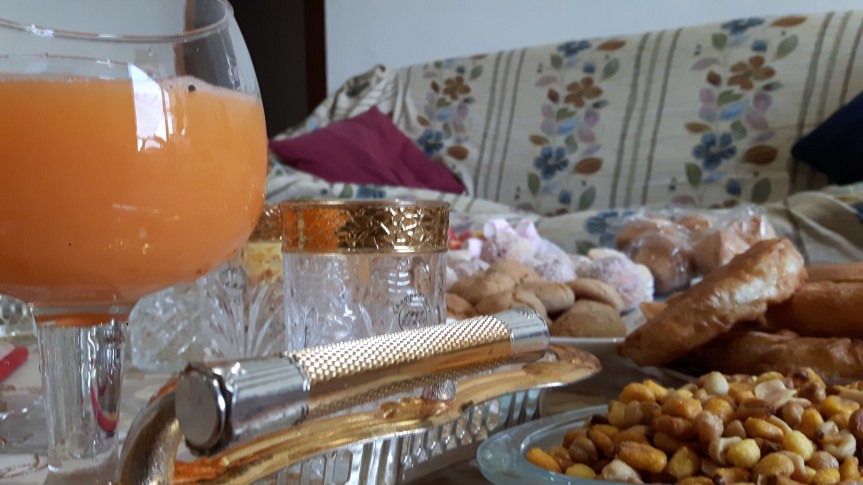
Ready or not, an Eid invitation came late last night. Even though I hadn’t fasted for the month of Ramadan, I was still invited to celebrate the end of it.

I had already eaten lunch when I arrived at five. That didn’t stop friends from heaving a giant platter of couscous onto the table. “Eat!”

I had missed their sense of humor and practicality–pieces of shared life that feels second-hand over whatsapp. There was too much to catch up on to waste time fussing about cultural propriety; I ended up just being me, fumbling language and all. 

We changed houses partway through the evening and ate again, a snack consisting mostly of sugar, white flour, caffeine, and grease. I did little piggies up and down little girl toes and taught the nose-rubbing “Eskimo kiss.” We dressed up, took pictures, laughed, talked, spilled juice, and cleaned up. The conversation that teased the deep part of our hearts was worth this sugar mania that is lasting past midnight. 

Snack was finished by 10, just in time for a phone call from North Africa that caught me broom in hand. Friends just checking in. 

I walked 45 minutes home with a burr in my sock, sticky but happy. So happy, in fact, that after waving good night to the neighbor watching TV in his garage, I bounded up the two flights of stairs to our apartment. 

Why is it that some days take the breath out of you and leave you with a stunning piece of life instead? It’s not the moments themselves that are stunning, but the steady tick-tock of a day held in God’s hand. 

And, yes, I brushed my teeth and took a melatonin. Good night!

The woman in the mirror

Who is that woman in the mirror staring back at me?

Glazed eyes from sorting through language notes all day. Almost in tears from how much there is still to learn and how does she start? Really start?

But enough of this not starting! Enough of unfinished projects in a burial heap in the cabinet! Because from now on, there won’t be projects to finish but a process to journey.

That’s what the woman in the mirror decided just now. Because it’s not all about what she doesn’t know, but also about what she does know. 

And she knows that studying two languages each week is hard and doesn’t always fit into her schedule. But she also knows that language learning is an act of worship because it is what God has called her to do.

And whatever you do, in word or deed, do everything in the name of the Lord Jesus, giving thanks to God the Father through him.

(Col. 3:17)

A different world: another quick update

Besides deliveries, the doorbell has rung only once or twice since March 15. Last night, it rang.

I answered the door. The neighbor girl beamed up at me, her fuzzy pigtails sticking straight out from her head: a North African Pippi Longstocking. Adorable. 

“This is for you. My mom made it.” She thrust out a plate with two orange wedges of dessert, probably on the menu for the night’s breaking of the fast. 

She continued to beam while we chatted. Last week, when I took chocolate cupcakes to her door, she gasped and did a little dance. Now she was delighting my day as I had delighted hers. That’s why she was beaming.

Indeed, it was delightful to chat with her before she marched across the hall with a cheerful “¡Adiós!”

This morning, the world feels different than it has in months. There was abundant life.  And cars everywhere. I was hesitant to make them stop for me at the crosswalks… or, if I’m honest, maybe partially afraid that they were out of practice stopping for pedestrians.

Many businesses are back, not to full capacity, but back. I grinned as I passed a café. Andalusians are loud when they’re in a pile. Now imagine them sitting several meters apart in the cafés. 

But the throbbing of their voices is the heartbeat of a town that’s beginning to live again.

Stop and wonder

Psalm 23 is one of those familiar Psalms that I tend to glaze over because I know it by heart. I don’t stop and see or wonder at the depths. However, recently, I got stuck on verse 6: “Surely goodness and mercy shall follow me all the days of my life…”

I pictured myself following God and goodness and mercy trailing along behind like an obedient but somewhat distracted dog. (Note: “mercy” as it appears here actually means “steadfast, unfailing, and unconditional love.”)

But “follow” is a much stronger word than “trailing.” It connotes pursuing relentlessly, running after, or tracking. In short, God’s goodness and steadfast love aren’t going to let us go. Not today or any day.

“All the days of my life,” David writes with unwavering confidence in God’s attributes. He had his days in lockdown too, hiding in caves, fearing for his life. Outside of lockdown, he had marriage problems, disobedient children, years of war, etc. Yet, he says that he knows God’s goodness and steadfast love are in those days too.

My roommate and I recently read Unseen by Sara Hagerty. Chapter 6 is titled, “Invitation to Wonder: Training Our Eyes to See God’s Beauty.”

“… [I]t’s harder… to see God’s beauty,” Hagerty writes. “… in the thousands of minutes in the middle of my days that don’t seem worthy of photographing or scrapbooking or sharing with others. He tells us in His Word that His glory is ever available, and it’s tucked inside every day. Every single one” (p. 107).

All the days of my life.

Earth’s crammed with heaven,
And every common bush afire with God:
But only he who sees, takes off his shoes,
The rest sit round it, and pluck blackberries.

“Aurora Leigh” by Elizabeth Barrett Browning (as quoted in Unseen p. 112)

God’s wonder–His goodness and steadfast love–are in each of our days. “Our flitting eyes… need to be trained to see them. They need to be trained to see the face of Jesus” (p. 118).

Stop and see.

Stop and wonder.


Photo by David McLenachan on Unsplash

Together and separate: a quick update

It was almost 11 p.m. on Saturday evening. 

Below me rang voices of a family celebrating the close of a day long fast. Day 2 of Ramadan. 

Beside them was the bouncing of a hollow ball against concrete walls and ceiling and the laughter from a family typically strained, but not tonight.

Beside me, just across the thin wall I heard the steady swish of a paint roller in time with thumping background music. 

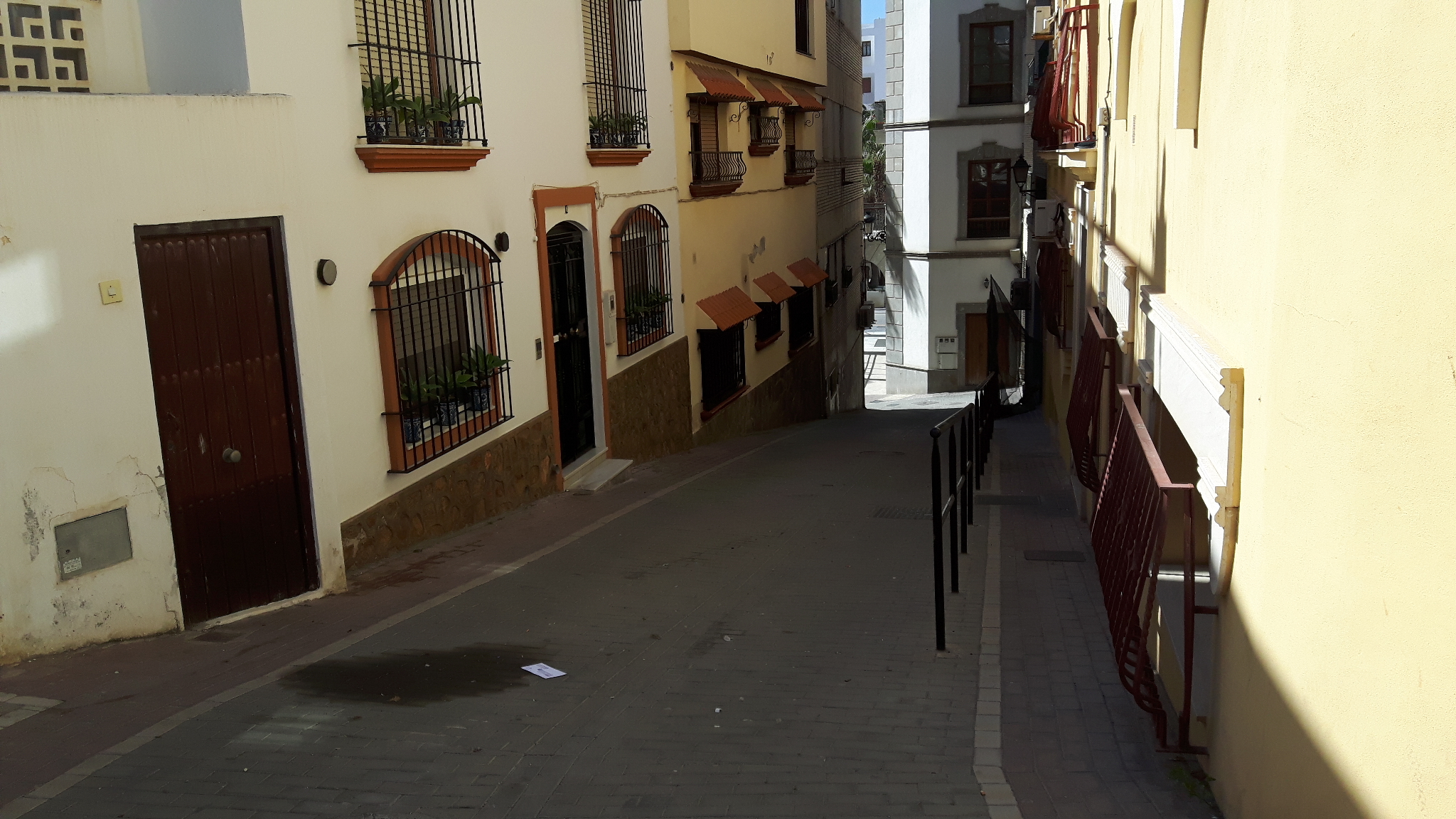
This is Spain during lockdown where we all do life so close together and yet so separately. 

Spain is slightly smaller than the state of Texas, although much more populated. There have been 223,759 reported cases as I write this and 22,902 deaths. Are the news reports exaggerated? Possibly. It’s not my place to make uneducated calls. What I do know is that the level of news validity doesn’t ease the pain or fear of the sick and their families. For this, the nation mourns. 

Simultaneously, we are tired of our houses. Part of me loves the quiet aloneness, but the other part of me is starving for any kind of human interaction. I am tired of staring at screens; regardless, they are my main connection to the outside world. Sometimes, I think I’m going crazy, not from boredom but from being with myself and no one else for too long. 

Maybe that’s not such a strange place to be after 6 whole weeks at home and 2 more to go. 

As I write this on Sunday morning, I hear a few children pass by on the street below. Today is the first day that children are allowed to go outside for 1 whole hour. We’re grateful that the most deprived (and most energetic) demographic has a chance to get some outside air in their lungs. Their voices bring delicious life to our neighborhood. (A friend laughingly offered to loan me one of her daughters so I would have an excuse to get out too!)

And this evening, maybe I’ll see a few neighbors when the neighborhood steps out on their balconies and roofs to applaud healthcare workers and listen to our local violinist.

That I’ll probably be a snowbird and other things you might not know about me

  1. It’s true. I’ll probably be the old lady who moves to Florida every winter. I used to scorn the idea, but as I get older, I understand that cold makes joints stiff. And that’s why I think I’ll be a snowbird.
  2. I only drink decaffeinated coffee because caffeinated coffee makes my heart race, my hands shake, my stomach growl. Speaking of being old…
  3. I don’t drive a car here in Spain.
  4. I’m scared of filling up with fuel at unknown fuel stations. (It’s good I no longer drive!)
  5. I was 27 before I tore down my guard enough to realize that my Savior loved me unconditionally. 
  6. People tell me I’m a lot like my grandma, which I don’t mind at all because she was a special lady. 
  7. I love to DIY (or would that be “DIM: do it myself”?), but often still use store products because, well, they often work better.
  8. I hardly eat bread. No, I’m not gluten-intolerant. I just don’t like it very well. I am my father’s daughter, I guess, because I would declare along with him that most of it is too “stuffy.” 
  9. I have a vein in my forehead that bulges every time I get worked up, for the good or bad. (My sister suggested I put this one in here; I think she likes my bulgy vein.) 
  10. I love plants but I have a hard time keeping them alive. I must have a toxic aura. 
  11. When I was little, I had a crush on Jimmy Stewart… until I found out he was no longer living. Come to think of it, I had a crush on Disney’s animated Robin Hood too…

That’s all folks. All of the rest of me is as expected and normal. 🙂 I wouldn’t mind hearing some of the lesser known youisms too!

We esteemed Him not

“He is despised and rejected of men; a man of sorrows, and acquainted with grief: and we hid as it were our faces from him; he was despised, and we esteemed him not.”

Isaiah 53:3

We esteemed Him not.

This phrase has stuck with me this Easter season. I prefer to focus on Jesus’ victory over sin and death. Christ is risen! But this declaration that we esteemed Him not

What does it mean? As I dug deeper, I noticed that this rejection is passive rather than active–apathetic rather than hateful.

At least hatred acknowledges a person or a deed. Apathy goes beyond; apathy doesn’t even care.

Apathy. For our bleeding Savior. Barnes’ says, “…he was regarded as cut off from man…that he was the most abject and vile of mortals in the estimation of others; so vile as not to be deemed worthy of the treatment due to the lowest of men.”

“He is despised and rejected of men; a man of sorrows, and acquainted with grief: and we hid as it were our faces from him; he was despised, and we esteemed him not.”

Isaiah 53:3

This verse speaks in first person plural of the Jewish nation, but I, for one, can see myself in the “we.”

I am so focused on my risen Lord that I don’t esteem my dying Lord. I grow apathetic to the suffering God on the cross, bearing the weight of sin and shame of mankind. My sin and my shame. 

Esteem Him this Easter season. Esteem the dying God and worship the living One.


Photo by Henrique Jacob on Unsplash

Along the coast

I felt more at home with the worn travelers and scruffy men bumming cigarettes than I had browsing a mall full of things I didn’t need and lounging in Pad Thai Wok after my pad thai was gone and all I had left was C.S. Lewis.

I moved on to Willa Cather at the bus station. A French speaker asked for a cigarette. A worn man asked for 80 cents. Neither bothered me. I belonged enough not to care that I had a bad hair day and the hem of my skirt was brown from being too long on dirty streets two days in a row.

A group of loud Americans clambered off the bus. I knew they were American before I heard them speak. –Why are we such a loud culture?– Their laughter pulsated under the metal roof.

A retired Baptist preacher introduced himself. We’re involved in the same sort of work, he said. But he’s short term and I’m long term. That’s about as far as we got before my bus pulled up and nearly bumped us with its stout nose.

It was the end of my stay in Málaga for a two-day literacy training. I could post pictures of my trip, but the truth is, the hours I wasn’t in training, I was parked on my airbnb couch, basking in the aloneness.

Besides my trip to Málaga shortly before the coronavirus lockdown, my roommate and I also spent a day in Adra. Yes, there is a pattern: both Málaga and Adra are along the coast. Sound lovely?

Well, I’m not going to lie; the trip to Adra wasn’t great. The wind quickly banished my dream of lounging on the beach for countless hours. To say nothing of the few rude people that cast a shadow over the rest of the trip. But, I’ll flood you with pictures that make you believe our trip was a blast. Really, it was okay, but it might be a while before I go back. (And next time, I’ll bring my own personal bathroom and a can of pepper spray.)