I was thirsty and you gave me coffee

When I saw this mural of a homeless man and his hot coffee, I thought of the countless cups of coffee that we serve to immigrant women each week. Some mornings, we scramble to warm milk, fill sugar containers, and pour coffee, remembering that this lady likes her coffee heated especially hot and this one doesn’t take milk so fill it to the brim and that one wants her special cup and saucer.

“I was thirsty and you gave me drink.”

Some of the women are easy to serve. They smile. They are grateful. They ask you to sit with them and don’t mind your faltering Arabic. But others gossip or demand things from you while appraising you with hardened eyes. Sometimes it’s hard to remember that serving these women, “the least of these,” is serving the Lord.

But aren’t we all from the lineage of “the least of these”? At one time, weren’t we all watching the world with hardened eyes, cup out-stretched, thirsty? But did we know for what we were thirsting?

“The water that I will give him will become in him a spring of water welling up to eternal life.”

Today we serve, we pray, we speak, we love. But we never want those we serve to find fulfillment in a cup of coffee. We want them to walk away thirstier until they find that spring of water that wells up to eternal life.


(Matt. 25:35 and Jn. 4:14)

Tips for surviving Spain- Part 1

Thinking of moving to southern Spain? Or even just visiting? Here are some helpful tips that my roommate helped me compile:

  1. Learn Spanish (I might as well start with the obvious).
  2. Carry your own shopping bags with you, recycle, conserve water, etc. Europe tends to be greener than America.
  3. Weigh your produce when you go shopping… or you’ll get to the counter without prices and the cashier might roll her eyes.
  4. Bring cash. Not every store accepts credit and/or debit cards. And many stores want small change, not large bills.
  5. Don’t read dates backwards. Dates are written by day/month/year rather than month/day/year. Don’t show up for an appointment on January 2 that was set for February 1.
  6. Read schedules by the 24-hour clock. Otherwise, you might expect a train at 6 p.m. that actually went at 6 a.m.
  7. Allow more time to complete tasks. The Spanish are fairly efficient… most of the time. But don’t treat the shopping world like a Wal-Mart. Shops tend to be more specialized and it takes longer to get everything you need (but it’s more fun!). And don’t expect buses to arrive on time… or arrive at all if it’s a holiday.
  8. Relax a bit. The average schedule runs about two hours later than the American schedule: shops open at 9 or 10. Lunch is at 2 or 3 p.m.
  9. Don’t try to shop between 2 and 5 p.m. In fact, don’t even bother going outside unless you’re looking for some quality solitude. And in the summer, you might burn to a crisp if you’re out in the hot sun between 1-6 p.m.
  10. Watch your step. At least in southern Spain, many people have little yippy dogs that leave behind deposits on the sidewalk.
  11. Realize that when it’s dark outside, it is NOT time to go to bed; the party is just beginning.
  12. Eat meat. Most Spaniards are unapologetically carnivorous. They especially love pork. (Be prepared to see the jamón serrano everywhere.) Some restaurant billboards would send animal rights activists into a tizzy.
  13. Don’t expect to find chicken in restaurants unless the restaurant name specifies chicken. Most menus are laden with pork and seafood options.
  14. Get used to eating bread, bread, bread. Fortunately, the Spaniards are excellent bread makers.
  15. And learn to love olives while you’re at it. Don’t worry; Spanish olives are amazing.

To be continued as we continue learning…

Two steep ditches I dig for myself

“If you don’t take your sorrows to God, they turn into bitterness. And if you don’t take your joys to God with thanksgiving and praise, they turn into idolatry.”

My brother learned this in one of his classes at Bible school.

But how one is supposed to balance on the narrow path between the ditches of bitterness and idolatry?

Late one night in the thick of my visa process, I was angry with life’s injustices. I curled up in my bed and started thanking God for His blessings. Thanking God seemed to be the spiritual thing to do.

But I didn’t feel thankful. I felt worried and scared and alone.

God saw through my flimsy façade. “Tell me about it,” He said.

“But, God, You have brought me so far already. I should be thanking You. I don’t want to be ungrateful!” Couldn’t He just accept my hollow thanks and be done with it?

Instead, He beckoned me to approach Him with my sorrow, no matter how frivolous or temporary it was. So I did. Would my silly little sorrow have turned to bitterness had I not given it to God?

See, I’m not sure that the path between these two ditches is so narrow after all. I don’t have to balance on a fine line between bitterness and idolatry. It’s not about balancing; it’s about surrendering.

God wants to be the One to hold our joys and our sorrows. The only two ditches are the ones I dig for myself when I don’t allow my Creator into my confidence and determine to face life alone.

Confessions of Betty Croaker

Have I ever told you I’m a terrible cook? Well, I am, and now you know.

My roommate, makes ratatouille. I make things like red curry and other spicy foods that people can’t actually taste because their mouths are on fire.

I suppose that my biggest problem is that I don’t often analyze what makes good flavors blend in the food I’m eating. Therefore, I can’t replicate such caution while I’m cooking.

One day, I suggested putting fresh salsa on a pesto pasta dish I had made. Tomatoes and pasta sounded close enough to Italian for me. My sister wrinkled her nose. “You would be mixing cuisines.” I think she was probably right. Basil and cilantro might not be a good mix after all.

I’m a thrifty cook like my grandma used to be. Before you commend me for such skill, please note that “thrifty” is a nice adjective to describe a lot of things, but not a cook. Especially if that is the only positive adjective one can conjure.

I’m the kind of cook that looks at a dying entity in my refrigerator and googles a recipe to use it up. Consequently with this spur-of-the-moment cooking, I rarely have the other ingredients the recipe calls for. Simple. I improvise! … and end up with something barely tolerable but edible as long as I’m not having guests.

The other option I sometimes employ is to keep searching for recipes that only have the ingredients I have on hand (or say “optional” behind them). The result is a bare bones dish that I don’t even want to sample.

When I moved to Spain, my roommate and I agreed to cook for each other once a week. Then I panicked. “What am I thinking?!” But it was a brave sort of panic, because I was pretty sure I could do it. My sister (maybe more concerned than I) shot me some menu ideas.

So once a week, I’ve been ignoring my budget and plunging into the exciting new world of meals with all of the ingredients, even the optional ones. (I eat the dying entities in the back of the fridge the other days of the week.)

After careful planning and zealous shopping, I was rewarded. At my first meal, my roommate took a second helping. Imagine! And at my second meal she said, “This one is worth repeating!”

Skeletons in the Savior’s closet

If anyone would have a perfect family tree, it would be sweet baby Jesus, right? No one who wants to rule the earth can hide skeletons in their closet. Any politician can tell you that.

In the end of the Old Testament book of Ruth, the writer gives a summary of Jesus’ lineage up to King David. First mentioned is Perez, son of Judah. Instead of a squeaky clean Old Testament saint, we find that Perez was the result of Judah mistaking his daughter-in-law for a prostitute (Gen. 38). Any good journalist would have sniffed out that scandal in a heartbeat and plastered unflattering pictures on the front page of every newspaper.

But that’s not all. This genealogy also mentions Boaz’s father, Salmon. But who was Boaz’s mother? None other than the heathen prostitute, Rahab (Josh. 6). Shocking.

Boaz marries Ruth, a Moabitess. Where did the Moabites come from? Well, when Lot is told to flee the city of Sodom, he and his daughters escape to a cave. There, the daughters conspire to preserve their father’s line and the eldest gives birth to her father’s child, Moab (Gen. 19). A sensational story that only God had the guts to write.

The family tree leaves more scars as generations march into history. Why didn’t God hide these skeletons in His Son’s closet instead of recording them for all people for all time? He had set up His Son for political failure.

But Jesus wasn’t a politician. His goal was not to erase the past, but to redeem it. God could have chosen a purer heritage for His Son; instead, He painted a stunning picture of redemption. These broken relationships in Jesus’ lineage wounded the heart of God, but out of them came Jesus, Healer of broken relationships, Hope of the hurting world.

Merry Christmas!

Dare to give away your dream

“Twelve dirham.”

I picked eight dirham out of my coin purse. “Here you are.”

The produce vendor looked down at the coins in his palm and waited.

I stared at the eight dirham and felt the heat creep up my face as my mind replayed the Arabic word he had used. He had said, “tnash” and I had given him “tminia.” I had been in North Africa for six months and still didn’t know my numbers? Good grief.

Despite the countless hours of study, I was, in fact, the worst language student in all of history.

The sting of my disappointment worsened when I saw others fulfilling my dream. While I plodded through language school, feeling like a daily failure, I was forced to watch other students blossom. It wasn’t fair.

Seeing others fulfill my dreams made me insecure and envious.

During my time in North Africa, I heard of a man and his wife who had a vision similar to mine. But because of circumstances outside of their control, they could not move overseas. Instead of being jealous and closing up their heart to this dream, they sent me a donation to carry on with my work. Several hundred dollars to someone who was living out their dream. Their heart was for the dream rather than who was fulfilling the dream.

Thousands of years ago, King David realized that he was living in a palace while God dwelt in a tent. He decided to honor God by building a gorgeous temple. It was his dream, and a worthy dream at that. But God said “no.”

Instead of pouting, King David helped to plan and gather building materials. He even blessed his successor to complete the God-given privilege of building the temple.

So when you see other people being or doing what you would like to be or do, don’t soothe your pride with the camaraderie of other envious people around you. Share your dream with others, even if they are better at it than you are. But beware: it’s much harder to give away your dream than it is to give it up! Trust me; I know because it’s a lesson I’m still learning.

What leaving feels like

I leave tomorrow. I’m excited and almost ready. But right now, Spain seems far away. Maybe life as it is now will go on forever: me almost leaving, a surgery here, a new job there, a new baby a state or two or three away.

To not be part of this ever-changing cycle at home is unfathomable. And when I do fathom, I burst into tears. My nostalgia remembers the days, weeks, and maybe even months that used to pass dry-eyed.

The other evening, I stretched out on the carpet with my head next to Clark’s. I stared into his bright face and could not cherish the moment. Neither could I reject the moment to protect my heart. The moment just was and I watched it pass.

Later as my nephews were leaving, Albert got zipped up in his too-big, puffy coat. Soon he will fill up that coat and I will not be here to see him do it.

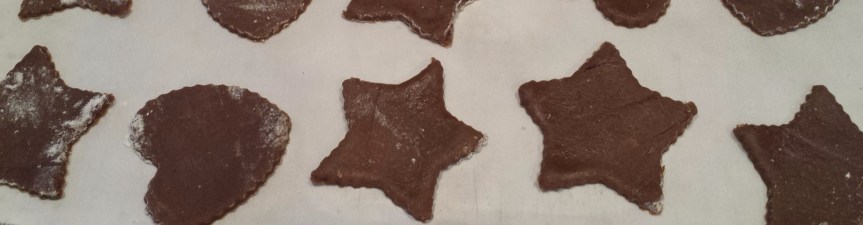
I made gingerbread cookies. My sister made coffee. We hung out with Christmas music. And at night when I crawled into my own little bed, all I could do was cling to the ghosts of those memories and cry my tears of regret that I hadn’t experienced them more fully. Or sealed off my heart from loving.

And I cried out, “Oh God, why do I have to follow You?” There was no answer. I knew, and He knew that I knew. There was no warm, fuzzy peace either. Just a calm that felt more like resignation as I braced myself for more goodbyes.

I hope tomorrow things will look different. But this is what leaving looks like today.

10% thankful

At church on Sunday, we had a sermon about the ten lepers in Luke 17. After Jesus healed them, only 10% came back to thank Him. What about the other 90%? All we really know is that they were healed on their way to the priest. Undoubtedly, they were grateful, but what did they do about it?

Ten percent versus ninety percent. I’m thinking in percentages because the story brings to mind tithes and offerings. I like to think that 10% is God’s and 90% is mine. I go my way with the 90%.

What would change if I started to live like the 100% belonged to God?

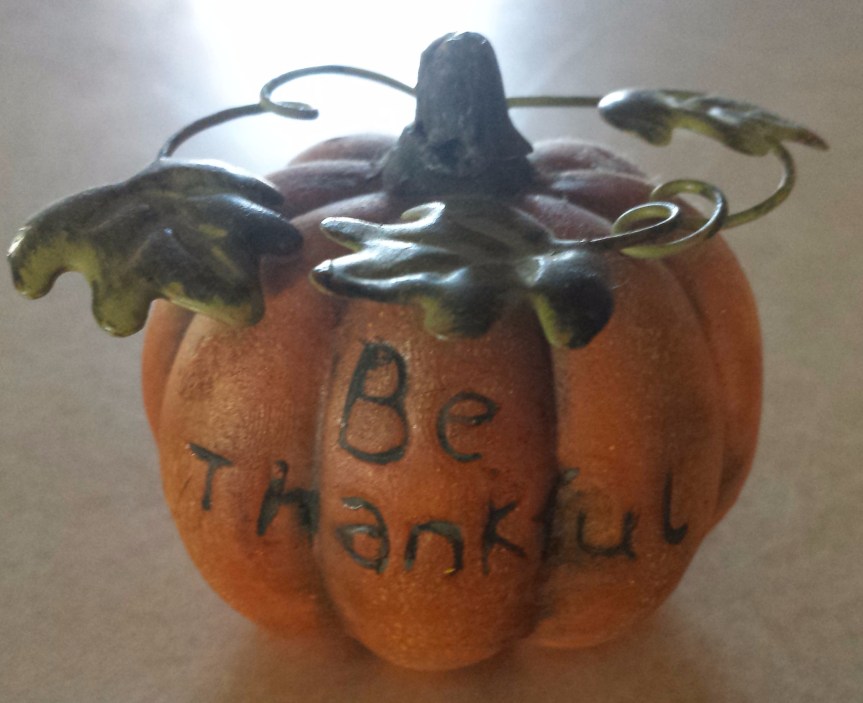
Just a thought as I consider how thankful or unthankful I am this Thanksgiving Day 2017.

Let the tears begin

It came while I was meeting my niece 12½ hours away from home. There it was! My Spanish residence visa. Dad WhatsApped me a picture. I broadcasted the news near and far and even took the first steps to get my plane ticket.

The ecstasy lasted approximately one hour; because when I pulled out my pocket calendar, excitement vanished with a puff of reality. I was looking at today’s date and my departure date on the same page. I had between three and four weeks.

I should have been ready; all along I had known of this possibility. But now it was real. That night, instead of drifting off into agreeable dreams, I cried myself to sleep.

That was a week ago. Now I have less than three weeks left. I’m still tossed to and fro between the delight of moving to Spain and the sorrow of leaving behind my world.

  • My nephews and niece will grow up, knowing me as the aunt who lives far away and brings them olives and cheap souvenirs with Spanish logos.
  • My family will try to keep me in the loop, even as we age and grow apart.
  • My church family will change dynamics as people come and people go.
  • Friends will move away, marry, and have children.
  • Older friends will have health complications and pass away.
  • The community will change as businesses start up and shut down, land is cleared, and landmarks disappear.

The list goes on.

I’ll change too. It’s just that this part of my life and I will not change together. It’s hard to give that up. But how can I cling to a vapor? My reality on earth is temporary. As important as life is to me right now, I don’t want it to weaken the anticipation of the life to come, the everlasting life.

Tomorrow hasn’t arrived yet

There is shrieking laughter as my nephew shakes bugs off of Grandma’s laundry and watches them vanish in the warm autumn sunlight above his head. Oh, that boy.

And to think that soon I’m going to be packing up my things and leaving. I cringe to think of those moments of transition when you’re sitting on a cold airport seat with little sleep and lots of memories of the world you’re leaving behind. Those are the worst moments.

The moments when you have completely left something but haven’t embraced the new something yet. And there you are, in the middle, caught in a swamp of your internal sorrow.

I know, because I’ve been there.

That’s why hearing my nephew’s laughter today makes me glad to be where there is grace enough, in today and not in the tomorrows that haven’t arrived.