Bargaining and boxing class: North Africa part 4

In December, I spent most of a week in North Africa, visiting friends. My intention is to give you a glimpse of my trip. Please forgive me for omitting certain details and for changing names in order to protect my friends.

“Can I have your phone number?” The taxi driver didn’t waste much time.

When I explained why that wasn’t possible, he asked if I was a Muslim.

“No. I follow Jesus the Messiah.”

He pondered this through several streets of traffic. As he pulled up to the curb to drop me off, he spoke again, “You should read the Qur’an.”

I sighed. “I do read the Qur’an. You should read the Bible.”

He frowned and shook his head at me in the rearview mirror as I handed him the fare.

In light of his suggestion, my own suggestion had been logical. But apparently only to me. “Why not? Are you scared?” I punctuated my challenge with a cheerful goodbye and a hasty exit.

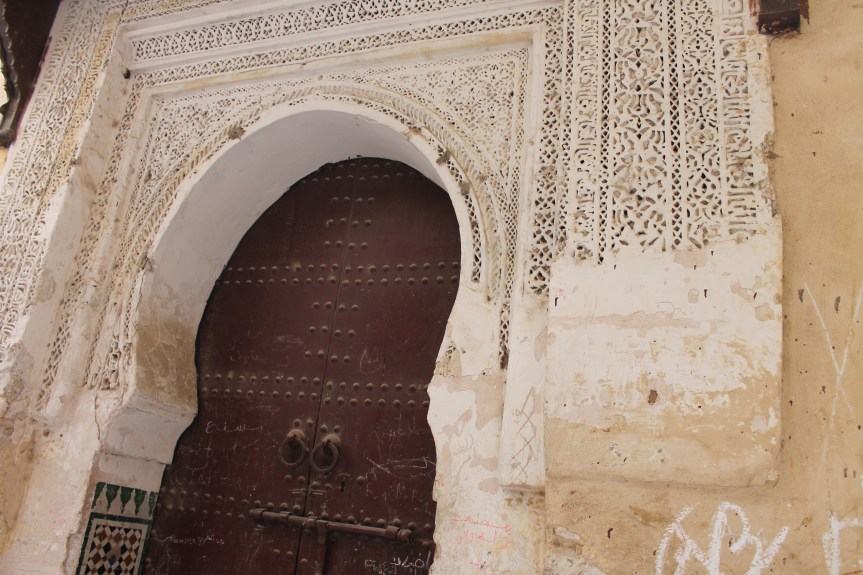
This morning was my morning to go shopping in the old city. The sights and smells of the old city had remained unchanged for centuries and had certainly not changed in the year and a half of my absence. There is a forever skirmish between fragrant and repulsive: baking bread, roasting chicken, urine, a blend of fresh spices, rotting fruit, soaps and perfumes, trash.

Rather than the narrow cobblestone streets accommodating their pedestrians, tourists and residents alike pressed in close to accommodate the streets.

“Where have you been?” several vendors called to me as I bustled along. Did they– could they?!— really remember me?

To my disappointment, I had forgotten how to bargain. No longer was it a matter of easy banter and good deals; it felt exhausting and cheap. Fortunately, shopping didn’t take long since I could only buy what would fit in my backpack between my clothes.

I caught a taxi to my friend’s neighborhood only to find that Khadija and her neighbor, Fusia, were out studying. They would be back soon, said Khadija’s niece. I sat in the salon, watching TV and wondering how my two eighty-year-old friends were doing in their studies.

Suddenly, the door opened and everyone piled into the apartment. There were hugs and greetings that came so fast that I could only repeat “Praise God” and laugh. Someone made tea. Another ran out to buy cookies. We talked and watched a Turkish soap opera until dark.

“I’ll walk with you,” Fusia said. She held my hand and led me along the street. “We’re going to go see my grandson. He will be sad if he doesn’t see you.”

What I didn’t realize was that her grandson’s boxing class did not allow interruptions. Two women screened everyone who entered, and one looked like she could flatten anyone who crossed her. I was making plans for a polite retreat when Fusia asked if her friend all of the way from Spain could just greet dear little Ali.

“Of course! Come with me!”

And so I interrupted the boxing class, a whole room full of gawking children and their annoyed instructor. Ali ran over to kiss me. His cheeks were pink. Mine may have been too.

Only after that, I was allowed to get a taxi and return home.
Words were more than just words: North Africa part 3

In December, I spent most of a week in North Africa, visiting friends. My intention is to give you a glimpse of my trip. Please forgive me for omitting certain details and for changing names in order to protect my friends.

Chaimae’s hug was long and tight, trying to make up for the year and a half of missed embraces. Her mother gave me the same hug. They led me into the salon, not the fancy one for guests, but the family salon that doubled as a bedroom. I wasn’t a guest; I was still family.

“Did you eat lunch?”

Chaimae fried fish and reheated chicken and potatoes already in a pot. We ate, talked about our families, and showed pictures from our time apart. Both mother and daughter were amazed that I remembered Arabic, or at least a semblance of it.

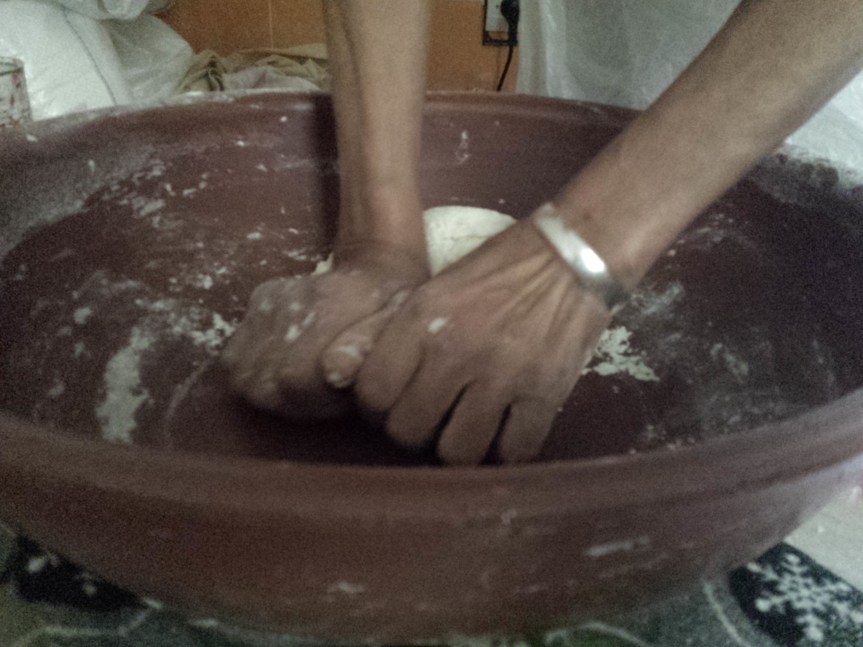
After the bread was patted into round loaves, Chaimae and I went for a stroll around the neighborhood. By the time we returned, the older brothers had arrived for afternoon tea.

It was after sipping cups of syrupy tea and eating mounds of oily bread that one of the brothers wiped his hands on the community napkin, leaned back against the couch, and pinned me with probing eyes. “Who is Jesus to you?”

I was ready.

The entire family listened as I shared. I listened as they shared. The conversation grew thick and loud. My face turned hot in animation. But their faces were hot too.

We discussed our differences and how our separate paths could not both be the path of God. Yet, beneath our disagreement was a profound respect for one another. We had known each other long enough now that words were more than just words; our words were what we had seen each other living and breathing.

And our words were as different as our lives.

Tea time blurred into dinner and more food appeared on the table, but no one seemed interested in another round of feasting.

My Arabic was worn out. So was the rest of me. When family members started to trickle out the door, I slipped into the kitchen to wash dishes. Chaimae made beds on the floor. She gave me a couch pillow so high that my neck immediately began to ache. I waited until the light was out to quietly set it aside.

Partway through the night, the light switched on.

“Chaimae! Chaimae! Wake up! Trish isn’t on her pillow!” They tucked the pillow under my kinked neck, and Chaimae’s mother tucked more blankets around me.

“It’s good that I slept in the room with you,” she told me after my interrupted night of sleep. “To take care of you.”

I smiled, hoping my expression reflected more of the endearment and less of the suffocation I was feeling.

After breakfast, they sent me to the taxi with enough tears to let me know I would be missed.

How do I love her?: North Africa part 2

In December, I spent most of a week in North Africa, visiting friends. My intention is to give you a glimpse of my trip. Please forgive me for omitting certain details and for changing names in order to protect my friends.

I woke up early. If I had known all that the day held, I may have tried harder to fall back asleep.

“Do you have a friend to meet you at the taxi stand?”

It was the normal question taxi drivers asked whenever they took me to Aisha’s neighborhood. And I was a bit nervous about locating the house without wandering up and down the streets of this particular neighborhood.

“Do you want me to walk you to the door?”

Then I saw it. The taxi driver had pulled ahead far enough that I could see the doorway from the taxi stand. “That’s it!” At least I was 90% sure.

At the top of those countless concrete stairs, I found the family at home, bursting with a warm welcome.

But all was not well.

The tension I had felt in their home more than a year ago had only increased. Sporadic and often violent discipline left the children confused, angry, and out of control.

Aisha invited me to sit on the naked couches. She had washed the covers for my visit, she said. She shook her head and clicked her tongue. Someone had slipped over the roof and stolen them off of the line as they dried in the sunshine.

As Aisha cooked (she refused my help, which was fortunate since her kitchen can only fit one person at a time), I slipped out to the rooftop to pray and to watch the world from the 6th story. The neighborhood was a moving I Spy book: a man leans over a roof parapet with a paint roller on a stick, turning dingy white to barn red. He calls to the men on the roof below to move their things so he doesn’t drip paint on them. His daughter swings on the clothesline behind him, laughing in delight as the wire stretches wider and wider. Boys play cards on the street below. Across the way, a woman gathers laundry. Just next door, a teenage girl drapes a blanket over the parapet, stops to watch the world, and spots me doing the same. I am fascinated by the movement—a symphony of together-life, sometimes harmonious, sometimes not.

More family came for a lunch of fried fish. And then we went for a walk. Rivers of mud flowed through the dirty market, splattering our shoes as motorcycles roared by. We came to an open area of crab grass, where families sat on blankets and pieces of cardboard and peeled mandarins while the children ran wild.

Aisha and I peeled mandarins together and had the first meaningful conversation of the day. But something in her expression and words spoke of stale panic.

The explosion came a little later, on our way home. Slaps, a bruised eye, and suddenly wood pieces hurled through the air as mother and daughter screamed at each other. Onlookers interceded, patching the family’s distress with layers of shame.

In the taxi on the way home, I hugged my backpack that now smelled like leftover cigarette smoke. “God, help this family!” I prayed until the words felt worn out. But God knew the layers in those words. How could I– a long-distance friend– initiate the healing of a crushed and bleeding family?

A few days later, we met for a final goodbye, just Aisha and I. We talked about her daughter. After listening to stories of behavior problems and irresponsibility, I begged Aisha to love her daughter.

“How do I love her?” she asked.

How does she show unconditional love when she may have never known it? How can she pass on what has never been passed on to her?

As we parted ways, I tried to scrape together my broken heart and wished I could scrape together hers too.

Welcome back: North Africa part 1

In December, I spent most of a week in North Africa, visiting friends. My intention is to give you a glimpse of my trip. Please forgive me for omitting certain details and for changing names in order to protect my friends.

Nine hours to kill in the airport. I hunched over a Burger King coffee and read.

Traveling dehumanizes people. We turn into frantic, herded animals. Carrying our belongings with us everywhere: hanging over-stuffed carry-ons on wimpy bathroom stall hooks (and watching in helpless horror as a scarf or jacket slides to the floor), propping our feet on suitcases to pretend we’re relaxing when we’re really just looking out for our stuff, and even getting desperate enough to sprawl across the grimy airport carpet and rest our head on the knobby bulk of our backpack. I have done all of this, so I know. I also know about frozen water bottles and trying to eat my lunch before I check into an international flight… just in case they try to confiscate my hard-boiled eggs.

Seven hours on an overnight bus just to wait 9 hours in the airport. But I was feeling surprisingly human. A cup of coffee and a good book can do that, I guess.

A couple of hours later, I touched down in North Africa, only a little queasy. Not enough to use the handy baggie I was gripping. But just enough for the man across the aisle to eye me nervously.

I had the equivalent of $3.35 in my pocket when I emerged from the airport—not enough for a taxi. And the 40 cent bus was pulling away. I waited for an hour with a diverse crew of other penny-pinchers.

As the bus seats filled, I chatted with a young family that piled into one seat beside me. The 3 children were almost as charmed by me as I was by them.

“Auntie, how long are you here?” Ilyas, the oldest boy asked.
“Until Thursday.”
He was crushed. “So we won’t see you again? You won’t have time to visit us?”
“Ilyas.” His mother took him by the shoulder. “We have her here—” she tapped his heart. “And here—” she tapped his head.

When they got off the bus, someone rapped on the window behind me. Ilyas was there, grinning and waving his final goodbye.

Darkness had fallen by the time we reached the heart of the city. The landmarks had changed since I had lived there and it was hard to stay oriented in the dark. I missed my stop.

I jumped off at the next stop and walked, hoping to find a place to exchange my euros. But exchange stores had closed early this Saturday night. So had phone stores.

At random, I popped into a tiny store and asked the owner if he had any SIM cards. He pulled a box out of a dusty drawer and dug through it until he found one. He was scrawling my passport number on a scrap of notebook paper when I remembered I didn’t have enough of the local currency.

“No problem,” he assured me as I emptied my coin purse on the counter and offered to pay in euro.
“No problem. How much do you have?”
Together, we totaled $2.95—five cents short.
“No problem!”

Since he didn’t seem to care, I decided not to care either.

With my new number, I called my former roommate and made a beeline for her house. She wasn’t home yet, but had left the key with the upstairs neighbors. A short chat and a key later, I entered the apartment to find that I had been much anticipated.

Handwritten notes were stuck all over the house, guiding me to my bedroom, the shower, tea, and waiting food. After almost 24 hours in transit with very little sleep, such a welcome brought me near to tears.

Lost in the system- Part 2

Continued from Part 1

F-7. That was my number. There again in the place I would love to bid goodbye forever.

We were all scanned in, checked in, and trapped. Waiting for that computerized voice to say “H-65” or “F-7.” Not that we heard the voice against the background of a hundred other voices; it was just a reminder to check the screen.

The room was heavy with anxiety and stale cigarette smoke on winter clothes. We were different colors. Different nationalities. But all in the dilemma of surviving the system.

An hour passed. Another hour buried in a legal system. This time to get permission to leave and re-enter the country while Spain ate up months processing my application. My paperwork, started in October, was now complete until they mailed me a list of more documents to wring out of someone somewhere. But if I left the country without special permission, I would have trouble re-entering.

“You need to fill out a form, give me copies of your card, your passport, and this other form, and pay a tax.”
“Is this completely necessary?”
“Where are you going?”
“Africa.”
“Absolutely.”
“And I can’t get this done today?”
She looked at her clock. “Not today. Come back tomorrow!”

I couldn’t decide if I wanted to reach across the desk and grab her by the neck or simply burst into tears. Lost in indecision, I did neither until I was dismissed.

Out on the street, I fumed, determined to leave Spain forever. I was tired of these daily trips to immigration offices. Tired of being an immigrant! Eventually, I calmed down and rearranged my schedule to fit in two more trips to the immigration office, gritting my teeth as I crossed off the rest of life to make room.

But something happened when I stopped fighting for my schedule and opened my heart to joy. Something happened when I stopped wishing I could be somewhere other than where I was and embraced the present, bumps and all.

The world began to brighten. Not much. But a shade enough to make a difference.

Even more discouraging than being lost in the immigration system was being lost in the system of discouragement. After all, when we reject the gift of joy, we reject the strength we need for daily life. Check out Nehemiah 8:10 if you doubt it.

On the way home from my final trip to the immigration office, I met up with an acquaintance. I squeezed her little girl close as we bounced home together on the bus, letting uninhibited, contagious giggles complete the joy of the present.

Lost in the system- Part 1

I have been lost in a system I can never hope to understand. Once, an immigration official told me, “Immigration is the part of government that changes the most.”

No kidding.

The letter in the mail. The journey to the immigration office in Almería to request information.

“You need a new invitation to work.”
“And a new empadronamiento?”
“No, you don’t need that unless you’ve moved. But you have to turn your paperwork in to Immigrantville, not here in Almería.”
“Where in Immigrantville?”
He gave a vague answer that told me he had no idea.

So I put in a request for a new invitation to work and waited and waited. Weeks later, it came. We signed and sent it off. The same papers came a second time, requesting signatures again.

“What happened?”
“I don’t know. My guess is some little old lady working in the office lost your papers.”

So we started again. And waited again.

I wasn’t sure where this elusive Immigrantville immigration office was, but one morning I started out across town with a vague notion, a handful of papers, and a trembling aloneness.

“You need an appointment.”
I stood, almost panting after my 45 minute walk. “When?”
“Right now we’re scheduling in December…”
“My card expires in November.”
“Oh, well you should have come sooner.”

But she squeezed me in just after the weekend. Another 1½ hour round trip on Monday. This time I was at least 50% sure I was in the right place. If I wasn’t, I would have to start all over somewhere else.

I waited an hour with a cluster of Senegalese men, listening to Wolof and crocheting. Round after round of crochet as my hope dwindled.

“Could I borrow a scissors?”
The receptionist gawked at my amateur square of yarn. “Of course.”

Finally, I was across the desk from a lady who was late for her lunch break. But she was the one who actually knew something.

“You need a new empadronamiento.”
“But the man in Almería told me…”
“It expires after 3 months.”
“I know. But the man told me…”
She shook her head. “Sorry. You need a new one.”

She offered to keep my paperwork until I made my next trip.

In the morning, I was the first client at town hall, one half hour before opening. Within 2 minutes, I had a new empadronamiento. Within 20 minutes, I was presenting it at the immigration office.

A friend stopped by and sat with me while I waited for the process to be finalized: another 45 minutes for that tiny stamp in the corner of my form that said I was still a legal immigrant.

“Lost in the system” to be continued in part 2…

Crocheting in Spanish

In October, I started something I never dreamed I would start: crochet class. Last semester, I always left the nun’s home directly after Spanish class. But this year, I carved a little more time out of my schedule for the second hour of craft class.

My first class, I forgot to bring yarn with me. I sat with the other ladies and we chatted in Spanish and Arabic as I unraveled a sweater to recycle the yarn.

“I’m better at undoing than doing,” I warned María, the nun in charge of the class.

That day, I went to the store and bought a ball of yarn and my very first crochet hook. I still was less than enamored with the idea of crochet, but I knew I would enjoy the fellowship with the ladies.

It turns out that the fellowship came at a pretty steep price for me: my pride.

I was usually ahead of the ladies in Spanish class, but this time, they were far beyond me. Even when we started on the same level of nothingness, they were crocheting in squares  by the second class. One show-off was even making a doily. I plugged away at my simple chain, class after class.

As a left-hander, I struggled to imitate instructions, especially since they came at me in rapid Andalusian. Not only that, but sitting in the courtyard made me vulnerable to anyone and everyone passing by on their way to class.

One moment, I would be wiggling my crochet hook through the invisible yarn triangle, and the next moment, my project would be whisked out of my hands and somebody else would take a shot at it. Or another would critique how I held my needle and try to teach me something new.

Once, an elderly nun came to teach me a stitch. A few minutes later, she came to check on me… only to be disappointed. “No, no, no! That’s not how you do it!”

I sighed and half-laughed to cover my frustration. “I think I need to practice in private.”

She backed away quickly. “Okay. Okay. You practice in private.”

I went home and watched youtube tutorials to no avail. I was a terrible crocheter.

One day, I went to the store and impulsively bought thicker yarn. (Maybe now I would be able to see what I was doing.)

I made a scarf. Success!

María proudly examined my work and told me that no one would even notice how I went from 13 squares to 12.

The pepper coffee experience

I’m not an expert on pepper coffee. But I might be a little more experienced than I was a week ago. My roommate and I both love coffee, so we were excited to try this Senegalese twist on our favorite drink.

I found the package one day as I was browsing through the African shop down the street. Fascinated, I took the package to the cashier. “Fatima, what is this?”

Fatima explained that many Senegalese drink coffee with pepper in it.

No way.

Step #1: Buying the coffee

A couple of weeks later, my roommate and I traipsed into the shop, looking like vagabonds. We were on our way home from a long day, carrying an armload of empty jars and a container of leftover dessert.

When we set the coffee on the counter, a concerned customer interrupted the sale. “Do you know this coffee?” he asked.

“Yes, yes,” we assured him. “We want to try it!”

The man and the store owners tried to explain how to prepare their special drink. But they were still skeptical as we, our empty jars, our leftover dessert, and our pepper coffee pranced out the door.

list of coffee ingredients

Step #2: Research

I wasn’t sure how to prepare it, so I pulled up trusty Google.

google search bar

I found some interesting websites, one even claiming that a nickname for pepper coffee is “kerosene.” Yikes.

It turns out that one can prepare the coffee pretty much any way they want to. That was a relief since we don’t own many fancy coffee-making devices.

Step #3: Making the coffee

We opened the pepper coffee package together and took long sniffs.

Roommate: “It smells like a gift store.”
Me: “It smells like dirt.”
Roommate: “I think I’m having a better experience than you.”

We dumped it in the coffee maker and my roommate dug around in her room until she unearthed a darling little cup and saucer set.

Step #4: Tasting the coffee

coffee pot pouring into small cup and saucer

Traditionally the coffee is hot and sweet. I opted to add sugar right away to get the full experience. My roommate decided to taste it solo.

Roommate: (WITHOUT sugar and wincing)
Me: (WITH sugar and wincing) I think it’s probably better with sugar.
Roommate: It is. I’m positive!

So what is it like? The flavor is not quite like anything I’ve ever experienced. A marriage of spiced tea and coffee. A gift shop. It’s hard to explain.

The next time I try it, I will remove all notions of coffee and try to enjoy it for the unique blend of flavors that it is. But it’s going to take more than one cup.

Grandma

Grandma imagined a pump of cold, running water in heaven. She told me so as we sat side by side on the couch just before I left for Spain.

“What do you imagine?” she asked.

Heavenly mansions were on our minds, not the frailty of human life.

When I said goodbye, I hugged Grandma and then Grandpa. My voice was still cheerful as I said, “If I don’t see you again here, I’ll see you in a much better place!”

They both smiled.

But I couldn’t control that rush of grief. The memories, joys, sorrows, and love just landed in a heavy heap on my heart. I started to cry.

Like I am now.

Today is Grandma’s funeral and I’m an ocean away.

Grandma spent her whole life quietly serving others. She inspired almost subconscious admiration and love; she was the rock that we all leaned on but sometimes forgot was there. She always had time for her children, grandchildren, and great-grandchildren (and even our pets too!).

And yet, she loved to be alone, content to be still while the world marched by. She enjoyed life without needing to partake of all its luxuries, and contentment made her life richer. Her faith in God, her love for others, and her hobbies—collecting, organizing, couponing, gardening, reading— strengthened her for the hard things life threw at her.

On Friday, the hard thing was emergency surgery with very little chance of success. The family was stunned. We knew she was ready to meet her Maker, but we weren’t ready for her to meet her Maker.

And then she was gone. Before most of us had the chance to say goodbye.

It’s as if the book of some of my best memories has closed. No more melting plastic game chips on the threadbare carpet. No more sleepovers on crinkly pillow covers. No more poring over stacks of Berenstain Bear books. No more Keebler cookie snacks. No more tiptoeing around in the forbidden basement with cousins. No more strict “with soap!” hand washings. No more maneuvering the golf cart between the fragile fir trees at the risk of Grandma spotting us from the living room window. No more Grandma stories from when Dad was a little boy. No more of her French silk pie or other outstanding desserts and dishes. No more talks on the couch. No more phone calls or quirky, Grandma-style emails.

Her last email came the middle of October:

“Think I swept my time under the rug and now need to reverse that. All kind of things collect there under that cover up. That’s why some people insist on hardwood floors. Do you have hardwood floors or rugs with secrets?”

Her emails always put a smile on my face, no matter what kind of day I was having. Especially when they ended like this one:

“We don’t sweep love under the rug so you’re safe! Grandpa and Grandma”

On Saturday, I sat on the lonely beach, staring at the sea and trying to swallow the suddenness of her death. There’s just no easy way to say goodbye. No easy way to hurt. Friends from here and there and everywhere have decided to hurt with me and my family. Thank you.

Today we are grieving the loss of a beloved grandmother. And we’re also celebrating Grandma’s gain as she welcomes eternity.

I hope there’s a pump of cold, running water.

No loaves but plenty of fish

I left for Almería after work. The morning had been long, but my errands were more important than my lunch. The errands went so smoothly that an hour after arriving in Almería, I was on board the bus again.

But so was someone else.

Due to our prior acquaintance, David and I greeted each other, he with an excited “God bless you!” and me with a polite, please-don’t-try-to-talk-to-me smile. Fortunately, the seat beside me was occupied, as was the seat across the aisle.

But we hadn’t even made it out of the city when suddenly a dripping bag of fresh fish came from an arm reaching over my shoulder. I was astonished. My seatmate was astonished. The two passengers across the aisle were astonished. One seat ahead, a teenager looked at me and rolled her eyes.

“This is a gift from God!” David told me gleefully. He opened the bag wider so I could have a look at just how good God was.

Fat fish decorated with twigs of rosemary stared up at me.

“Thank you.” I tied up the leaky plastic bag and continued to smile even as fishy juices dribbled over my groceries.

At home, I messaged my friend, asking her to teach me how to prepare fresh fish. She willingly adjusted her schedule and came to the rescue. We prepared the sardines together: she taught and I absorbed her instructions with naive horror.

Then I prepared American snacks and we sat to eat, study, and talk about our unique immigrant experiences.

David was right after all; the fish were a gift from God.