A gift from Gift

One of the customers in our thrift store is a little girl. Her name means “gift.” Her mother brings her in a stroller.

Gift is 2½ years old. She has spent a lot of her time visiting doctors and having surgeries. Her weeks are full of bus rides and appointments.

“Her bones are short,” her mother explained.

Gift is a dwarf.

With all of the trials in her young life, some days Gift is pensive and tearful. Yet, most days, Gift faces life with a delighted grin. And she loves music. She waves her hands in the air, rolling her wrists to pretend she is dancing. And if you join her, she bursts into giggles, which is music itself.

Due to a recent operation on her spine, she is learning to walk. She still falls a lot, but that doesn’t stop her from insisting on being freed from her stroller while her mother sits down for a cup of coffee.

One day, I was folding clothes around the corner when I heard the tappity-tap of her little shoes. I turned to see that delighted grin and eyes bright with the pleasure of finding me.

Oh, Gift. People will always stare at you. People will talk about you in low tones. And your schedule may always be full of appointments and surgeries.

But, Gift, your life is precious. Keep spreading delight.

Country mice in Almería

Once in a while, my roommate and I like to get out of our immigrant town and feel like we’re in Europe (because it’s so easy to forget that we actually are!).

I looked up a local art museum and an intriguing café in Almería. So, pretending to be polished and cultured, we country mice set off to spend our Friday evening in the big, frightening city.

Okay, I’m exaggerating a little. It’s not like we never go to Almería and neither of us are frightened by the relatively small city. However, despite how sophisticated we felt that night, I rather think we still looked like country mice.

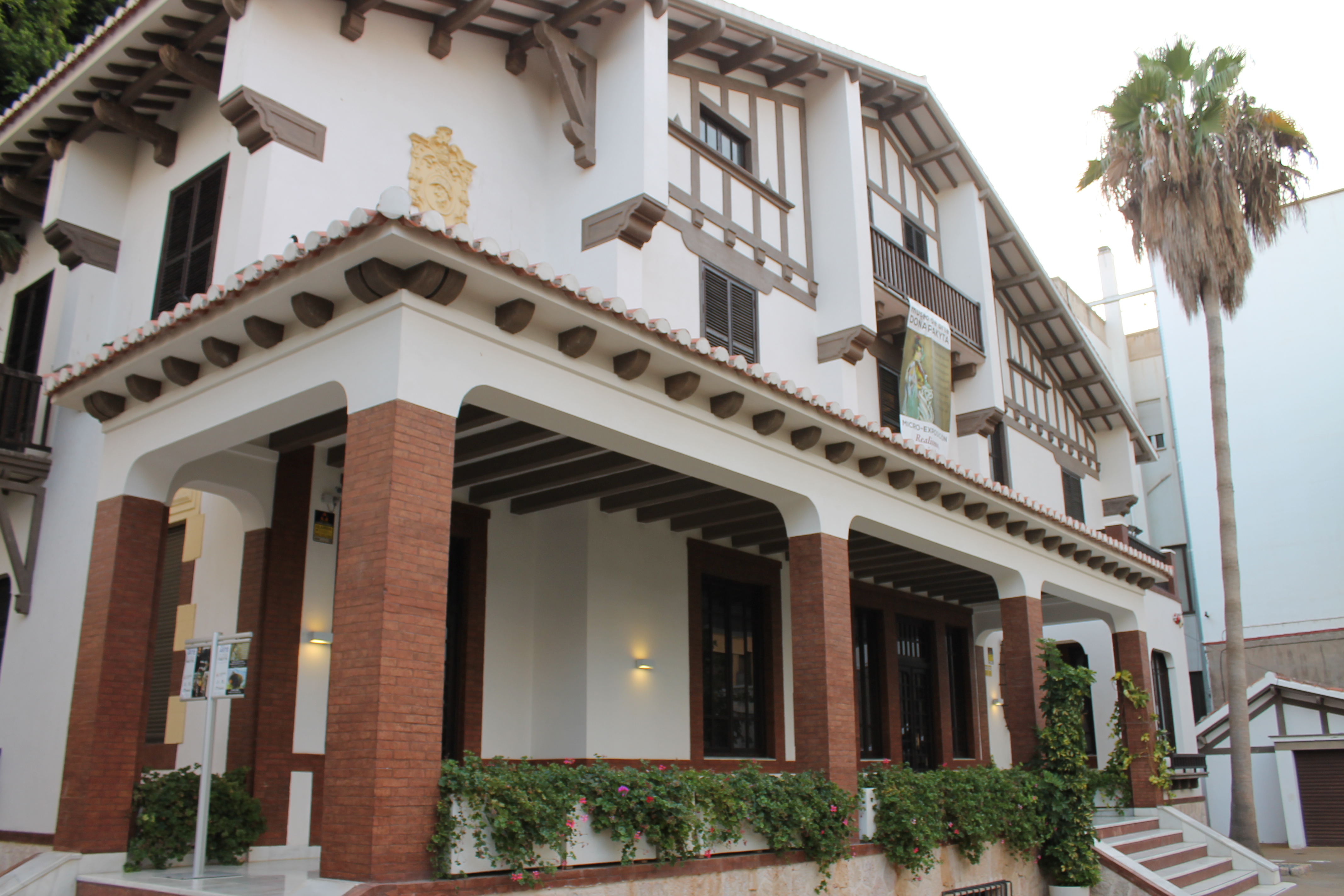
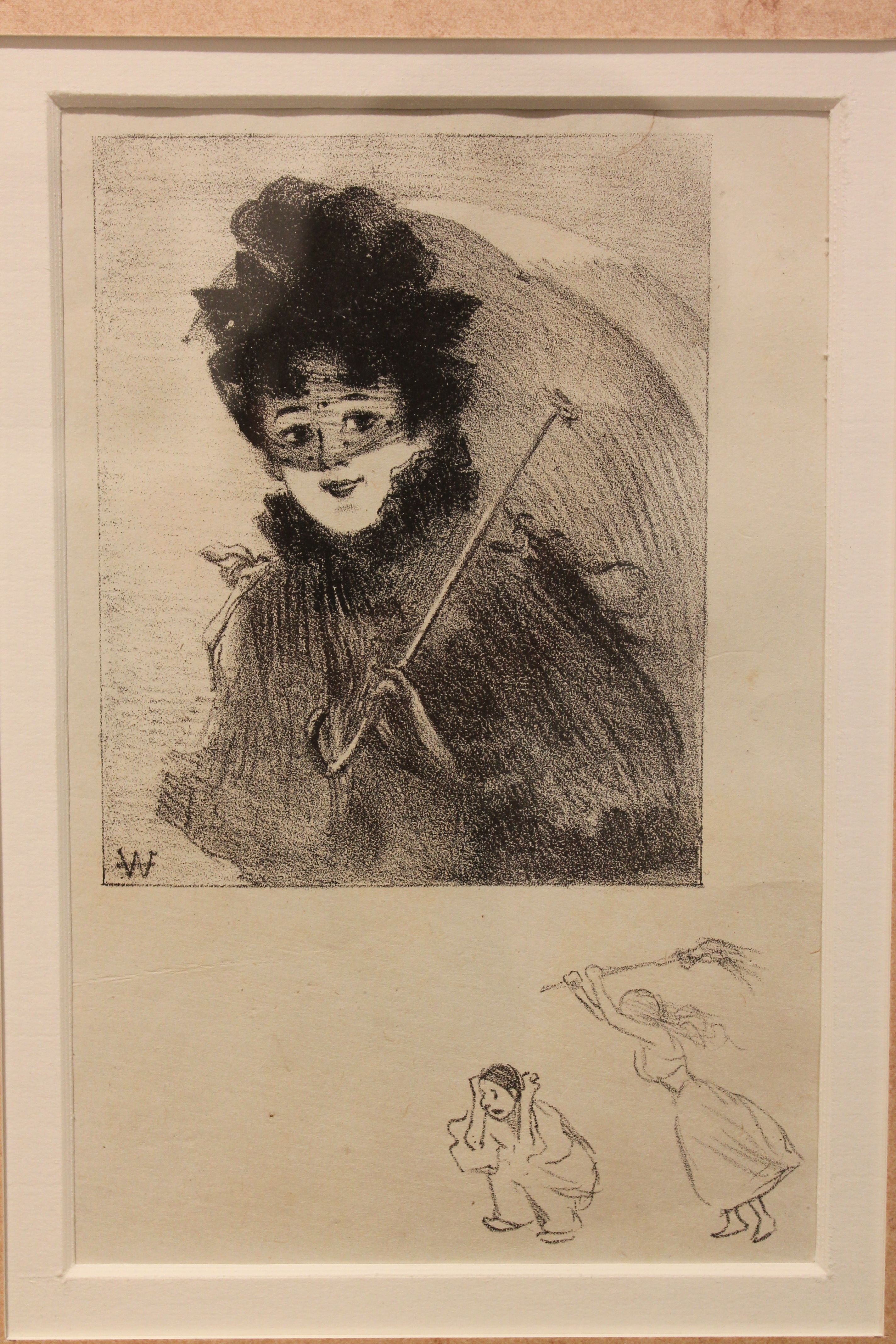
Our adventure began at the Doña Pakyta art museum. I highly recommend this little museum if you’re ever in Almería. Not only is it full of local art and snapshots of the city’s history, but it’s also located in an old residence. (And it’s free!)

Our next stop was Café Cyrano. I had only browsed through reviews, so we had really no idea what we were getting into. But we pretended that we did. And we were pleasantly surprised by a bustling and yet relaxed atmosphere. I managed to tune out the world and study Arabic while munching on a pita griega vegetal.

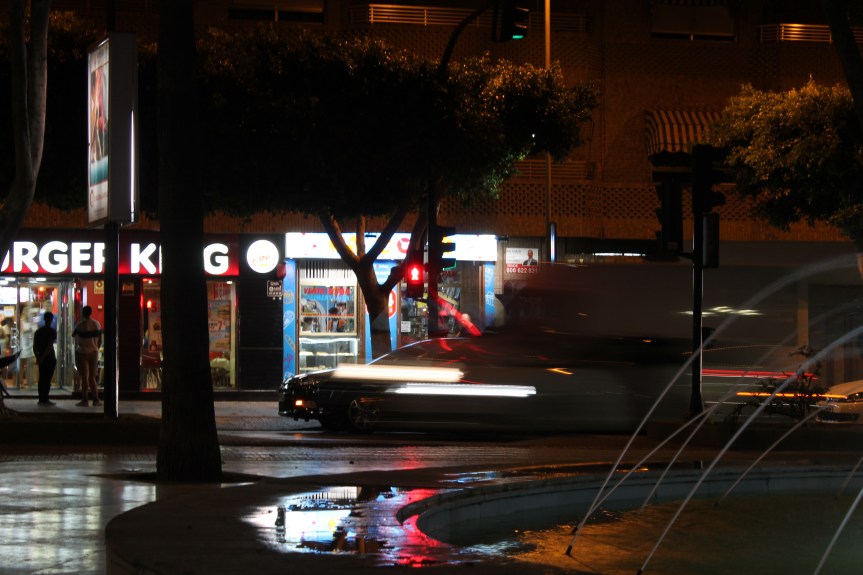
Last of all, while waiting for the last bus back to Immigrantville, we sat along the Rambla, the main boulevard, and enjoyed the life happening around us.

Birth certificates and cookie crumbs

It took 45 minutes to walk to town hall. Naima had told me she would meet me there. She was so slow in coming that I almost gave up. But it was a pleasant morning. There was shade and a nice breeze.

Suddenly she appeared, three children in tow. Only Curly Top, the littlest, was her own; the older two belonged to a neighbor. The younger neighbor girl gave me a grin so big that it took up the bottom half of her face.

Naima had tried to call me to change the meeting place, but I hadn’t answered, she said. We left it at that and walked together to a little building on the end of town.

“What do you need here?” I was the designated interpreter. But that could only happen if I understood what I was supposed to interpret. Naima tried to type the unknown Arabic word into my translator, but didn’t know how to spell it.

We entered the building, just large enough for a few offices that didn’t look strikingly official.  A sign said to ask for a number, so I snagged a wandering employee. “A number please?” By the time he found a number and brought it to me, it was my turn.

But I still didn’t know what Naima needed.

I sat across from a gruff man at a desk. “What do you need?” His voice matched his expression.

“I don’t know.” I handed him my friend’s family book and he paged through it.

“What do you need?” he asked again.

“My friend needs two of something for her daughter, but I don’t know the word in Arabic, so I don’t know what to say in Spanish. She is trying to call her husband now.”

The gruff features twisted. “A birth certificate?”

“Is that what you have here?”

“Yes, and that’s all we have for her daughter.”

So while he printed the documents, he asked if I was evangelical and then launched into a one-sided discussion about Mormons. Mormons?

BANG! went the rubber stamp. BANG! BANG! BANG! He signed the documents with such scribbled flourish that it may have looked more natural had he been using a crayon on a coloring page.

“Where are you from?”

“The United States.”

“Trump. A lot of people angry that he doesn’t like immigrants.”

I sighed. Yes, but didn’t every country have its problems and weren’t there any problems in Spain?

Another one-sided discussion ensued that gave me a vague sensation of having made my point. He walked me to the door, still talking, and watched our little gang leave the odd little office.

Naima invited me up to her flat where I tried to translate a medical questionnaire that dizzied my brain. Naima sat on the arm of the couch and swatted away the little girls when they reached for the papers in my lap.

“Is it normal for your child to have high fevers?”

“No. She only has fevers when she’s teething. Have lunch with us.” Naima got up to start lunch preparations.

I couldn’t, but thank you. Another time, Lord willing.

“In my culture, when a guest comes to my house it’s shameful not to give them any food.” Naima packed up a container of olives she had brought back from her country.

I joined her in the kitchen area and watched her carefully wrap the container of olives in a plastic bag.

Curly Top was walking around the floor on her knees, sprinkling bread and cookie crumbs wherever she went, like a miniature Hansel and Gretel. Big Smile was claiming ownership of everything that wasn’t hers—my bag, Curly Top’s toys, a plate of cookies. I watched as she carefully stuck her foot into a pair of Curly Top’s pants, only about 3 years too small.

Naima took me to the elevator, leaving the flat door wide open and crumby children sprinkled along the hallway. I hit “0” and the elevator door closed.

When a day starts, I never know what to expect. But I kinda like that.

Night at the beach

It is evening as I descend from the bus stop to the beach. Red-faced, dripping families are ascending after their rigorous seaside adventure. Is it too much to hope for a quiet evening, alone with God and the waves?

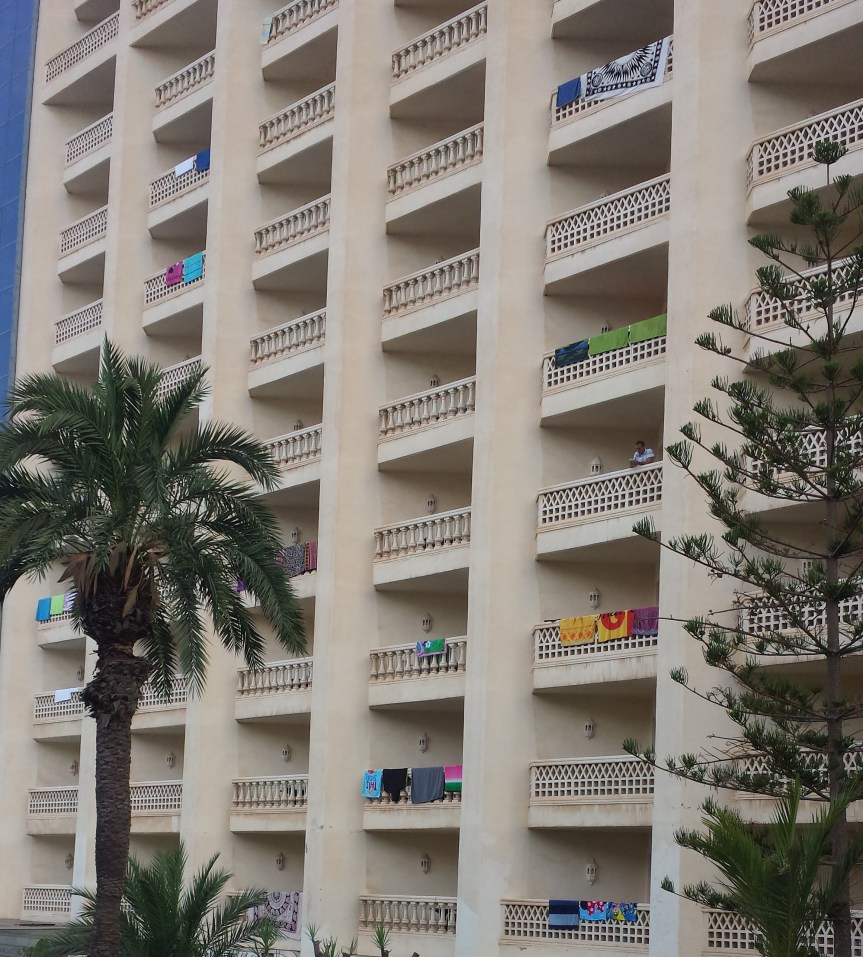
I get closer until I can smell the salty water. Brightly colored towels hang from the balconies of a beachfront hotel.

Despite those who have left, there are people everywhere. I am not the only one who thought of enjoying the post-sunshine beach. Laughter punctuates the dull roar of voices.

I slip off my shoes and enter the chaos. The thick sand is rough against my bare feet. Each step half-buries my foot. I find the quietest spot available, spread out my towel, and shake my head at an African vendor who is trying to make a sale.

The waves froth over the rocks. A jet-ski roars past, spinning to dance in its own wake. A boat skims along, a child in an inner tube bouncing and shrieking behind. Another boat passes, this one with less drama.

The sun disappears and the air is almost cool. But the sand still sticks to my sweaty arm as I reach down to adjust my towel.

I soak in the moment. Just as it is.

The night thickens and so does the salty scent of the waves. And finally, I pick up my things and start the uphill plod. I can’t hear the waves anymore. A bustling restaurant is playing Caribbean music while customers sit in wicker chairs shaped like hard-boiled eggs.

That fades too. And it’s just me and a few other panting stragglers going uphill toward home.

God doesn’t owe me results

The night was a failure. Even after a day of prayer and fasting.

No one noticed that my heart was beating in time with the Father’s. No one noticed that my soul was alive and refreshed.

People were out breathing in the cool night after the long, scorching day. Last week on my nightly strolls, I had met several women. Under the cover of dusk, we had sat on park benches and talked while children played around us.

But tonight there was nothing invigorating.

A stop at the local store made me wonder where the line between friendly and amorous should be drawn. And why was I always the one to draw the line?

And then there was that woman again. The shriveled Gypsy for whom I had once bought bread and eggs and now every time she saw me she snagged me with a long, anguished tale and a request for a couple of euros. How could I communicate love? Bread, eggs, and euros were not going to alleviate her poverty of soul.  Her granddaughters averted their blushing faces.

And that was all. No one else seemed open to conversation. Alone and discouraged, I finished my route and turned toward home.

That’s when truth started to sink it, settling between the churning waves of injured pride and self-pity.

God doesn’t owe me results. He doesn’t owe me deep, blossoming friendships and engaging conversations. If I cultivate a certain level of spiritual maturity, He doesn’t owe me the world on a silver platter.

My service is not qualified by my carnally-defined successes but by my faithfulness. Am I loving (and consequently serving) God with all of my heart? My soul? My strength? My mind?

Years and years ago, my Sunday school teacher gave me a quote that I have kept tucked inside of my Bible ever since. “There is no more powerful force for rebuking all evil things, whether of conduct or of opinion, than that of the quiet, strong, persistent life of a man or woman who goes on from day to day doing the duties of the day well, cheerfully, and with joy.”

As I walked those final blocks home, my sense of entitlement slipped away. “What if?” I wondered. “What if in my day to day journey, I start counting each blossoming friendship and engaging conversation as a blessing rather than my entitlement? What if I named each interaction as a gift rather than my payment for growing in Christ?”

The neighbor man waved and smiled. “Good evening.”

I waved back. “Good evening.” And it was.

A cathedral, cave houses, and amateur flamenco

The end of June, just before I left for the States, my roommate and I took a short trip to the nearby city, Guadix. In all of the July activities, I neglected to put up pictures… until now.

Overall, it was a good trip, although it did have its downsides… like being in town on a holiday weekend when businesses were closed, realizing that our trusty map was on my broken-down phone, getting hot and tired from wandering through the old city streets in search of our elusive airbnb. But those were the not-so-fun things that I didn’t bother to capture on my camera. So enjoy the happier things that I did…

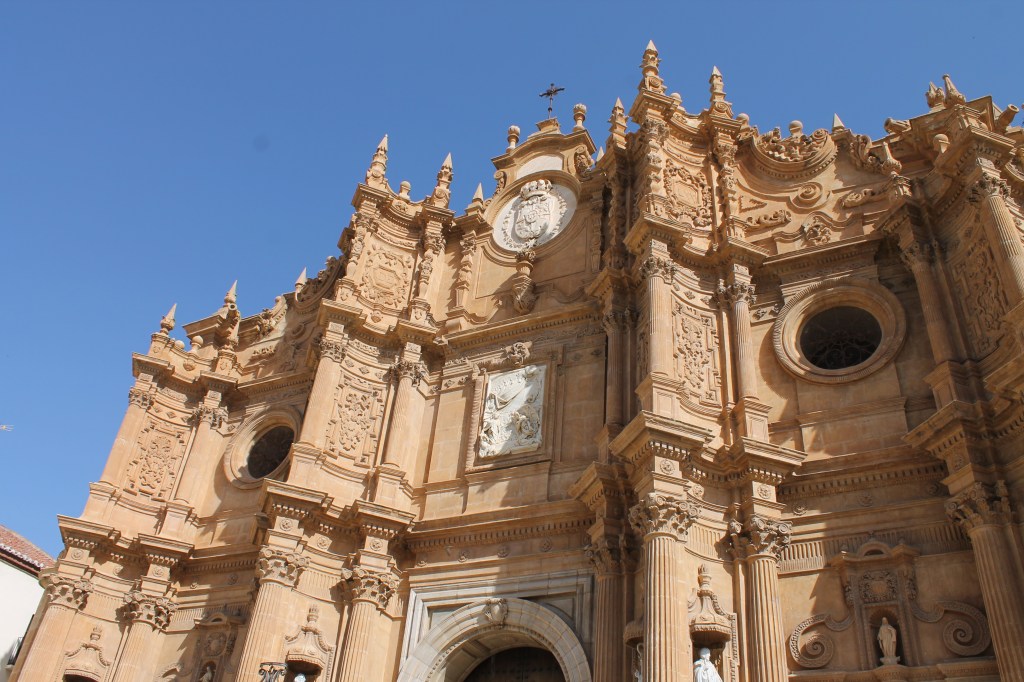
Guadix is known for its splendid Baroque cathedral which was built from the 15th to mid-18th century.

Guadix is also known for its cave houses. Before you start picturing primitive etchings in rock walls and cavemen wielding stout clubs, take a look at these pictures.

Rather from being formed from natural caves, these cave houses or “troglodyte houses” are carved into the rocky landscape. The cave houses maintain a temperature of 18º C (64ºF.).We toured a church in the cave community. The church had marvelous nooks and crannies and tottering staircases to explore.

I noticed the window shoppers after I took the picture. And I definitely don’t have anything against window shopping. Especially since that’s how my roommate and I found a flyer for a charitable event hosted by a flamenco school of dance. We went.

group of female flamenco dancers in black

Río Duero

Río Duero, río Duero,
nadie a acompañarte baja;
nadie se detiene a oír
tu eterna estrofa de agua.*

(Douro River, Douro River,
no one to accompany your descent;
no one to stop and hear
your eternal stanza of water.)

We had gone over this poem for the last five classes. At least. We had already unpacked the literal and figurative meaning of each word and noted the poetic devices.

We had written paragraphs and held discussions on the importance of water. And we had drawn a map of all the important rivers in Spain.

And still…

Río Duero, río Duero,
nadie a acompañarte baja;

“Trish, you read. The first stanza.”

Fine. “RíoDueroRíoDuero…”

“Ah! That’s not poetry! That’s prose… badly read prose! Listen…”

My teacher burst into a triumphant recitation of the first lines. Once again, those syllables rattled around in my head.

I imitated her enthusiasm, but my version may have been more obnoxious than triumphant. “RÍO DUERO, RÍO DUERO…”

The second hour students paused their pencils over their copy books and stared at me. But my teacher remained unimpressed. “Not that either!”

What did I care about the Duero River with its silver beard and its eternal water stanzas?

But I tried again. And as I read, I heard the poem… maybe for the first time. I saw the Duero flowing on alone, used but unseen.

Used. Unseen. But still flowing.

And suddenly the poem was less about a river and more about a life lesson I needed to be learning.


* The first stanza of “Río Duero” by Gerardo Diego
Photo by Migsar Navarro on Unsplash

Spanish with the nuns

Buried in my neighborhood is a tiny green door that leads to a tiled courtyard full of vibrant plants. Charming little rooms surround the tiled courtyard, completing the charming little haven.

In one room, there is a set of five sewing machines. Four treadle. One electric.

In another room, there is a plastic table with accompanying plastic chairs and a rough blackboard.

This is a sewing and Spanish school for immigrants. It is managed by nuns. A friend brought me along to class one day to see if I could enroll.

The first time I met the nuns, I had to bend over at the waist to greet them with kisses on their dainty little faces. Only one seemed more than five feet tall. And not one of them was under seventy. Maybe eighty.

I was captivated. “Is it possible to sign up for Spanish class?” I gripped my friend’s elbow as I awaited the nuns’ answer.

It was possible. After Semana Santa, I officially enrolled for the final trimester of the school year. (And by officially enrolling, I mean that I jotted my information on a scrap of notebook paper.)

On the first day of class—a lesson of body parts vocabulary—the teacher chalked a stick figure on the board with a rectangular trunk. For good measure, she placed a few wild curls on the faceless head to classify the figure as “female.”

During class, the figure was blessed with a chalky esophagus. No other organ required equal visual explanation, so the figure proudly sported her solitary organ until the end of class. And as the teacher erased both the figure and her esophagus, we students trickled out of the shadowy room and into the blast of sunlight that spread across the courtyard.

Since then, class has brought me in close contact with other immigrants as we reveal tidbits of our lives in choppy Spanish and laugh about our language woes. We share struggle and community. We even share goods: sometimes we carry home peppers, cucumbers, handcrafted sewing class projects, or even potted plants.

As the final trimester enters the final month, attendance has dwindled as most of the women fast for Ramadan.

The first and second hour classes combined and I suddenly found myself in a class of women who struggle with pronouns and simple verbs. But the energy and fun we have together is rewarding enough for me.

Yesterday, while practicing the structure “I like,” a classmate smiled and said, “I like Trish’s face.”

“Yes, yes,” agreed the teacher. “Trish has a nice face.”

The other students murmured their agreement and admired my reddening cheeks. Until, for lack of a Spanish equivalent, I burst out the Arabic expression, “God be blessed!”

Spontaneous in Níjar

The weekend finally came after a long, busy week.

“I’m sipping the last of my now-cold coffee and enjoying the fact that I have nowhere I need to go today,” I wrote in an email to my parents.

Five minutes later, a friend whatsapped me: “If it works and you want to…” She and her husband were planning to pick up a load of donated clothing for our second-hand shop. Could I help?

“Yes, I can. What time?”

“Ten minutes.”

Even though it was after ten o’clock, I was still in pajamas with a bedhead. But I dashed around the house and out the door just in time, bedhead (calmed but not conquered), coffee breath, and all. Had I remembered to put on deodorant?

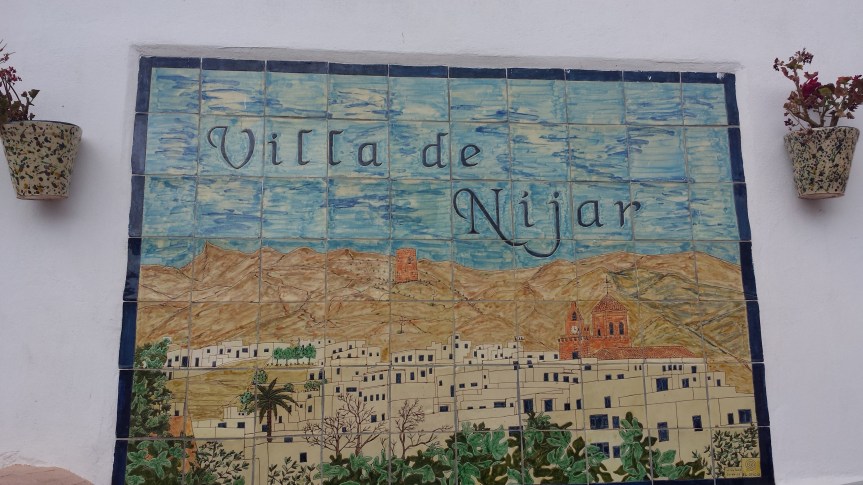
As we were loading the last of the clothes along the winding streets of downtown Almería, my friend’s husband said, “We would like to take you to Níjar.”

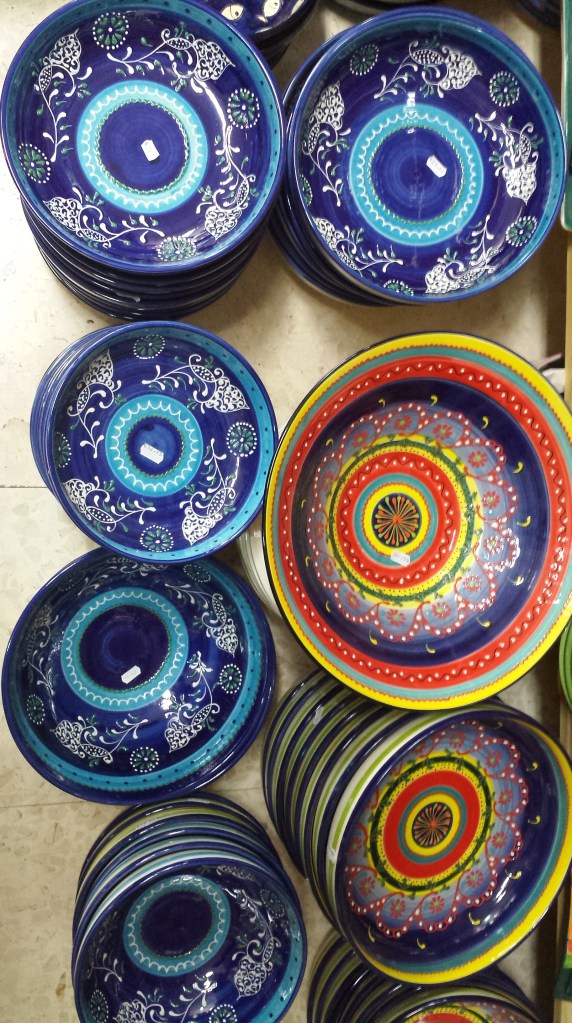
Of course, this statement wasn’t as unprecedented as I make it sound. They knew I had been wanting to browse through handmade pottery and they were willing to drive me to a quaint, mountain town to do my browsing.

There I stood with my bedhead and bad breath. But I wasted only a moment in indecision before heartily agreeing to the spontaneous plan.

So we went. And it was lovely. The spontaneity made it delightful. The handcrafted merchandise made it breathtaking.

Small town librarying

After a couple of months of life in Spain, I gathered up courage to visit the local library. Through the park that hosts elderly men in the morning and rebellious teenagers in the afternoon. Down a long hallway lined with local photography. Until I stood in a room full of books.

Unruffled by my presence, the librarian looked at me over a piece of cardboard she was painting. A prop for a children’s program? “Can I help you?” she asked.

There would be no subtle spying out of the library grounds. I was an outsider and expected to state the purpose for my unheralded intrusion. “Uh, I live here now and-and I would like to read m-more books in Spanish.”

“You need proof of residency from city hall and a copy of your residency card.”

I retrieved the documents and filled out the paperwork. Then I selected a book.

The librarian scrawled the due date on a slip of paper inside the front cover of my selection. I admit that even in that small town, one-room library, I was startled by the lack of technology.

The book I had chosen was boring, so I returned it the next week.

“Did you finish it?” the unruffleable librarian asked without glancing up from her new craft project.

Why this sudden sense of guilt? “No.” I cleared my throat.

“Okay. Just leave it there on the desk.” And she continued unruffledly crafting.

A week later I slipped in again, determined to select a more interesting book. This time, the unruffled librarian was in the middle of a sewing class. She barely looked up while I selected Las Memorias de Sherlock Holmes.

She pulled out my file without confirming my name, made a phone call to the main branch—the internet was down, she said—and then picked up a pencil.

I’m sure my eyes widened when she penciled the due date in the corner inside the front cover.

Sherlock Holmes was a better choice, but I still didn’t finish it by the due date. So I attempted my first renewal.

The librarian’s hands were covered in black paint as she was undertaking yet another craft project. “Did you finish it?”

“No. I would like to renew it.”

“No problem. Just bring it back when you finish.”

Assuming she was referring to the due date, I pointed out that the date inside the front cover said tomorrow.

“No, not when it is due. When you finish,” she clarified. She held up a black hand while the other still clutched a dripping paintbrush. “My hands are covered in paint right now. When you finish, bring the book back and I will erase your fine.”

This week, I returned the overdue book. There was a painting project spread across the entire library floor. The librarian’s pre-teen volunteers cleared a skinny path for me between the massive sheets of damp paper. The unruffled librarian continued hot-gluing safety pins to name tags as I selected another book and brought it to her.

Inside the cover of the old book, she jotted down the number of the new book, handed the new book to me, and returned to her gluing. Apparently, she didn’t feel like traversing the skinny path to her desk.

But this time, she was not the only one unruffled. I had grown accustomed to small town library dynamics and was quite unruffled myself.