It’s quiet here

It’s quiet here.
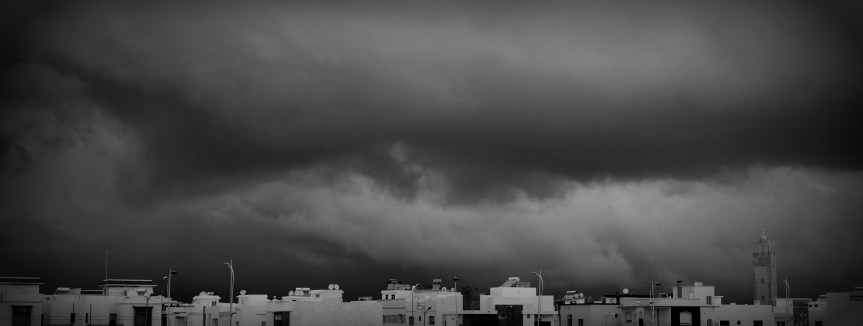
Above, the sun comes and goes
More going than coming
Behind stubborn clouds.
Below is small but grinding
With a today of
Abuse and addiction
Suffering and slavery
In our own town, in our own people.

But it’s quiet here,
Here in my heart:
A mountain reaching up from a dark sea
To that sun swallowed by haze.

In a world gone mad
We long
We laugh
But we live following.
Because behind a cloud
The sun is quiet like the moon,
Searchable, findable.

Photo by Timothy Dykes on Unsplash

Mr. Rochester

I don’t know his name
But just suppose it’s Mr. Rochester
Who
Doesn’t hide his melancholy from the world.

I meet his appraising gaze
Over the cash register.
“Aren’t you going to seat me?”
Grunt.
Thump.
His cane hits the counter.

I smile unnecessarily
For the brightness of my countenance is lost
On its wretched observer.
“Right away, sir.”
Normal seat at booth five
Where he has the restaurant under surveillance.

“Coffee!”
I help remove his sweater and tuck away his cane.
“Coffee!”
As if I have forgotten.
I flee his scathing presence but return
To serve the coffee.
“Where’s my cream and sugar?”
“In front of you, sir.” Then, “As always.”
I add the last
Not to spite him,
But to pacify my own irritation.

(I wrote this narrative free verse years ago while working at a restaurant. I stumbled across it the other day and started to laugh. I think there was more than one Mr. Rochester during my years in the restaurant industry!)


Photo by Colin Maynard on Unsplash

Sunday people

I like Sunday people.
They walk slower, walk happier.
Like they are going nowhere
and everywhere and who really cares?
The market heart pounds with euro produce
and rebajas and greasy churro air.
Shouts and laughter as fathers play with children
And mothers look less worn.
Men with their canes on park benches
under the winking sun
talk about days gone by and passersby.
Church bells echo with every hour mass.
Men in ties are proud beside
the clippity-clop of high heels and scrubbed children
trying to stay clean for mother's sake.
Muslim children walk to class at the mosque,
little girls with covered hair
looking and knowing they are young.
All across town, there is a breeze
of one big Sunday sigh.

“He’s dying,” she says

"He's dying," she says,
As life seeps away
In voiceless submission
Of what it was taught,
Where death is unknown
And forever beckons
The judgment throne
Of a whimsical god.

The family huddles
To weep and recite
Then sit back and sigh,
"Alhamdulillah."

In the still kitchen
My face in my hands,
I plead for mercy
And hope big enough.

In the stillness is
Just the ticking clock:
Tock. Tock. Tock.

Religious hurricane

The sweeping wind
of religious authority
scatters humanity
to drown in waters
of blind idolatry
of human effort.
Flailing arms
reach out to me.
Instead of “Save us!”
they cry, “Join us!
We have the truth!”
But why would I
search for truth
when I have found it?
Why would I
search for peace
when I am in
the eye of the storm?
And how can I rescue
those who want to drown?

Río Duero

Río Duero, río Duero,
nadie a acompañarte baja;
nadie se detiene a oír
tu eterna estrofa de agua.*

(Douro River, Douro River,
no one to accompany your descent;
no one to stop and hear
your eternal stanza of water.)

We had gone over this poem for the last five classes. At least. We had already unpacked the literal and figurative meaning of each word and noted the poetic devices.

We had written paragraphs and held discussions on the importance of water. And we had drawn a map of all the important rivers in Spain.

And still…

Río Duero, río Duero,
nadie a acompañarte baja;

“Trish, you read. The first stanza.”

Fine. “RíoDueroRíoDuero…”

“Ah! That’s not poetry! That’s prose… badly read prose! Listen…”

My teacher burst into a triumphant recitation of the first lines. Once again, those syllables rattled around in my head.

I imitated her enthusiasm, but my version may have been more obnoxious than triumphant. “RÍO DUERO, RÍO DUERO…”

The second hour students paused their pencils over their copy books and stared at me. But my teacher remained unimpressed. “Not that either!”

What did I care about the Duero River with its silver beard and its eternal water stanzas?

But I tried again. And as I read, I heard the poem… maybe for the first time. I saw the Duero flowing on alone, used but unseen.

Used. Unseen. But still flowing.

And suddenly the poem was less about a river and more about a life lesson I needed to be learning.


* The first stanza of “Río Duero” by Gerardo Diego
Photo by Migsar Navarro on Unsplash