


Two steep ditches I dig for myself

“If you don’t take your sorrows to God, they turn into bitterness. And if you don’t take your joys to God with thanksgiving and praise, they turn into idolatry.”

My brother learned this in one of his classes at Bible school.

But how one is supposed to balance on the narrow path between the ditches of bitterness and idolatry?

Late one night in the thick of my visa process, I was angry with life’s injustices. I curled up in my bed and started thanking God for His blessings. Thanking God seemed to be the spiritual thing to do.

But I didn’t feel thankful. I felt worried and scared and alone.

God saw through my flimsy façade. “Tell me about it,” He said.

“But, God, You have brought me so far already. I should be thanking You. I don’t want to be ungrateful!” Couldn’t He just accept my hollow thanks and be done with it?

Instead, He beckoned me to approach Him with my sorrow, no matter how frivolous or temporary it was. So I did. Would my silly little sorrow have turned to bitterness had I not given it to God?

See, I’m not sure that the path between these two ditches is so narrow after all. I don’t have to balance on a fine line between bitterness and idolatry. It’s not about balancing; it’s about surrendering.

God wants to be the One to hold our joys and our sorrows. The only two ditches are the ones I dig for myself when I don’t allow my Creator into my confidence and determine to face life alone.

Skeletons in the Savior’s closet

If anyone would have a perfect family tree, it would be sweet baby Jesus, right? No one who wants to rule the earth can hide skeletons in their closet. Any politician can tell you that.

In the end of the Old Testament book of Ruth, the writer gives a summary of Jesus’ lineage up to King David. First mentioned is Perez, son of Judah. Instead of a squeaky clean Old Testament saint, we find that Perez was the result of Judah mistaking his daughter-in-law for a prostitute (Gen. 38). Any good journalist would have sniffed out that scandal in a heartbeat and plastered unflattering pictures on the front page of every newspaper.

But that’s not all. This genealogy also mentions Boaz’s father, Salmon. But who was Boaz’s mother? None other than the heathen prostitute, Rahab (Josh. 6). Shocking.

Boaz marries Ruth, a Moabitess. Where did the Moabites come from? Well, when Lot is told to flee the city of Sodom, he and his daughters escape to a cave. There, the daughters conspire to preserve their father’s line and the eldest gives birth to her father’s child, Moab (Gen. 19). A sensational story that only God had the guts to write.

The family tree leaves more scars as generations march into history. Why didn’t God hide these skeletons in His Son’s closet instead of recording them for all people for all time? He had set up His Son for political failure.

But Jesus wasn’t a politician. His goal was not to erase the past, but to redeem it. God could have chosen a purer heritage for His Son; instead, He painted a stunning picture of redemption. These broken relationships in Jesus’ lineage wounded the heart of God, but out of them came Jesus, Healer of broken relationships, Hope of the hurting world.

Merry Christmas!

Dare to give away your dream

“Twelve dirham.”

I picked eight dirham out of my coin purse. “Here you are.”

The produce vendor looked down at the coins in his palm and waited.

I stared at the eight dirham and felt the heat creep up my face as my mind replayed the Arabic word he had used. He had said, “tnash” and I had given him “tminia.” I had been in North Africa for six months and still didn’t know my numbers? Good grief.

Despite the countless hours of study, I was, in fact, the worst language student in all of history.

The sting of my disappointment worsened when I saw others fulfilling my dream. While I plodded through language school, feeling like a daily failure, I was forced to watch other students blossom. It wasn’t fair.

Seeing others fulfill my dreams made me insecure and envious.

During my time in North Africa, I heard of a man and his wife who had a vision similar to mine. But because of circumstances outside of their control, they could not move overseas. Instead of being jealous and closing up their heart to this dream, they sent me a donation to carry on with my work. Several hundred dollars to someone who was living out their dream. Their heart was for the dream rather than who was fulfilling the dream.

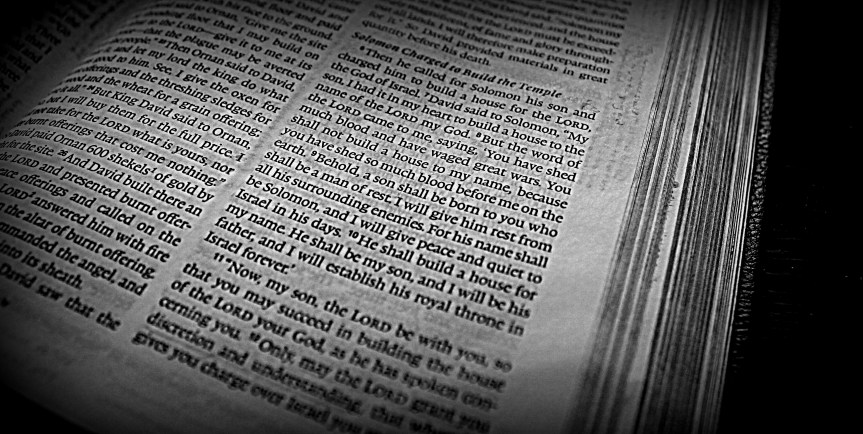
Thousands of years ago, King David realized that he was living in a palace while God dwelt in a tent. He decided to honor God by building a gorgeous temple. It was his dream, and a worthy dream at that. But God said “no.”

Instead of pouting, King David helped to plan and gather building materials. He even blessed his successor to complete the God-given privilege of building the temple.

So when you see other people being or doing what you would like to be or do, don’t soothe your pride with the camaraderie of other envious people around you. Share your dream with others, even if they are better at it than you are. But beware: it’s much harder to give away your dream than it is to give it up! Trust me; I know because it’s a lesson I’m still learning.

Permanence

Barf bag? Check. Peppermint oil? Check. Ginger? Check. I wasn’t going to jeopardize the rest of the trip by getting sick on the first of my three flights.

Now for the distraction. I plugged in earbuds and cranked up Handel’s Messiah.

The plane taxied. The engines roared. And we were up, up, and away. “Prepare ye the way of the Lord!” boomed the bass soloist.

Forty-five minutes later, the wheels touched the runway. “Glory to God! Glory to God! Glory to God in the hiiiiiigh-eeeest!” the choir shrieked.

Amen. Flight #1 was done. But flight #2 was the doozy: Chicago to Madrid. I glazed over after hours of my seatmate’s flickering screen through my closed eyelids. When flight #3 came around, I couldn’t keep my eyes open during the safety demonstration but drifted to sleep on my seatmate’s arm.

Traveling to my new home took less than 24 hours, but it’s going to take me longer than that to adjust. As I walk the familiar streets, I’m continually surprised when I realize that I’m a Spanish resident, not just a visitor.

For years, I have been longing for a sense of permanence. Now I have it and I’m not quite sure what to do with it. Not yet.

But Someone in my life understands permanence better than I do. In fact, He has never changed. And He is the best part of the permanence in my life right now. “The eternal God is your refuge and underneath are the everlasting arms.” (Deut. 33:27a)

What leaving feels like

I leave tomorrow. I’m excited and almost ready. But right now, Spain seems far away. Maybe life as it is now will go on forever: me almost leaving, a surgery here, a new job there, a new baby a state or two or three away.

To not be part of this ever-changing cycle at home is unfathomable. And when I do fathom, I burst into tears. My nostalgia remembers the days, weeks, and maybe even months that used to pass dry-eyed.

The other evening, I stretched out on the carpet with my head next to Clark’s. I stared into his bright face and could not cherish the moment. Neither could I reject the moment to protect my heart. The moment just was and I watched it pass.

Later as my nephews were leaving, Albert got zipped up in his too-big, puffy coat. Soon he will fill up that coat and I will not be here to see him do it.

I made gingerbread cookies. My sister made coffee. We hung out with Christmas music. And at night when I crawled into my own little bed, all I could do was cling to the ghosts of those memories and cry my tears of regret that I hadn’t experienced them more fully. Or sealed off my heart from loving.

And I cried out, “Oh God, why do I have to follow You?” There was no answer. I knew, and He knew that I knew. There was no warm, fuzzy peace either. Just a calm that felt more like resignation as I braced myself for more goodbyes.

I hope tomorrow things will look different. But this is what leaving looks like today.

Unexpected heroes

When my car broke down in West Virginia, I had visions of myself hunting down a toothless backwoods mechanic. As I stood at a gas station counter, buying every quart of 5W-30 synthetic oil the station had, I told the lady, “My car hates West Virginia!”

“We all do,” she remarked dryly.

A man stood behind me, 12-pack of Coors Light in hand. He looked a bit like Gimli, the dwarf of The Lord of the Rings—a bit pudgier and balder, but not much taller. He caught my glance. “You’re looking pretty today,” he graveled.

Apparently, I was being appraised just as I had been appraising. Apparently, he hadn’t noticed my frumpy traveling clothes. “Thank you.” I turned away from him and slipped outside as soon as I had my change.

I ducked under the hood of the car, carefully re-checking the oil and wondering how I would ever make it to my destination. My dad was helplessly 10 hours away while my car reeked of hot oil.

A man walked past. “Problems?” He studied the car. “This is a new car! It should still be under warranty.” And then he walked away shaking his head.

Thanks. Even if it had been under warranty—which it wasn’t—how would that solve my immediate problems? I was stuck in the middle of the West Virginia mountains. He may as well have said, “Be warmed and filled” before going on his way.

But suddenly Gimli and his equally rough-looking companion were standing under the hood with me. “Problems?” Gimli set down the Coors Light. The men listened to my description of the symptoms, filled the engine with fresh oil, and looked around under the car. Last, they started the car and listened to the heartbeat of the engine. And just as dusk was approaching, they sent me on my way.

No, my car wasn’t miraculously healed, but I limped along with the mighty reassurance that God was looking out for me, even if it was through unexpected heroes.

Learning trust, one call at a time

The first time I got the call, I was woefully unprepared. “Your paperwork isn’t right. You have 10 days to straighten it out.”

“I will look into it. If I have questions, can I call you?”

“No, everything you need is on our website.”

I messaged my team in Spain with my sob story. Within a day, they had straightened out my paperwork on the Spanish side of things. Several agonizing days later, the documents had the proper signatures on them. All was well. Disaster averted.

A few days later, after a day of work, I noticed a missed call on my phone… from the consulate. The chances of this being a “we received your paperwork” phone call were not good. But I still prayed that way until they called again 2 days later.

This time the voice was female. “One of the documents is still not right. You have 10 days to straighten this out.”

Within a day, the team in Spain had amended yet another document and it was on its way to the consulate. But as soon as the document arrived, my phone rang and my heart sank.

“This is not right. How can you live and work in one province when your organization is in another province?”

“That’s how it is.” I tried to explain, but the man remained unconvinced.

“I need a correction on this document or an official letter of explanation or we will reject your application and you will need to start again. This has gone on too long.”

“I know.” I didn’t even try to keep the whine out of my voice. “Too long” was right. My application would be either accepted or denied and we might as well get on with it. This middle ground had stripped my nerves completely raw.

In short, each phone call presented a new opportunity to trust. After each call, I gave the entire ordeal to God… but it was never long before I stole it back from Him. When would I learn?

Just this week, I sent off the latest document. I am waiting to hear whether or not it arrived in time. Re-application is a looming possibility. But I suppose that if I apply enough times, I might actually learn complete trust in the One who is in control of every government and their consulates.

Speak life

How often do I pass judgment without considering another’s perspective? And how often do I whisper that judgment to someone who is willing to listen?

These are questions I have been asking myself recently. Because even if my judgment is accurate, is it edifying? The phrase “speak life” has been rolling around in my brain. But what does it mean to “speak life”? I have a feeling that I haven’t been very good at it.

David says, “Let the words of my mouth and the meditation of my heart be acceptable in your sight, O LORD, my rock and my redeemer” (Ps. 19:14).

So words of life would be words that are acceptable in God’s sight.

Once upon a time, religious people caught a woman in the act of adultery and dragged her out to be publicly stoned. Then seeing Jesus, these people tried to trap Him by asking whether or not the woman should be stoned. Jesus didn’t pick up a stone, but neither did He deny the woman’s sin. He calmed the mob by questioning the state of their own hearts, and then He turned to the fearful sinner crouching in the dirt. “Go, and from now on sin no more.” (Jn. 8)

Those are words of life. Not words of ignorance or denial, but words that give hope.

Grace and migrating tissues

I had spent a significant part of my evening in the living room chair with a box of tissues close at hand. It was my very own pity party. No one else was invited. The piles of bank statements, resident visa forms, tax papers, and junk mail were the life of my party.

I felt like I had been making lists all day. Lists of things that had to be done. Lists of phone numbers to call. Lists of people I should visit. Grocery lists. Arabic verb lists. And this list goes on…

Not only that, but the thoughts rolling around in my head hadn’t yet been categorized on any list. Is this what “normal” looked like in America? Had I simply forgotten? Or had I completely lost my ability to handle stress? Or was it just the paperwork I couldn’t handle?

That’s why I merited a pity party. So I moped and felt considerably worse afterwards. A pity party hangover. Finally, I was able to motivate myself to go to bed. And guess what? I had a wonderful night of sleep!

Not that I deserved it. Nope. If I would have been God, I would have made me toss and turn restlessly all night to learn my lesson for worrying about all of the “tomorrows” of my future. Instead, He showed me grace and I woke up ready to face the new day instead of cowering under the covers.

I chipped away at one of my lists, accomplishing what I could and leaving the rest unwept, unhonored, and unsung. And that afternoon, I was ready when a friend arrived in unexpected tears. She didn’t need to explain. We simply moved the tissues from beside my chair to where she was seated on the couch. And I made some tea.

God knows that we don’t always learn lessons best through justice. Sometimes what we need is grace.