
Be still and know

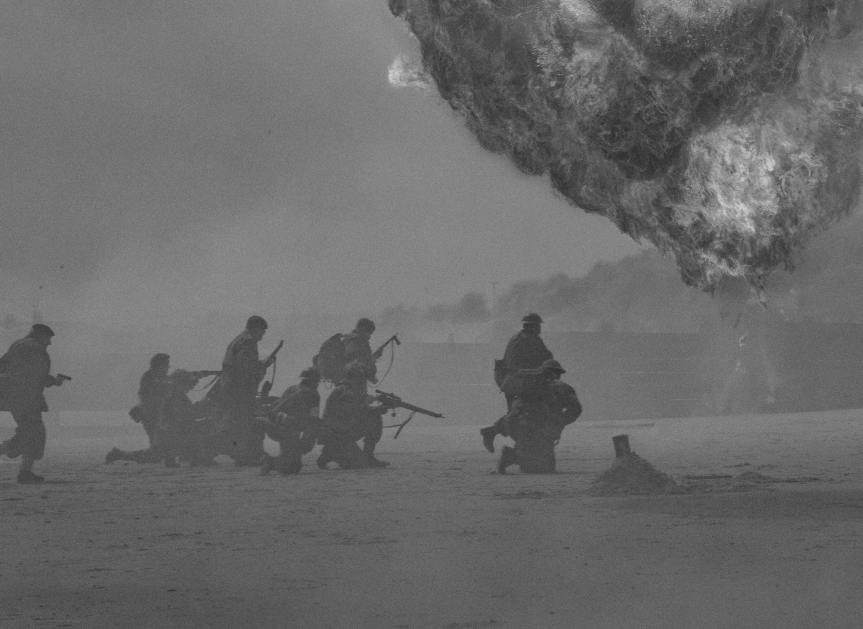
“Be still, and know that I am God.” Those words beckon inner peace. For most of my life, I have enjoyed that thought in isolation. But recently, someone suggested I look at the context of the Psalm. These are a few of the phrases from the preceding verses:

  • the earth gives way
  • waters roar and foam
  • mountains tremble
  • nations rage
  • kingdoms totter
  • the earth melts

Psalm 46 is not only about finding inner peace, but about finding inner peace despite external circumstances. How? God is our refuge and strength.

God is our refuge and strength, a very present help in trouble.
Therefore we will not fear though the earth gives way, though the mountains be moved into the heart of the sea,
though its waters roar and foam, though the mountains tremble at its swelling. Selah

There is a river whose streams make glad the city of God, the holy habitation of the Most High.
God is in the midst of her; she shall not be moved; God will help her when morning dawns.
The nations rage, the kingdoms totter; he utters his voice, the earth melts.
The Lord of hosts is with us; the God of Jacob is our fortress. Selah

Come, behold the works of the Lord, how he has brought desolations on the earth.
He makes wars cease to the end of the earth; he breaks the bow and shatters the spear; he burns the chariots with fire.
“Be still, and know that I am God. I will be exalted among the nations, I will be exalted in the earth!”
The Lord of hosts is with us; the God of Jacob is our fortress. Selah

Psalm 46

Photo by Duncan Kidd on Unsplash

Celebrating life

Sitting down to write a blog post is the last thing I want to do right now. Today I cannot pretend to have the formula to solve life’s problems. I have just said goodbye to a life where I had started to belong and I’m feeling rather homeless.

But there is Someone who experienced a transition much more challenging than I will ever have to face. Imagine leaving the presence of God to become a needy child, a hormonal teenager, and then a radical adult first pursued and then rejected by a group of wishy-washy followers.

Jesus Messiah understands the struggle and the heartache that come with transition. But instead of hiding from life, He still chose to live intentionally. He chose to invest in the lives of others, sometimes despite a low return on His investment. And what happened at the end of this intentional life? Jesus was killed for living unashamed. That sounds like a noble end, doesn’t it? But noble as it is, that isn’t the end of the story. Death didn’t stop Him.

This year, I am celebrating Resurrection Sunday in Spain before I move back to the States to apply for residency. Transition has really only just begun. But despite my heartache and perceived homelessness, today I want to celebrate life: Jesus’ life on earth and my own life because of Him.

It’s okay to be a foreigner

Sometimes it’s okay not to fit into every aspect of the local culture.

In a culture so linked to religion, I would make a lot of compromises and outright denials of my faith if I were to fully acclimate. So where do I draw the line between foreigner and local? I have faced a lot of cultural quirks that have made me uncomfortable. Sometimes I bit my tongue before I blurted out my opinion. Other times, I didn’t bite my tongue fast enough.

Understanding the drive behind a behavior helps me determine whether or not I want to conform. I often ask questions, especially when I’m with friends and teachers:

“Why do you act like that people group is dirty?”
“Why don’t you throw your bread in the trash?”
“Why don’t North Africans trust each other?”
“Why do men sit in coffee shops so long?”

Some things I obviously don’t want to take part in. Other things have etched question marks in my conscience. Sometimes I make a judgment and confront a North African only to discover that I have interpreted the matter through my Western worldview. I also find many cultural aspects that are a beautiful representation of God’s character.

Every culture has its ups and downs. And every foreigner should determine how to accept the good in a culture without the bad; thus, our right choices will set us apart from mainstream culture. That’s why I say it’s okay to be a foreigner.

Aisha- part 4

She lost her job. Just when things had been going well. Just when little by little she had been saving up to furnish the tiny salon. She had talked of buying an oven. She had talked of the circumcision party she wanted to hold for her son in April. Now that was gone. There were no more dreams because there was no more money.

Her husband was working a little, she explained, but she never saw the money.

“It goes for cigarettes and coffee with his friends at the coffee shop.”
“Praise God he doesn’t use your money for that!” I reminded her. But I still hurt for her.

Eventually she found work two days a week. Enough to survive, but not enough to live.

It seemed that every time I entered her home, there was a storm brewing between mother and daughter. Today was no exception.

When I had reached Aisha’s house, things were calm. We sat in the salon, talking and watching Bollywood. God’s grace bridged the language deficit. We talked about life, about marriage, about her children, about her job hunt.

Her daughter, Soukaina, disappeared to be with her friends. A long time later, Aisha hollered across the rooftops of that tiny, sunken neighborhood: “Soukaina! Soukaina!” Soukaina emerged from her friend’s house and soon thereafter two young men followed.

To a mother with no education, a girl’s purity and family honor are the only things worth living for. There is no other option. And with her husband generally absent, Aisha is the guardian of her daughter and, essentially, the family honor.

I just wanted to hide. I had already had an encounter on the street with a man who left my blood boiling in his wake. And upon arrival to Aisha’s neighborhood, I had an argument with the taxi driver whether or not it was safe for me to walk the ½ block from the taxi stand to Aisha’s house. I didn’t want to get involved in anything else, for goodness’ sake!

Aisha offered me a way out: to go with her to buy sweets for the afternoon tea.

But God said, “Stay here with Soukaina.”

So I stayed and listened to the 16-year-old, heart-broken side of the story. Then I touched her hot and teary face and wondered what kind of life lay ahead of this girl. What opportunities did she have? What opportunities would she have?

My own heart felt achy for the women of the family, even as we sipped syrupy tea and I made boats, airplanes, and trains out of each bite of cookie for Aisha’s 2-year-old son.

Aisha walked me to the taxis, telling me again and again how “dear” I am to the family.

I responded with the appropriate reciprocal response, but I really meant it. Aisha will always be dear to me. As we turned out of the neighborhood, the evening sky came into view with bright pinks and oranges. It was so breathtaking I started to cry from the bittersweet mingling of Aisha’s pain and God’s faithfulness.

To the land that I will show you

When Abram was called by God in Genesis 12, he wasn’t called to a specific country. God didn’t say, “Abram, go to China.” Neither did God say, “There you will use your gifts of teaching and discipling by starting a language center and a church.”

Abram went with no country in mind and no idea of how to plug into his new world. He didn’t even know what linguistic and cultural barriers he would face. Plus, he was 75-years-old.

But he went in obedience because that was really all he had. He didn’t update his facebook or keep a blog to tell the world what a great job he was doing. He probably never even communicated with home again.

And then, to top it all off, within a short time of his being on the field, the land was hit with famine. The Bible doesn’t record the thoughts that would have gone through my mind: “Am I sure that God led me here? These people and this place were never really on my heart before I got here. Maybe I heard God wrong. Maybe He meant I should move down the street, not leave my home country.”

Perhaps the Bible doesn’t record those thoughts because Abram didn’t really have them. He struggled with faith in other areas at other times, but this whole “going” thing seems to be one thing he was really good at. Going and not looking back. Not doubting his calling or God’s promises even when the hard times came.

Interviewing Carmen

As I was reflecting on different aspects of North African culture, I realized it would be refreshing to get someone else’s perspective. So I talked with Carmen, a fellow foreigner, who lives in my city. (Keep in mind that her answers are paraphrased because I could not type fast enough to keep up with her thoughts.)

What do you like most about the culture?

I love the modesty. They have so much style and yet they’re so modest. Especially coming from Western culture. Although it may not be a true heart modesty, it’s physical modesty and that is nice.

Another thing I like is that people here talk about honoring God, and they’re just more open to talking about God in general. I went to a wedding in North America and there was no mention of God anywhere! It makes me wonder if God has a great plan for the children of Ishmael to have a greater voice for Him in the future; they’re already used to talking about Him.

What things about the culture makes you smile?

The colors of the traditional dress. They remind me of jewels. I went to a festival where everyone had on their best clothing and they looked like a flock of butterflies.

Do you find that people are friendly or easy to get to know?

I’ve found in our neighborhood that people are a bit harder. There is a foreigner barrier. They are hospitable but they have a limit. At the school where I teach English, that barrier is gone. They know that I’m the teacher and they are the parents instead of a foreigner and local.

Thinking long-term, what are some things about the culture that you will enjoy?

The coolest thing about being here long term is the chance to learn the language to make friends with people who don’t speak your mother tongue and don’t share your worldview. But when you get beyond that, you can share even bigger things; it becomes natural. Long term relationships are an investment and a privilege. I look forward to developing deep friendships with people from this culture. One of my best friends ever was an illiterate, subsistence farmer. I look forward to developing more of those kinds of relationships.

What are some things you might get tired of?

Not seeing what you most hope for. And if you work in the school system, lack of administrative support.

Why should someone visit North Africa?

To pray. There is such potential here in a culture that already acknowledges God. Will the Lord raise up a voice in this culture? Spirituality is respected here, not old-fashioned.  Whereas in the past, the West has been reaching out to the East, but will the Lord flip that and have the East reach out to the West?

We wear a Name

When I was in school, I met an atheist who was planning to work in the Arab world. He said that he was undecided about whether or not to reveal his beliefs. “I think it would be better to say I’m a Christian because even if they don’t like Christians, at least they would think I believe in God.” He didn’t mind branding himself with the Christian label; it meant nothing to him.

Before I moved to North Africa, people warned me that many North Africans have a misconception of Christianity. Is it any wonder? Long ago, “Christianity” was a name used to fight wars. In recent years, many presume to understand Christianity from a blend of European Catholicism, Hollywood, and tourists in scant clothing.

This is a big generalization, I realize; however, I run up against this big generalization frequently. Like the time that my friend told me what Christians believe because she had taken a religions class at the local university. Both she and others have treated me as if I don’t belong in the Christian box. In their opinion, some of the things I do or don’t do are too respectable to be Christian.

What have we done?

In Romans, Paul comes down pretty hard on God’s people for the same offense: “The name of God is blasphemed among the Gentiles because of you” (2:24). They weren’t practicing what they were preaching. As God’s chosen people they weren’t living up to the name they carried.

As a Christian, I bear the name of Christ. Instead of providing an excuse for others to blaspheme Him, I acknowledge that I need His power to live out this privilege.

Every nation, tribe, and tongue

When I heard that a nearby university was hosting a Christmas carol festival, I didn’t need any other motivation to jump in a taxi and go. After all, North Africa isn’t the easiest place to celebrate Christmas. There are no Salvation Army bell ringers, no Christmas flyers or billboards announcing unbeatable sales, no Christmas lights, no store aisles filled with Christmas candy, hardly any Christmas shopping at all.

You may write off those things as obnoxious, an assault to your everyday life. But for me, those little things help remind me of God’s greatest Gift to mankind. This year I don’t have those reminders, and it’s hard to fully enjoy the season.

But now, in this university auditorium, I could overlook the giant poster of the country’s king on the wall and remember the coming of another King.

There were beautiful classic carols, contemporary carols, worship songs, gospel songs, touches of opera, and Bible readings. Children and adults took turns on stage, representing the evangelical churches of the country.

Some songs filled the auditorium with life, eliciting applause and cheers. In the wake of one particularly lively group, a Spanish monk walked up to the podium and read the Christmas story. The irony of the moment was stifled by the beauty of it.

Is this what heaven will be like?

After this I looked, and behold, a great multitude that no one could number, from every nation, from all tribes and peoples and languages, standing before the throne and before the Lamb, clothed in white robes, with palm branches in their hands, and crying out with a loud voice, “Salvation belongs to our God who sits on the throne, and to the Lamb!”

(Rev. 7:9-10)

Worship isn’t uniformity, but it is unifying. The variation of style, genre, and the mix of at least eleven languages was remarkable…but inconsequential. We were there to celebrate the birth of the Savior. 

Who do I laugh at?

The sun came and went as ominous clouds marched across the sky. I shivered and wondered why I hadn’t checked the weather before I had walked to the park to study. Winter was coming; that was certain.

On the other side of the bubbling fountain of the garden plaza, a man was stretched out on a bench in front of the bamboo forest. I had seen him there before. He wore several layers of clothing all with that grimy, unwashed tinge. He was a perfect picture of a North African homeless. But he didn’t bother anyone. Even when he awoke, stood up, and stumbled to another part of the garden.Beside me, just on the other side of the fig tree, were two boys pretending to be men. They smoked cigarettes, played music, and took selfies.

But when the homeless man got up and walked away, the boys gawked at him. Then they whispered something to each other and snickered.

I was angry. If the man had bothered them, I could have understood the sentiment to mock him. But as it was, the man had done nothing to deserve anything less than their respect. And yet they laughed at him. How dare they!

While I was still high on my judgment throne, God asked me, “Who do you laugh at?”

Me? Laugh at someone?

How many times have I amused myself at the expense of another? In short, who do I look at and tell myself I am better than they? Maybe it’s not the homeless man. But it could be the boys smoking cigarettes. And really, does that make my pride any less hideous than theirs?

I’m a good person

“You’re the perfect Muslim.”

“Huh?”

“Yah, except that you’re not a Muslim.” My friend began to list the ways in which I fulfilled the religious requirements: “You pray. You don’t lie or cheat. You dress modestly…”

She wasn’t talking about my heart; she was talking about my actions. And she wasn’t the first person to praise me for things I do right.

When I hear continual praises of my good deeds, it is easy to internally echo what I’m hearing. “Yes, I am pretty good. I pray. I don’t lie or cheat…”

Essentially, it is easy to forget this: if not motivated by my love for God, my good deeds mean nothing. The blackness of my heart only blackens as I bow to the idol of man’s praise.

I protested to my friend’s assessment of my character. However, she insisted that my heart is inherently good and that is why I do good things.

People will continue to praise me because they like to believe that I am being good on my own. They like to think that being “perfect” is humanly achievable. But when they walk away from an encounter with me, I want them to be praising God, not me.