Lose your life for my sake: Remembering Grandpa

What does it mean to lose my life for Christ’s sake?

I was sitting on a park bench, feeling the warm sun just under the gentle breeze of a perfect day.

Florence, Italy. My sister, my friend, and I had been planning this trip for months. Flights, buses, trains, shuttles, airbnbs, tourist sites.

But there in the park, I was thinking about losing life. Because while we were still in Madrid, Grandpa had passed from this world to the next.

“Dad, should we cancel our trip?” I would not have been able to travel back for the funeral anyway, but being on a belated 30th birthday trip while my family mourned…

“Absolutely do not cancel your trip!”

So here I sat in Florence, pondering Matthew 10 on the day of Grandpa’s visitation. Have I found life by losing it? This familiar passage wasn’t making sense anymore.

The late cappuccino (we had defied the culture by sipping our cappuccino after 11 a.m.) was still taking effect. Just over the mesh-lined fence, tennis players swung rackets at a yellow ball. I could barely see them, but I heard them. Grunt. Thwack. Grunt. Thwack. “Out!”

Am I worthy of Christ? Do I love Him more than family? Have I taken up my cross?

In Italy—in a world so different from the one I grew up in—it was hard to understand that Grandpa was gone. But I let my mind drift through memories.

Hours and hours of reading “Burn-stin Bear” books and “Dead-Eye Dick.” Patiently teaching us grandchildren (his “coochtie boochties”) to play 42. “Honda” rides. Issuing drivers’ licenses for the golf cart. Constantly wanting to tape record his little grandchildren singing songs. Sketching maps that directed us past where this or that “used to be” as if we had been born in his generation. Chanting “Cumbine coorn and cumbine be-eans,” as we pulled ourselves up to sit with him in the combine. Giving us “bubble gums” from the door pocket of his F-150, the one that had the automatic window buttons in little blue and red bubbles that I would run my fingers over while I waited for my gum.

Letting Grandpa serve you something from the shop was always exciting because it was fascinating to watch him prepare something from his stash of snacks. (Did you know you can make hot chocolate from microwaving chocolate milk? Or a “roastin’ ear” by microwaving an ear of sweet corn wrapped in a wet paper towel?) Sunday night at Grandpa and Grandma’s typically included helping Grandpa get the ice cream out of the “shed” and hiding a pickle or an olive under the heaping scoops in Dad’s ice cream bowl.

And then Grandpa began to get older and frail. Some of his stories came out confused. His tall body began to shrink. His blue eyes got watery. But those watery eyes always brightened when he talked about his grandchildren and great-grandchildren.

When I told him goodbye last summer, I wondered if he would remember that I was going back to Spain.

Grandpa had dozed off while Grandma and I were chatting. “Touch his shoulder,” Grandma said.

I touched his shoulder and his blue eyes opened. Instead of watery, his eyes were clear as they stared up at me wordlessly.

“I’m going to go Grandpa. And I wanted to tell you goodbye.”

The clear, blue eyes continued to stare for several long moments. Had he heard me?

And then, “Kiss on the cheek!” So he remembered that my goodbye was longer than a “see you later.” I leaned over to hug him, kiss his cheek, and let him kiss mine.

My voice was still cheerful as I said, “If I don’t see you here again, I’ll see you in a much better place!”

He smiled. I cried. He was silent as I hugged him again.

That goodbye felt like a closed chapter in my life. It was one that I mourned, not only that day but also when Grandma passed away in November. And now again while sitting on that park bench, trying to register the reality of Grandpa’s death.

Death is real. It’s ugly. It hurts.

But what does it mean to lose my life for Christ’s sake? My mingling thoughts that late Florence morning brought me here: It isn’t until you die that the greatest potential for life is set before you.
Grandma

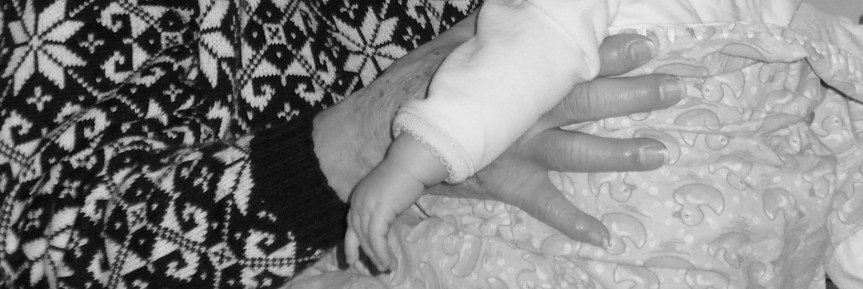
Grandma imagined a pump of cold, running water in heaven. She told me so as we sat side by side on the couch just before I left for Spain.

“What do you imagine?” she asked.

Heavenly mansions were on our minds, not the frailty of human life.

When I said goodbye, I hugged Grandma and then Grandpa. My voice was still cheerful as I said, “If I don’t see you again here, I’ll see you in a much better place!”

They both smiled.

But I couldn’t control that rush of grief. The memories, joys, sorrows, and love just landed in a heavy heap on my heart. I started to cry.

Like I am now.

Today is Grandma’s funeral and I’m an ocean away.

Grandma spent her whole life quietly serving others. She inspired almost subconscious admiration and love; she was the rock that we all leaned on but sometimes forgot was there. She always had time for her children, grandchildren, and great-grandchildren (and even our pets too!).

And yet, she loved to be alone, content to be still while the world marched by. She enjoyed life without needing to partake of all its luxuries, and contentment made her life richer. Her faith in God, her love for others, and her hobbies—collecting, organizing, couponing, gardening, reading— strengthened her for the hard things life threw at her.

On Friday, the hard thing was emergency surgery with very little chance of success. The family was stunned. We knew she was ready to meet her Maker, but we weren’t ready for her to meet her Maker.

And then she was gone. Before most of us had the chance to say goodbye.

It’s as if the book of some of my best memories has closed. No more melting plastic game chips on the threadbare carpet. No more sleepovers on crinkly pillow covers. No more poring over stacks of Berenstain Bear books. No more Keebler cookie snacks. No more tiptoeing around in the forbidden basement with cousins. No more strict “with soap!” hand washings. No more maneuvering the golf cart between the fragile fir trees at the risk of Grandma spotting us from the living room window. No more Grandma stories from when Dad was a little boy. No more of her French silk pie or other outstanding desserts and dishes. No more talks on the couch. No more phone calls or quirky, Grandma-style emails.

Her last email came the middle of October:

“Think I swept my time under the rug and now need to reverse that. All kind of things collect there under that cover up. That’s why some people insist on hardwood floors. Do you have hardwood floors or rugs with secrets?”

Her emails always put a smile on my face, no matter what kind of day I was having. Especially when they ended like this one:

“We don’t sweep love under the rug so you’re safe! Grandpa and Grandma”

On Saturday, I sat on the lonely beach, staring at the sea and trying to swallow the suddenness of her death. There’s just no easy way to say goodbye. No easy way to hurt. Friends from here and there and everywhere have decided to hurt with me and my family. Thank you.

Today we are grieving the loss of a beloved grandmother. And we’re also celebrating Grandma’s gain as she welcomes eternity.

I hope there’s a pump of cold, running water.

Two steep ditches I dig for myself

“If you don’t take your sorrows to God, they turn into bitterness. And if you don’t take your joys to God with thanksgiving and praise, they turn into idolatry.”

My brother learned this in one of his classes at Bible school.

But how one is supposed to balance on the narrow path between the ditches of bitterness and idolatry?

Late one night in the thick of my visa process, I was angry with life’s injustices. I curled up in my bed and started thanking God for His blessings. Thanking God seemed to be the spiritual thing to do.

But I didn’t feel thankful. I felt worried and scared and alone.

God saw through my flimsy façade. “Tell me about it,” He said.

“But, God, You have brought me so far already. I should be thanking You. I don’t want to be ungrateful!” Couldn’t He just accept my hollow thanks and be done with it?

Instead, He beckoned me to approach Him with my sorrow, no matter how frivolous or temporary it was. So I did. Would my silly little sorrow have turned to bitterness had I not given it to God?

See, I’m not sure that the path between these two ditches is so narrow after all. I don’t have to balance on a fine line between bitterness and idolatry. It’s not about balancing; it’s about surrendering.

God wants to be the One to hold our joys and our sorrows. The only two ditches are the ones I dig for myself when I don’t allow my Creator into my confidence and determine to face life alone.

What leaving feels like

I leave tomorrow. I’m excited and almost ready. But right now, Spain seems far away. Maybe life as it is now will go on forever: me almost leaving, a surgery here, a new job there, a new baby a state or two or three away.

To not be part of this ever-changing cycle at home is unfathomable. And when I do fathom, I burst into tears. My nostalgia remembers the days, weeks, and maybe even months that used to pass dry-eyed.

The other evening, I stretched out on the carpet with my head next to Clark’s. I stared into his bright face and could not cherish the moment. Neither could I reject the moment to protect my heart. The moment just was and I watched it pass.

Later as my nephews were leaving, Albert got zipped up in his too-big, puffy coat. Soon he will fill up that coat and I will not be here to see him do it.

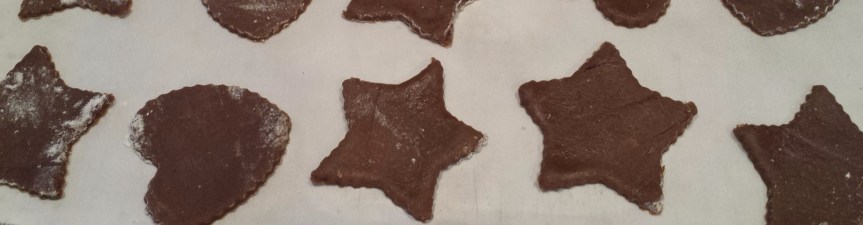
I made gingerbread cookies. My sister made coffee. We hung out with Christmas music. And at night when I crawled into my own little bed, all I could do was cling to the ghosts of those memories and cry my tears of regret that I hadn’t experienced them more fully. Or sealed off my heart from loving.

And I cried out, “Oh God, why do I have to follow You?” There was no answer. I knew, and He knew that I knew. There was no warm, fuzzy peace either. Just a calm that felt more like resignation as I braced myself for more goodbyes.

I hope tomorrow things will look different. But this is what leaving looks like today.

Tomorrow hasn’t arrived yet

There is shrieking laughter as my nephew shakes bugs off of Grandma’s laundry and watches them vanish in the warm autumn sunlight above his head. Oh, that boy.

And to think that soon I’m going to be packing up my things and leaving. I cringe to think of those moments of transition when you’re sitting on a cold airport seat with little sleep and lots of memories of the world you’re leaving behind. Those are the worst moments.

The moments when you have completely left something but haven’t embraced the new something yet. And there you are, in the middle, caught in a swamp of your internal sorrow.

I know, because I’ve been there.

That’s why hearing my nephew’s laughter today makes me glad to be where there is grace enough, in today and not in the tomorrows that haven’t arrived.

Transitioning with olives

All I wanted to do was buy olives. It was the perfect idea to reward myself with a short walk to the store between secretarial tasks. The weather was full of gentle Mediterranean breezes and I loved walking. Then why was I suddenly anxious?

What should I wear? Some of my clothes were stored in boxes. Others were stashed in suitcases, ready to make the final leg of the journey to the States. Somehow the outfit I had on no longer matched. The shades of blue were all wrong.

“Trish,” I reasoned with myself. “This outfit was perfectly fine before.” But not now. Not in Europe. Not in public. I changed and then changed back when the second option felt even worse.

How do I say olive in Spanish? Olive? No, that’s French. Zitun? That’s Arabic. Why can’t I remember my Spanish anymore? Should I take my own bag or do stores give out plastic bags? I can’t remember. What were they doing the last time I was here? Where did I even put my shopping bags?

Why is this so hard?

I didn’t want to take that short walk anymore. Every decision looked big. Nothing was familiar. I battled my anxiety all the way to the store. I felt everyone’s eyes on me. Am I even walking down the right street? Why is that car stopping for me? Thank you, sir! No, don’t wave at him; you’ll look even more like a stupid foreigner. You’re in Europe now.

Transition. Have I exaggerated my trip to the store? Yes. But the exaggeration was in reality, not in what I just wrote. It sounds ridiculous to say that I almost panicked at the thought of buying olives. But transition is hard because nothing is familiar. Everything requires extra thought and effort. No matter how insignificant, every decision feels big.

I am not the only one who feels the pressure of transition. Maybe everyone else I know can confidently buy olives, but there are different responses to transition. And there are different types of transition. Do you know of someone whose spouse has passed away? Someone who has lost a dear friendship? Someone who has moved to a different community?

Maybe it’s you. Maybe you’re feeling a bit like me right now, or worse. Whether it is you or someone else, give that person time to grieve and transition. Remember that we are not alone. There are others who understand… especially the “man of sorrows” who was “acquainted with grief” (Is. 53:3).

WhatamIdoinghere

WhatamIdoinghere
And whatwasIthinking
To expose myself to rejection
And the stinging unknown.
WhatamIdoinghere
And whatwasIthinking
To make myself vulnerable
To a broken world,
Tasting its pain and distress
Hearing the cry of the oppressed.
WhatamIdoinghere
And whatwasIthinking
To let my soul experience
The piercing emotion that comes
From living a full life,
Allowing my will to battle strife,
Petitioning for souls at heaven’s door,
And understanding love more than before
WhatamIdoinghere?

Tricked by hope

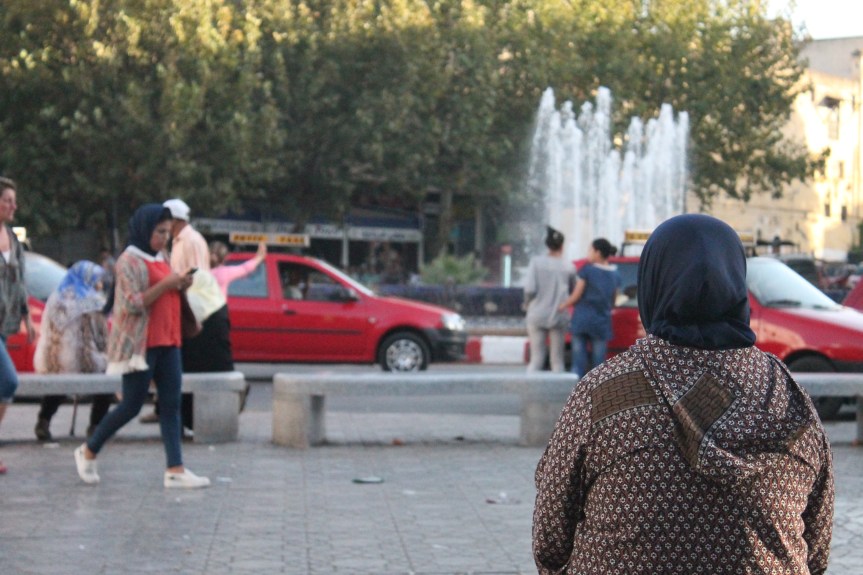
As North Africa heats up, people are disappearing from the streets to hide in their houses with drawn shades and fans.

But there are some who cannot hide.

Like the homeless sub-Saharan African man reclining in the shadow of a doorway. The despair in his eyes tore my heart.

Even worse is seeing that same despair in the face of a child. Like today, when I passed a family: a disabled father and a young mother with a toddler strapped to her back. The boy’s face was stricken with hopelessness.

I have so much. And I’m not talking about money. I’m talking about hope. Even in the valley, I can still see the mountain.

But what about them? What do they see beyond the next moment? What would cause them to lift their heads?

Tricked by hope

The child is weeping
because there is nothing,
not even a horizon.

His mother's heart will not hear
because it won't
be tricked by hope.

And every man's disrobed dream
sinks
in the mire of the present.

Life is nothing
and beyond nothing is the dark
that dogs every moment.

Do we hear them?
They're clawing at the gates of hell,
believing there's nothing better.

The quiet road

It’s been a quiet road. Not a lot of mountains, valleys, or even speed bumps. But sometimes the quiet is the hardest part of the journey. I feel alone sometimes. Well, a lot of times. The world at home continues without me… like it should and like I knew it would. But it hurts when I can’t be a part of it.

This week at the international church, the speaker brought a very real struggle into the open: it doesn’t seem fair that we have to be the ones leaving behind what we know.

But His call is personal. He instructs Peter to “Feed my sheep” and “Follow me” (John 21). When Peter questions him about another disciple, He pulls Peter’s focus back to the personal calling: “What is that to you? You follow me!”

See, it’s not a matter of what we have or what we leave behind; it’s a matter of following.

So, although the quiet road is lonely, I don’t have to feel something supernatural and emotional to be able to claim God’s promise that He is with me.

I’m a failure

Recently, a friend prayed for me: “God, let her learn what you’re teaching her through what she considers failure.”

“Failure” is a word I bump up against often. Too often for my poor, wounded pride. Although I’ve learned this lesson dozens of times, it still hasn’t traversed the head-to-heart channel.

I want to be the best. The best foreign Arabic speaker in North Africa. The English teacher that inspires others to change the world. In short, I want people to reflect on my life and call me accomplished.

That’s one of the reasons I’m here. Not because I’m excelling but because I’m not excelling. God set me up for what I consider failure. He sees that deep down in the dank crevices of my heart, I believe the lie that it’s about me and what I accomplish. So when I’m struggling to survive instead of excelling, I label it “failure” and try to soothe my pride in other ways.

But at the end of the day:

“It is good for me that I was afflicted, that I might learn your statutes.”

Ps. 119:71

Maybe this time the lesson will reach my heart.