
Bargaining and boxing class: North Africa part 4

In December, I spent most of a week in North Africa, visiting friends. My intention is to give you a glimpse of my trip. Please forgive me for omitting certain details and for changing names in order to protect my friends.

“Can I have your phone number?” The taxi driver didn’t waste much time.

When I explained why that wasn’t possible, he asked if I was a Muslim.

“No. I follow Jesus the Messiah.”

He pondered this through several streets of traffic. As he pulled up to the curb to drop me off, he spoke again, “You should read the Qur’an.”

I sighed. “I do read the Qur’an. You should read the Bible.”

He frowned and shook his head at me in the rearview mirror as I handed him the fare.

In light of his suggestion, my own suggestion had been logical. But apparently only to me. “Why not? Are you scared?” I punctuated my challenge with a cheerful goodbye and a hasty exit.

This morning was my morning to go shopping in the old city. The sights and smells of the old city had remained unchanged for centuries and had certainly not changed in the year and a half of my absence. There is a forever skirmish between fragrant and repulsive: baking bread, roasting chicken, urine, a blend of fresh spices, rotting fruit, soaps and perfumes, trash.

Rather than the narrow cobblestone streets accommodating their pedestrians, tourists and residents alike pressed in close to accommodate the streets.

“Where have you been?” several vendors called to me as I bustled along. Did they– could they?!— really remember me?

To my disappointment, I had forgotten how to bargain. No longer was it a matter of easy banter and good deals; it felt exhausting and cheap. Fortunately, shopping didn’t take long since I could only buy what would fit in my backpack between my clothes.

I caught a taxi to my friend’s neighborhood only to find that Khadija and her neighbor, Fusia, were out studying. They would be back soon, said Khadija’s niece. I sat in the salon, watching TV and wondering how my two eighty-year-old friends were doing in their studies.

Suddenly, the door opened and everyone piled into the apartment. There were hugs and greetings that came so fast that I could only repeat “Praise God” and laugh. Someone made tea. Another ran out to buy cookies. We talked and watched a Turkish soap opera until dark.

“I’ll walk with you,” Fusia said. She held my hand and led me along the street. “We’re going to go see my grandson. He will be sad if he doesn’t see you.”

What I didn’t realize was that her grandson’s boxing class did not allow interruptions. Two women screened everyone who entered, and one looked like she could flatten anyone who crossed her. I was making plans for a polite retreat when Fusia asked if her friend all of the way from Spain could just greet dear little Ali.

“Of course! Come with me!”

And so I interrupted the boxing class, a whole room full of gawking children and their annoyed instructor. Ali ran over to kiss me. His cheeks were pink. Mine may have been too.

Only after that, I was allowed to get a taxi and return home.
Words were more than just words: North Africa part 3

In December, I spent most of a week in North Africa, visiting friends. My intention is to give you a glimpse of my trip. Please forgive me for omitting certain details and for changing names in order to protect my friends.

Chaimae’s hug was long and tight, trying to make up for the year and a half of missed embraces. Her mother gave me the same hug. They led me into the salon, not the fancy one for guests, but the family salon that doubled as a bedroom. I wasn’t a guest; I was still family.

“Did you eat lunch?”

Chaimae fried fish and reheated chicken and potatoes already in a pot. We ate, talked about our families, and showed pictures from our time apart. Both mother and daughter were amazed that I remembered Arabic, or at least a semblance of it.

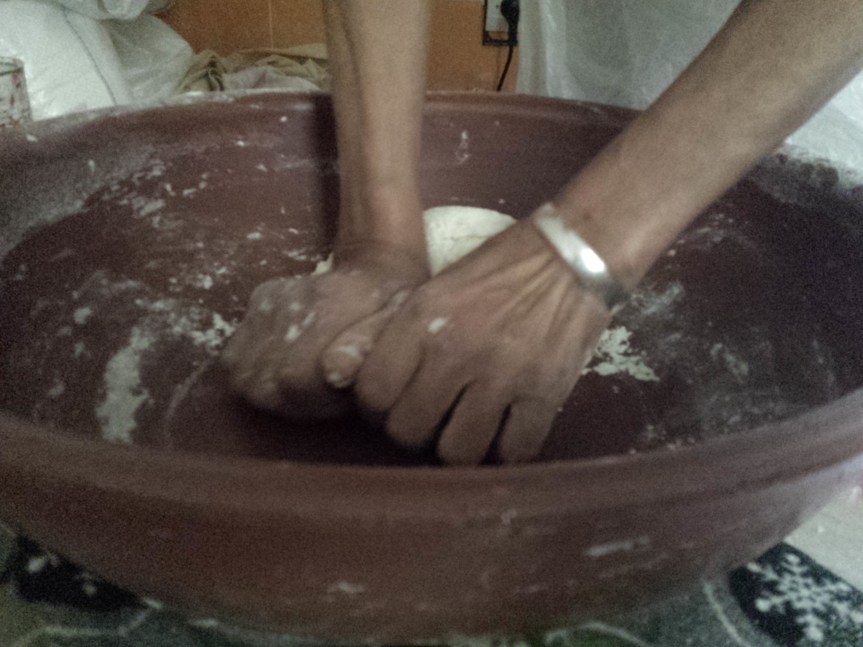
After the bread was patted into round loaves, Chaimae and I went for a stroll around the neighborhood. By the time we returned, the older brothers had arrived for afternoon tea.

It was after sipping cups of syrupy tea and eating mounds of oily bread that one of the brothers wiped his hands on the community napkin, leaned back against the couch, and pinned me with probing eyes. “Who is Jesus to you?”

I was ready.

The entire family listened as I shared. I listened as they shared. The conversation grew thick and loud. My face turned hot in animation. But their faces were hot too.

We discussed our differences and how our separate paths could not both be the path of God. Yet, beneath our disagreement was a profound respect for one another. We had known each other long enough now that words were more than just words; our words were what we had seen each other living and breathing.

And our words were as different as our lives.

Tea time blurred into dinner and more food appeared on the table, but no one seemed interested in another round of feasting.

My Arabic was worn out. So was the rest of me. When family members started to trickle out the door, I slipped into the kitchen to wash dishes. Chaimae made beds on the floor. She gave me a couch pillow so high that my neck immediately began to ache. I waited until the light was out to quietly set it aside.

Partway through the night, the light switched on.

“Chaimae! Chaimae! Wake up! Trish isn’t on her pillow!” They tucked the pillow under my kinked neck, and Chaimae’s mother tucked more blankets around me.

“It’s good that I slept in the room with you,” she told me after my interrupted night of sleep. “To take care of you.”

I smiled, hoping my expression reflected more of the endearment and less of the suffocation I was feeling.

After breakfast, they sent me to the taxi with enough tears to let me know I would be missed.

Christmas this year

Christmas this year looks different. There is a usual busyness, made busier by a short trip to Africa wedged in between full weeks (more on that later).

It’s my second year of celebrating Christmas in Spain. But unlike last year, this year I have the opportunity to be with friends that don’t celebrate Christmas.

I love Christmas: lights, carols, gifts, markets, chocolates, roasted chestnuts, scarves and winter coats. It gives me a warm, fuzzy feeling.

This year I want to indulge in that warm, fuzzy feeling. I want to enjoy the celebration of Christmas. And primarily, not secondarily, I want to experience a fresh joy and excitement of the Messiah’s birth. A Savior, born into the world, a light born into thick darkness.

He’s still shining.

Sometimes, surrounded by people who know the Christmas story by heart and perform it every year, I forget to savor that first Christmas joy.

My sister has been telling my 1-year-old niece the Christmas story using a miniature nativity set (minus the minor character sheep which may have gone out with the trash).

Telling the story to someone who has never heard it makes the story exciting again. What would happen in my own heart this year if I could share the wonder of Christmas with those who have never heard?

It begins again

Today is the first day of Ramadan. Earlier this week, a friend told me that Ramadan is a time of growing close to God.

Whether or not her comment reflects her true goal during the obligatory month of fasting, there are many who are seeking God. And many are finding. Sometimes in ways they don’t expect.

“You will seek me and find me, when you seek me with all your heart.”

(Jer. 29:13)

Pray that those who are seeking will find.

All we get are windows

“All we get are windows,” he had said.

And this after my week of cancelled plans, disappointed tears, and familiar feelings of uselessness. But his words rang in my head all weekend so that now in the middle of a lively West African church service, my mind was still stuck.

The dissonant keyboard chords, the steady drums and tambourine and my mind was thousands of miles away in last summer.

I could still hear those testimonies of broken men and women who were crying out to God for the meaning of their years of overseas service—men and women who felt they had little to report except failure.

“All we get are windows of time in people’s lives. We walk with them while we can.”

Sometimes those windows feel pointless. Like walking with someone on their journey is a waste of time and couldn’t God please bring someone else into our lives? Sometimes the windows feel so nice that we frantically try to prop them open when they begin to close. But they close anyway and we label them as aborted opportunities.

In the snippets of time we have with people—these “windows”—sometimes we lose sight of the bigger picture and think that the windows are all that matter. That’s when we feel useless, like failures.

The keyboard, drums, and tambourine faded as a new song leader took the microphone. Pacing back and forth, she started an African version of “Alleluia.”

“Alleluia. Alleluia. For the Lord God Almighty reigns.

“Holy, holy are you, Lord God Almighty!”

Behind the song leader was a pillar that supported the center of the little church building. There on the pillar, neat rows of pink and white silk rose buds formed a cross.

“Worthy is the Lamb! Worthy is the Lamb! Amen!”

Amen. So where will I place my focus? On my interpretation of efficiency or on the bigger picture: the glory of the Lamb? On the brevity of the windows of time or the fact that the Lamb is worthy of a life spent in faithful service?

Thank you for the homesickness

When I think of my family, friends, and church at home, the word that comes to mind right now is “thank you.”

Thank you for the strength I feel behind me. When I struggle, you gently carry me along with your prayers, encouragement, and advice. When I am happy, you rejoice with me. And you tell me about life at home like I’m still one of you. I am still one of you.

You give me a reason to be homesick. Not every day. But some days it rushes over me and I feel lost, pretty sure that I will drown. And I do for a little, overwhelmed with the sorrow of what has been and probably would have continued being had I not moved here. But then I lift my hands in surrender (literally sometimes), let my tears dry, and blow my nose. Life goes on.

“God, I’m not questioning my calling; I’m just feeling the hurt right now.”

I’m thankful for technology– emails, phone calls, video chats and such– but it’s not the same.

I wonder if Jesus ever felt homesick. He had sweet and constant communion with His Father. And then He left heaven to come to earth. Sure, He could pray to His Father. But it wasn’t the same. Sorta like a phone call.

But without that sweet communion, without something that emotionally ties us to “our” place, there would be no homesickness.

That’s why I say, “Thank you for the homesickness.” You have given me many reasons to miss you.

I was thirsty and you gave me coffee

When I saw this mural of a homeless man and his hot coffee, I thought of the countless cups of coffee that we serve to immigrant women each week. Some mornings, we scramble to warm milk, fill sugar containers, and pour coffee, remembering that this lady likes her coffee heated especially hot and this one doesn’t take milk so fill it to the brim and that one wants her special cup and saucer.

“I was thirsty and you gave me drink.”

Some of the women are easy to serve. They smile. They are grateful. They ask you to sit with them and don’t mind your faltering Arabic. But others gossip or demand things from you while appraising you with hardened eyes. Sometimes it’s hard to remember that serving these women, “the least of these,” is serving the Lord.

But aren’t we all from the lineage of “the least of these”? At one time, weren’t we all watching the world with hardened eyes, cup out-stretched, thirsty? But did we know for what we were thirsting?

“The water that I will give him will become in him a spring of water welling up to eternal life.”

Today we serve, we pray, we speak, we love. But we never want those we serve to find fulfillment in a cup of coffee. We want them to walk away thirstier until they find that spring of water that wells up to eternal life.


(Matt. 25:35 and Jn. 4:14)

Skeletons in the Savior’s closet

If anyone would have a perfect family tree, it would be sweet baby Jesus, right? No one who wants to rule the earth can hide skeletons in their closet. Any politician can tell you that.

In the end of the Old Testament book of Ruth, the writer gives a summary of Jesus’ lineage up to King David. First mentioned is Perez, son of Judah. Instead of a squeaky clean Old Testament saint, we find that Perez was the result of Judah mistaking his daughter-in-law for a prostitute (Gen. 38). Any good journalist would have sniffed out that scandal in a heartbeat and plastered unflattering pictures on the front page of every newspaper.

But that’s not all. This genealogy also mentions Boaz’s father, Salmon. But who was Boaz’s mother? None other than the heathen prostitute, Rahab (Josh. 6). Shocking.

Boaz marries Ruth, a Moabitess. Where did the Moabites come from? Well, when Lot is told to flee the city of Sodom, he and his daughters escape to a cave. There, the daughters conspire to preserve their father’s line and the eldest gives birth to her father’s child, Moab (Gen. 19). A sensational story that only God had the guts to write.

The family tree leaves more scars as generations march into history. Why didn’t God hide these skeletons in His Son’s closet instead of recording them for all people for all time? He had set up His Son for political failure.

But Jesus wasn’t a politician. His goal was not to erase the past, but to redeem it. God could have chosen a purer heritage for His Son; instead, He painted a stunning picture of redemption. These broken relationships in Jesus’ lineage wounded the heart of God, but out of them came Jesus, Healer of broken relationships, Hope of the hurting world.

Merry Christmas!

It’s beginning to look a lot like Christmas… in Almería

My roommate, a friend, and I spent a chilly afternoon on the beach before checking out what Christmas looks like in Almería. We sampled roasted chestnuts, feasted on chicken and potatoes, tried to find an elusive tea shop, browsed through a Christmas market, and walked and walked and walked until I was sure we had worn holes in the soles of our shoes.

giant bethlehem manger scene
An entire room of a Bethlehem scene
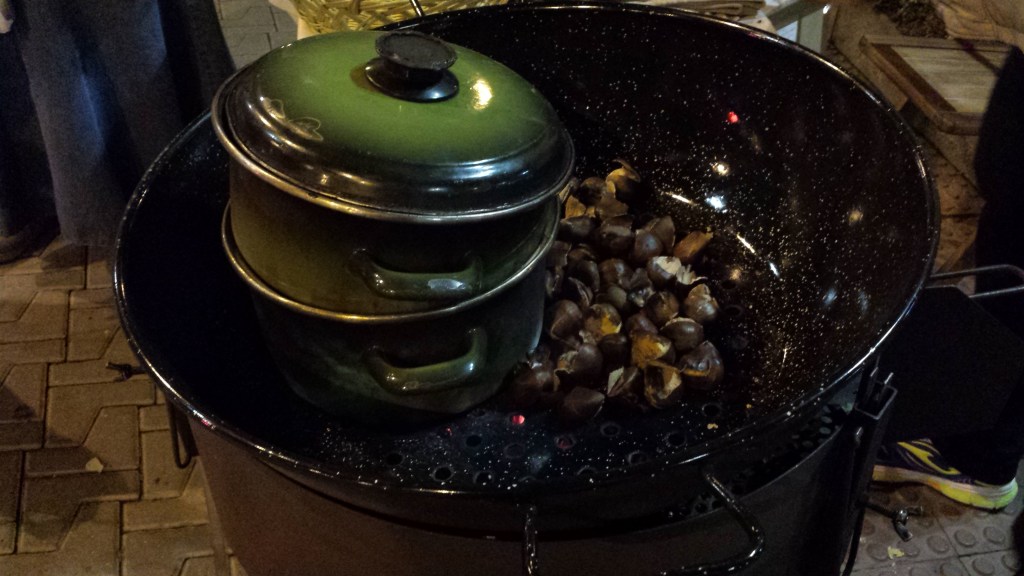
chestnuts roasting in a pan over a fire
“Chestnuuuuuts rooooasting on an open fiiiiiire.”
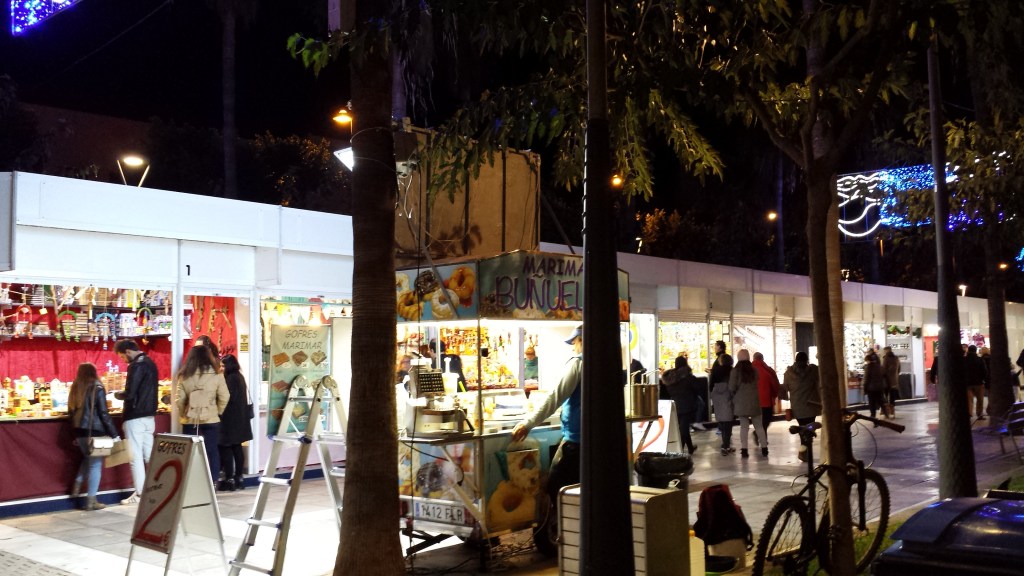
brightly lit row of market stalls
A Christmas market

10% thankful

At church on Sunday, we had a sermon about the ten lepers in Luke 17. After Jesus healed them, only 10% came back to thank Him. What about the other 90%? All we really know is that they were healed on their way to the priest. Undoubtedly, they were grateful, but what did they do about it?

Ten percent versus ninety percent. I’m thinking in percentages because the story brings to mind tithes and offerings. I like to think that 10% is God’s and 90% is mine. I go my way with the 90%.

What would change if I started to live like the 100% belonged to God?

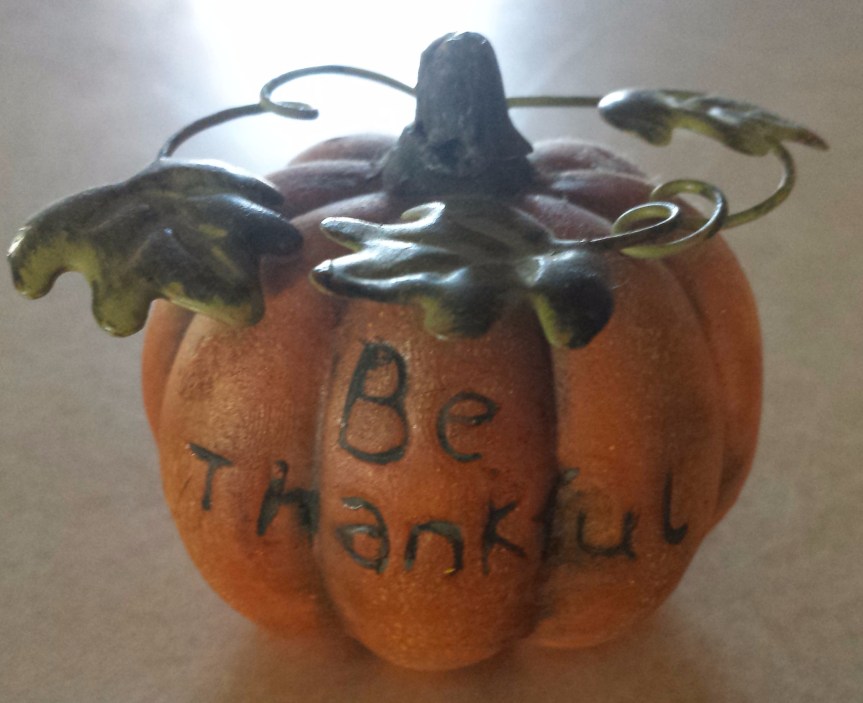
Just a thought as I consider how thankful or unthankful I am this Thanksgiving Day 2017.