Río Duero

Río Duero, río Duero,
nadie a acompañarte baja;
nadie se detiene a oír
tu eterna estrofa de agua.*

(Douro River, Douro River,
no one to accompany your descent;
no one to stop and hear
your eternal stanza of water.)

We had gone over this poem for the last five classes. At least. We had already unpacked the literal and figurative meaning of each word and noted the poetic devices.

We had written paragraphs and held discussions on the importance of water. And we had drawn a map of all the important rivers in Spain.

And still…

Río Duero, río Duero,
nadie a acompañarte baja;

“Trish, you read. The first stanza.”

Fine. “RíoDueroRíoDuero…”

“Ah! That’s not poetry! That’s prose… badly read prose! Listen…”

My teacher burst into a triumphant recitation of the first lines. Once again, those syllables rattled around in my head.

I imitated her enthusiasm, but my version may have been more obnoxious than triumphant. “RÍO DUERO, RÍO DUERO…”

The second hour students paused their pencils over their copy books and stared at me. But my teacher remained unimpressed. “Not that either!”

What did I care about the Duero River with its silver beard and its eternal water stanzas?

But I tried again. And as I read, I heard the poem… maybe for the first time. I saw the Duero flowing on alone, used but unseen.

Used. Unseen. But still flowing.

And suddenly the poem was less about a river and more about a life lesson I needed to be learning.


* The first stanza of “Río Duero” by Gerardo Diego
Photo by Migsar Navarro on Unsplash

Victim of the Tower of Babel

As a life-long language learner, I often always struggle to find the right word in the right language. And I always often end up using the wrong word anyway.

One time, a friend in the thick of language school told me that she had burst into laughter when a non-native English speaker used the word “elephant” to describe an “eggplant” dish. Although she was embarrassed by her own uncontrollable giggles, she knew that it was coming from a sense of relief that other people make mistakes too.

I can understand.

Heavily accented English. Mispronounced vocabulary. Misused idioms. Misspellings. I can smile… because when I do, I am smiling at my own mistakes too.

Like my language school director once told me on a particularly bad language day: “You’re a victim of the Tower of Babel!”

I’m glad I’m not the only one.

peanut butter label
electric lint remover instructions

Spanish with the nuns

Buried in my neighborhood is a tiny green door that leads to a tiled courtyard full of vibrant plants. Charming little rooms surround the tiled courtyard, completing the charming little haven.

In one room, there is a set of five sewing machines. Four treadle. One electric.

In another room, there is a plastic table with accompanying plastic chairs and a rough blackboard.

This is a sewing and Spanish school for immigrants. It is managed by nuns. A friend brought me along to class one day to see if I could enroll.

The first time I met the nuns, I had to bend over at the waist to greet them with kisses on their dainty little faces. Only one seemed more than five feet tall. And not one of them was under seventy. Maybe eighty.

I was captivated. “Is it possible to sign up for Spanish class?” I gripped my friend’s elbow as I awaited the nuns’ answer.

It was possible. After Semana Santa, I officially enrolled for the final trimester of the school year. (And by officially enrolling, I mean that I jotted my information on a scrap of notebook paper.)

On the first day of class—a lesson of body parts vocabulary—the teacher chalked a stick figure on the board with a rectangular trunk. For good measure, she placed a few wild curls on the faceless head to classify the figure as “female.”

During class, the figure was blessed with a chalky esophagus. No other organ required equal visual explanation, so the figure proudly sported her solitary organ until the end of class. And as the teacher erased both the figure and her esophagus, we students trickled out of the shadowy room and into the blast of sunlight that spread across the courtyard.

Since then, class has brought me in close contact with other immigrants as we reveal tidbits of our lives in choppy Spanish and laugh about our language woes. We share struggle and community. We even share goods: sometimes we carry home peppers, cucumbers, handcrafted sewing class projects, or even potted plants.

As the final trimester enters the final month, attendance has dwindled as most of the women fast for Ramadan.

The first and second hour classes combined and I suddenly found myself in a class of women who struggle with pronouns and simple verbs. But the energy and fun we have together is rewarding enough for me.

Yesterday, while practicing the structure “I like,” a classmate smiled and said, “I like Trish’s face.”

“Yes, yes,” agreed the teacher. “Trish has a nice face.”

The other students murmured their agreement and admired my reddening cheeks. Until, for lack of a Spanish equivalent, I burst out the Arabic expression, “God be blessed!”

Writer’s block and little people

“The words don’t come anymore. It’s like they’re stuck,” I told my roommate. I used to love sitting down to answer emails. Now, despite the fact that I still love to get emails, it’s harder to sit down and respond to them. What used to be a joy now feels more like a discipline.

“It’s like the one thing I used to be good at no longer works!”

My journal entries have grown thin and factual. My blog entries are dry.

Sometimes I get tired of words, trying to recall or learn words in three languages. Tired of trying to make myself understood in any of those languages and their respective cultures.

Sometimes I want to turn off the words in my brain and just be—I want the “nothing” box that men claim is real.

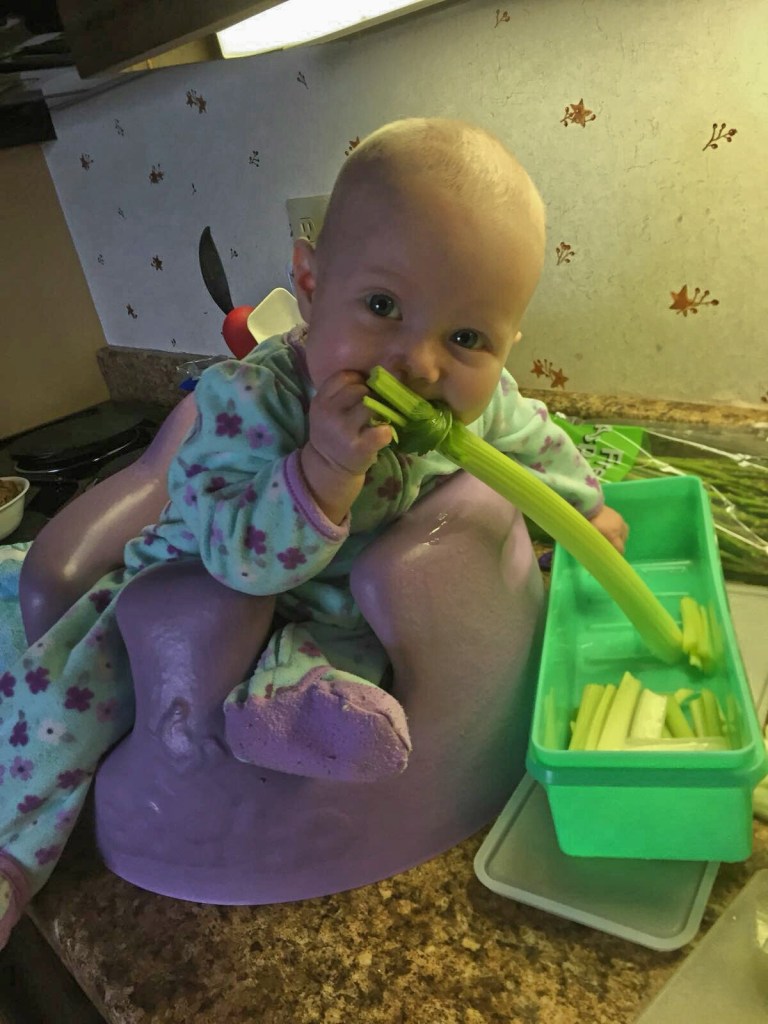
So instead of writing something profound, I offer you some snapshots of my favorite little people: Carissa Joy, Clark David, and Albert Harris. My family kindly keeps me updated with pictures of my growing niece and nephews.


Featured photo by Steve Johnson on Unsplash

Niece and nephews photo credits to my family

Dare to give away your dream

“Twelve dirham.”

I picked eight dirham out of my coin purse. “Here you are.”

The produce vendor looked down at the coins in his palm and waited.

I stared at the eight dirham and felt the heat creep up my face as my mind replayed the Arabic word he had used. He had said, “tnash” and I had given him “tminia.” I had been in North Africa for six months and still didn’t know my numbers? Good grief.

Despite the countless hours of study, I was, in fact, the worst language student in all of history.

The sting of my disappointment worsened when I saw others fulfilling my dream. While I plodded through language school, feeling like a daily failure, I was forced to watch other students blossom. It wasn’t fair.

Seeing others fulfill my dreams made me insecure and envious.

During my time in North Africa, I heard of a man and his wife who had a vision similar to mine. But because of circumstances outside of their control, they could not move overseas. Instead of being jealous and closing up their heart to this dream, they sent me a donation to carry on with my work. Several hundred dollars to someone who was living out their dream. Their heart was for the dream rather than who was fulfilling the dream.

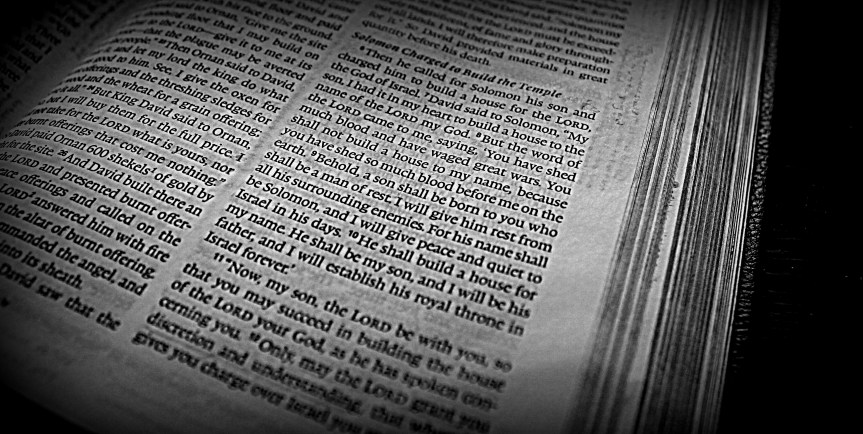
Thousands of years ago, King David realized that he was living in a palace while God dwelt in a tent. He decided to honor God by building a gorgeous temple. It was his dream, and a worthy dream at that. But God said “no.”

Instead of pouting, King David helped to plan and gather building materials. He even blessed his successor to complete the God-given privilege of building the temple.

So when you see other people being or doing what you would like to be or do, don’t soothe your pride with the camaraderie of other envious people around you. Share your dream with others, even if they are better at it than you are. But beware: it’s much harder to give away your dream than it is to give it up! Trust me; I know because it’s a lesson I’m still learning.

Grace and migrating tissues

I had spent a significant part of my evening in the living room chair with a box of tissues close at hand. It was my very own pity party. No one else was invited. The piles of bank statements, resident visa forms, tax papers, and junk mail were the life of my party.

I felt like I had been making lists all day. Lists of things that had to be done. Lists of phone numbers to call. Lists of people I should visit. Grocery lists. Arabic verb lists. And this list goes on…

Not only that, but the thoughts rolling around in my head hadn’t yet been categorized on any list. Is this what “normal” looked like in America? Had I simply forgotten? Or had I completely lost my ability to handle stress? Or was it just the paperwork I couldn’t handle?

That’s why I merited a pity party. So I moped and felt considerably worse afterwards. A pity party hangover. Finally, I was able to motivate myself to go to bed. And guess what? I had a wonderful night of sleep!

Not that I deserved it. Nope. If I would have been God, I would have made me toss and turn restlessly all night to learn my lesson for worrying about all of the “tomorrows” of my future. Instead, He showed me grace and I woke up ready to face the new day instead of cowering under the covers.

I chipped away at one of my lists, accomplishing what I could and leaving the rest unwept, unhonored, and unsung. And that afternoon, I was ready when a friend arrived in unexpected tears. She didn’t need to explain. We simply moved the tissues from beside my chair to where she was seated on the couch. And I made some tea.

God knows that we don’t always learn lessons best through justice. Sometimes what we need is grace.

Redeemed opportunities

Where do missed opportunities go? Are they gone forever or does God redeem them by giving us new opportunities?

Here in North Africa, where living intentionally should be as easy as breathing, I still miss opportunities. Why? Well, I’m busy; there is always language to study, classes to teach, emails to write, friends to visit, etc.

But those excuses aren’t good enough. Try telling a little boy that preparing lunch is more important than his soul. Maybe that’s not exactly what I said, but it is most likely what I communicated.

I was in the middle of a bad day when he followed me home from the store. People had been raining expectations down on me and I was exhausted although the day was only half finished. So when he jumped up and followed me, I rolled my eyes.

He only wanted one coin, he said. But to me, he was just one more beggar with just one more fabulous fable to accompany the outstretched palm. I tried to be pleasant, but my smile faded with his persistence. “Enough!” I said as he fell in step with me. “Be quiet!” I said. He didn’t. He followed me to my doorstep and only stopped when I closed the door behind me.

I had just started putting groceries away when my conscience awakened. What if I was the only person in that boy’s life who could have shared truth with him?

It took an hour or so before I was ready to face him again and apologize for my heartlessness. But when I went outside, he wasn’t there. Nor was he in front of the store. He had vanished.

So had my opportunity.

But my question is this: Has God redeemed my mistake by giving me another opportunity? Could it be having tea with that lonely widow? Or maybe taking time for a girl whose insecurity manifests itself in bullying?

God is a God of redemption. Because He has redeemed me, I know He is capable of redeeming my missed opportunities.


This post was first published on https://lucindajmiller.com

Ramadan blues

“Am I hungry or just bored?” I muse as I peer into the refrigerator.

Summer has set in where the nights rarely descend with a breath of cool air. It is warm all of the time. And what is worse is that I feel trapped inside. And what is even worse is that my roommate chose this month to travel to Germany, another friend left forever, one classmate is in the UK and another classmate is in Spain. I am trapped with myself.

I make plans here and there, but the reality is that any plans are contingent upon the time of day. The hours that are too hot are off limits because street robbers might prey on the few people who are out. The hours right before the breaking of fast are even worse; there are hardly any people or cars to be seen and a fog of silence enshrouds the street.

Even if I do go out, most stores would be closed anyway. And the cafés and restaurants definitely are.

Why didn’t I just go home for part of the summer? Never mind the long journey or the money. Maybe that would have cured some of my recent homesickness.

I am tired of studying on my own, reviewing, practicing, listening, jotting down notes. I am tired of the food in my fridge. I am tired of sleeping.

For a melancholy, boredom breeds self-pity. At least it does in this melancholy. The light at the end of the tunnel is fading. Ramadan will NEVER end! Instead of thinking how hard it would be to fast for thirty days, I think about how unfair it is to plan my life around those who are fasting.

Selfishness. Yes, it all comes down to a perspective saturated in selfishness. Time to go count my blessings.


Photo by Erik Mclean on Unsplash

Aisha- part 1

We had seen each other before. Most mornings I passed her by on my way to school. She and a friend would sit on a concrete bench under a tree. Noting the consistency of our timing and location, I greeted the women regularly. But I never slowed enough to make conversation.

Until the day I needed help with my homework. Both ladies were startled when I plopped down beside them and asked them to help me. With no context for this encounter, they were full of questions: Was I a student? Where was I studying? What kind of Arabic was I studying? What was my name?

The conversation was labored, but I finished the assignment and arrived at class, breathless and only a few minutes late.

A few days later, I was striding to school with my normal stoic street face when a lady in my peripheral became animated and shouted to get my attention.

Another beggar, I surmised, and turned to greet her without reaching for my change purse. But then I recognized her face, although she wasn’t in her usual place under the tree.

As we greeted each other in somewhat reserved familiarity, I studied her for the first time. She wore old clothes and the kind of shoes that most women only wore to the public bath house. Her face was enveloped in the odor of her breath, which I smelled as I embraced her. She was a tiny woman, not built for the hard work that life required of her.

Who was this woman? And what did she want from me? She insisted on walking with me on my way to school; she said she worked as a maid at a house nearby.

Her speech was complimented with gestures. “You—come—my house—to sleep.” She isolated her words with the intention of helping me understand. “Do you understand?”

I did understand, but said only, “God willing” which was neither a commitment nor a refusal.

Before we parted ways, she asked for my phone number. That evening she called me and together we weathered my first phone call in Arabic. We exchanged greetings and a few other bits of information among the numerous confessions of “I’m sorry; I don’t understand.”

She told me she would wait for me the next day on my way to school.