Why I don’t understand white

While I was working my way through college, I cleaned a doctor’s mansion that needed this floor cleaned with vinegar and that one cleaned with mopping solution and the other one wiped dry, and well, yes. 

I hated cleaning (and still do), but I did it for the money, considering it a comfort issue rather than a class distinction. Then one day, I overheard the doctor telling her friend that she didn’t really need a cleaning lady but, “They need work.” 

They?

I’ve carried that with me for years as a reminder of the lines that people draw between “us” and “them.” The lines that I draw.

“I think I finally saw a little bit of what you see every day,” I told a Latino co-worker later that weekend. I don’t remember what he said, but I remember he acted embarrassed that I, a white middle-class American, even wanted to discuss discrimination.

How can I really understand white privilege when I’m living it? When I stepped out of my white world and moved to North Africa, I began to have an inkling of the disparity between white and other colors. North Africans love foreigners… Well, they loved me and I was white. Now, in a Spanish province chock-full of immigrants, I’m not blind to how immigration officials relax when they see my blue passport. 

“Are you looking for an apartment for you?” one realtor asked during my apartment hunt. “Because if it’s for an Arab, I have nothing.”

“It’s for me,” I assured him, startled by the blatant discrimination. What would it be like to taste rejection on account of my skin color or my nationality? I honestly had no idea.

The occasional Spaniard lumps me in with the North African crowd, and not in a good way. In those times, my blazing internal response runs along the lines of, “How dare they?! They don’t know me well enough to judge me!” 

True. They don’t. But my subconscious assumption is, “If they only knew who I was, they would treat me better than this.” If they only knew I was white because white deserves special treatment. 

How I hate that I subconsciously believe this! Yet, it’s not hard when it’s all I’ve ever known. 

I’ve been watching other immigrants and I wonder. While I am busy taking offense at any implication of discrimination, I see most Arabs and sub-Saharans accepting it as a matter of course. They’re used to being used and unwanted. 

I’m not. Has the special treatment of whites the world around made me more fragile, more threatened by opposition? I say this because I am weak, I am white, and I wonder.

Cuisine and pirates: what’s been happening recently

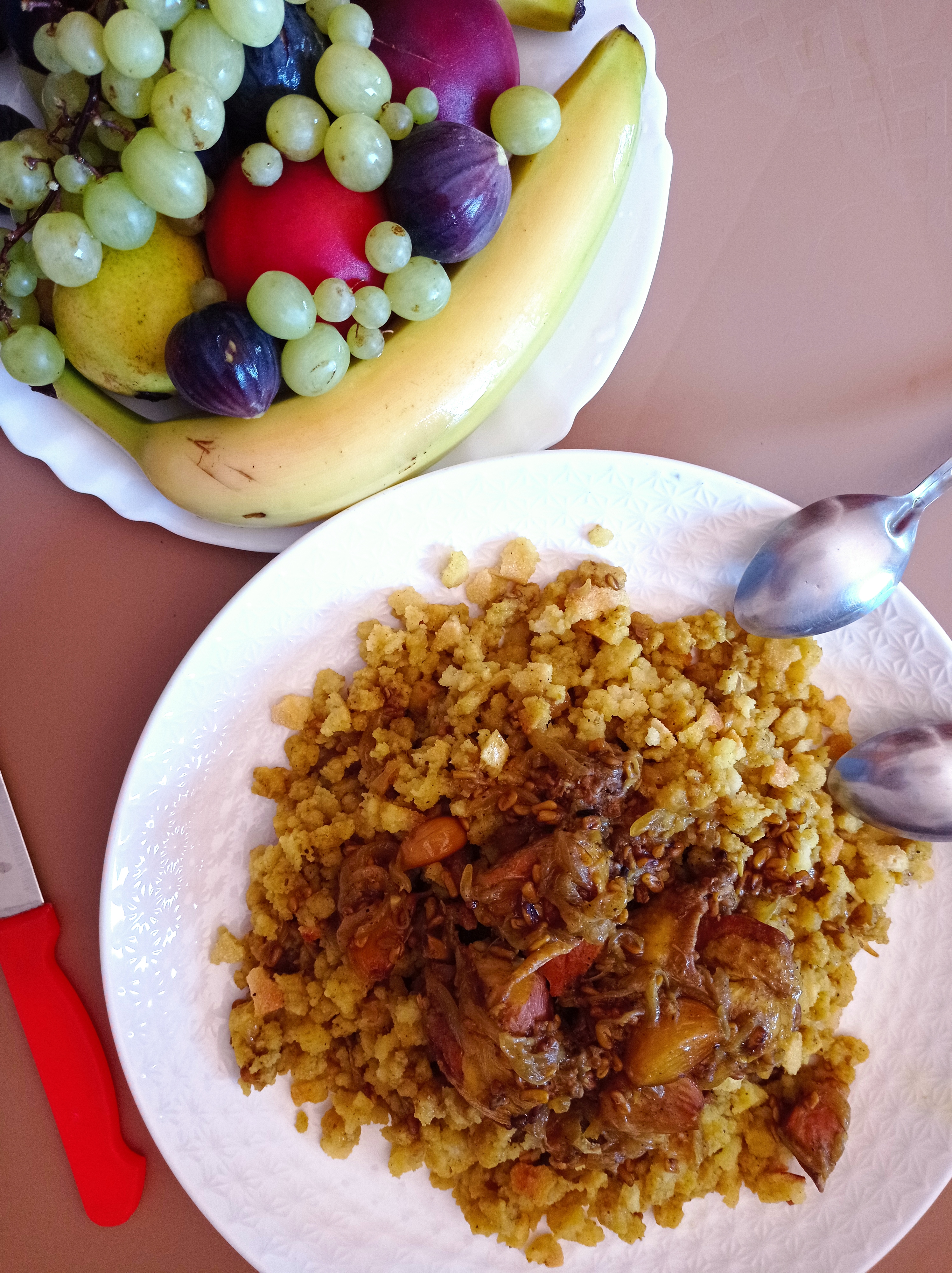
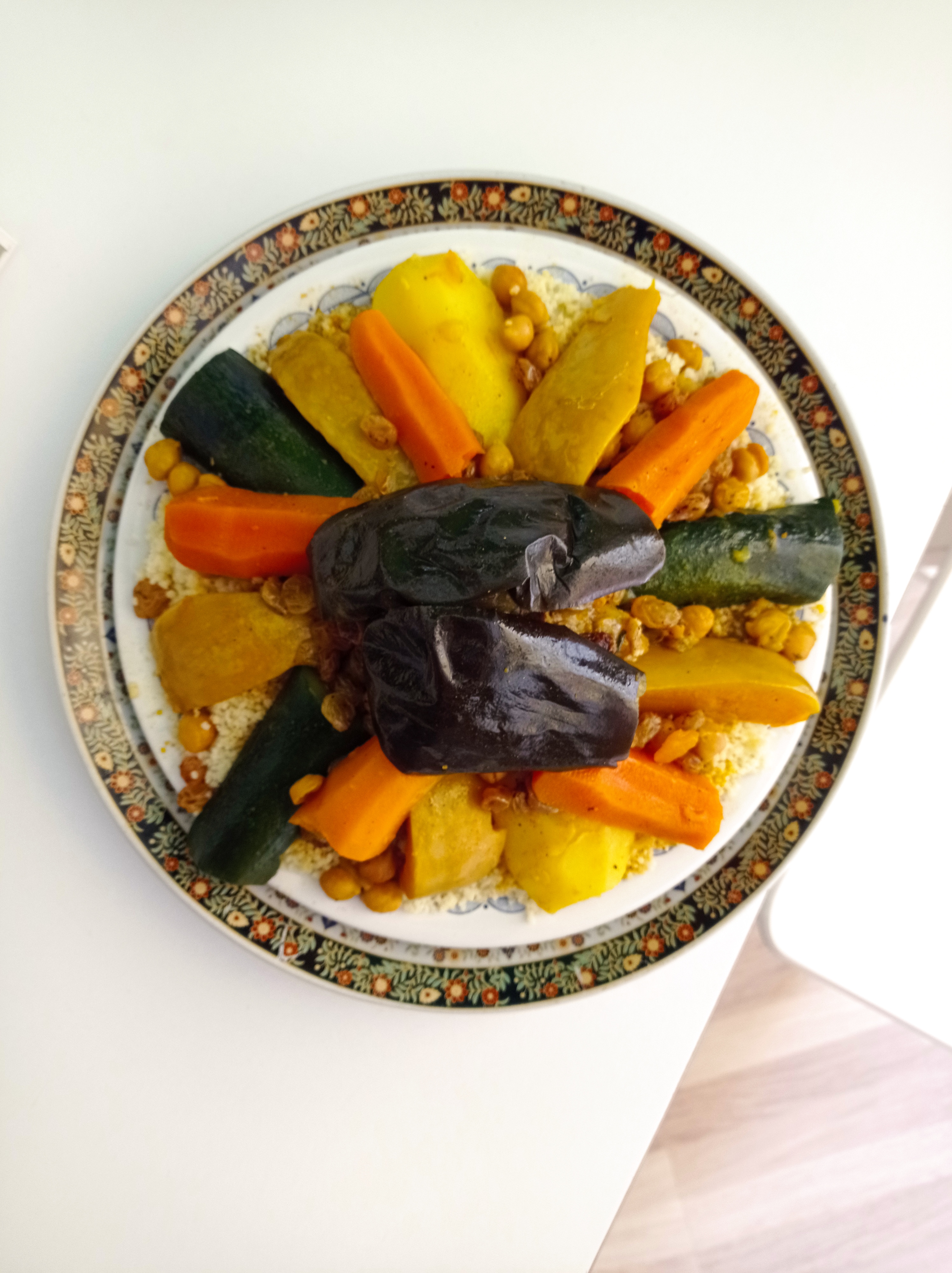
  • I decided it’s time to learn to cook the North African cuisine. I’ve put it off for years, learning things here and there, but always timid because of how unforgiving the culture can be with their own cuisine–“You used milk in your harcha?!” I don’t think like they do. I don’t grate my onions or peel my tomatoes. I don’t grab for the same spices. I don’t have the same cookware. But I’m trying. And my friends are delighted to train me. Although, truth be told, I still look up recipes, fusing my hands-on experience and American measurements. (Note: The photos below are of food made by friends who gave me cooking lessons.)
  • I finished editing Level 1, Units 1-2 of an English curriculum that I’ve been modifying for several years. I printed and bound the notebook (and now I feel positively published!), which will make for easy lesson prep in the future. Now, on to units 3-8…
  • One day, I asked my downstairs neighbor if I could pop in and play with her little boy. “I miss my nieces and nephews,” I explained. “Of course. Come.” Was her response. So we linked monkeys in a barrel and looked at books. He didn’t know what books were, supposing that they were just to be opened and closed. So I pulled him on my lap and pointed, “Blue hat, green hat…” Soon he was pointing too.
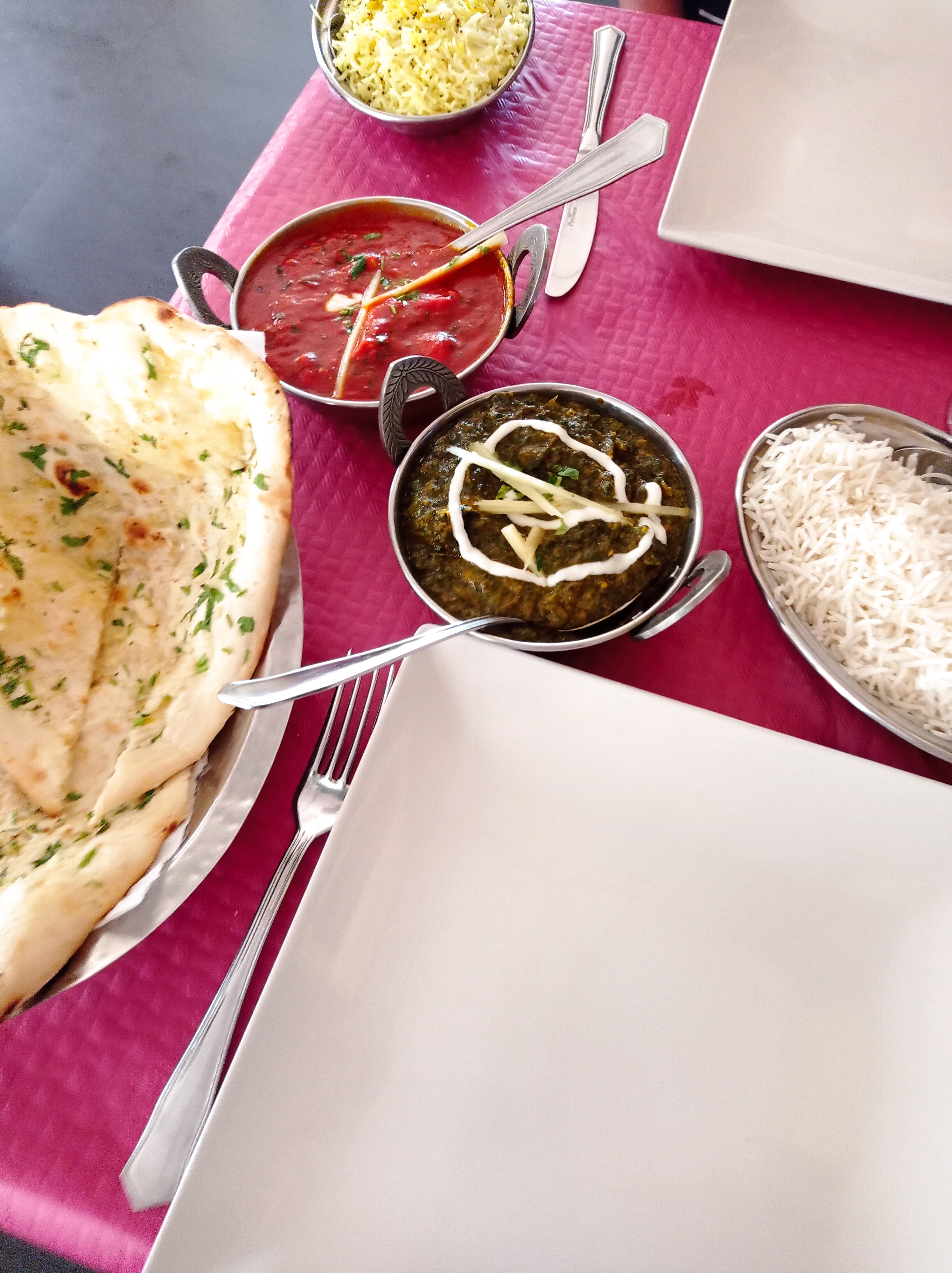
  • A teammate and I went to see a traveling pirate exhibit. It was interesting–horrifying, really. The barbarism was rooted in the understanding that a fight was a fight to the death. While eyeing the grubby wax figures, I couldn’t shake the realization that these people probably smelled worse than they looked. That oughta erase any of those romantic pirate notions for you! We topped off the day with saag and curry that is making my mouth water as I upload the picture.
  • We have been meeting new people as we pass out flyers in the settlements among the greenhouses. Way out there in the boonies, a man told me, “You’re from Immigrantville.” Apparently, we had both lived in the same town at one point. So maybe you can “dance like no one is watching” in the privacy of your own home, but never stroll down the street like no one is watching!

There has been much, much more that has been happening, but “time would fail me to tell” all that I could say, or what I should say on a public platform. So, I will end here and get back to work. 🙂

Lord of the shadows

Something about the book begs tears. I don’t know what it is exactly; there’s no paragraph or even chapter that particularly resonates. Perhaps it’s the undertone of sorrow mingled with hope in everyday sacred moments.

“God, where are you?” And I set aside the book and turn off the reading light to stare into the shadows of the 9:30 world. “Please meet me here.”

He does. And I have my own mingling of sorrow and hope. Of homesickness and gratitude. Of reluctance and awe. 

And, refusing to turn on the light, I stumble in the shadows to make a cup of tea, fumbling for the tea kettle and spilling leaves from the tea ball. Strawberry cream. I found it at the market today. It leaves a thick aftertaste of comfort although it’s new to my palate. I sip it from the robin’s egg mug I found while shopping with a new friend. The mug makes me think of her, this new friend full of intense questions ever since our first encounter.  She is working hard to please Allah. “Please meet her too.”

Down below, are voices. Arabic. I peek over the balcony to see two men and one woman leaving the nightclub next door. But no, only the men are leaving, caressing the woman’s hand in parting. “See you on Saturday,” they say. She tugs up her blouse neckline as she returns to that dark doorway that heaves its sweet and sick breath. “Oh God, please meet her there!”

With the light on, now I can see God was in the cooling rain this morning. In the huge, toothless smile from a friend’s husband who pretended to steal my market bag. In the husky greeting from a melancholy neighbor puffing a cigarette on the front stoop. In a phone call from a chatty acquaintance-turning-friend. In the final save of a document that took countless hours and headaches to create.

As I finish my cup of strawberry cream tea in the lamplight, the shadows have faded. But they lurk. There will always be shadows, I think. But even in the glow of the light, there is comfort knowing that He is Lord of the shadows too.

We must endure

“Pero que hacemos? Hay que aguantar.” But what do we do? We must endure.

The phrase caught me off-guard. I am used to hearing North Africans talk like that, especially if they throw in a “praiseGod” or dozen and shake their heads with wry smiles that say what their words don’t. And then their words do, but they are followed so closely with more resigned “praiseGod”s that it all feels more like a question mark rather than a confirmation of faith. But I am not used to hearing Spaniards talk with the same resignation. What happened?

Meanwhile, in America we clamor for platforms that offer unfiltered voice on topics we may or may not understand when, in fact, the world would be better off if most of us suffered from stage fright. 

Are these our only options? Resignation or dogmatism?

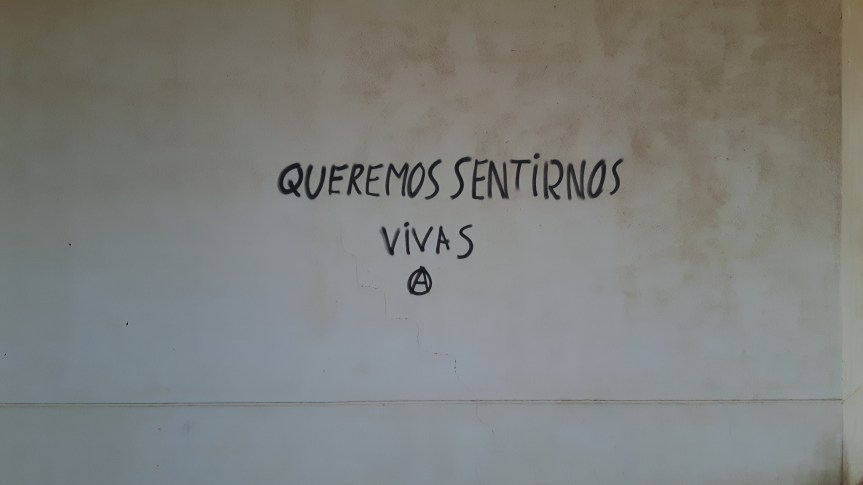
Almost every time I walk across town, some wanna-be graffiti slapped to the side of a décor shop catches my eye. “Queremos sentirnos vivas” We want to feel alive. It sounds like a cry, not to oppressors, not even to God, but just hurled into space from a spirit that wants more than resignation or dogmatism. It reminds me of another of another cry:

During those many days the king of Egypt died, and the people of Israel groaned because of their slavery and cried out for help. Their cry for rescue from slavery came up to God. And God heard their groaning, and God remembered his covenant with Abraham, with Isaac, and with Jacob. God saw the people of Israel—and God knew.

(Ex. 2:23-25)

Even though the cry was not to God, God heard and God knew. And He liberated His people. After this liberation, the following years in the desert were so hard that the ex-slaves began to daydream of life back in Egypt (Num. 11:5). God had promised a land flowing with milk and honey, but not yet.

Today as headlines continue to make history in ways we never would have chosen, we too are in that “not yet” pocket, basking in salvation (already) and looking forward to God’s promise of heaven (not yet).

What will choose in the meantime? Resignation or dogmatism?

Or life. Abundant life (Jn. 10:10). After all, we have a guarantee of our inheritance as heirs with Christ:

In him you also, when you heard the word of truth, the gospel of your salvation, and believed in him, were sealed with the promised Holy Spirit, who is the guarantee of our inheritance until we acquire possession of it, to the praise of his glory.

(Eph. 1:13)

We don’t just have to endure and parrot “praiseGod.” We don’t all have to share our opinions about every topic all the time (and resent those who disagree). We don’t even have to assign divine meaning to suffering.

Yes, hay que aguantar, but that is not all. Whatever “not yet” desert we are stumbling through today is not the end of our stories. And right here in the middle of the dry, we can sentirnos vivos because the gift of abundant life transcends our desert.

Spotted recently

A man in the front of the bus was deeply unsettled by a roaring conversation between a gypsy family and the bus driver. When the family got off, the man snarled about how loud and obnoxious they had been. (In truth, my nerves were a bit shattered too.) But the bus driver shrugged and instead of engaging in an argument, said, “That’s their way.” He, for one, was willing to roll with it.

Three women in brightly colored djellabas crowded around a fourth woman holding her large handicapped son in her lap. She spoon-fed him yogurt as he grinned at the women crowding around him. The women’s happy exclamations told him, in short, “We delight in you.”

In low tones, a new acquaintance assured me that even with multiple children with mental and physical disabilities, the last thing she wanted was people feeling sorry for her. When life got stressful, she danced. Literally. 

I was coming home, tired and worn. As I rounded the corner on my street, I heard a greeting… from above. I looked up and saw my neighbor’s fuzzy gray head peeking over the window sill. “I thought that was you!” she called cheerfully.

At the bus station, a demonstrative Spanish couple bid each other farewell with an exaggerated display of affection. The North African taxistas started shuffling their feet and darting glances at the walls and ceiling. Not part of either world, I just sat on my concrete bench and enjoyed the cultural clash. 

“I feel so alone,” my stooped neighbor told me, his eyes watery. His wife of many years had passed away suddenly and his loss was nearly unbearable. He couldn’t imagine life without the love of his life.

We all waited and waited and the bus driver fumed as the elderly man loaded his cart under the bus and carefully counted out his pennies for the bus fare. He stumbled into his seat, mask askew and tag peeking out from under his cap. And all I could see was that he was someone’s father. 

When I greeted a stranger on the street, she stopped and broke into a smile that spilled over the top of her lowered mask. Her cheerful conversation stunned me, even though I had been the initiator. Had I met her before? But no. Although most people are afraid to talk to strangers, it just turns out that there are a few friendly people in Mytown!


Photo by Annie Spratt on Unsplash

Welcome to Mytown

Nobody told me “Welcome to Mytown.” I had to interpret their welcome in other ways. 

Most don’t seem to know in which box to put me. So they gawk. Is this some weird North African-Spanish hybrid? Romanian? Russian? In small-town Immigrantville, people knew where I belonged, but in Mytown, a larger city, they don’t.

Sometimes, I enjoy shocking people. Once, I walked into a halal butcher shop and greeted the owner in Arabic. He began a lively exchange, incredulously. Arabs are varied enough that though light complexions are not common, neither are they impossible. Sometimes Arabs just assume I’m a rare breed of themselves. “Syrian? Palestinian?”

But other times, people can be downright rude. While I was waiting at the bus station with an Asian friend, a man sauntered over. He deliberately stopped in front of us but said nothing, just eavesdropped. After my friend left, he and two of his buddies approached me.

“Where are you going?”

“Where are you from?”

“Where is your friend from?”

And then, “What you don’t find in Mytown!” as if I, apparently a freak of geography, weren’t standing right in front of them.

Once, I stopped by the café next door to drop off something for the owner. My unanticipated entrance startled the old men circling tables of dominoes. As I walked out only seconds later, the rowdy conversation had ceased. The only sound was the clink, clink of dominoes.

Although I still don’t know them well, my neighbors have been fabulous (except one), offering to help me with things, greeting me on the streets, holding doors open for me, and so on. One gave me a watermelon when I happened upon him rolling watermelons to the front door. 

“You want watermelon? You have a family? Children? Take some!”

I imagined myself rolling little watermelons through the front door to the elevator like he was doing. “Thank you. Just one.”

“Just put it over there,” he suggested, probably because he didn’t want me squeezing into the elevator with him and the watermelons that wobbled around his feet. “No one will take it,” he assured me. 

I balanced my watermelon on top of the apartment mailboxes, confident that he was right. We were both wrong and I never saw my watermelon again. But that same night, a neighbor asked me to drop by and pick up some sweets she had made me. Those fried balls of dough dripping with honey were sweeter than the watermelon in more ways than one. 

My acclimation to Mytown is taking longer than I had anticipated. When I mentioned this to a woman at the bus station, she peered at me over her glasses and explained that I shouldn’t just be friendly to everyone I meet because there is no reason to trust them. You have to grow your friend base slowly and carefully, she said.

If this is how people think, no wonder they greet my persistent friendliness with suspicious stares!

Then, still watching me over her glasses, the woman said, “I’ve been living in Murcia for 16 years and I still haven’t grown used to it.” Well then, I guess 3 months isn’t so bad.

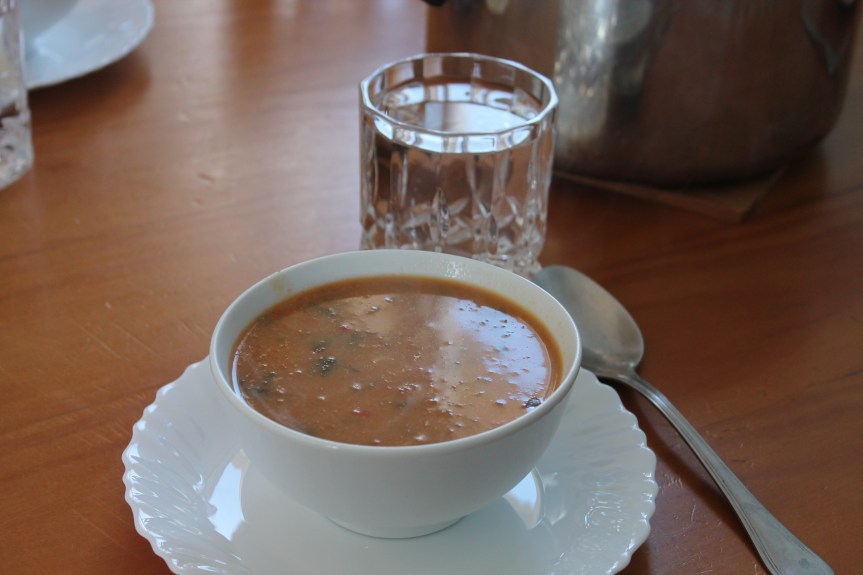
Recipe: harira

This tomato-based soup is a classic North African dinner, served especially in the winter and during Ramadan. Although unfamiliar as a dish, you might find something familiar in the mild, comfortable flavor. Harira tastes like a food I grew up with, even though I didn’t.

After tasting many versions of this soup in both North Africa and Spain, it’s the aroma that gets me every time. Nostalgia creeps in around the time I add the parsley and cilantro.

The recipe isn’t hard, but note that it takes a lot of stovetop time!

  • 225 g (1/2 lb.) beef, diced into tiny pieces
  • 3 tbsp. olive oil
  • 2-3 beef soup bones
  • 1 kilo (2 lb.) tomatoes, cooked and pureed
  • 1 handful garbanzos, soaked but not cooked
  • 1 large onion, grated
  • 1 tbsp. salt
  • 1 tbsp. ground ginger
  • 1½ tsp. black pepper
  • 1 tsp. ground cinnamon
  • 1/2 tsp. turmeric powder
  • 2 handfuls dry lentils
  • 3 tbsp. tomato paste combined with 2 c. water
  • 1 stalk celery (with leaves), chopped
  • 1 small bunch parsley, chopped
  • 1 small bunch cilantro, chopped
  • 3 tbsp. broken vermicelli (I like to use whole wheat)
  • 1/2 c. flour combined with 1 c. water (Although it’s not traditional, I use oat flour.)
  • water

Brown the beef in the olive oil.

Add the soup bones, pureed tomatoes, garbanzos, onion, spices, and 3 cups of water. Bring to a boil, cover, and simmer for an hour.

Add the lentils, tomato paste mixture, celery, parsley, cilantro, and 2-3 cups of water. Bring to a boil, cover, and simmer for 90 minutes.

Add vermicelli and simmer until tender.

Thicken the soup to a silky, cream-like consistency by gradually adding the flour and water mixture, stirring constantly. Simmer soup for 10 minutes, stirring occasionally.

Add salt, pepper, or any of the other spices to taste. Serve in small soup bowls with large soup spoons… or slurp it right out of the bowl! Serves about 8.

Note: If you want a soup with a louder flavor, go light on the water that is added throughout the recipe. Everyone has their way of preparing this dish, so feel free to be creative.

Happy Thanksgiving!

It’s just another day here in Spain. It’s strange celebrating holidays that aren’t celebrated in our country of residence. The world around us zips by at its normal pace while we baste a turkey or set off fireworks and grill burgers. Once, I even celebrated Christmas in North Africa. That was the strangest of all.

Thanksgiving is an American holiday, so even though my team lives in Spain, we plan to celebrate. My roommate is basting the turkey as I write. The green beans and sweet potatoes are ready to cook. The pies are done. The table set.

HAPPY THANKSGIVING!

I have an appointment at the other end of town this morning, so I won’t be around for the last minute rush before guests arrive. I’ve been delegated to pick up the rest of the wassail ingredients and new light bulbs on my way home.

But before I leave, I decided to write a few things I’m thankful for this year.

  1. A safe return to Spain last weekend
  2. Family and friends who make leaving so hard
  3. A suitcase that arrived after all
  4. Stage 1 visa paperwork handed in
  5. A smoky turkey aroma filling the apartment
  6. That despite the craziness of our world, God is in control
  7. A fluffy blond niece who asked me yesterday, “What color is your imagination?”
  8. A thrill when I think about the future and the God who holds it
  9. Freedom to get out and about even while under covid restrictions
  10. The mountains and the sea in the same view– How I missed you!

By no means is that an exhaustive list. But I wanted to give you time to write your own list. What are you thankful for?

Some ups and downs of language learning

We approached what we hoped was the bus stop, our suitcases rattling along behind and a disgruntled (and tipsy) beggar peering after us. Since disembarking the ferry, we were well aware that we were in foreign territory once again. “Toto, I’ve a feeling we’re not in Spain anymore!”

“Peace be upon you. Do taxis stop here?” I threw the question out to a group of brightly dressed ladies waiting in a spot of shade.

“The taxis are over there, in the port,” one lady spoke up.

“No, I mean the taxis that you pay by place. Those other taxis are too expensive.”

Back and forth we went until suddenly she started giggling. “I’m speaking with you in Arabic! You’re a foreigner and I’m speaking with you in Arabic!”

Back in Spain, I apparently used just enough of a greeting but not enough filler conversation for a new customer to ask me if I was North African.

I thanked her and laughed because it always amuses me that someone with my complexion could ever be mistaken for a North African.

With wide eyes, she backed away from me, exclaiming, “Tbarakallah!” (God be praised!)
And it’s always refreshing to hear someone say, “You talk like us!” even when I obviously don’t. It makes the weekly log of Arabic study look less intimidating somehow.

Don’t get me wrong. There are also the less-proud moments.

Like when, after an English class, I was zoning out over a bowl of harira, letting the conversation swirl around me. Suddenly, my friend turned to me. “Isn’t that right?”

I swallowed that spoonful of soup and looked back at her blankly. Right? What was I expected to agree to? I groped for context–a word or a phrase, but I found only a blank slate. Oh, boy.

Yet, in the same conversation, a woman who had designated herself as my Arabic teacher told me I was dangerous. Why? Apparently, I understood more than I let on. (At least when I wasn’t zoning out over my soup.)

There are also times that a friend will sigh and look weary while trying to understand what I am saying. Times when I talk in the wrong language, or simply switch back and forth between Arabic and Spanish without realizing it. Times when a joke or a witty quip falls flat because it was funny in my mind but not my mouth.

Occasionally, just to be annoying, I speak only in Arabic to a new shop owner. I don’t look North African, but neither do I look very Spanish. I’ve had owners eye me but keep speaking Arabic simply because they weren’t sure if they could switch to Spanish.

But my local shop owner got me back by playing my game with me. In fact, he didn’t let on that he spoke a decent amount of English for two whole years! In the meantime, he was able to eavesdrop on conversations I had with visiting friends. Today, we still talk mostly Arabic and he occasionally gives me language lessons while he bags up my groceries.

Overall, like I wrote last time, language learning is a journey, an act of worship. With its ups and downs, it’s bound to be a bumpy, but meaningful ride. 🙂

Made in God’s image: thoughts on sexual harassment- Part 2

Last time, I shared some of my own experience with sexual harassment, including a few of those inner reactions. If you haven’t read part 1, please do so before reading part 2. 


Regardless of how others respond to your experience, it still happened. 

SO NOW WHAT?

Gain control. 
A huge part of the emotional aftermath is due to feeling powerless. I experienced a marked difference in two street harassment encounters. After the first encounter, I didn’t even know if teammates would be on my side. The second encounter ended at the police station. Knowing that the power was indisputably on my side decreased the fear I felt on the street afterwards. 

In a case of street harassment, involve people nearby. Responding in some way as soon as possible helps alleviate the painful emotional aftermath. Don’t argue with the offender, but if you are able to, include bystanders. 

To be honest, although gaining control is one of the most important factors, I am a lame example. Often, I first respond with denial, doubting the experience is real until it is past, thus hindering my opportunity for an appropriate response. I guess I still struggle because I am still learning. 

Even if the incident is already past, take control by setting up precautions for your future self. Being passive means setting yourself up for victimization again.

“If it feels wrong, it probably is,” was some of the best advice I got when I moved to North Africa where some form of harassment was expected every time one left the house. One North African day, a rug vendor wanted to show me more of his wares. He led me to the back of the shop, to a quiet room full of rugs. My gut told me we were too alone, especially when he started making subtle preparations to keep out other customers. I thanked him for showing me his rugs and marched out of the shop, despite his protests. 

Don’t be afraid to be angry…
…but also realize that anger is often, if not always, a secondary emotion. There is still something else underneath. Give yourself time to sort out what you’re feeling and as soon as possible, take those emotions–fear, shame, vengeance or whatever else it may be– to God because He’s not afraid of what you’re feeling, even if you are.

Realize that your emotions are part of the process. 
You will face a lot of emotions, some of them unexpected. If you don’t face them head on, they will gnaw away at your sense of worth as God’s image bearer. 

After harassment incidents, I do a lot of journaling. It helps me honestly examine what I’m feeling. It launches a talk with God and prepares me to talk with a mentor. 

I was in a moderately healthy place when a follow-up incident occurred. Twenty-four hours later, I was still in turmoil when I journaled this: 

     And here I was, wishing I were not. Wishing I had the strength to say, “It is well with my soul” and feeling that anger-turning-shame…
     Shame that in my inner longings for approval, I had stumbled across a sickened version of it and should have I already slain that longing? Shame that now I was the one in the spotlight and how did this happen and could it be my fault? But it wasn’t. It isn’t…
     And where was Jesus in this picture? He was here, wrapping His arms around me when all I could do was swim through memories of past hurts and wish God would just turn men like this one into piles of ashes. I don’t know it because I felt Him there; I know it because I know it. Today that is enough.
     And as for the shame. It has a name now and soon I’ll be ready to confront it rather than live with it.

Run to your Ultimate Protector. 
After a recent incident, I was able to gain control of the situation, which ended in the man jumping off at the next bus stop, presumably in an effort to get away. I like to think so, at least. 

The next evening, I was praying about an unrelated topic when God said, “You know that man who touched you last night? I was there.” And I knew He was telling the truth. No, He hadn’t smote the offender–not then anyway. But He is the God who sees and will deal with sin in His perfect timing. 

(This is not a statement that higher earthly authorities should never be involved. In passing incidents, use discernment. In repeated or ongoing incidents, those higher earthly authorities should definitely be involved! Read Romans 13.)

Find out who you really are. 
Ask yourself: “Who am I in the eyes of God?” If you don’t strip away your pretenses before a loving and perfect Father, you most certainly will feel the additional pain as you face a world of opinions about the incident. 

After a particularly frustrating day of feeling unprotected by someone I thought should have protected me, I cried out to God in the middle of that shame and heartache. “Just tell me what to do!” I wailed. 

And He said, “You are my child.” He offered no solution to the events, but spoke to the bigger problem. I had lost grip on my intrinsic worth and instead was clinging to the lie that I wasn’t worth protecting. But He reminded me that I belonged to Him and that was enough.

Find someone who will hear without judgment. 
Find someone who will listen to your muddled thoughts and feelings and hear what’s behind all of that. If you don’t take it somewhere, it will come out, often in unexpected and uncontrolled settings. 

Make sure it is someone with whom you can be completely honest about the situation. (Note that multiple debriefings could be helpful as your emotional waves ebb and flow.) Don’t lie about your role if you had one; that doesn’t make the offender innocent. Admitting the whole truth will help you get to the root of your shame. 

Allow for repentance. 
Is the offender truly sorry and truly repentant? I’m not talking about an “I’m sorry” to please authorities, but a humble apology and a true life change. Forgive. Don’t hold on to it. You will probably have to do this many times. But do it. Don’t let his or her power hover over you when you can be free.

However, there is no biblical basis that forgiveness looks like trust. Trust must be earned, not offered indiscriminately. If you have been sexually harassed by this person, in most cases, it’s okay to stay away or make them stay away from you, even if you have forgiven. 

Let God be Lord of your sexuality. 
You are a sexual being. God created you that way. And remember, He said “very good.” But in my experience as a single (especially in a culture where women are particularly vulnerable), sexuality feels more like a burden than a blessing. Something I need to hide and control rather than a gift to express. 

There was a moment after many of the aforementioned incidents that I felt the invitation to surrender my sexuality and I saw the outstretched arms of Jesus, glad to embrace me. There was instant relief when I thought of Him piloting my sexuality. I felt safe. Like that part of me was no longer my enemy. 

This has not been a once-and-done surrender, but no longer do I fight the enemy alone in this area of my life. 

In surrender, there is freedom. Surrendering your sexuality might feel restrictive, but true freedom is being restricted in certain areas to enjoy fullness in others. Rather than being a slave, it is being a child of God and living in the fullness of that relationship. As a child, you give up the right to govern your own life or “call the shots.” Yet, the richness of sonship is so much better than living in the “freedom” of going your own way and finding you are a slave after all. 

CONCLUSION

I don’t pretend to know everything there is to know about this topic. I write from my limited experience. I don’t respond well each time. Sometimes, it’s hard to forgive. Sometimes, I’m still surprised by the spectrum of emotions an incident will elicit– all of the way from pleasure to disgust. 

Yet, I can cling to the truth that I am “very good” and when someone tries to diminish that value in the form of sexual harassment, it is not okay with me because it’s not okay with God. 

May you cling to that truth as well. God made you in His image. That heavy load of shame you’ve been carrying? That isn’t yours to carry anymore. Unpack it, hurt through it, but ultimately leave at the feet of the One who has already carried it for you. And He did because you, His child, are worth that much.


Photo by Priscilla Du Preez on Unsplash