

There isn’t much that separates us

The public health clinic was teeming with people. Where was she?

“Over here!” My friend waved me over to a corner of the waiting room. She rushed to explain her health problem, pointing to various body parts while keeping an eye on the door where she was to go as soon as her number was called.

My breathless mind tried to keep up with her Arabic. I was still drumming up passable Spanish vocabulary when her number was called.

We squeezed around an old shopping cart piled high with unsupervised medical supplies and stepped into the consultation room.

“What is the problem?”

I took a deep breath and launched into an unrehearsed explanation. Interpreting between two foreign languages is always a workout for me, and not a flattering one.

The lady at the desk was silent until I paused. Then she said, “You both realize that I’m a nurse, not a doctor, right?” 

Actually, no. I had never been beyond the door in this particular public health clinic.

“Look, the only thing I can do is test and see if she still has the infection.” She handed my friend one of those flimsy plastic cups we use at children’s parties for juice or Jell-O. “Urinate in here and bring it back to me.”

Apparently dismissed, we squeezed around the shopping cart and wandered around the building in search of restrooms. Misplaced people were milling everywhere in a warm, concrete facility that smelled of metal and sweat. 

We eventually found the almost unmarked restroom, nestled between consultation rooms. Then back down the long hallway we went, my friend trying to hide her cup of pee in a plastic bag she’d dug out of her purse. “There wasn’t any paper in there to wrap the cup,” she said. “I don’t want everyone here to see it.”

We wiggled around the overflowing shopping cart again. The nurse stretched on a pair of gloves, stuck a testing strip into the urine, and told us to wait outside. My friend turned and left, still holding her cup.

“Uh… can she throw away the urine?” I asked. 

While I was still verifying this with the nurse-not-doctor, my friend lost her way and, unable to read, ended up in the men’s restroom. There was an unsettled man waiting outside when I arrived on the scene. “This is for men,” he said in Arabic when my friend emerged.

We found seats in the waiting room. As much as I love to people-watch, it was hard to look around without feeling absolutely hopeless. Did anyone in the healthcare system really care about these people?

As we waited, the lady next to us asked if her number was on the screen yet. She couldn’t read; she could only hear the tone and see the digits move without understanding what they meant. I looked at her tiny slip of paper, the kind of ticket you get while waiting in line for olives at the market. It was hard to see that wisp of green-blue and not see my own personalized number on a freshly printed ticket from the private health clinic across the street. My initials followed by 524. Always the same. Always announced over the speaker while I sat in the air-conditioned waiting room. 

Her number was 254. The number on the screen was 272. “It’s past,” I explained. By a good half hour, likely. She walked up to the desk and was sent to get another number and start the process again. 

Meanwhile, my friend and I were called back into the consultation room. The overflowing shopping cart had been removed and this time we could walk in without yoga posing our way through the doorway.

The nurse told me, “Tell her that she still has an infection, but she needs to finish the week of antibiotics she got yesterday.”

Oh.

That was a piece of information I had been missing. My friend had apparently just been to the emergency room the day before, but wasn’t satisfied with the lingering pain from the infection. As if one dose of antibiotics should have removed her aching like magic.

It was hard to look at the nurse sitting at her desk and not feel absolutely hopeless for her. Was this what she dealt with day after day? Confused immigrants expecting or even demanding immediate fixes without understanding her role as a nurse, not a doctor or a magician?

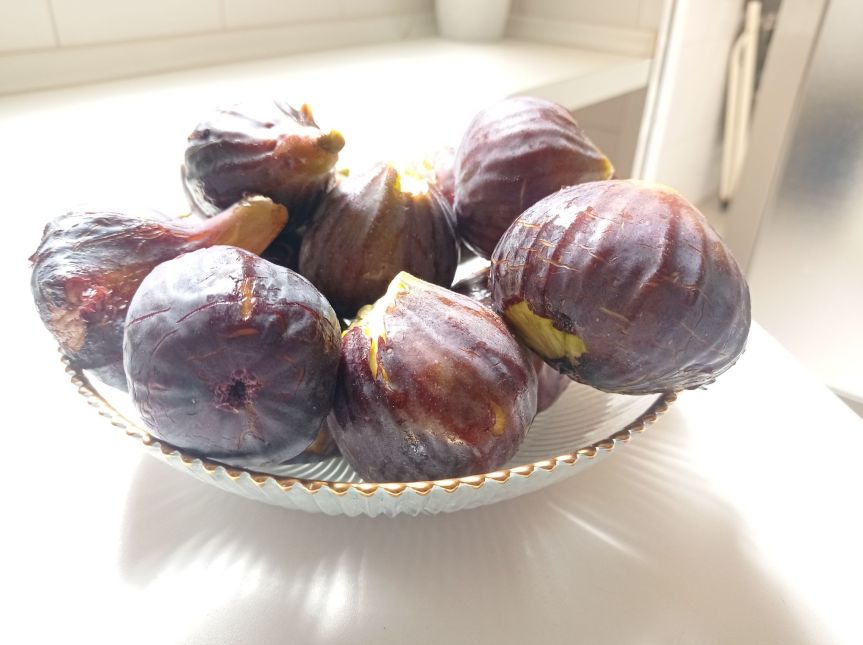
My friend and I walked toward home. She pulled me into a North African store and bought a bag of fresh figs: big, purple, and sweet. On the street again, she handed me the bag. “I got these for you because you helped me today.”

We sat on the front steps of my apartment building until the hopelessness of the morning faded with chatter and laughter. Deep down, there isn’t as much that separates us as we sometimes imagine.


God doesn’t owe me results

The night was a failure. Even after a day of prayer and fasting.

No one noticed that my heart was beating in time with the Father’s. No one noticed that my soul was alive and refreshed.

People were out breathing in the cool night after the long, scorching day. Last week on my nightly strolls, I had met several women. Under the cover of dusk, we had sat on park benches and talked while children played around us.

But tonight there was nothing invigorating.

A stop at the local store made me wonder where the line between friendly and amorous should be drawn. And why was I always the one to draw the line?

And then there was that woman again. The shriveled Gypsy for whom I had once bought bread and eggs and now every time she saw me she snagged me with a long, anguished tale and a request for a couple of euros. How could I communicate love? Bread, eggs, and euros were not going to alleviate her poverty of soul.  Her granddaughters averted their blushing faces.

And that was all. No one else seemed open to conversation. Alone and discouraged, I finished my route and turned toward home.

That’s when truth started to sink it, settling between the churning waves of injured pride and self-pity.

God doesn’t owe me results. He doesn’t owe me deep, blossoming friendships and engaging conversations. If I cultivate a certain level of spiritual maturity, He doesn’t owe me the world on a silver platter.

My service is not qualified by my carnally-defined successes but by my faithfulness. Am I loving (and consequently serving) God with all of my heart? My soul? My strength? My mind?

Years and years ago, my Sunday school teacher gave me a quote that I have kept tucked inside of my Bible ever since. “There is no more powerful force for rebuking all evil things, whether of conduct or of opinion, than that of the quiet, strong, persistent life of a man or woman who goes on from day to day doing the duties of the day well, cheerfully, and with joy.”

As I walked those final blocks home, my sense of entitlement slipped away. “What if?” I wondered. “What if in my day to day journey, I start counting each blossoming friendship and engaging conversation as a blessing rather than my entitlement? What if I named each interaction as a gift rather than my payment for growing in Christ?”

The neighbor man waved and smiled. “Good evening.”

I waved back. “Good evening.” And it was.

Privilege and poverty

A proud tree stood with arms stretched wide
Until they reached the other side
Of a wall that ran both deep and wide.

The tree offered fruit and shade
Of the same quality that it saved
But on its side it proudly stayed.

And this side--both yours and mine--
Toiled but controlled the time,
And the other side could never climb.

Then one day that tree fell down,
And passing people quickly found
Not one but two ruts in the ground.

Photo by Annie Spratt on Unsplash

What child is this?

“What child is this?” We sing the words of that Christmas carol every year as if we don’t know what Child “this” is.

Do we?

Is Jesus the sweet baby in the manger “no crying he makes”?

“For I was hungry and you gave me food, I was thirsty and you gave me drink, I was a stranger and you welcomed me, I was naked and you clothed me, I was sick and you visited me, I was in prison and you came to me.”

(Matt. 25:35-36)

God’s greatest Gift to man didn’t stay in a manger. So let’s not pretend He’s still there.

“Truly, I say to you, as you did it to one of the least of these my brothers, you did it to me.”

(Matt. 25:40)

Who do I laugh at?

The sun came and went as ominous clouds marched across the sky. I shivered and wondered why I hadn’t checked the weather before I had walked to the park to study. Winter was coming; that was certain.

On the other side of the bubbling fountain of the garden plaza, a man was stretched out on a bench in front of the bamboo forest. I had seen him there before. He wore several layers of clothing all with that grimy, unwashed tinge. He was a perfect picture of a North African homeless. But he didn’t bother anyone. Even when he awoke, stood up, and stumbled to another part of the garden.Beside me, just on the other side of the fig tree, were two boys pretending to be men. They smoked cigarettes, played music, and took selfies.

But when the homeless man got up and walked away, the boys gawked at him. Then they whispered something to each other and snickered.

I was angry. If the man had bothered them, I could have understood the sentiment to mock him. But as it was, the man had done nothing to deserve anything less than their respect. And yet they laughed at him. How dare they!

While I was still high on my judgment throne, God asked me, “Who do you laugh at?”

Me? Laugh at someone?

How many times have I amused myself at the expense of another? In short, who do I look at and tell myself I am better than they? Maybe it’s not the homeless man. But it could be the boys smoking cigarettes. And really, does that make my pride any less hideous than theirs?

On a roll

If I would have been Elijah, 51 more people would have died.

When Ahaziah, King of Judah fell through a lattice and lay sick in his bed, he wanted to know if he would live. “Go, inquire of Baal-zebub, the god of Ekron,” he told his messengers.

But on the way, Elijah intercepted the messengers to give the king a word from the Lord: “You shall surely die.”

King Ahaziah wasn’t happy with this meddling in his affairs and he sent out a captain with his 50 men to fetch Elijah from where he sat on top of a hill. Elijah responded by calling down fire from heaven and consuming the 51 men.

But the king didn’t give up. He sent another captain and 50 men. These also were consumed by fire from heaven.

And still King Ahaziah didn’t give up.

If I had been Elijah and seen the third party of 51 men approaching me, I would have sighed, “Yes, Lord, I know the routine. Fire from heaven.”

But the third captain fell on his knees and pleaded, “O man of God, please let my life, and the life of these fifty servants of yours, be precious in your sight.”

Elijah had executed God’s will on the former two occasions. Why would God want anything different this time?

That’s why I say that if I had been Elijah, 51 more people would have died. Or at least I would have attempted to call down the same fire from heaven. I would have been on a roll.

I often think about this story when I’m tempted to make a “policy” on how to treat a certain category of people: persistent beggars, inappropriate men, meddling taxi drivers, aggressive women, etc. Yet, God showed Elijah the Tishbite how important it was to listen to His voice in every situation. Likewise, God may want me to say a certain thing to one aggressive woman and want me to keep silent with the next. The point isn’t to get energized by being “on a roll” but to listen in each situation.

Yes, always listening can be exhausting, especially when we hear commands we don’t want to obey. When Elijah heard the angel of the Lord say, “Go down with him; do not be afraid of him” it may have crossed his mind that calling down fire from heaven would have been less of a hassle. But he still went. He still listened.

(2 Kings 1)


Photo by Ricardo Gomez Angel on Unsplash

What if you were Soukaina?

Have you ever stepped into someone else’s shoes and tried walking around in them?

Soukaina is sixteen years old. She lives with her parents and two year old brother in a poor neighborhood of a bustling North African city. In that tiny, sixth floor apartment, personal property and space are out of the question. She doesn’t have her own bedroom. In fact, there is only one bedroom for the entire family.

She usually attends school but spends her free time on the streets. She gets in trouble for bullying neighborhood kids. Her parents send her out of their way, but paradoxically rebuke her for spending too much time on the streets.

Her father is diabetic and doesn’t have a job. Her mother works herself to the bone six days a week. Her little brother follows her around and gets into everything.

To get anyone to listen to her, she has to yell. Sometimes, it’s just easier to hide. Once, she said, “I don’t like to live here. There are many bad people.”

Yet, she is loved. Despite the abstract and irregular displays of affection, her parents love her.

So what if you were Soukaina? Well, what if you were? What would your life look like? What choices would you make?

I’m not asking these questions so you can recognize your privileges or count your blessings. I’m asking you because looking at the world from someone else’s perspective makes you better capable of loving them.

Unashamed of our offerings

A few weeks ago, a friend read us the story of the woman and the copper coins (Mark. 12:41-44). As we sat around the room listening to the story, we saw the Teacher and His disciples watching the procession of people drop their dutiful percentages into the offering box.

And in the middle of the clanking coins of the proud and wealthy, we saw a poor widow approach the box and drop in her two small copper coins.

I had always pictured the widow creeping up and hiding her flushed face as she dropped in her offering. But if she was trying to hide, she would have done a better job than to let the disciples see the value and count the number of coins that had dropped in.

Maybe she wasn’t embarrassed at all. Despite the wealth and the substantial giving of the others, she was unashamed to bring her offering to God. And why should she be ashamed? She gave God 100%; she gave “all that she had to live on” (Mark 12:44).

I want to offer my life like she offered her two copper coins.

WhatamIdoinghere

WhatamIdoinghere
And whatwasIthinking
To expose myself to rejection
And the stinging unknown.
WhatamIdoinghere
And whatwasIthinking
To make myself vulnerable
To a broken world,
Tasting its pain and distress
Hearing the cry of the oppressed.
WhatamIdoinghere
And whatwasIthinking
To let my soul experience
The piercing emotion that comes
From living a full life,
Allowing my will to battle strife,
Petitioning for souls at heaven’s door,
And understanding love more than before
WhatamIdoinghere?

The pattern of practical loving

Sometimes I don’t know what the practical side of love is supposed to look like. And by the practical side of love, I’m referring to loving those in need. Is it really even “supposed to” look like anything, as if it were a consistent pattern? 

This is on my mind because today on my way to the store, I saw the same beggar that I always see on the way to the store. As usual, she sat on the sidewalk, her swollen feet outstretched for passersby to take pity on her condition.

I smiled and greeted her. Her face lit with an almost-toothless grin. She cackled a greeting in return and asked how I was. She wasn’t expecting anything more from me than what I gave.

So what did she really want? Was it the couple of coins I could have dropped into her hand? Was it the groceries I could have bought for her? Or did she really just want eye-contact: to be treated like a normal person, to be loved instead of patronized by a stranger?

When I walked back out of the store, I had nothing for her except another smile. And she was ready with that same brilliant grin. What I had given her was all she wanted from me today.

Perhaps the only consistent “pattern” in practical loving the fact that one is loving.

“You shall love the Lord your God with all your heart and with all your soul and with all your mind. This is the great and first commandment. And a second is like it: You shall love your neighbor as yourself. On these two commandments depend all the Law and the Prophets.”

Matt. 22:37-40