Not so glamorous

I asked my roommate for ideas for my blog. She suggested that I write about how life abroad isn’t necessarily glamorous. The common misconception is that life at home is mundane, but those who live abroad are enveloped in a never-ending adventure. Yet, those who have live out of the country soon realize that there is a difference between traveling abroad and living abroad.

I dug around in my old emails to find my initial impressions of my “exotic” life. It turns out that despite the initial culture shock, I soon settled into a routine, much like life at home.

From February 2016: “It was hard to decide what to write about this month. If I only mention the highlights, you assume that my life is one big, adrenaline-laden adventure. It’s not. Each day is unique, but I have developed a pattern and am beginning to plod down the same cowpath day after day. Even the grass is wearing out beneath my hooves. Moo… In spite of these very normal circumstances, occasionally I do experience variation from normal life. It’s like happening on an untasted meadow (to continue the bovine analogy). Sometimes the meadow is sweet grass, other times it’s mostly thistles.”

From April 2016: “Perhaps my life sounds glamorous to you. I suppose it is in theory, but it’s been hard to give up close interaction with family, church, and friends while what used to be my everyday life changes without me. And looking like an ignorant tourist isn’t particularly glamorous or comfortable..”

What’s new quickly becomes normal when you experience it enough. Flagging down taxis, crossing the street amidst moving traffic, watching things shatter when dropped on hard tile, eating piles of bread and drinking liters of syrupy tea is all commonplace.

See, the glamorous part happens in the initial stages. A North African immigrant in America might be startled at the wealth of personal space, how difficult it is to make friends, traffic that is relatively decent and in order, prices that are non-negotiable, and everything running on time. That is something to write home about…initially. Until the glamour of the foreign adventure becomes everyday life.

Also from an email from April 2016: “A recent sermon has given me a few thoughts to ponder. Using John 21, the speaker proclaimed that our duty is to follow Him, not to compare ourselves to others and decide that our personal callings are unjust. No matter where we are, whether glamorous or not glamorous at all, our duty is to follow, day by day and hour by hour.”

Loyal or practical?

My roommate and I have the same problem. After more than a year of living in the same area, we find that we are loyal to shop owners. That doesn’t sound so bad, but we both wonder about the practicality of it. We go back to the same shops again and again, even if another place has better merchandise or better prices. This is especially true if new shops are in sight of our normal shop.

For example, my preferred produce vendor is on my way home from school. One day, when I was feeling sick to my stomach, I stopped and asked if he had bananas.

“No, they will come in later today. Maybe an hour or hour and a half.”

“Okay.” And I continued on my way, walking right past a vendor cart of bananas…sold by someone else.

My struggle became evident over Eid Kbir when many of my normal vendors disappeared for the holiday. I found new people to be faithful to…until my usuals returned. So now I have two produce vendors. One is in a busier section of the neighborhood which I usually avoid, but when I do stop there, I take a route home that avoids my usual vendor.

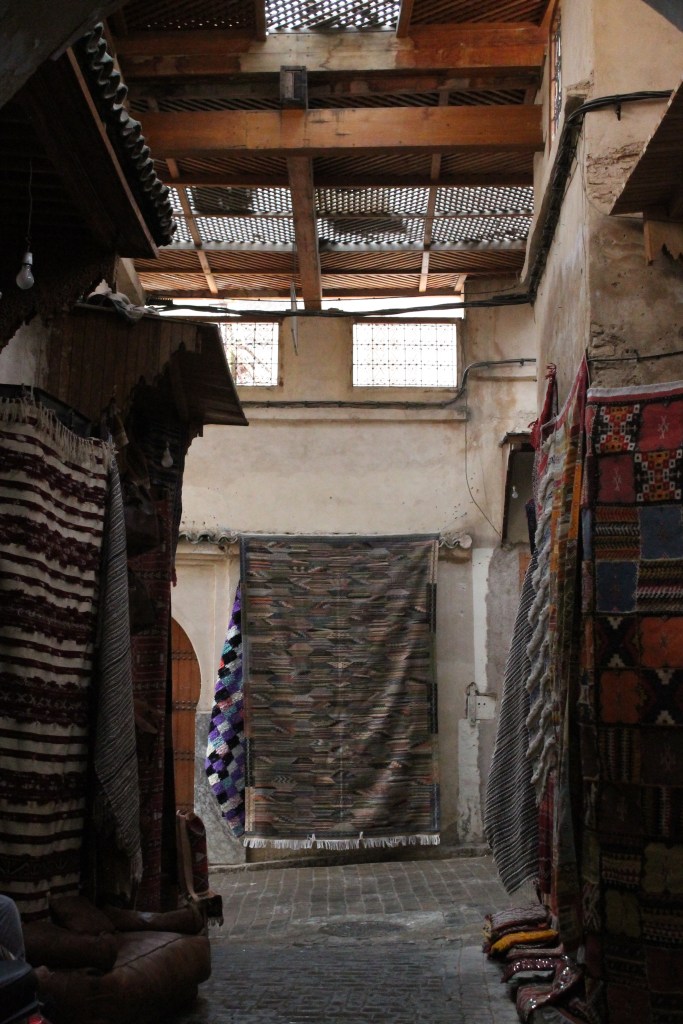
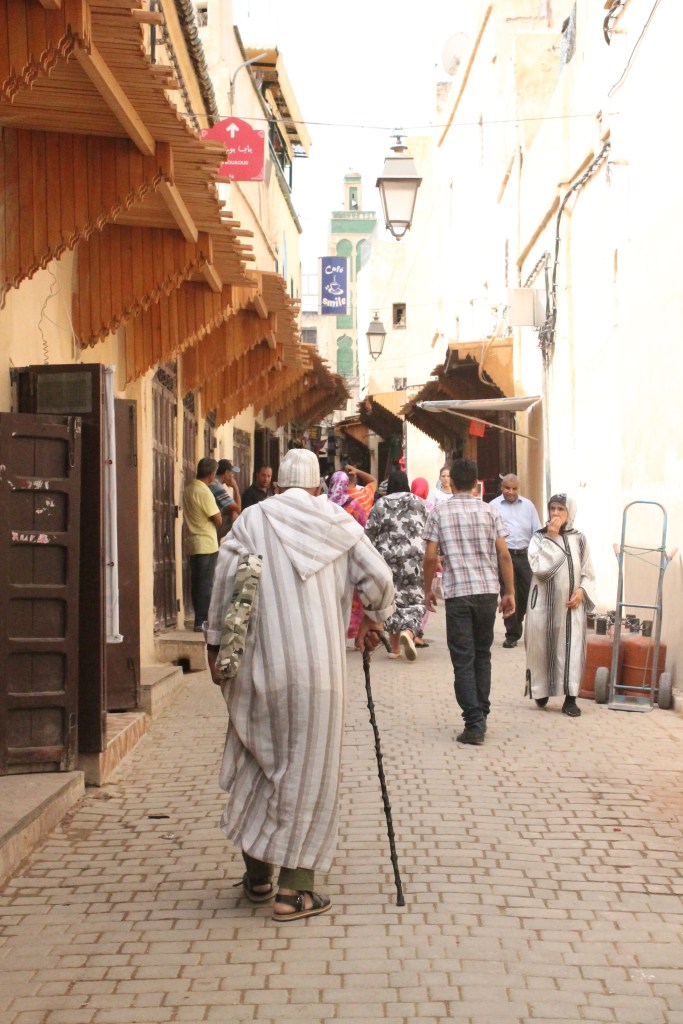
My roommate likes to give business to an elderly man in the old medina who usually has about four things for sale. Sometimes she takes inventory of his stock, decides she needs nothing, and then buys something anyway.

Is this practical? Probably not. At least not at first glance. Then again, by sticking with the chosen few, we are able to build solid professional relationships and perhaps protect ourselves from those less honest.

Every nation, tribe, and tongue

When I heard that a nearby university was hosting a Christmas carol festival, I didn’t need any other motivation to jump in a taxi and go. After all, North Africa isn’t the easiest place to celebrate Christmas. There are no Salvation Army bell ringers, no Christmas flyers or billboards announcing unbeatable sales, no Christmas lights, no store aisles filled with Christmas candy, hardly any Christmas shopping at all.

You may write off those things as obnoxious, an assault to your everyday life. But for me, those little things help remind me of God’s greatest Gift to mankind. This year I don’t have those reminders, and it’s hard to fully enjoy the season.

But now, in this university auditorium, I could overlook the giant poster of the country’s king on the wall and remember the coming of another King.

There were beautiful classic carols, contemporary carols, worship songs, gospel songs, touches of opera, and Bible readings. Children and adults took turns on stage, representing the evangelical churches of the country.

Some songs filled the auditorium with life, eliciting applause and cheers. In the wake of one particularly lively group, a Spanish monk walked up to the podium and read the Christmas story. The irony of the moment was stifled by the beauty of it.

Is this what heaven will be like?

After this I looked, and behold, a great multitude that no one could number, from every nation, from all tribes and peoples and languages, standing before the throne and before the Lamb, clothed in white robes, with palm branches in their hands, and crying out with a loud voice, “Salvation belongs to our God who sits on the throne, and to the Lamb!”

(Rev. 7:9-10)

Worship isn’t uniformity, but it is unifying. The variation of style, genre, and the mix of at least eleven languages was remarkable…but inconsequential. We were there to celebrate the birth of the Savior. 

Enjoying the journey

“When I’m finished with school-”
“After work today-”
“When we get old, we’ll retire and be able to do the things we always wanted to do.”

Sound familiar? Those words could be snatched from the mouths of most western culture citizens.

That’s when I look at North Africans and realize that they understand the brevity of life better than we do. For many of them, it’s not about the next thing; it’s about today.

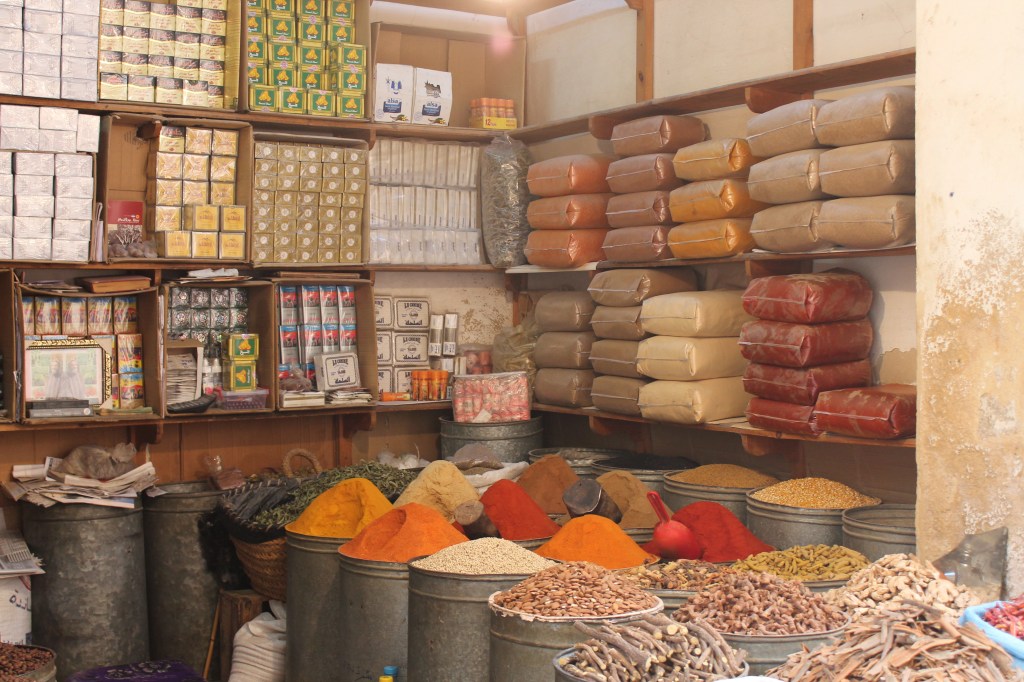
I thought about it while shopping one day. It would have been much simpler to taxi to the supermarket and buy all of my groceries in one place (and sometimes I do this). Instead, I went from little shop to shop, little vendor to vendor to find what I was looking for. I was not just another face in the checkout line; I was “my sister” to some of the shopkeepers. There was conversation and relationship.

It wasn’t about being efficient; it was about having interaction. It wasn’t about finishing the task; it was about enjoying the moment that you have while you have it.

This method of thinking has its drawbacks, but it is a rich way to live life. Maybe someday I will learn how to implement it in my western mindset. 

Adventure on Hardware Alley

My motive was to not look lost. I fingered the plastic washer in my pocket as I turned down “hardware alley,” a street lined almost exclusively with hardware stores. Lest you question the logic of this arrangement, note that most of the stores specialize in certain areas such as light fixtures, mirrors, tile, etc. And often, they don’t overlap merchandise. For example, only one or two stores carry little items like screws, nails, and washers.

Which was exactly my problem. I had yet to ascertain which stores I needed to visit and I felt out of place tromping from store to store on a street operated and patronized mostly by men. My task was to find metal washers to replace the plastic ones that had come with our new toilet seat. Ideally, the metal would grip the porcelain and keep the seat from sliding around.

When I whipped out my plastic washer for the first store owner, he pointed to the store next door. The store next door did indeed have washers.

“What do you want them for?” the owner asked.

I was embarrassed to admit that I was trying to fix a toilet seat. After all, this man was from a culture where Western toilets were the exception rather than the norm. So I offered a blank smile and pretended not to understand his question. Sometimes being a foreigner is helpful. Then again, being a foreigner was what got me into the situation in the first place.

The man eventually dug out two metal washers. They were small, but they were the only size he had. He suggested I keep looking for bigger ones and if I couldn’t find any, to try out the ones he had given me. When I pulled out my wallet, he said, “No problem” and ushered me out of his store.

I stopped at a third store where the man shook his head and told me to try another store.

“Where?” I realized how ridiculous the question was as I asked it. My directional comprehension still had much room for improvement. I prepared to nod and smile despite the fact that I wouldn’t understand.

And I didn’t understand everything, but I understood that the store he recommended was somewhere in relation to a nearby bank. So I meandered around, trying to look purposeful rather than lost.

Eventually, I made an educated guess and entered a store that was overcome with men. (One of my friends refers to such places as “the valley of the shadow of men.”)

I sidled up to the counter. “Do you have something like this…” I plunked the metal washer from the second store owner on the counter. “But bigger. Like this one…” Another plunk as I set the larger plastic washer beside the tiny metal one. “But not plastic.”

The owner didn’t give me any smart remarks or pick-up lines. He didn’t even give me a strange look. He just asked how many I wanted and fetched me precisely what I was looking for.

I fought the urge to cast a smug look around to see if anyone was astonished by my smooth purchase on hardware alley.

Of bargaining

“It’s camel leather!”

“Really?”

I probably wasn’t the first ignorant foreigner to fall for that trick. But unlike most foreigners, I had a friend beside me who revealed the claim as rubbish. Camels are too valuable to be able to sell cheap street merchandise made of their hides.

I narrowed my eyes at the shopkeeper. “You lied to me! Shame on you!”

He sheepishly tried to make amends, but his customer was no longer interested.

Living in North Africa requires me to be functional at bartering with shopkeepers and street vendors. If no price is listed on an item, I must accept an exorbitant price or hone my bargaining skills.

Often, a shopkeeper will take me aside and lower his voice: “For everyone else, it is 150, but for you it is 130.”  As if he doesn’t tell every customer the same thing. At times, shopkeepers add phrases like: “…because you have North African friends” or “because you live here.” If the price still seems unreasonably high, I add, “And I’m a student. Do I get a student discount?”

Once, as I was bartering in Arabic, a shopkeeper told me “You are not a tourist. You are a North African!” Given the context, I took that as a compliment.

Using Arabic helps those selling realize that I am intentional about what I am buying. It also clues them in that I might know reasonable prices. After speaking to a restaurant owner in Arabic, he listed a fair price for a meal and I accepted. But when I asked to see a menu, he had none to give me; the only menus were “tourist” menus!

I may bargain for a while, but when I know my last price and I say my last price, it is my last price. It is what the item is worth to me and if I can’t buy it for that, I don’t want it. Sometimes the shopkeepers drop their prices to meet mine, sometimes they don’t. Sometimes, I am walking away when they call me back. Perhaps it’s the threat that others will get my business when I say, “No thank you. I will keep looking at other shops.”

Bargaining used to terrify me. Now, after seven months, I have accepted this piece of the culture. Until I finish language study in another seven months, I might be enjoying myself.

Ramadan blues

“Am I hungry or just bored?” I muse as I peer into the refrigerator.

Summer has set in where the nights rarely descend with a breath of cool air. It is warm all of the time. And what is worse is that I feel trapped inside. And what is even worse is that my roommate chose this month to travel to Germany, another friend left forever, one classmate is in the UK and another classmate is in Spain. I am trapped with myself.

I make plans here and there, but the reality is that any plans are contingent upon the time of day. The hours that are too hot are off limits because street robbers might prey on the few people who are out. The hours right before the breaking of fast are even worse; there are hardly any people or cars to be seen and a fog of silence enshrouds the street.

Even if I do go out, most stores would be closed anyway. And the cafés and restaurants definitely are.

Why didn’t I just go home for part of the summer? Never mind the long journey or the money. Maybe that would have cured some of my recent homesickness.

I am tired of studying on my own, reviewing, practicing, listening, jotting down notes. I am tired of the food in my fridge. I am tired of sleeping.

For a melancholy, boredom breeds self-pity. At least it does in this melancholy. The light at the end of the tunnel is fading. Ramadan will NEVER end! Instead of thinking how hard it would be to fast for thirty days, I think about how unfair it is to plan my life around those who are fasting.

Selfishness. Yes, it all comes down to a perspective saturated in selfishness. Time to go count my blessings.


Photo by Erik Mclean on Unsplash

A day of successful tourism

These are some of my favorite pictures from yesterday. A friend took me down into the dark depths of the Old City and out the other side, through a people-less village of makeshift houses, and up a hill. It was quiet up there. No hollering. No one trying to be our tour guide or pull us into their shop to buy merchandise. And the scenery was lovely: the city, the sky, the ruins.

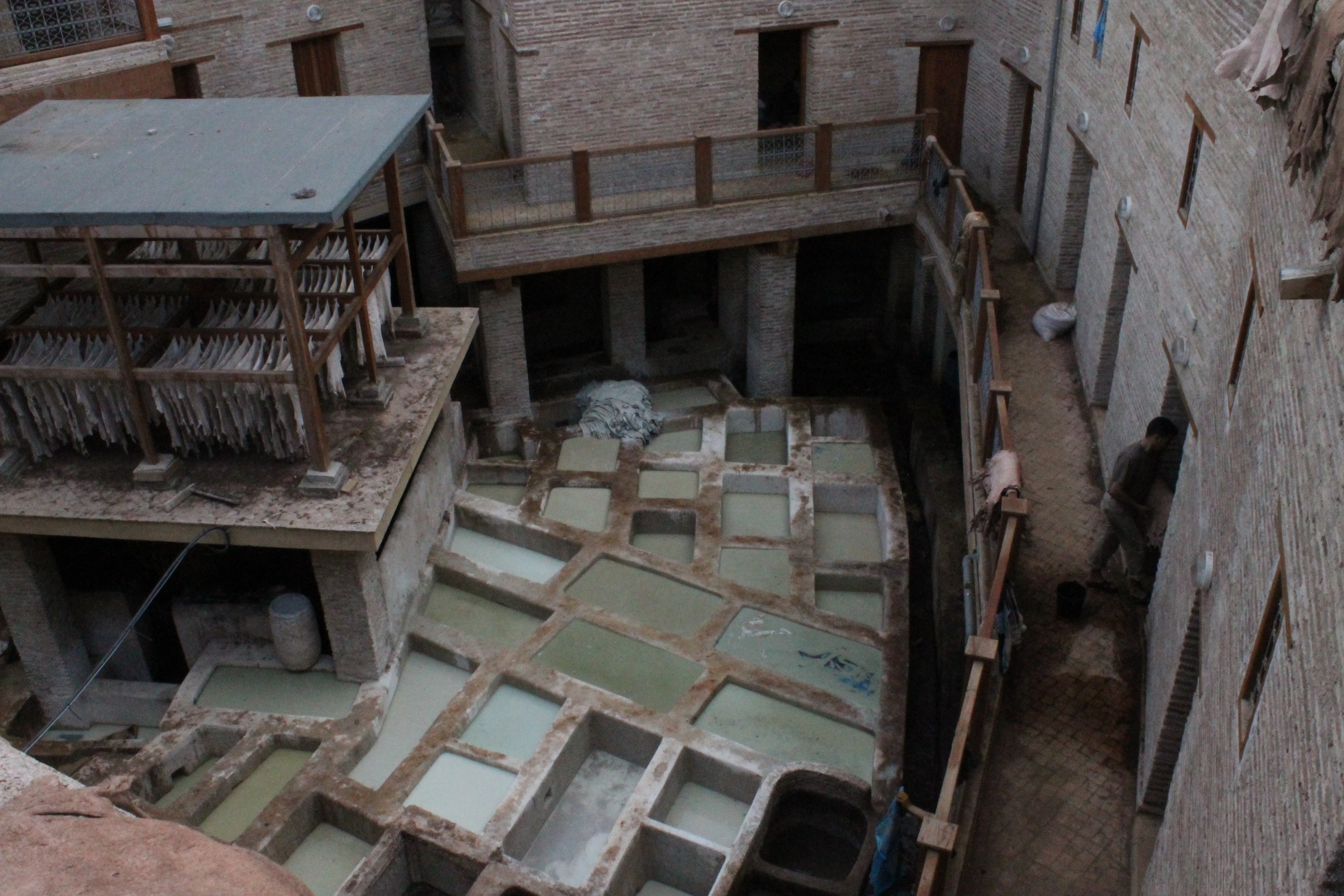
On our way back, we even visited a tannery (one that I had missed the other week) where we happened upon our very own tour guide.

After our smelly visit to the tannery, our guide took us to a friend’s shop to buy something. We weren’t very good tourists. After tolerantly sniffing the bottles of spices and perfumes that were thrust in our faces, we smiled and said, “Thank you! Good bye!”

Then we were off to the guide’s friend’s café where we were directed up a ladder-like staircase to the upper room: the room where women were allowed to sip their tea and coffee. “Watch your head.” My head almost brushed the ceiling. The owner followed us up the stairs and wiped off the dusty table and chairs. Our guide plucked some trash off the floor and tossed it into a nearby bucket. The owner crept back down the ladder to start our tea. “Half sugar, please.” Our guide parked himself at our table. Conversation was lethargic until the delicious, syrupy tea arrived. It was then that our guide gave a parting handshake and left us alone.

street of shacks
aerial view of north african city
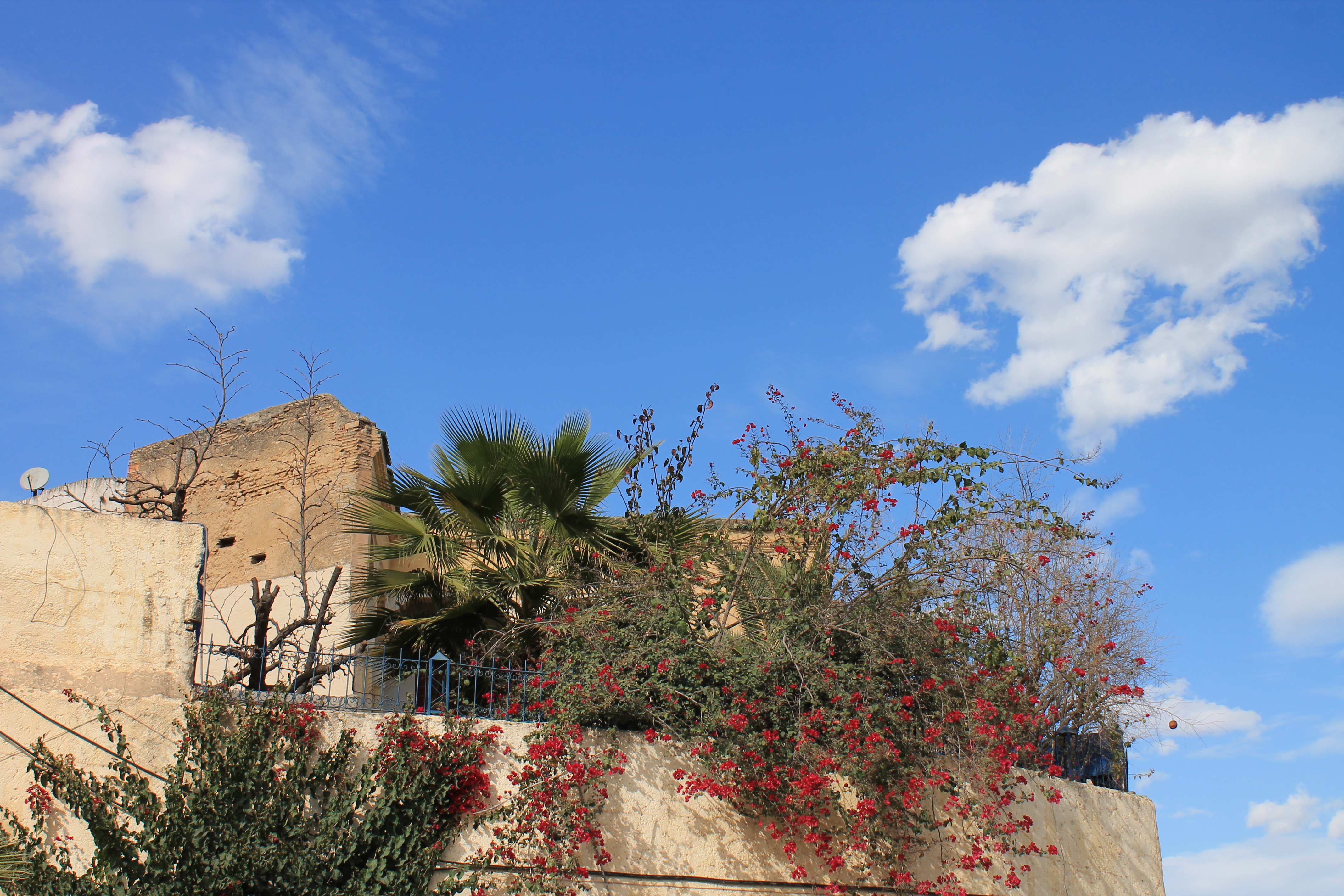
house top overflowing with plants and flowers
stacked sacks lined against crumbling wall
bird's eye view of ancient tanneries
drying skins