Some things I miss/ Things I don’t (so far)

Things I miss:

  • Friends
  • Making friends quickly
  • A respect for morals rather than a disdain of them
  • Bringing God into everyday conversation without people thinking you are overly pious
  • Easy and cheap transportation
  • Inexpensive produce
  • Going out to eat on a whim because of inexpensive menu prices
  • Bargaining for prices
  • Warm and constant hospitality
  • Crossing the street without a crosswalk… and not feeling guilty
  • People looking excited when you speak to them in their language
  • People watching out for you

Things I don’t miss:

  • The class system and discrimination
  • Being addressed in French
  • Being treated as a trophy friend
  • Being treated as better than others
  • The façade of open-mindedness
  • A monotonous cuisine
  • Bread
  • Catcalls
  • Being targeted by people asking for things because you are a foreigner
  • People budging
  • People asking invasive questions

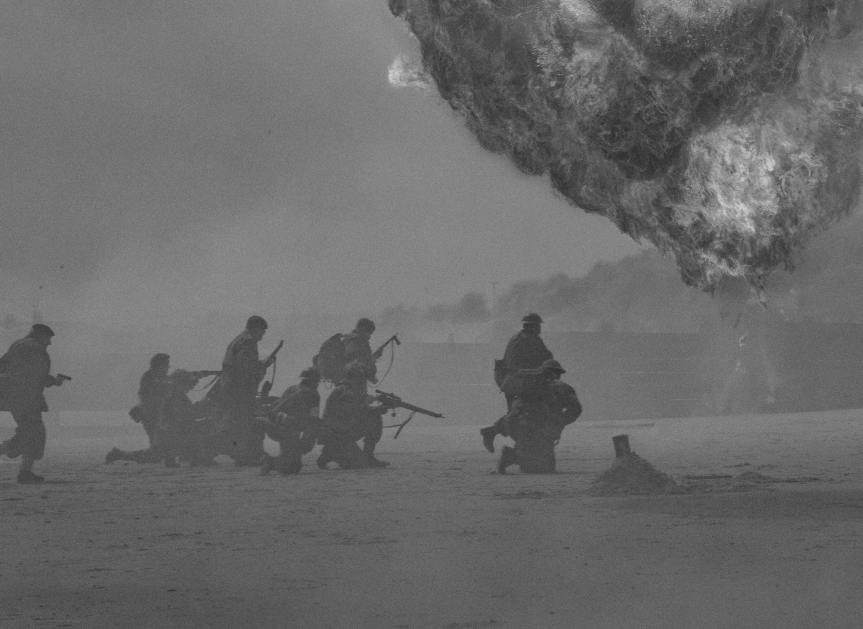
Be still and know

“Be still, and know that I am God.” Those words beckon inner peace. For most of my life, I have enjoyed that thought in isolation. But recently, someone suggested I look at the context of the Psalm. These are a few of the phrases from the preceding verses:

  • the earth gives way
  • waters roar and foam
  • mountains tremble
  • nations rage
  • kingdoms totter
  • the earth melts

Psalm 46 is not only about finding inner peace, but about finding inner peace despite external circumstances. How? God is our refuge and strength.

God is our refuge and strength, a very present help in trouble.
Therefore we will not fear though the earth gives way, though the mountains be moved into the heart of the sea,
though its waters roar and foam, though the mountains tremble at its swelling. Selah

There is a river whose streams make glad the city of God, the holy habitation of the Most High.
God is in the midst of her; she shall not be moved; God will help her when morning dawns.
The nations rage, the kingdoms totter; he utters his voice, the earth melts.
The Lord of hosts is with us; the God of Jacob is our fortress. Selah

Come, behold the works of the Lord, how he has brought desolations on the earth.
He makes wars cease to the end of the earth; he breaks the bow and shatters the spear; he burns the chariots with fire.
“Be still, and know that I am God. I will be exalted among the nations, I will be exalted in the earth!”
The Lord of hosts is with us; the God of Jacob is our fortress. Selah

Psalm 46

Photo by Duncan Kidd on Unsplash

Celebrating life

Sitting down to write a blog post is the last thing I want to do right now. Today I cannot pretend to have the formula to solve life’s problems. I have just said goodbye to a life where I had started to belong and I’m feeling rather homeless.

But there is Someone who experienced a transition much more challenging than I will ever have to face. Imagine leaving the presence of God to become a needy child, a hormonal teenager, and then a radical adult first pursued and then rejected by a group of wishy-washy followers.

Jesus Messiah understands the struggle and the heartache that come with transition. But instead of hiding from life, He still chose to live intentionally. He chose to invest in the lives of others, sometimes despite a low return on His investment. And what happened at the end of this intentional life? Jesus was killed for living unashamed. That sounds like a noble end, doesn’t it? But noble as it is, that isn’t the end of the story. Death didn’t stop Him.

This year, I am celebrating Resurrection Sunday in Spain before I move back to the States to apply for residency. Transition has really only just begun. But despite my heartache and perceived homelessness, today I want to celebrate life: Jesus’ life on earth and my own life because of Him.

It’s okay to be a foreigner

Sometimes it’s okay not to fit into every aspect of the local culture.

In a culture so linked to religion, I would make a lot of compromises and outright denials of my faith if I were to fully acclimate. So where do I draw the line between foreigner and local? I have faced a lot of cultural quirks that have made me uncomfortable. Sometimes I bit my tongue before I blurted out my opinion. Other times, I didn’t bite my tongue fast enough.

Understanding the drive behind a behavior helps me determine whether or not I want to conform. I often ask questions, especially when I’m with friends and teachers:

“Why do you act like that people group is dirty?”
“Why don’t you throw your bread in the trash?”
“Why don’t North Africans trust each other?”
“Why do men sit in coffee shops so long?”

Some things I obviously don’t want to take part in. Other things have etched question marks in my conscience. Sometimes I make a judgment and confront a North African only to discover that I have interpreted the matter through my Western worldview. I also find many cultural aspects that are a beautiful representation of God’s character.

Every culture has its ups and downs. And every foreigner should determine how to accept the good in a culture without the bad; thus, our right choices will set us apart from mainstream culture. That’s why I say it’s okay to be a foreigner.

Not so glamorous

I asked my roommate for ideas for my blog. She suggested that I write about how life abroad isn’t necessarily glamorous. The common misconception is that life at home is mundane, but those who live abroad are enveloped in a never-ending adventure. Yet, those who have live out of the country soon realize that there is a difference between traveling abroad and living abroad.

I dug around in my old emails to find my initial impressions of my “exotic” life. It turns out that despite the initial culture shock, I soon settled into a routine, much like life at home.

From February 2016: “It was hard to decide what to write about this month. If I only mention the highlights, you assume that my life is one big, adrenaline-laden adventure. It’s not. Each day is unique, but I have developed a pattern and am beginning to plod down the same cowpath day after day. Even the grass is wearing out beneath my hooves. Moo… In spite of these very normal circumstances, occasionally I do experience variation from normal life. It’s like happening on an untasted meadow (to continue the bovine analogy). Sometimes the meadow is sweet grass, other times it’s mostly thistles.”

From April 2016: “Perhaps my life sounds glamorous to you. I suppose it is in theory, but it’s been hard to give up close interaction with family, church, and friends while what used to be my everyday life changes without me. And looking like an ignorant tourist isn’t particularly glamorous or comfortable..”

What’s new quickly becomes normal when you experience it enough. Flagging down taxis, crossing the street amidst moving traffic, watching things shatter when dropped on hard tile, eating piles of bread and drinking liters of syrupy tea is all commonplace.

See, the glamorous part happens in the initial stages. A North African immigrant in America might be startled at the wealth of personal space, how difficult it is to make friends, traffic that is relatively decent and in order, prices that are non-negotiable, and everything running on time. That is something to write home about…initially. Until the glamour of the foreign adventure becomes everyday life.

Also from an email from April 2016: “A recent sermon has given me a few thoughts to ponder. Using John 21, the speaker proclaimed that our duty is to follow Him, not to compare ourselves to others and decide that our personal callings are unjust. No matter where we are, whether glamorous or not glamorous at all, our duty is to follow, day by day and hour by hour.”

Loyal or practical?

My roommate and I have the same problem. After more than a year of living in the same area, we find that we are loyal to shop owners. That doesn’t sound so bad, but we both wonder about the practicality of it. We go back to the same shops again and again, even if another place has better merchandise or better prices. This is especially true if new shops are in sight of our normal shop.

For example, my preferred produce vendor is on my way home from school. One day, when I was feeling sick to my stomach, I stopped and asked if he had bananas.

“No, they will come in later today. Maybe an hour or hour and a half.”

“Okay.” And I continued on my way, walking right past a vendor cart of bananas…sold by someone else.

My struggle became evident over Eid Kbir when many of my normal vendors disappeared for the holiday. I found new people to be faithful to…until my usuals returned. So now I have two produce vendors. One is in a busier section of the neighborhood which I usually avoid, but when I do stop there, I take a route home that avoids my usual vendor.

My roommate likes to give business to an elderly man in the old medina who usually has about four things for sale. Sometimes she takes inventory of his stock, decides she needs nothing, and then buys something anyway.

Is this practical? Probably not. At least not at first glance. Then again, by sticking with the chosen few, we are able to build solid professional relationships and perhaps protect ourselves from those less honest.

To the land that I will show you

When Abram was called by God in Genesis 12, he wasn’t called to a specific country. God didn’t say, “Abram, go to China.” Neither did God say, “There you will use your gifts of teaching and discipling by starting a language center and a church.”

Abram went with no country in mind and no idea of how to plug into his new world. He didn’t even know what linguistic and cultural barriers he would face. Plus, he was 75-years-old.

But he went in obedience because that was really all he had. He didn’t update his facebook or keep a blog to tell the world what a great job he was doing. He probably never even communicated with home again.

And then, to top it all off, within a short time of his being on the field, the land was hit with famine. The Bible doesn’t record the thoughts that would have gone through my mind: “Am I sure that God led me here? These people and this place were never really on my heart before I got here. Maybe I heard God wrong. Maybe He meant I should move down the street, not leave my home country.”

Perhaps the Bible doesn’t record those thoughts because Abram didn’t really have them. He struggled with faith in other areas at other times, but this whole “going” thing seems to be one thing he was really good at. Going and not looking back. Not doubting his calling or God’s promises even when the hard times came.

Oh, the people you meet

A short two-day trip to a land not so far away yielded a wealth of interactions and acquaintances that made it hard to leave. Oh, the people you meet!

  • A fellow passenger in a grand taxi, who spoke to me only a few minutes before inviting my roommate and me to her niece’s evening wedding.
  • A lady passing by on the street who helped us pound on the locked riad door and stuck with us until the owner and his maid came back from the market.
  • The riad owner with a surprisingly Western perspective and his maid who loved engaging in deep conversation about cross-cultural marriage and religion. But just when I thought I was making an excellent point, the owner leaned back in his chair, grinned, and said that if he had met me 24 years ago, he would have married me. The maid, an adorable but hopeless romantic, kept returning to the cross-cultural marriage part of the conversation.
  • A young lady who seemed to know everyone in town and was delighted to take us around to her favorite places…and even fish out a party invitation for us (which we turned down). But before we parted, she took us to a crumbling café for evening tea above the sea. There, she told us about her life. At the end of her story she shrugged away any traces of self-pity, smiled, and said, “Well, what are we going to do? Praise God.”
  • An old gentleman who led me to a store to buy water, waited for me, and led me back. He escaped before I could thank him.
  • A taxi driver who took us to an ancient ruins sight and then meekly offered his phone number in case we couldn’t find a taxi back into town.
  • Our guide at the ruins who led us through the layers of sights on the hillside. But he stayed far ahead of us to not disturb our sight-seeing. And he topped off his hospitality by calling the taxi driver to return for us (thus saving me a phone call in Arabic).
  • Our guide at the music conservatory who didn’t seem to mind that class was in session as he banged around on a piano in the courtyard… and then tried to get us to show off as well. He made my heart swell in hollow pride when he mistook me for a local.
  • The owner of a souvenir shop who seemed sincere in his beliefs, but wanting to listen as much as explain.
  • A family on the train who knew how to enjoy each other and the people around them. What fun to be a part of their lives for that ride. And before they got off at their stop, the father found us seats with other women so we wouldn’t have to travel alone in our cabin.

Interviewing Carmen

As I was reflecting on different aspects of North African culture, I realized it would be refreshing to get someone else’s perspective. So I talked with Carmen, a fellow foreigner, who lives in my city. (Keep in mind that her answers are paraphrased because I could not type fast enough to keep up with her thoughts.)

What do you like most about the culture?

I love the modesty. They have so much style and yet they’re so modest. Especially coming from Western culture. Although it may not be a true heart modesty, it’s physical modesty and that is nice.

Another thing I like is that people here talk about honoring God, and they’re just more open to talking about God in general. I went to a wedding in North America and there was no mention of God anywhere! It makes me wonder if God has a great plan for the children of Ishmael to have a greater voice for Him in the future; they’re already used to talking about Him.

What things about the culture makes you smile?

The colors of the traditional dress. They remind me of jewels. I went to a festival where everyone had on their best clothing and they looked like a flock of butterflies.

Do you find that people are friendly or easy to get to know?

I’ve found in our neighborhood that people are a bit harder. There is a foreigner barrier. They are hospitable but they have a limit. At the school where I teach English, that barrier is gone. They know that I’m the teacher and they are the parents instead of a foreigner and local.

Thinking long-term, what are some things about the culture that you will enjoy?

The coolest thing about being here long term is the chance to learn the language to make friends with people who don’t speak your mother tongue and don’t share your worldview. But when you get beyond that, you can share even bigger things; it becomes natural. Long term relationships are an investment and a privilege. I look forward to developing deep friendships with people from this culture. One of my best friends ever was an illiterate, subsistence farmer. I look forward to developing more of those kinds of relationships.

What are some things you might get tired of?

Not seeing what you most hope for. And if you work in the school system, lack of administrative support.

Why should someone visit North Africa?

To pray. There is such potential here in a culture that already acknowledges God. Will the Lord raise up a voice in this culture? Spirituality is respected here, not old-fashioned.  Whereas in the past, the West has been reaching out to the East, but will the Lord flip that and have the East reach out to the West?

We wear a Name

When I was in school, I met an atheist who was planning to work in the Arab world. He said that he was undecided about whether or not to reveal his beliefs. “I think it would be better to say I’m a Christian because even if they don’t like Christians, at least they would think I believe in God.” He didn’t mind branding himself with the Christian label; it meant nothing to him.

Before I moved to North Africa, people warned me that many North Africans have a misconception of Christianity. Is it any wonder? Long ago, “Christianity” was a name used to fight wars. In recent years, many presume to understand Christianity from a blend of European Catholicism, Hollywood, and tourists in scant clothing.

This is a big generalization, I realize; however, I run up against this big generalization frequently. Like the time that my friend told me what Christians believe because she had taken a religions class at the local university. Both she and others have treated me as if I don’t belong in the Christian box. In their opinion, some of the things I do or don’t do are too respectable to be Christian.

What have we done?

In Romans, Paul comes down pretty hard on God’s people for the same offense: “The name of God is blasphemed among the Gentiles because of you” (2:24). They weren’t practicing what they were preaching. As God’s chosen people they weren’t living up to the name they carried.

As a Christian, I bear the name of Christ. Instead of providing an excuse for others to blaspheme Him, I acknowledge that I need His power to live out this privilege.