Unexpected heroes

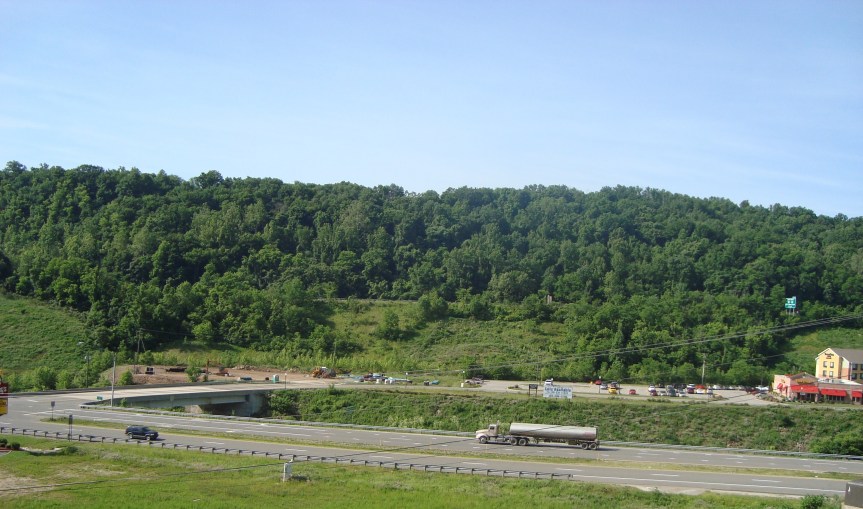
When my car broke down in West Virginia, I had visions of myself hunting down a toothless backwoods mechanic. As I stood at a gas station counter, buying every quart of 5W-30 synthetic oil the station had, I told the lady, “My car hates West Virginia!”

“We all do,” she remarked dryly.

A man stood behind me, 12-pack of Coors Light in hand. He looked a bit like Gimli, the dwarf of The Lord of the Rings—a bit pudgier and balder, but not much taller. He caught my glance. “You’re looking pretty today,” he graveled.

Apparently, I was being appraised just as I had been appraising. Apparently, he hadn’t noticed my frumpy traveling clothes. “Thank you.” I turned away from him and slipped outside as soon as I had my change.

I ducked under the hood of the car, carefully re-checking the oil and wondering how I would ever make it to my destination. My dad was helplessly 10 hours away while my car reeked of hot oil.

A man walked past. “Problems?” He studied the car. “This is a new car! It should still be under warranty.” And then he walked away shaking his head.

Thanks. Even if it had been under warranty—which it wasn’t—how would that solve my immediate problems? I was stuck in the middle of the West Virginia mountains. He may as well have said, “Be warmed and filled” before going on his way.

But suddenly Gimli and his equally rough-looking companion were standing under the hood with me. “Problems?” Gimli set down the Coors Light. The men listened to my description of the symptoms, filled the engine with fresh oil, and looked around under the car. Last, they started the car and listened to the heartbeat of the engine. And just as dusk was approaching, they sent me on my way.

No, my car wasn’t miraculously healed, but I limped along with the mighty reassurance that God was looking out for me, even if it was through unexpected heroes.

Learning trust, one call at a time

The first time I got the call, I was woefully unprepared. “Your paperwork isn’t right. You have 10 days to straighten it out.”

“I will look into it. If I have questions, can I call you?”

“No, everything you need is on our website.”

I messaged my team in Spain with my sob story. Within a day, they had straightened out my paperwork on the Spanish side of things. Several agonizing days later, the documents had the proper signatures on them. All was well. Disaster averted.

A few days later, after a day of work, I noticed a missed call on my phone… from the consulate. The chances of this being a “we received your paperwork” phone call were not good. But I still prayed that way until they called again 2 days later.

This time the voice was female. “One of the documents is still not right. You have 10 days to straighten this out.”

Within a day, the team in Spain had amended yet another document and it was on its way to the consulate. But as soon as the document arrived, my phone rang and my heart sank.

“This is not right. How can you live and work in one province when your organization is in another province?”

“That’s how it is.” I tried to explain, but the man remained unconvinced.

“I need a correction on this document or an official letter of explanation or we will reject your application and you will need to start again. This has gone on too long.”

“I know.” I didn’t even try to keep the whine out of my voice. “Too long” was right. My application would be either accepted or denied and we might as well get on with it. This middle ground had stripped my nerves completely raw.

In short, each phone call presented a new opportunity to trust. After each call, I gave the entire ordeal to God… but it was never long before I stole it back from Him. When would I learn?

Just this week, I sent off the latest document. I am waiting to hear whether or not it arrived in time. Re-application is a looming possibility. But I suppose that if I apply enough times, I might actually learn complete trust in the One who is in control of every government and their consulates.

From a family of writers

It was 2:30 a.m. and I was wide awake, when suddenly it struck me: I’m from a family of writers!

My mom, my siblings, and I all enjoy writing. Of course, we’ve had our share of mishaps. Like the time my mom sent a cheerful email to her siblings proclaiming “Hell to you all!” (she’d forgotten an “o”). Or the time when I was a child making a birthday card for my aunt. The card contained a hidden message cleverly concealed under a square of paper on which I had inscribed “Open the flab.”

Despite these unfortunate skeletons, we continued writing and continue to this day.

Mom comes from a family of unusual vocabulary, a vocabulary which still seeps into her everyday speech and writing. Before having children, she used to write poetry and keep a journal. Since children, she exchanged writing time for reading aloud: tales of Ira, Francis, Ichiro, and a little later, Narnia. Now her main writing occupation is optimistic emails to missing family members.

My older sister and I have stacks of journals. Hers go way back, to when she recorded observations from our childhood such as “Tricia eats like a horse and looks like a string bean.” Even now, she writes captivating emails recording events and people that waltz through her married life.

My older brother is the nerdy, theological writer of the family. When he asked me to help edit his Bible school thesis, I read a bit then stuck to editing grammar, not content. Instead of “This deep point of doctrine would be more indisputable if…” I was penciling in things like, “Maybe this sentence structure needs help???” Of late, most of his writing seems to be going out from the mailbox to a certain Ohio address.

My younger brother kept a journal of our family trip out West. The several pages, which gave a snapshot of the vacation in that moment, also gave some humorous insight to the workings of a 12-year-old mind. It was delightful to find his journal in my stash of papers years later… and give a copy to his wife to read! Now he gets to write sermons rather than record who is eating candy and what music we are listening to.

It was on another vacation long ago that my little sister, wrote an adorable note: “Dad, why do you let your whiskers grow?” Her thoughts have run down deeper lines since then. She maintains her own blog now and is more dedicated to her writing than any of us other family members.

At 14-months, even my nephew scripts his feelings quite clearly (see photo above).

Why do we write? Maybe it was due to those years when our parents instilled in us a love of reading. Those evenings that Mom would take us to the library and we would walk out with 40+ books that we started to read on the way home. The librarian told Mom that we were “good for circulation.”

Regardless of the reason, I’m thankful to be from a family who expresses through writing. For one, it makes living overseas more possible.

At the consulate

While I was on the 15th floor of an office building in downtown Chicago, my siblings were lounging in a plaza across the street, discussing how I had been strong and calm before my appointment. “But when she comes out, she will collapse.”

They were right. Of course they were. They had watched me meticulously gathering my paperwork over the last several months. I had read everything once, twice, a dozen times. They had seen me bend over backwards to satisfy the requirements of a Spanish residence visa.

Fifteen stories up in the one-room Spanish consulate, I watched two other applicants turned away due to unsatisfactory paperwork. Would I be next? I had tried so hard, but had I missed something? They called my name.

I was so nervous that I couldn’t even read the tidy sticky notes that I had stuck to my paper-clipped and stapled stacks of paper.

“Application form?” The accented voice was muted through the glass window.

I slid the form through the slot. Why didn’t they have personal interview rooms instead of making us feel like paroled prisoners requesting our belongings?

“Letter of invitation?”

Another man approached and looked over my interviewer’s shoulder. They discussed something in great length and jotted some notes on my application form. I stood, breathless until nearly purple. Was something wrong? Didn’t I have the right papers?

The second man asked me a few questions with an alarmingly furrowed brow. I deflated. But it was okay. I would have to start over with some of it. But at least I could go home now. I could just climb in that shiny elevator and disappear.

But the man said, “Okay, I trust you. I will try to get it to you in time.”

I wasn’t sure what he was “trusting” me about. The answers to the questions he had asked were on the papers in front of him. But I didn’t ask him to explain himself. Prolonging our talk felt risky.

“Proof of insurance?”

I slid my translated insurance letter through the slot. The list went on until I had handed over every one of my documents. There were no complaints, no outbursts, no declarations that I hadn’t gathered the correct things.

The interviewer gave me a curious glance as I packed up my things. Perhaps he was analyzing how I would survive in Europe. But I didn’t care because gliding down 15 floors in a polished elevator was my red carpet.

Now the waiting would begin, and with it came the possibility of a rejected application. But for today, I could be done!

deep dish pizza on restaurant table

That is why I collapsed when I saw my siblings waiting for me in the plaza. And then we went to Giordano’s for celebratory deep dish pizza.

Do you want to know the apricot tree?- Part 3

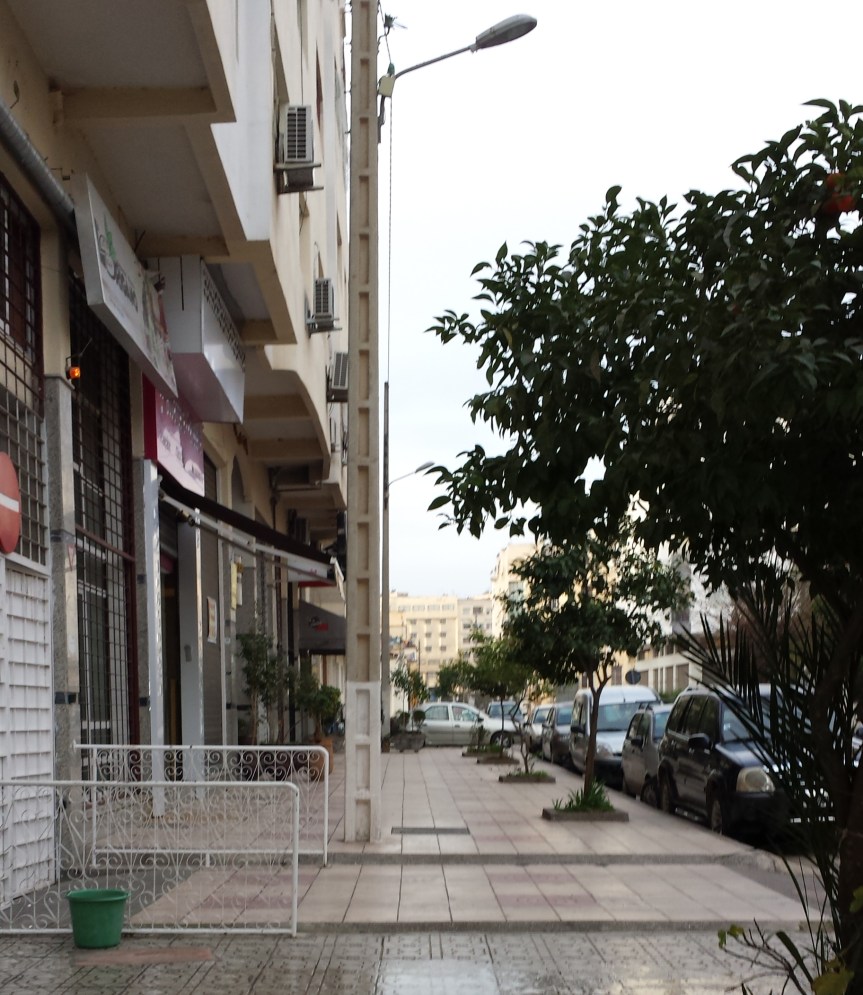
The uneven cobblestone streets wound down into the old medina. It was my last big shopping trip before I left the country. I wasn’t going to rush. Not many people were out today- was it a holiday? Who cared?

I had already bought a neat little set of tea glasses and stopped to chat with the rug seller who invited me into his shop whenever I strolled by. Then I paused in front of a shop to look for a piece of jewelry someone had asked me to look for. Earrings with a ship anchors on them.

“Can I help you?” The idle shopkeeper was suddenly at attention.

“Yes, do you have… do you have… Do you have earrings with-” How in the world was I going to describe an anchor?

“Yes! Here are the earrings! I have this kind, and this kind-” His hands flew as he pointed out his worthy merchandise. “Do you want camels? I have camel earrings!”

“No. I want… I want earrings with something from a ship. Something they throw into the water.”

He covered his confusion by pointing out more undesired sets.

Then I spotted a keychain with a ship anchor. “There! I want earrings with this! What is this?”

He shrugged and grinned. “Something from a ship that they throw into the water.”

I rolled my eyes, but he urged me into his shop to look at other things. After a quick glance around, I was ready to go.

But he had spotted the set of tea glasses sticking out of the cloth bag I had draped over my arm. “Are those colored?”

“No. They’re just normal.”

Uninvited, he pulled them out of my bag. Carefully, he opened the box and seeing the set of shining but very normal glasses, he said reverently, “They’re nice.”

I agreed as I took the box back from him.

He was still staring at the box as I replaced it my shopping bag. “How much did you pay for them?”

The moment I had been waiting for had sneaked up and caught me unaware. Almost. But not quite.

“Do you want to know the apricot tree and who planted her?” I didn’t say the words loudly; I was too preoccupied with saying them correctly. But they hit their mark.

The storekeeper took a step backward before bursting into hearty laughter. It was several moments before he was able to respond. “You are not a foreigner. You are a North African! You speak North African!”

Do you want to know the apricot tree?- Part 2

There was coffee with milk, mint tea, several types of bread, cookies, brownies, chocolate pastries, hard-boiled eggs with salt and cumin, strawberries…

We three roommates beamed at each other across the table. We had pulled off a luscious North African tea time. Our two guests were relaxed and carried on a lilting conversation that didn’t seem to notice our limited vocabulary.

“Eat! Eat!” We urged as we refilled coffee glasses and set plates of food in front of them.

The topic turned to people who ask too many questions. I shared my story with the woman at the store. Our guests burst into laughter, amused at how annoyed I still was, days later.

“What should I say when people ask me that?” I hollered over their laughter. My teacher had taught me the phrase, “Is it your market?” but I had only ever heard sassy children use that with each other. It hardly seemed appropriate to be so blunt with another adult.

Still laughing, one of the ladies said, “Do you want to know the apricot tree and who planted her?”

Captivated, we asked her to repeat the phrase over and over. As foreigners, we probably got more than our fair share of nosy questions. Having a bit of good-natured ammunition would be refreshing. Our guests assured us that no one would take offense at such a remark, but they would get the hint to get their nose out of of your business.

We practiced the awkward words and intonation until our pronunciation was acceptable by North African standards.

And I filed that helpful tidbit in my mind for easy access.


Photo by Pratik Gupta on Unsplash

Do you want to know the apricot tree?- Part 1

Just a quick trip to the store and I would be back in a jiffy. Humming, I pranced down the flights of stairs and onto the street that baked in the warm March sun.

“Peace be upon you,” I greeted the storekeeper.

“And upon you.”

A woman was in front of me at the counter. She turned to me with an intrusive stare. “Is she English?” she addressed the storekeeper.

“No, I’m American.” I answered for myself and then looked away to avoid further questions.

Some North African women could smell evasion. They went around, rooting out people who dared to hide anything from them. Her eyebrows lifted. “You speak Arabic?”

“Yes. I live here.”

“How much do you pay for rent?”

Really? All I need is two eggs. I bit back a smart reply that would probably be effective. It would also probably be rude. So I cleared my throat and tried to dance around the question. “I live with two other girls.”

The storekeeper was smirking. I could feel it more than I saw it. But despite our months of trust-building and extraordinary civility, he refused to come to my rescue. Then again, maybe I had rescued him.

The woman hung on like an un-oiled tick. “But how much do you pay?”

Exsparated, I gave her an amount.

She gasped. “What? All of you pay that together?”

A gusty sigh escaped before I could stop it. “Noooo. Each of us pays that amount.” I had yet to acquire the linguistic ability to defend myself and my private information around women like her.

“Oh.” She glanced at the ceiling as she did some quick math. “That’s not very much.”

Glad you think so. Now, could you please finish?

When she had vanished, carrying with her the essence of satisfied control, I stepped up the counter, deflated. “Eggs.”

“How many?” The store keeper was still smirking.

“Just two.”

Grace and migrating tissues

I had spent a significant part of my evening in the living room chair with a box of tissues close at hand. It was my very own pity party. No one else was invited. The piles of bank statements, resident visa forms, tax papers, and junk mail were the life of my party.

I felt like I had been making lists all day. Lists of things that had to be done. Lists of phone numbers to call. Lists of people I should visit. Grocery lists. Arabic verb lists. And this list goes on…

Not only that, but the thoughts rolling around in my head hadn’t yet been categorized on any list. Is this what “normal” looked like in America? Had I simply forgotten? Or had I completely lost my ability to handle stress? Or was it just the paperwork I couldn’t handle?

That’s why I merited a pity party. So I moped and felt considerably worse afterwards. A pity party hangover. Finally, I was able to motivate myself to go to bed. And guess what? I had a wonderful night of sleep!

Not that I deserved it. Nope. If I would have been God, I would have made me toss and turn restlessly all night to learn my lesson for worrying about all of the “tomorrows” of my future. Instead, He showed me grace and I woke up ready to face the new day instead of cowering under the covers.

I chipped away at one of my lists, accomplishing what I could and leaving the rest unwept, unhonored, and unsung. And that afternoon, I was ready when a friend arrived in unexpected tears. She didn’t need to explain. We simply moved the tissues from beside my chair to where she was seated on the couch. And I made some tea.

God knows that we don’t always learn lessons best through justice. Sometimes what we need is grace.

Transitioning with olives

All I wanted to do was buy olives. It was the perfect idea to reward myself with a short walk to the store between secretarial tasks. The weather was full of gentle Mediterranean breezes and I loved walking. Then why was I suddenly anxious?

What should I wear? Some of my clothes were stored in boxes. Others were stashed in suitcases, ready to make the final leg of the journey to the States. Somehow the outfit I had on no longer matched. The shades of blue were all wrong.

“Trish,” I reasoned with myself. “This outfit was perfectly fine before.” But not now. Not in Europe. Not in public. I changed and then changed back when the second option felt even worse.

How do I say olive in Spanish? Olive? No, that’s French. Zitun? That’s Arabic. Why can’t I remember my Spanish anymore? Should I take my own bag or do stores give out plastic bags? I can’t remember. What were they doing the last time I was here? Where did I even put my shopping bags?

Why is this so hard?

I didn’t want to take that short walk anymore. Every decision looked big. Nothing was familiar. I battled my anxiety all the way to the store. I felt everyone’s eyes on me. Am I even walking down the right street? Why is that car stopping for me? Thank you, sir! No, don’t wave at him; you’ll look even more like a stupid foreigner. You’re in Europe now.

Transition. Have I exaggerated my trip to the store? Yes. But the exaggeration was in reality, not in what I just wrote. It sounds ridiculous to say that I almost panicked at the thought of buying olives. But transition is hard because nothing is familiar. Everything requires extra thought and effort. No matter how insignificant, every decision feels big.

I am not the only one who feels the pressure of transition. Maybe everyone else I know can confidently buy olives, but there are different responses to transition. And there are different types of transition. Do you know of someone whose spouse has passed away? Someone who has lost a dear friendship? Someone who has moved to a different community?

Maybe it’s you. Maybe you’re feeling a bit like me right now, or worse. Whether it is you or someone else, give that person time to grieve and transition. Remember that we are not alone. There are others who understand… especially the “man of sorrows” who was “acquainted with grief” (Is. 53:3).

Djellaba shopping

We were supposed to be going djellaba shopping. Aisha had volunteered to help me when she found out I wanted to buy a traditional dress. I had agreed to meet her at her house, knowing well what would happen.

I was right. After an hour or so, when lunch was cleaned up and everyone was dressed, we moseyed out to a shop that happened to be closed. So we spent another half hour sitting on her mother’s couch and chatting over cups of thick coffee as someone dozed under a wool blanket across the room.

We entered a tiny shop that sold mostly pajamas. They did have a few djellabas, however. The tailor made me try them on and was disheartened when they all ended before my wrists and above my ankles.

So he took my measurements and told me to pick out a fabric. Aisha negotiated the price alone. When we walked away, she squealed. “That is the local price. You would not get a price like that. If I wasn’t with you, people would take advantage of you.” I didn’t doubt it.

She still had my money in her pocket and waving the scrap of fabric the tailor had snipped off for us, she insisted that we find a headscarf and traditional shoes to match my new outfit.

In that neighborhood there was such a camaraderie of poverty- a people that hovered just above the grime of life, but hovered together. Still, admonitions came to “hold your sack in front of you, not behind you!” Indeed, a lady in front of us paused when she realized that she no longer had her wallet.

But I was so watched that I couldn’t imagine how anyone could have stolen anything from me without someone else noticing. People swarmed around us, bumped into us, gawked at us.

A shopkeeper motioned to me while addressing Aisha. “Is she a Muslim?”
“No.”
“Not yet.” He eyed me. “Why aren’t you a Muslim?”
Taken off-guard, I straightened. “Why do I need to be?”
“She prays!” Aisha inserted, intent on protecting my religious freedom.
“Who is she?”
“My sister.”
“You’re short and she’s tall. How can you be sisters?”
I cleared my throat. “She is like our mother and I am like our father.”
Then Aisha and I giggled together, and the shopkeeper gave an irritated but irrepressible grin.

Another lady stopped us and Aisha proudly told her that I was getting a djellaba made by a local tailor.
“Is she a Muslim?”
“No.”
“Does she pray?”
“Yes.”
“Does she fast?”
“Yes, she fasts.”
“Well then, what does it matter what she is?”

I spoke up then, but the lady was more interested in the fact that I was speaking her dialect than in what I had to say. And she walked away, still convinced that my good deeds gave me a good shot at paradise.

The sundown prayer call sounded. Aisha kissed me goodbye and tucked me into a taxi, even while insisting that I stay for tea.

I stared out the window at the sunset on the way home, pensive and full. It was one of those days that I would like to store in my pocket and pull out when I get lonesome for these people.