It’s okay to be a foreigner

Sometimes it’s okay not to fit into every aspect of the local culture.

In a culture so linked to religion, I would make a lot of compromises and outright denials of my faith if I were to fully acclimate. So where do I draw the line between foreigner and local? I have faced a lot of cultural quirks that have made me uncomfortable. Sometimes I bit my tongue before I blurted out my opinion. Other times, I didn’t bite my tongue fast enough.

Understanding the drive behind a behavior helps me determine whether or not I want to conform. I often ask questions, especially when I’m with friends and teachers:

“Why do you act like that people group is dirty?”
“Why don’t you throw your bread in the trash?”
“Why don’t North Africans trust each other?”
“Why do men sit in coffee shops so long?”

Some things I obviously don’t want to take part in. Other things have etched question marks in my conscience. Sometimes I make a judgment and confront a North African only to discover that I have interpreted the matter through my Western worldview. I also find many cultural aspects that are a beautiful representation of God’s character.

Every culture has its ups and downs. And every foreigner should determine how to accept the good in a culture without the bad; thus, our right choices will set us apart from mainstream culture. That’s why I say it’s okay to be a foreigner.

Not so glamorous

I asked my roommate for ideas for my blog. She suggested that I write about how life abroad isn’t necessarily glamorous. The common misconception is that life at home is mundane, but those who live abroad are enveloped in a never-ending adventure. Yet, those who have live out of the country soon realize that there is a difference between traveling abroad and living abroad.

I dug around in my old emails to find my initial impressions of my “exotic” life. It turns out that despite the initial culture shock, I soon settled into a routine, much like life at home.

From February 2016: “It was hard to decide what to write about this month. If I only mention the highlights, you assume that my life is one big, adrenaline-laden adventure. It’s not. Each day is unique, but I have developed a pattern and am beginning to plod down the same cowpath day after day. Even the grass is wearing out beneath my hooves. Moo… In spite of these very normal circumstances, occasionally I do experience variation from normal life. It’s like happening on an untasted meadow (to continue the bovine analogy). Sometimes the meadow is sweet grass, other times it’s mostly thistles.”

From April 2016: “Perhaps my life sounds glamorous to you. I suppose it is in theory, but it’s been hard to give up close interaction with family, church, and friends while what used to be my everyday life changes without me. And looking like an ignorant tourist isn’t particularly glamorous or comfortable..”

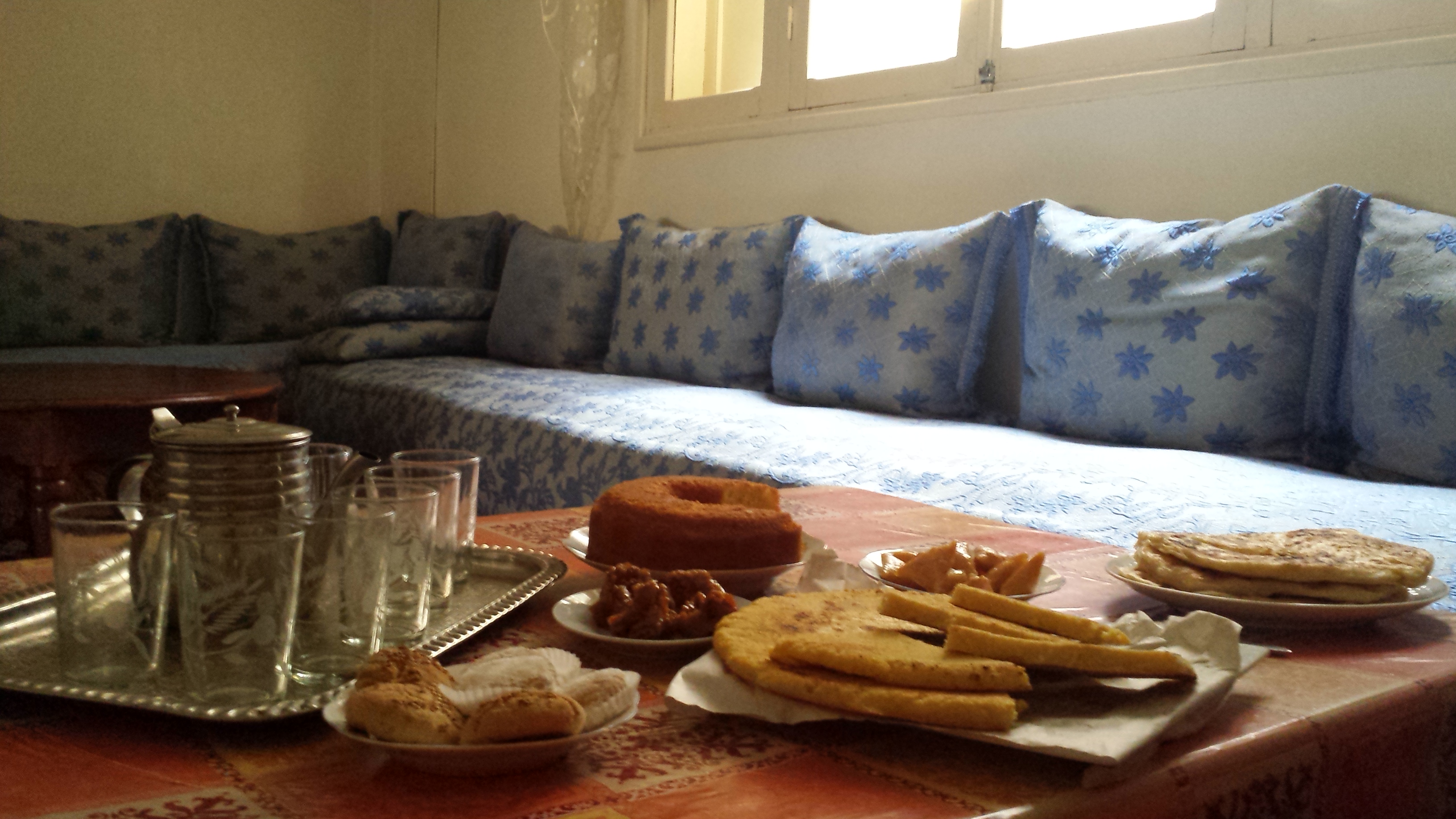
What’s new quickly becomes normal when you experience it enough. Flagging down taxis, crossing the street amidst moving traffic, watching things shatter when dropped on hard tile, eating piles of bread and drinking liters of syrupy tea is all commonplace.

See, the glamorous part happens in the initial stages. A North African immigrant in America might be startled at the wealth of personal space, how difficult it is to make friends, traffic that is relatively decent and in order, prices that are non-negotiable, and everything running on time. That is something to write home about…initially. Until the glamour of the foreign adventure becomes everyday life.

Also from an email from April 2016: “A recent sermon has given me a few thoughts to ponder. Using John 21, the speaker proclaimed that our duty is to follow Him, not to compare ourselves to others and decide that our personal callings are unjust. No matter where we are, whether glamorous or not glamorous at all, our duty is to follow, day by day and hour by hour.”

Aisha- part 4

She lost her job. Just when things had been going well. Just when little by little she had been saving up to furnish the tiny salon. She had talked of buying an oven. She had talked of the circumcision party she wanted to hold for her son in April. Now that was gone. There were no more dreams because there was no more money.

Her husband was working a little, she explained, but she never saw the money.

“It goes for cigarettes and coffee with his friends at the coffee shop.”
“Praise God he doesn’t use your money for that!” I reminded her. But I still hurt for her.

Eventually she found work two days a week. Enough to survive, but not enough to live.

It seemed that every time I entered her home, there was a storm brewing between mother and daughter. Today was no exception.

When I had reached Aisha’s house, things were calm. We sat in the salon, talking and watching Bollywood. God’s grace bridged the language deficit. We talked about life, about marriage, about her children, about her job hunt.

Her daughter, Soukaina, disappeared to be with her friends. A long time later, Aisha hollered across the rooftops of that tiny, sunken neighborhood: “Soukaina! Soukaina!” Soukaina emerged from her friend’s house and soon thereafter two young men followed.

To a mother with no education, a girl’s purity and family honor are the only things worth living for. There is no other option. And with her husband generally absent, Aisha is the guardian of her daughter and, essentially, the family honor.

I just wanted to hide. I had already had an encounter on the street with a man who left my blood boiling in his wake. And upon arrival to Aisha’s neighborhood, I had an argument with the taxi driver whether or not it was safe for me to walk the ½ block from the taxi stand to Aisha’s house. I didn’t want to get involved in anything else, for goodness’ sake!

Aisha offered me a way out: to go with her to buy sweets for the afternoon tea.

But God said, “Stay here with Soukaina.”

So I stayed and listened to the 16-year-old, heart-broken side of the story. Then I touched her hot and teary face and wondered what kind of life lay ahead of this girl. What opportunities did she have? What opportunities would she have?

My own heart felt achy for the women of the family, even as we sipped syrupy tea and I made boats, airplanes, and trains out of each bite of cookie for Aisha’s 2-year-old son.

Aisha walked me to the taxis, telling me again and again how “dear” I am to the family.

I responded with the appropriate reciprocal response, but I really meant it. Aisha will always be dear to me. As we turned out of the neighborhood, the evening sky came into view with bright pinks and oranges. It was so breathtaking I started to cry from the bittersweet mingling of Aisha’s pain and God’s faithfulness.


Loyal or practical?

My roommate and I have the same problem. After more than a year of living in the same area, we find that we are loyal to shop owners. That doesn’t sound so bad, but we both wonder about the practicality of it. We go back to the same shops again and again, even if another place has better merchandise or better prices. This is especially true if new shops are in sight of our normal shop.

For example, my preferred produce vendor is on my way home from school. One day, when I was feeling sick to my stomach, I stopped and asked if he had bananas.

“No, they will come in later today. Maybe an hour or hour and a half.”

“Okay.” And I continued on my way, walking right past a vendor cart of bananas…sold by someone else.

My struggle became evident over Eid Kbir when many of my normal vendors disappeared for the holiday. I found new people to be faithful to…until my usuals returned. So now I have two produce vendors. One is in a busier section of the neighborhood which I usually avoid, but when I do stop there, I take a route home that avoids my usual vendor.

My roommate likes to give business to an elderly man in the old medina who usually has about four things for sale. Sometimes she takes inventory of his stock, decides she needs nothing, and then buys something anyway.

Is this practical? Probably not. At least not at first glance. Then again, by sticking with the chosen few, we are able to build solid professional relationships and perhaps protect ourselves from those less honest.

Khadija

When we sat down on that bench along the boulevard, weary from hauling our backpacks around all day, my roommate and I didn’t imagine that the elderly lady who sat down next to us would become anything more than the elderly lady who sat down next to us.

But I smiled and said, “Peace be upon you.”

“And upon you.”

“Are you from here?”

It didn’t take long to find out that she was proud of her Berber heritage. Her opinionated brusqueness appealed to me. There were no fluffy, flattering words. No acting like we were movie stars. Just an invitation to tea the next day.

At tea, she spoke clearly and explained the words I didn’t understand. She understood that I was from a different culture and a different religion without treating me as if I were ignorant. And the way that she told stories inspired me to one day be like her.

In the months that followed, she told more stories, including part of her own story… a disappointing trail of heartache with oases of happiness. Whether I visited her with my roommate or alone, I always felt at rest. She didn’t pressure me to stay when I needed to go, or pressure me to eat when I was full. It was like she welcomed the relationship with no expectations. And she liked me for being me and not what I could do for her or who I might one day become.

One day, we went to visit her when she was ill. But she didn’t answer her door. After knocking and calling, I was concerned. Was she in the hospital? Was she too ill to come to the door?

We knocked on the neighbor’s door and were welcomed into the life of the next door family. They fed us, helped me with my homework, and chatted with that same element of acceptance. They were, in short, delightful. And Khadija was fine after all; just late with running errands.

She invited my family for tea when they visited North Africa. She admired pictures of my nephew and showed me her grandchildren. Her broken family had broken her heart. But after quickly wiping away her tears, she seemed content with the good people in her life. And her yearly pilgrimage to Mecca gave her an element of peace that she was doing what was right.

During one of my visits, I was sipping tea with her and the lady next door when Khadija switched the TV channel to sumo wrestling. I was repulsed until I realized I was living one of those moments that I would never be able to relive. How many times would I recline on the sofa, sipping sweet mint tea, and watching sumo wrestling with two 70-year-old ladies?

That was the same visit that she brought me a traditional robe to put on over my clothes. When she left to start the coffee, the neighbor lady patted my arm, “Now you are really her daughter. She is treating you like a daughter.”

Privilege and poverty

A proud tree stood with arms stretched wide
Until they reached the other side
Of a wall that ran both deep and wide.

The tree offered fruit and shade
Of the same quality that it saved
But on its side it proudly stayed.

And this side--both yours and mine--
Toiled but controlled the time,
And the other side could never climb.

Then one day that tree fell down,
And passing people quickly found
Not one but two ruts in the ground.

Photo by Annie Spratt on Unsplash

To the land that I will show you

When Abram was called by God in Genesis 12, he wasn’t called to a specific country. God didn’t say, “Abram, go to China.” Neither did God say, “There you will use your gifts of teaching and discipling by starting a language center and a church.”

Abram went with no country in mind and no idea of how to plug into his new world. He didn’t even know what linguistic and cultural barriers he would face. Plus, he was 75-years-old.

But he went in obedience because that was really all he had. He didn’t update his facebook or keep a blog to tell the world what a great job he was doing. He probably never even communicated with home again.

And then, to top it all off, within a short time of his being on the field, the land was hit with famine. The Bible doesn’t record the thoughts that would have gone through my mind: “Am I sure that God led me here? These people and this place were never really on my heart before I got here. Maybe I heard God wrong. Maybe He meant I should move down the street, not leave my home country.”

Perhaps the Bible doesn’t record those thoughts because Abram didn’t really have them. He struggled with faith in other areas at other times, but this whole “going” thing seems to be one thing he was really good at. Going and not looking back. Not doubting his calling or God’s promises even when the hard times came.

Oh, the people you meet

A short two-day trip to a land not so far away yielded a wealth of interactions and acquaintances that made it hard to leave. Oh, the people you meet!

  • A fellow passenger in a grand taxi, who spoke to me only a few minutes before inviting my roommate and me to her niece’s evening wedding.
  • A lady passing by on the street who helped us pound on the locked riad door and stuck with us until the owner and his maid came back from the market.
  • The riad owner with a surprisingly Western perspective and his maid who loved engaging in deep conversation about cross-cultural marriage and religion. But just when I thought I was making an excellent point, the owner leaned back in his chair, grinned, and said that if he had met me 24 years ago, he would have married me. The maid, an adorable but hopeless romantic, kept returning to the cross-cultural marriage part of the conversation.
  • A young lady who seemed to know everyone in town and was delighted to take us around to her favorite places…and even fish out a party invitation for us (which we turned down). But before we parted, she took us to a crumbling café for evening tea above the sea. There, she told us about her life. At the end of her story she shrugged away any traces of self-pity, smiled, and said, “Well, what are we going to do? Praise God.”
  • An old gentleman who led me to a store to buy water, waited for me, and led me back. He escaped before I could thank him.
  • A taxi driver who took us to an ancient ruins sight and then meekly offered his phone number in case we couldn’t find a taxi back into town.
  • Our guide at the ruins who led us through the layers of sights on the hillside. But he stayed far ahead of us to not disturb our sight-seeing. And he topped off his hospitality by calling the taxi driver to return for us (thus saving me a phone call in Arabic).
  • Our guide at the music conservatory who didn’t seem to mind that class was in session as he banged around on a piano in the courtyard… and then tried to get us to show off as well. He made my heart swell in hollow pride when he mistook me for a local.
  • The owner of a souvenir shop who seemed sincere in his beliefs, but wanting to listen as much as explain.
  • A family on the train who knew how to enjoy each other and the people around them. What fun to be a part of their lives for that ride. And before they got off at their stop, the father found us seats with other women so we wouldn’t have to travel alone in our cabin.

Interviewing Carmen

As I was reflecting on different aspects of North African culture, I realized it would be refreshing to get someone else’s perspective. So I talked with Carmen, a fellow foreigner, who lives in my city. (Keep in mind that her answers are paraphrased because I could not type fast enough to keep up with her thoughts.)

What do you like most about the culture?

I love the modesty. They have so much style and yet they’re so modest. Especially coming from Western culture. Although it may not be a true heart modesty, it’s physical modesty and that is nice.

Another thing I like is that people here talk about honoring God, and they’re just more open to talking about God in general. I went to a wedding in North America and there was no mention of God anywhere! It makes me wonder if God has a great plan for the children of Ishmael to have a greater voice for Him in the future; they’re already used to talking about Him.

What things about the culture makes you smile?

The colors of the traditional dress. They remind me of jewels. I went to a festival where everyone had on their best clothing and they looked like a flock of butterflies.

Do you find that people are friendly or easy to get to know?

I’ve found in our neighborhood that people are a bit harder. There is a foreigner barrier. They are hospitable but they have a limit. At the school where I teach English, that barrier is gone. They know that I’m the teacher and they are the parents instead of a foreigner and local.

Thinking long-term, what are some things about the culture that you will enjoy?

The coolest thing about being here long term is the chance to learn the language to make friends with people who don’t speak your mother tongue and don’t share your worldview. But when you get beyond that, you can share even bigger things; it becomes natural. Long term relationships are an investment and a privilege. I look forward to developing deep friendships with people from this culture. One of my best friends ever was an illiterate, subsistence farmer. I look forward to developing more of those kinds of relationships.

What are some things you might get tired of?

Not seeing what you most hope for. And if you work in the school system, lack of administrative support.

Why should someone visit North Africa?

To pray. There is such potential here in a culture that already acknowledges God. Will the Lord raise up a voice in this culture? Spirituality is respected here, not old-fashioned.  Whereas in the past, the West has been reaching out to the East, but will the Lord flip that and have the East reach out to the West?