Birth certificates and cookie crumbs

It took 45 minutes to walk to town hall. Naima had told me she would meet me there. She was so slow in coming that I almost gave up. But it was a pleasant morning. There was shade and a nice breeze.

Suddenly she appeared, three children in tow. Only Curly Top, the littlest, was her own; the older two belonged to a neighbor. The younger neighbor girl gave me a grin so big that it took up the bottom half of her face.

Naima had tried to call me to change the meeting place, but I hadn’t answered, she said. We left it at that and walked together to a little building on the end of town.

“What do you need here?” I was the designated interpreter. But that could only happen if I understood what I was supposed to interpret. Naima tried to type the unknown Arabic word into my translator, but didn’t know how to spell it.

We entered the building, just large enough for a few offices that didn’t look strikingly official.  A sign said to ask for a number, so I snagged a wandering employee. “A number please?” By the time he found a number and brought it to me, it was my turn.

But I still didn’t know what Naima needed.

I sat across from a gruff man at a desk. “What do you need?” His voice matched his expression.

“I don’t know.” I handed him my friend’s family book and he paged through it.

“What do you need?” he asked again.

“My friend needs two of something for her daughter, but I don’t know the word in Arabic, so I don’t know what to say in Spanish. She is trying to call her husband now.”

The gruff features twisted. “A birth certificate?”

“Is that what you have here?”

“Yes, and that’s all we have for her daughter.”

So while he printed the documents, he asked if I was evangelical and then launched into a one-sided discussion about Mormons. Mormons?

BANG! went the rubber stamp. BANG! BANG! BANG! He signed the documents with such scribbled flourish that it may have looked more natural had he been using a crayon on a coloring page.

“Where are you from?”

“The United States.”

“Trump. A lot of people angry that he doesn’t like immigrants.”

I sighed. Yes, but didn’t every country have its problems and weren’t there any problems in Spain?

Another one-sided discussion ensued that gave me a vague sensation of having made my point. He walked me to the door, still talking, and watched our little gang leave the odd little office.

Naima invited me up to her flat where I tried to translate a medical questionnaire that dizzied my brain. Naima sat on the arm of the couch and swatted away the little girls when they reached for the papers in my lap.

“Is it normal for your child to have high fevers?”

“No. She only has fevers when she’s teething. Have lunch with us.” Naima got up to start lunch preparations.

I couldn’t, but thank you. Another time, Lord willing.

“In my culture, when a guest comes to my house it’s shameful not to give them any food.” Naima packed up a container of olives she had brought back from her country.

I joined her in the kitchen area and watched her carefully wrap the container of olives in a plastic bag.

Curly Top was walking around the floor on her knees, sprinkling bread and cookie crumbs wherever she went, like a miniature Hansel and Gretel. Big Smile was claiming ownership of everything that wasn’t hers—my bag, Curly Top’s toys, a plate of cookies. I watched as she carefully stuck her foot into a pair of Curly Top’s pants, only about 3 years too small.

Naima took me to the elevator, leaving the flat door wide open and crumby children sprinkled along the hallway. I hit “0” and the elevator door closed.

When a day starts, I never know what to expect. But I kinda like that.

Spanish with the nuns

Buried in my neighborhood is a tiny green door that leads to a tiled courtyard full of vibrant plants. Charming little rooms surround the tiled courtyard, completing the charming little haven.

In one room, there is a set of five sewing machines. Four treadle. One electric.

In another room, there is a plastic table with accompanying plastic chairs and a rough blackboard.

This is a sewing and Spanish school for immigrants. It is managed by nuns. A friend brought me along to class one day to see if I could enroll.

The first time I met the nuns, I had to bend over at the waist to greet them with kisses on their dainty little faces. Only one seemed more than five feet tall. And not one of them was under seventy. Maybe eighty.

I was captivated. “Is it possible to sign up for Spanish class?” I gripped my friend’s elbow as I awaited the nuns’ answer.

It was possible. After Semana Santa, I officially enrolled for the final trimester of the school year. (And by officially enrolling, I mean that I jotted my information on a scrap of notebook paper.)

On the first day of class—a lesson of body parts vocabulary—the teacher chalked a stick figure on the board with a rectangular trunk. For good measure, she placed a few wild curls on the faceless head to classify the figure as “female.”

During class, the figure was blessed with a chalky esophagus. No other organ required equal visual explanation, so the figure proudly sported her solitary organ until the end of class. And as the teacher erased both the figure and her esophagus, we students trickled out of the shadowy room and into the blast of sunlight that spread across the courtyard.

Since then, class has brought me in close contact with other immigrants as we reveal tidbits of our lives in choppy Spanish and laugh about our language woes. We share struggle and community. We even share goods: sometimes we carry home peppers, cucumbers, handcrafted sewing class projects, or even potted plants.

As the final trimester enters the final month, attendance has dwindled as most of the women fast for Ramadan.

The first and second hour classes combined and I suddenly found myself in a class of women who struggle with pronouns and simple verbs. But the energy and fun we have together is rewarding enough for me.

Yesterday, while practicing the structure “I like,” a classmate smiled and said, “I like Trish’s face.”

“Yes, yes,” agreed the teacher. “Trish has a nice face.”

The other students murmured their agreement and admired my reddening cheeks. Until, for lack of a Spanish equivalent, I burst out the Arabic expression, “God be blessed!”

Writer’s block and little people

“The words don’t come anymore. It’s like they’re stuck,” I told my roommate. I used to love sitting down to answer emails. Now, despite the fact that I still love to get emails, it’s harder to sit down and respond to them. What used to be a joy now feels more like a discipline.

“It’s like the one thing I used to be good at no longer works!”

My journal entries have grown thin and factual. My blog entries are dry.

Sometimes I get tired of words, trying to recall or learn words in three languages. Tired of trying to make myself understood in any of those languages and their respective cultures.

Sometimes I want to turn off the words in my brain and just be—I want the “nothing” box that men claim is real.

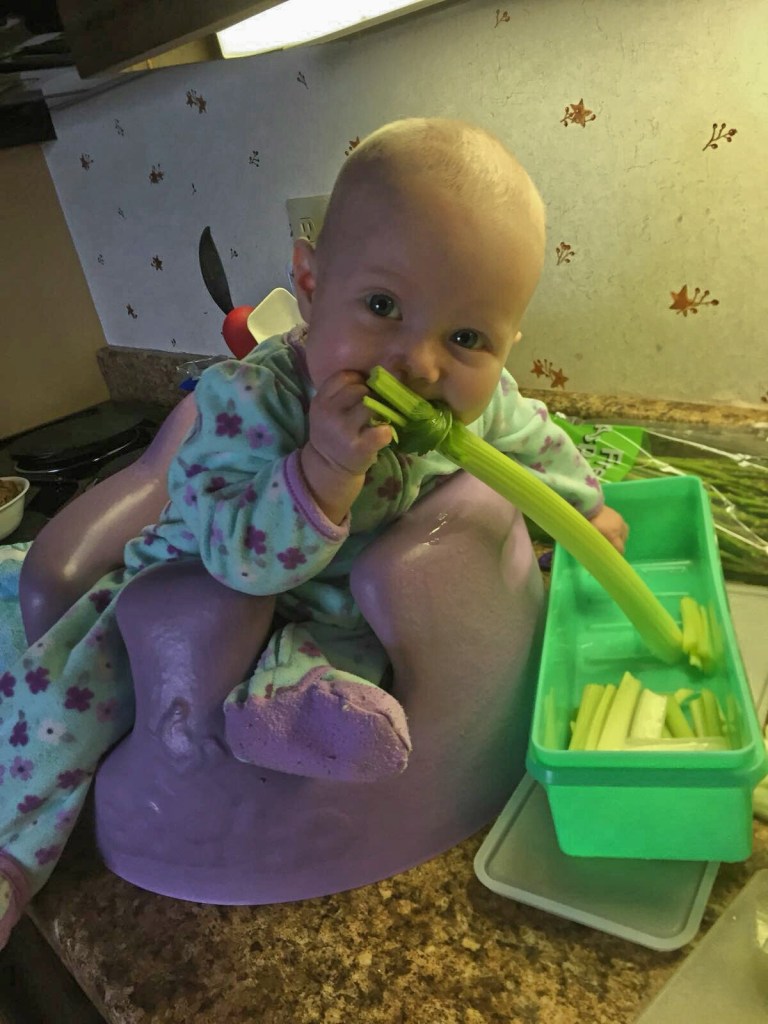
So instead of writing something profound, I offer you some snapshots of my favorite little people: Carissa Joy, Clark David, and Albert Harris. My family kindly keeps me updated with pictures of my growing niece and nephews.


Featured photo by Steve Johnson on Unsplash

Niece and nephews photo credits to my family

A Good Friday stroll

The Good Friday streets were quieter than normal. I plodded along, bracing myself against the wind.

When I was young—not more than ten—I overheard a conversation between my mom and her friend. The friend claimed that it always rained on Good Friday, even if it was just a little. Mom was politely dubious, but the statement impressed itself upon my impressionable mind. Did it really? Was God reminding us of the death of Jesus through a sky full of tears?

However, since this friend had revealed the fact after Good Friday, I had to wait an entire year to see if the statement were true. By then, I had forgotten about it. And I forgot the next year and the next until more than twenty years later, I still had never noted whether or not the rain dutifully came on Good Friday. Would it come to every part of the world if it indeed came at all? Would it come to Spain?

To be my age and wondering these things made me question my sanity. Why would I believe something that had neither Biblical nor meteorological basis?

I continued to walk, lost in rambling thoughts. My morning plans had been changed at the last minute, making me wish I had stayed in bed longer. But since I was up, I thought I might as well go for a stroll. My relaxed pace allowed a stooped, old man to zip around me. As he passed, I wondered what his story was.

Today the world was worth noticing: young voices pouring out of open cafés, elderly men congregating on park benches, a boy with a soccer ball. What did Easter mean to these people?

I wandered into my favorite café. “Coffee with milk?” The server asked before I had selected my chair.

“Thank you.” I smiled and pulled out my Kindle. I read, inhaling a fair amount of secondhand smoke and sipping my coffee from the sweet rim of my mug—I hadn’t used sugar and tried not to think too hard why the rim tasted sweet.

“One euro, guapa.” The server made change for my ten euro bill.

“Have a good Easter.” I smiled at her.

But would she? In Spain, the climax of Holy Week is the passion of Christ. That part of the holiday is celebrated and reenacted until resurrection Sunday is almost lost. Like their Jesus, did these people also keep their faith eternally nailed to the cross? Did they believe in victorious faith? Victorious life?

A dog trotted along a crosswalk, confident he owned the street. His owner followed a few paces behind.

The North African store was one of the only stores open on Good Friday. It bustled with limp produce, loud Arabic, and bodies that were busy making room for themselves in the small shop.

I dropped a euro on the floor as I paid for a few too-ripe tomatoes. The clerk gently smiled at my clumsiness. And then he switched from Spanish to Arabic to bid me farewell.

I greeted the mother of a lesser-known acquaintance and we walked home together in the powerful wind.

“I have laundry on our roof,” I told her as a gale threatened to carry us off like Mary Poppinses.

She had also hung her morning laundry on the roof, so at her street corner we said hasty goodbyes and rushed to rescue our scattered clothing.

It was afternoon when I opened my laptop to write an email. Outside my bedroom window, the clouds lowered over the mountains while the sky and the sea simultaneously turned gray. Then from somewhere came enough drops of rain to make me wonder, against all logic, if Mom’s friend had been right after all.


Photo by Anant Jain on Unsplash

I once was young, but now…

I found my first gray hair after more than a year in North Africa. I wailed as I looked at its reflection in the mirror. Was it really gray or just blond? I yanked it out and gingerly carried it to my roommate. She inspected it too, pulling out her flashlight for better lighting.

There, in the glaring battery-powered light, we knew the truth. Grimacing, my roommate (only one year younger than I) looked up at me, “I’m sorry!”

I could have wallowed in despair. But I didn’t. For some reason it didn’t bother me as much as I was expecting.

Long, long ago—and I’m pretty sure I’m qualified to use this phrase now that I’m over 30—long, loooong ago, my older sister told me that she didn’t think there was any point in feeling old. “We’re never going to be any younger than we are right now.”

I’ve remembered that.

Why are we so afraid of age? Is it the aches and pains? The slowing metabolism? The realization that our bodies are “past their prime”? The imminence of the grave (even though “to die is gain”? Why do we focus on the negative aspects?

Long, long ago, an English professor told me that the best part about getting older is the accumulation of knowledge. I’m not sure I would agree that knowledge is the best part, but it’s a pretty hefty perk.

As we get older, we get to embrace adulthood, make our own decisions, continue maturing, grow in wisdom, and teach the younger generation.

In Arabic (at least in this North African dialect), the verbs “to grow old” and “to honor” are almost identical. In the culture, gray-haired people are respected because of their life experience and wisdom. For some reason, my one gray hair—or maybe five or six by now—doesn’t hold a lot of weight yet. Maybe in another ten years I will be ten years wiser, and ten years more worthy of respect.

I was thirsty and you gave me coffee

When I saw this mural of a homeless man and his hot coffee, I thought of the countless cups of coffee that we serve to immigrant women each week. Some mornings, we scramble to warm milk, fill sugar containers, and pour coffee, remembering that this lady likes her coffee heated especially hot and this one doesn’t take milk so fill it to the brim and that one wants her special cup and saucer.

“I was thirsty and you gave me drink.”

Some of the women are easy to serve. They smile. They are grateful. They ask you to sit with them and don’t mind your faltering Arabic. But others gossip or demand things from you while appraising you with hardened eyes. Sometimes it’s hard to remember that serving these women, “the least of these,” is serving the Lord.

But aren’t we all from the lineage of “the least of these”? At one time, weren’t we all watching the world with hardened eyes, cup out-stretched, thirsty? But did we know for what we were thirsting?

“The water that I will give him will become in him a spring of water welling up to eternal life.”

Today we serve, we pray, we speak, we love. But we never want those we serve to find fulfillment in a cup of coffee. We want them to walk away thirstier until they find that spring of water that wells up to eternal life.


(Matt. 25:35 and Jn. 4:14)

Dare to give away your dream

“Twelve dirham.”

I picked eight dirham out of my coin purse. “Here you are.”

The produce vendor looked down at the coins in his palm and waited.

I stared at the eight dirham and felt the heat creep up my face as my mind replayed the Arabic word he had used. He had said, “tnash” and I had given him “tminia.” I had been in North Africa for six months and still didn’t know my numbers? Good grief.

Despite the countless hours of study, I was, in fact, the worst language student in all of history.

The sting of my disappointment worsened when I saw others fulfilling my dream. While I plodded through language school, feeling like a daily failure, I was forced to watch other students blossom. It wasn’t fair.

Seeing others fulfill my dreams made me insecure and envious.

During my time in North Africa, I heard of a man and his wife who had a vision similar to mine. But because of circumstances outside of their control, they could not move overseas. Instead of being jealous and closing up their heart to this dream, they sent me a donation to carry on with my work. Several hundred dollars to someone who was living out their dream. Their heart was for the dream rather than who was fulfilling the dream.

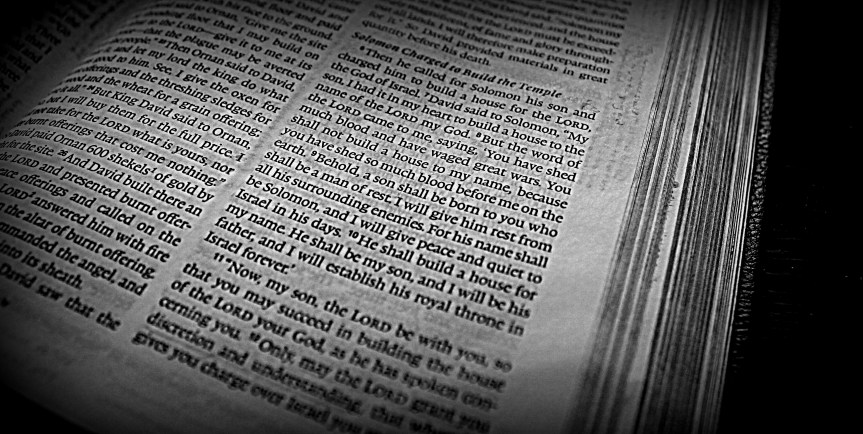
Thousands of years ago, King David realized that he was living in a palace while God dwelt in a tent. He decided to honor God by building a gorgeous temple. It was his dream, and a worthy dream at that. But God said “no.”

Instead of pouting, King David helped to plan and gather building materials. He even blessed his successor to complete the God-given privilege of building the temple.

So when you see other people being or doing what you would like to be or do, don’t soothe your pride with the camaraderie of other envious people around you. Share your dream with others, even if they are better at it than you are. But beware: it’s much harder to give away your dream than it is to give it up! Trust me; I know because it’s a lesson I’m still learning.

Do you want to know the apricot tree?- Part 2

There was coffee with milk, mint tea, several types of bread, cookies, brownies, chocolate pastries, hard-boiled eggs with salt and cumin, strawberries…

We three roommates beamed at each other across the table. We had pulled off a luscious North African tea time. Our two guests were relaxed and carried on a lilting conversation that didn’t seem to notice our limited vocabulary.

“Eat! Eat!” We urged as we refilled coffee glasses and set plates of food in front of them.

The topic turned to people who ask too many questions. I shared my story with the woman at the store. Our guests burst into laughter, amused at how annoyed I still was, days later.

“What should I say when people ask me that?” I hollered over their laughter. My teacher had taught me the phrase, “Is it your market?” but I had only ever heard sassy children use that with each other. It hardly seemed appropriate to be so blunt with another adult.

Still laughing, one of the ladies said, “Do you want to know the apricot tree and who planted her?”

Captivated, we asked her to repeat the phrase over and over. As foreigners, we probably got more than our fair share of nosy questions. Having a bit of good-natured ammunition would be refreshing. Our guests assured us that no one would take offense at such a remark, but they would get the hint to get their nose out of of your business.

We practiced the awkward words and intonation until our pronunciation was acceptable by North African standards.

And I filed that helpful tidbit in my mind for easy access.


Photo by Pratik Gupta on Unsplash

Grace and migrating tissues

I had spent a significant part of my evening in the living room chair with a box of tissues close at hand. It was my very own pity party. No one else was invited. The piles of bank statements, resident visa forms, tax papers, and junk mail were the life of my party.

I felt like I had been making lists all day. Lists of things that had to be done. Lists of phone numbers to call. Lists of people I should visit. Grocery lists. Arabic verb lists. And this list goes on…

Not only that, but the thoughts rolling around in my head hadn’t yet been categorized on any list. Is this what “normal” looked like in America? Had I simply forgotten? Or had I completely lost my ability to handle stress? Or was it just the paperwork I couldn’t handle?

That’s why I merited a pity party. So I moped and felt considerably worse afterwards. A pity party hangover. Finally, I was able to motivate myself to go to bed. And guess what? I had a wonderful night of sleep!

Not that I deserved it. Nope. If I would have been God, I would have made me toss and turn restlessly all night to learn my lesson for worrying about all of the “tomorrows” of my future. Instead, He showed me grace and I woke up ready to face the new day instead of cowering under the covers.

I chipped away at one of my lists, accomplishing what I could and leaving the rest unwept, unhonored, and unsung. And that afternoon, I was ready when a friend arrived in unexpected tears. She didn’t need to explain. We simply moved the tissues from beside my chair to where she was seated on the couch. And I made some tea.

God knows that we don’t always learn lessons best through justice. Sometimes what we need is grace.

Some things I miss/ Things I don’t (so far)

Things I miss:

  • Friends
  • Making friends quickly
  • A respect for morals rather than a disdain of them
  • Bringing God into everyday conversation without people thinking you are overly pious
  • Easy and cheap transportation
  • Inexpensive produce
  • Going out to eat on a whim because of inexpensive menu prices
  • Bargaining for prices
  • Warm and constant hospitality
  • Crossing the street without a crosswalk… and not feeling guilty
  • People looking excited when you speak to them in their language
  • People watching out for you

Things I don’t miss:

  • The class system and discrimination
  • Being addressed in French
  • Being treated as a trophy friend
  • Being treated as better than others
  • The façade of open-mindedness
  • A monotonous cuisine
  • Bread
  • Catcalls
  • Being targeted by people asking for things because you are a foreigner
  • People budging
  • People asking invasive questions