I’m doing terrible, terrible

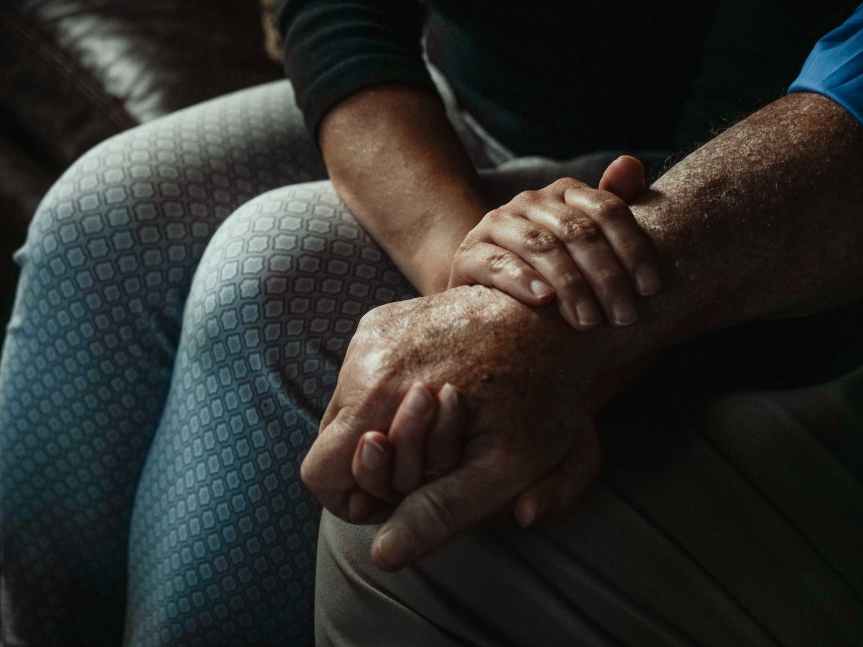
Estoy fatal, fatal…” I’m doing terrible, terrible. That’s how an elderly neighbor typically greets me. 

Maybe I’ve lent an ear too many times. Or, for all I know, she dumps her health issues on everyone she comes in contact with. 

Being on the receiving end of her complaints isn’t much fun. It’s hard to listen to how the doctors can’t give her any answers, about her latest trip to the pharmacy, or how her legs refuse to work (although they mysteriously carried her several blocks from home). 

She never asks how I am or what I’m doing. I doubt she even knows my name. 

I help roll her walker down the ramp from the elevator, open the door, and stop for a “Oh, uh-huh, oh that’s too bad” chat on the street. I even take her cinnamon rolls at Christmas because I know she likes them. Still, I inwardly groan every time our paths cross.

Estoy fatal, fatal…

As much as I hate to admit this, I know that sometimes I sound just like my neighbor: “Why me? Why do I have to be the one to deal with this bumpy relationship/chronic illness/broken heart/smashed dream? I’m doing terrible, terrible…”

When life doesn’t feel fair, it can be an easy slide from lament to griping, from heartache to bitterness. Even with the Spirit of God dwelling in me. 

So it’s a good thing God sends my neighbor into my life every now and then to give a face to my inward grumblings and remind me to trust that God knows what He is doing. Then, as Jen Pollock Michel writes in her book In Good Time, I can receive life with gratitude and say, “Whatever you choose to give, Lord, I embrace” (p.99).


Pollock Michel, Jen. In Good Time: 8 Habits for Reimagining Productivity, Resisting Hurry, and Practicing Peace. Kindle ed., Baker Books, 2022.

There isn’t much that separates us

The public health clinic was teeming with people. Where was she?

“Over here!” My friend waved me over to a corner of the waiting room. She rushed to explain her health problem, pointing to various body parts while keeping an eye on the door where she was to go as soon as her number was called.

My breathless mind tried to keep up with her Arabic. I was still drumming up passable Spanish vocabulary when her number was called.

We squeezed around an old shopping cart piled high with unsupervised medical supplies and stepped into the consultation room.

“What is the problem?”

I took a deep breath and launched into an unrehearsed explanation. Interpreting between two foreign languages is always a workout for me, and not a flattering one.

The lady at the desk was silent until I paused. Then she said, “You both realize that I’m a nurse, not a doctor, right?” 

Actually, no. I had never been beyond the door in this particular public health clinic.

“Look, the only thing I can do is test and see if she still has the infection.” She handed my friend one of those flimsy plastic cups we use at children’s parties for juice or Jell-O. “Urinate in here and bring it back to me.”

Apparently dismissed, we squeezed around the shopping cart and wandered around the building in search of restrooms. Misplaced people were milling everywhere in a warm, concrete facility that smelled of metal and sweat. 

We eventually found the almost unmarked restroom, nestled between consultation rooms. Then back down the long hallway we went, my friend trying to hide her cup of pee in a plastic bag she’d dug out of her purse. “There wasn’t any paper in there to wrap the cup,” she said. “I don’t want everyone here to see it.”

We wiggled around the overflowing shopping cart again. The nurse stretched on a pair of gloves, stuck a testing strip into the urine, and told us to wait outside. My friend turned and left, still holding her cup.

“Uh… can she throw away the urine?” I asked. 

While I was still verifying this with the nurse-not-doctor, my friend lost her way and, unable to read, ended up in the men’s restroom. There was an unsettled man waiting outside when I arrived on the scene. “This is for men,” he said in Arabic when my friend emerged.

We found seats in the waiting room. As much as I love to people-watch, it was hard to look around without feeling absolutely hopeless. Did anyone in the healthcare system really care about these people?

As we waited, the lady next to us asked if her number was on the screen yet. She couldn’t read; she could only hear the tone and see the digits move without understanding what they meant. I looked at her tiny slip of paper, the kind of ticket you get while waiting in line for olives at the market. It was hard to see that wisp of green-blue and not see my own personalized number on a freshly printed ticket from the private health clinic across the street. My initials followed by 524. Always the same. Always announced over the speaker while I sat in the air-conditioned waiting room. 

Her number was 254. The number on the screen was 272. “It’s past,” I explained. By a good half hour, likely. She walked up to the desk and was sent to get another number and start the process again. 

Meanwhile, my friend and I were called back into the consultation room. The overflowing shopping cart had been removed and this time we could walk in without yoga posing our way through the doorway.

The nurse told me, “Tell her that she still has an infection, but she needs to finish the week of antibiotics she got yesterday.”

Oh.

That was a piece of information I had been missing. My friend had apparently just been to the emergency room the day before, but wasn’t satisfied with the lingering pain from the infection. As if one dose of antibiotics should have removed her aching like magic.

It was hard to look at the nurse sitting at her desk and not feel absolutely hopeless for her. Was this what she dealt with day after day? Confused immigrants expecting or even demanding immediate fixes without understanding her role as a nurse, not a doctor or a magician?

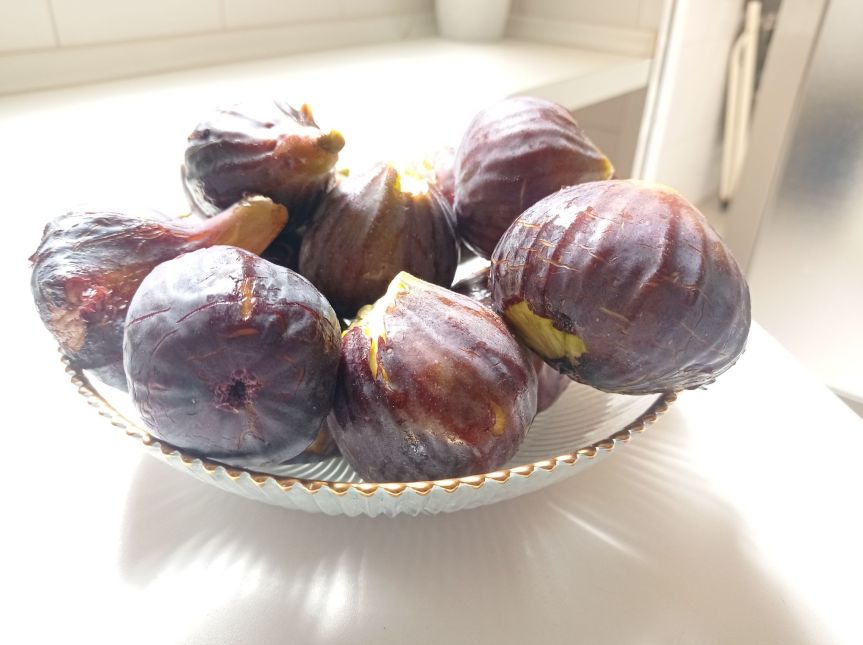
My friend and I walked toward home. She pulled me into a North African store and bought a bag of fresh figs: big, purple, and sweet. On the street again, she handed me the bag. “I got these for you because you helped me today.”

We sat on the front steps of my apartment building until the hopelessness of the morning faded with chatter and laughter. Deep down, there isn’t as much that separates us as we sometimes imagine.

Ireland- part 3

Our Country Cottage Oasis awaited.

Both my friend and I were looking forward to having a place to base from for the next couple of days. A charming little cottage with great reviews and maybe even a fireplace. We had put in an order for a sturdy drizzle so we could curl up in snug armchairs with tea and a meaty book.

We found out by accident that our hostess, who lived in the cottage, wouldn’t be there to welcome us. No problem, we decided. Surely someone else would be there.

We wound through the countryside to a charming tree-lined walkway; though, admittedly, it would have been more charming had it been daylight. But we found the gate and rumbled our suitcases up the gravel driveway.

When no one answered the doorbell, we hesitantly stepped in the unlocked door. A draft sailed down the hallway to greet us. Although the entryway was dark, a welcoming glow was coming from one of the rooms. We removed our damp boots so not to leave tracks and headed toward the light. It led us to a cluttered sitting room with a pair of ghostly pink slippers residing on a carpet thick with dog hair.

We shuddered. Surely that wasn’t our room. But the rest of the cottage was dark and silent. Were we even in the right house? We tiptoed around, trying in vain to forget every Agatha Christie novel we’d ever read, because this was assuredly the perfect place for murder. “Foreign guests lured to countryside cottage…”

We found our room, at least a room that resembled the photos on the airbnb page. But could we be sure? The trash was overflowing and used towels hung on the back of the door.

My friend tried in vain to shut the patio door, the source of the draft. I set down my luggage, preparing to make myself at home. It was then that I began to notice the depth of the grime. It was also then that I began to lose my composure. We shot our hostess some questions: “Key? Washer and dryer? Wifi password?” but left out the most pressing: “Were you really expecting us? Because it sure doesn’t look like it!”

We left to grab a few groceries and, well, to evaluate our situation. Then we ate in one of the grimiest first-world kitchens I’ve ever seen, washing everything before and after we used it. A powerful odor wafted from the refrigerator, which we hoped were just the aging strawberries. I gnawed on cucumbers and broccoli, glum.

My poor friend was trying to make the best of the situation while I broke down bit by bit.

“Go take a hot shower and you’ll feel better,” she said.

She hunted down relatively clean towels in the overstuffed wardrobe in our bedroom. I went to the shower, hauling my entire suitcase with me so not to gather any extra filth by setting my clothes on her crowded bathroom furniture.

Soon, my friend heard a bellow, which happened to be the last of my expectations oozing out and spiraling down the shower drain. There was no hot water. Nor heat, as we soon discovered. We buried ourselves under blankets of questionable cleanliness which my friend had also dug out of that same overstuffed wardrobe.

My wounded sense of justice was still sending off flares when I fell asleep in a bed that was actually pretty comfortable.

My friend chose to believe that our hostess was grief-stricken, since she had mentioned she was at a funeral. Actually, over the next couple of days, even with socks laden with dog hair, we made quite a few excuses for her. She was a very nice lady, after all. Even if she did forget to clean her house. Or which amenities she had listed on her airbnb page. Or that we needed hot water and heat in an Irish November. Or that the last guest (or maybe the one before) had left a liter of milk and hummus in the window sill.

We began to refer to our country cottage as our “Hairy Haven,” a generous term for a place that wasn’t a haven at all. Although, it wasn’t a total loss for it did provide a space for bonding and quite a few opportunities for memory-making.

But there would be no curling up in front of fireplaces here. And so we slayed our dreams.


Photo by Oliver Hale on Unsplash

It’s easy to forget

"Hey! Hey!"
I turn to wave,
his kiss still wet on my cheek.
I can, in these moments,
forget that dogged darkness from the womb,
the dark that swallows him now.
Life feels so much like life
when his eyes still glitter hope.
So it's easy to forget.
Or not to remember.

And then I do,
and I want to run back
and snatch him
from what his family and his god
demand of him.
Because who will he be
when he reaches the end of his hope?
The end of his life?

"Hey! Hey!"
I turned around again
to see him looking over his shoulder
as his mother's hand leads him away.

Photo credit: Scott Szarapka on Unsplash

Pride and apathy

True love drives away laziness, that’s what a young friend learned in philosophy class. It drives away apathy too.

Then why do I grow apathetic to the woundedness that surrounds me?

Overwhelmed, that’s what I am. Overwhelmed by the dissonance of compassion and my own limits. I am one person with moderate abilities and stamina. I cannot be a superhero no matter how hard I try. My tiny contribution of self-sacrifice will not change the world.

And so I begin to seal off my heart, and what began as love is reduced to apathy.

Or was it even love to begin with?

When I fill my schedule to the brim with world-changing activities, what is my motive? Can it be love? It might be, but, if I’m honest, my motive to change the world often starts and ends with pride. And it’s a pride that turns apathetic when I refuse to be humbled by remembering my limits.

There always will be busy seasons in our lives, some longer than others, but a sustained frantic pace, even under the pretense of love is not truly loving.

Love isn’t defined by the absence of laziness or apathy. The real meaning isn’t found in the absence of something. It’s not even found in the presence of something like hard work or compassion. It is ultimately found in the Presence of Someone.

When I realize that I am not the one who must save the world, I am freed. The burden to be the savior rolls away. Finally, I can stop panicking over my limits in light of all the work that needs to be done. I am finally free to love well.

I can sit with someone who needs to cry. I can make cupcakes for a team event. I can read a captivating book. I can agree to tutor another student. I can have a friendly chat with my neighbor from the patio. I can probe deeper into the heart of a young woman who isn’t sure who she wants to be just yet. And I can do all of this, recognizing that I am just a small piece in what is happening, and, praise the Lord, I get the joy of being a piece.

I am a created being, created with limits. And that is very good. Why? Because the work does not begin and end with me but with the One who is limitless.


For an excellent resource on human limits, I recommend You’re Only Human by Kelly M. Kapic.

I wish I knew you

Maybe you think I don’t notice that bruise on half your face. You light the room with a smile and a dignified calm.

But I wish I could grab him by the throat and not let go until I know that he will never touch you again.

Except with love.

But how can I know unless you tell me? And how can you tell me unless you trust me? And how can you trust me when you just met me and he calls your phone and you need to go before we even know each other?

We say goodbye with an embrace, two kisses, and a few besides.

Then I stand and watch you walk away, wishing I knew the you behind that sparkling smile. 

And that black eye.


Photo by mostafa meraji on Unsplash

Notes from Hospitality 101

I had promised I would summarize a few of the things I learned (and am currently learning!) while researching for an essay on hospitality. If you’re interested in reading the entire essay, send me a message. 🙂

  • We think of hospitality as taking place in our homes. But hospitality is broader than that; we can take hospitality with us wherever we go by honoring those around us.
  • Hospitality is not about bowing to the expectations of others. It’s not that we ignore expectations, but neither obligation nor martyrdom is true hospitality. Why? Because our work, our hospitality will never validate us; only God can do that.
  • Christ followers are commanded to show hospitality. (Check out Titus 1:8, 1 Timothy 5:10, Romans 12:13, Hebrews 13:2, and 1 Peter 4:9.) However, the truth is that we love our comforts. And the other truth is that hospitality isn’t always comfortable. So while it would be easier never to invite anyone into our homes and lives, as Christians, we no longer worship the god of comfort.
  • If you’re an introvert like me, hospitality may feel like it requires more than you can give. But it doesn’t. Everyone needs boundaries and everyone has limits. If you’re introverted, it doesn’t exempt you from hospitality; it just means that you prepare for hospitality differently than those who have different limits.
  • True hospitality starts with worship. God is the One who empowers hospitality because He shows us both our imago dei and our depravity, reminding us that we are on the same level as everyone who walks through our door.
  • Hospitality can be grand and life-changing, but day-to-day hospitality is usually quiet, small, and insignificant.
  • We cannot wait until we know how to do it “right” or have the “right” circumstances before we show hospitality. If so, we will never start. Perfectionism can stand in the way of God working through us. In fact, hospitality goes hand in hand with humility, creating a space for our own vulnerability.
  • Speaking of creating spaces, hospitality creates a safe space for relationship regardless of life’s circumstances. Not only that, but we need to be fully present, committed to the privilege of walking with someone on their journey, even as they walk with us on ours. In other words, we should be invested for the long haul.
  • Hospitality is both living and speaking love and truth, all the while acknowledging that our story is only a part of a bigger story, God’s story.
  • Yes, hospitality requires much but it also blesses much. We connect with people we may have never known otherwise. We learn to enjoy them instead of use them. We are enriched when we enrich the lives of others, sharing our gifts and partaking of their gifts. We also bless God when we live in obedience to His Word.

Photo by Priscilla Du Preez on Unsplash

A dog and a man

It was a quiet Sunday morning. Very little traffic. Very few people out except the dedicated who had rolled out of bed for 10 o’clock mass.

The evangelical service didn’t start until 11. And a crisp morning stroll was a good remedy for lethargy during church. Obviously, I was fairly alone in my opinion, or at least alone in the motivation for its practice.

I jammed my fists into my coat pockets to keep them warm. I was headed nowhere in particular and anyone looking at me could tell. Who cared? The hushed activity was restful and I talked with God as I walked.

Along the boulevard, there was a big piece of cardboard spread out on a bench. Had a homeless person slept there? Where was he now? Had the police chased him away? Why was he homeless?

As I continued strolling, I prayed for the needy of our quiet little town. Up a block or two along the boulevard, I noticed a dog shying away from a man on a bench. The skinny beast had belonged to somebody at some point in time—I knew because of the collar—but now his ribs were jutting through his thin white coat.

Again, the dog approached the man with great skepticism and was rewarded with a chunk of bread. He shied away again, but watched for the next morsel.

And the man. As I got closer, I noticed him. He had that look. Like someone who had spent more than one night on a park bench. Next to him was a childless stroller piled high with things, earthly treasures that may have come from a nightly raid of the neighborhood trash bins.

I passed the scene, wondering why the man was throwing away his bread to a dog. Wasn’t that proof of his bad stewardship that had probably put him out on the street in the first place?

Or could it be that he knew need—true, desperate need—and he had compassion on another needy creature?

On my return loop, my view was from the back of the scene. The dog was still there, darting in and shying away, but not quite so shyly anymore. He and the man understood each other.

I was the outsider, passing by the scene without really understanding.

I was thirsty and you gave me coffee

When I saw this mural of a homeless man and his hot coffee, I thought of the countless cups of coffee that we serve to immigrant women each week. Some mornings, we scramble to warm milk, fill sugar containers, and pour coffee, remembering that this lady likes her coffee heated especially hot and this one doesn’t take milk so fill it to the brim and that one wants her special cup and saucer.

“I was thirsty and you gave me drink.”

Some of the women are easy to serve. They smile. They are grateful. They ask you to sit with them and don’t mind your faltering Arabic. But others gossip or demand things from you while appraising you with hardened eyes. Sometimes it’s hard to remember that serving these women, “the least of these,” is serving the Lord.

But aren’t we all from the lineage of “the least of these”? At one time, weren’t we all watching the world with hardened eyes, cup out-stretched, thirsty? But did we know for what we were thirsting?

“The water that I will give him will become in him a spring of water welling up to eternal life.”

Today we serve, we pray, we speak, we love. But we never want those we serve to find fulfillment in a cup of coffee. We want them to walk away thirstier until they find that spring of water that wells up to eternal life.


(Matt. 25:35 and Jn. 4:14)

What if you were Soukaina?

Have you ever stepped into someone else’s shoes and tried walking around in them?

Soukaina is sixteen years old. She lives with her parents and two year old brother in a poor neighborhood of a bustling North African city. In that tiny, sixth floor apartment, personal property and space are out of the question. She doesn’t have her own bedroom. In fact, there is only one bedroom for the entire family.

She usually attends school but spends her free time on the streets. She gets in trouble for bullying neighborhood kids. Her parents send her out of their way, but paradoxically rebuke her for spending too much time on the streets.

Her father is diabetic and doesn’t have a job. Her mother works herself to the bone six days a week. Her little brother follows her around and gets into everything.

To get anyone to listen to her, she has to yell. Sometimes, it’s just easier to hide. Once, she said, “I don’t like to live here. There are many bad people.”

Yet, she is loved. Despite the abstract and irregular displays of affection, her parents love her.

So what if you were Soukaina? Well, what if you were? What would your life look like? What choices would you make?

I’m not asking these questions so you can recognize your privileges or count your blessings. I’m asking you because looking at the world from someone else’s perspective makes you better capable of loving them.