Of bargaining

“It’s camel leather!”

“Really?”

I probably wasn’t the first ignorant foreigner to fall for that trick. But unlike most foreigners, I had a friend beside me who revealed the claim as rubbish. Camels are too valuable to be able to sell cheap street merchandise made of their hides.

I narrowed my eyes at the shopkeeper. “You lied to me! Shame on you!”

He sheepishly tried to make amends, but his customer was no longer interested.

Living in North Africa requires me to be functional at bartering with shopkeepers and street vendors. If no price is listed on an item, I must accept an exorbitant price or hone my bargaining skills.

Often, a shopkeeper will take me aside and lower his voice: “For everyone else, it is 150, but for you it is 130.”  As if he doesn’t tell every customer the same thing. At times, shopkeepers add phrases like: “…because you have North African friends” or “because you live here.” If the price still seems unreasonably high, I add, “And I’m a student. Do I get a student discount?”

Once, as I was bartering in Arabic, a shopkeeper told me “You are not a tourist. You are a North African!” Given the context, I took that as a compliment.

Using Arabic helps those selling realize that I am intentional about what I am buying. It also clues them in that I might know reasonable prices. After speaking to a restaurant owner in Arabic, he listed a fair price for a meal and I accepted. But when I asked to see a menu, he had none to give me; the only menus were “tourist” menus!

I may bargain for a while, but when I know my last price and I say my last price, it is my last price. It is what the item is worth to me and if I can’t buy it for that, I don’t want it. Sometimes the shopkeepers drop their prices to meet mine, sometimes they don’t. Sometimes, I am walking away when they call me back. Perhaps it’s the threat that others will get my business when I say, “No thank you. I will keep looking at other shops.”

Bargaining used to terrify me. Now, after seven months, I have accepted this piece of the culture. Until I finish language study in another seven months, I might be enjoying myself.

Quiet corner=buried treasure

Have you ever stumbled across a place that you were subconsciously looking for? It takes a bit for you to catch your breath as your heart smiles: “Yes!”

It might be as trivial as a little café, buried in a North African old city where few tourists trod. Except us. A friend and I were wandering down one narrow cobblestone street after another. We walked right past the café the first time, not because we didn’t notice it, but because the owner spotted us and began to holler that we were welcome. We darted down another street to avoid him. But that street was a dead end and eventually we had to turn around.

Hot and tired, we were easy victims when we passed by the café the second time and the owner called out his menu just in case we changed our minds. Then he said the magic words: “We have orange juice!”

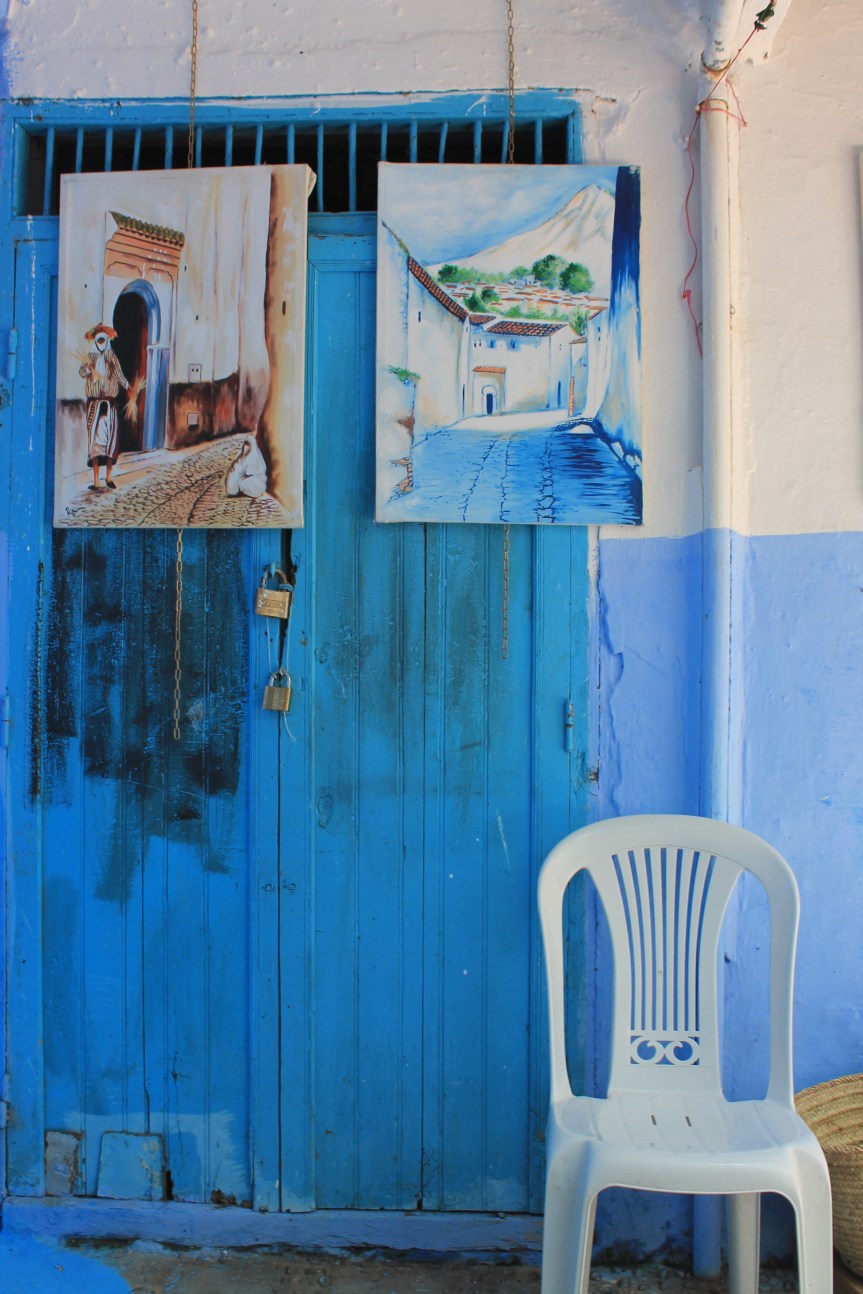
We sat on white plastic chairs and admired the blue art hanging from metal chains on the blue walls. The reed table runner covered the rusty metal table and smelled like fresh hay. Sitting felt wonderful. The shade felt wonderful. We pulled off our sunglasses and mopped the sweat from our foreheads.

The juicer was whirring inside a makeshift hut, the café’s kitchen. A moment later, we heard slurping and a satisfied, “Ahhh!” Apparently our juice had met the café owner’s approval.

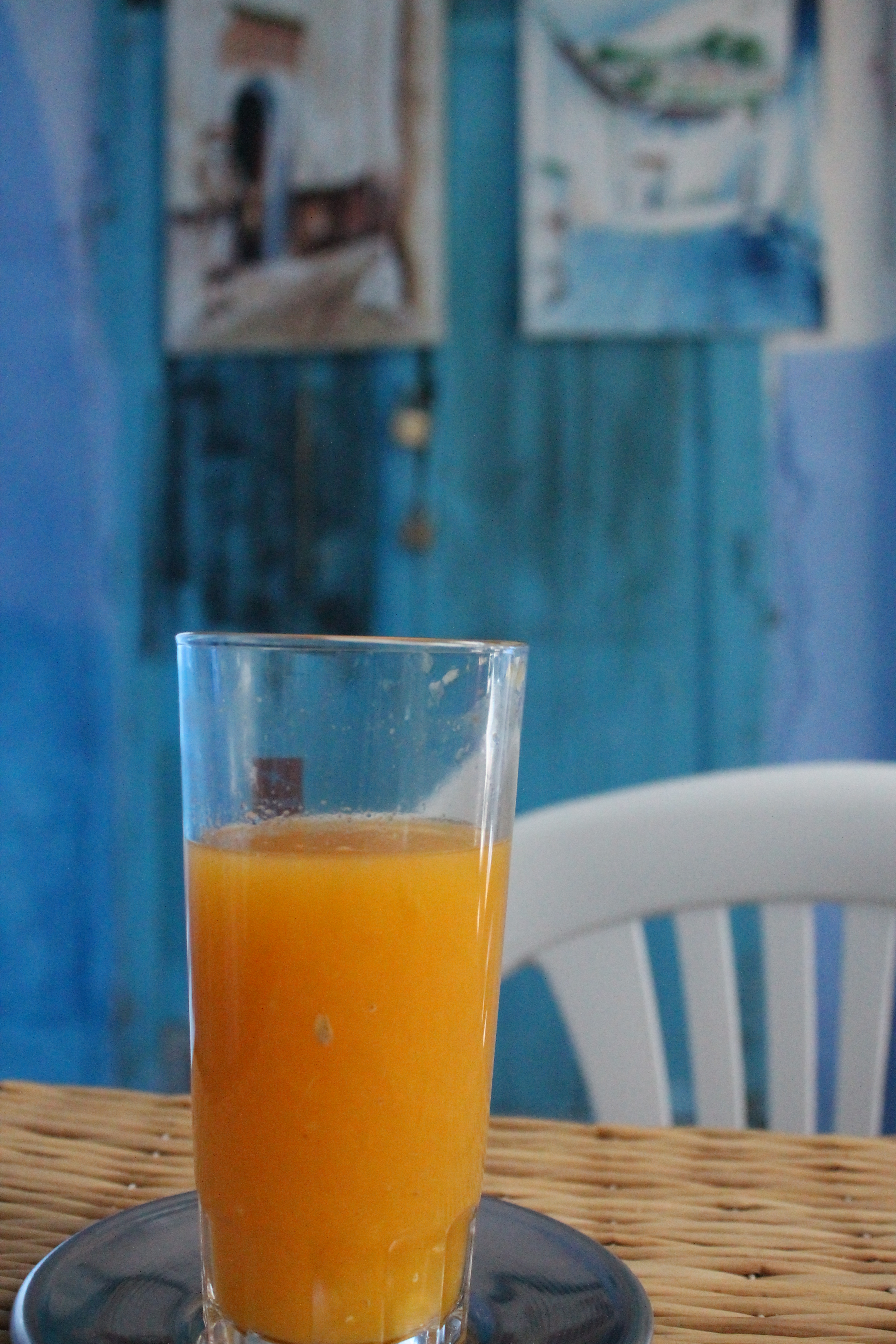
He brought out tall glasses on little metal plates. “My name is Rashid.”His sunny smile brightened when we tried to speak Arabic. But he left us alone until we were finished enjoying the shade and every last drop of our fresh orange juice.

glass of orange juice on wicker table next to blue wall

Ramadan blues

“Am I hungry or just bored?” I muse as I peer into the refrigerator.

Summer has set in where the nights rarely descend with a breath of cool air. It is warm all of the time. And what is worse is that I feel trapped inside. And what is even worse is that my roommate chose this month to travel to Germany, another friend left forever, one classmate is in the UK and another classmate is in Spain. I am trapped with myself.

I make plans here and there, but the reality is that any plans are contingent upon the time of day. The hours that are too hot are off limits because street robbers might prey on the few people who are out. The hours right before the breaking of fast are even worse; there are hardly any people or cars to be seen and a fog of silence enshrouds the street.

Even if I do go out, most stores would be closed anyway. And the cafés and restaurants definitely are.

Why didn’t I just go home for part of the summer? Never mind the long journey or the money. Maybe that would have cured some of my recent homesickness.

I am tired of studying on my own, reviewing, practicing, listening, jotting down notes. I am tired of the food in my fridge. I am tired of sleeping.

For a melancholy, boredom breeds self-pity. At least it does in this melancholy. The light at the end of the tunnel is fading. Ramadan will NEVER end! Instead of thinking how hard it would be to fast for thirty days, I think about how unfair it is to plan my life around those who are fasting.

Selfishness. Yes, it all comes down to a perspective saturated in selfishness. Time to go count my blessings.


Photo by Erik Mclean on Unsplash

Hungry or not, here I come

How exactly does a one hour tutoring lesson turn into eight hours? Simple: I agreed to stay for lunch.

It was my first day of tutoring. I was nervous because I wasn’t sure how the protective father would view my method of teaching his 5-year-old son.

Exactly ½ hour before we had agreed to meet, the father came to pick me up.

He took me to his house where I met his family, extended family, the maid, and of course, his son. After a long conversation–some of it typed in google translate–we had breakfast (their first; my second). Then I spent exactly one hour teaching and reviewing with the little boy.

“Will you stay for lunch?”

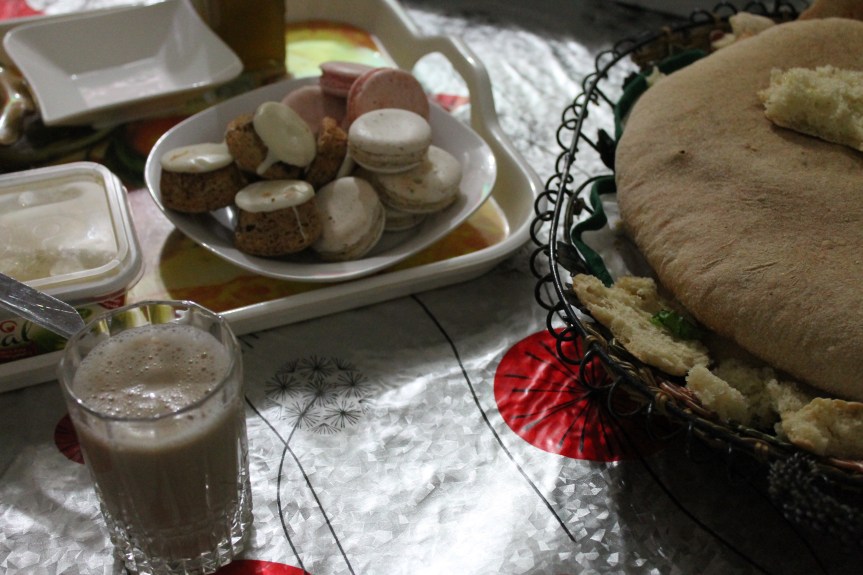
Noting the family sitting around the salon table, I agreed. But I soon realized that I wasn’t sitting down to lunch; this was pre-lunch! After two breakfasts, I was expected to fill up on bread, cookies, and tea and then eat lunch a little while thereafter.

When we finally did get lunch around 3:00 p.m., it was several courses: a salad followed by a beef and plum dish with another salad on the side, and then a huge chicken stuffed with vermicelli noodles and resting on a bed of rice. Everything was eaten with bread.

And all of the while, if I wasn’t reaching my hand into the platter, I was being told to do so. “Eat! Eat! Please eat!” The extended family kept a calculation of how much I ate while persistently informing me that it was not enough. We finished with luscious fruits for dessert, of which I was too full to enjoy.

This story has no moral, except not to take a tutoring job if you’re on a diet!

Aisha- part 3

Isolated. That was the flavor of the air as we walked down streets that were merely variations of the same. I was the only foreigner in the neighborhood, strange considering that just over the hill, tourists were thick within the shadowy walls of the old city.

But here, crumbling buildings full of tiny apartments stretched toward the overcast sky. Cobblestone streets cupped leftover puddles and floating litter. Laundry was strung everywhere: on wires, through window grates, on rooftop clotheslines. Curious faces darkened whitewashed doorways and window ledges. Children danced along the streets in endless game.

Much of the world was happening outside. Together. As if the culture didn’t realize that people didn’t have enough room to live.

Our first stop was a relative’s home. We entered a low doorway and were enveloped in a world of chattering woman. It was a noise that trailed up several flights of uneven concrete steps. There Aisha picked up her 1 1/2 year-old son. And there, we were offered coffee so sweet it made my teeth cringe. My coffee cup smelled like the residue of someone else’s saliva. I smiled and drank the coffee anyway. Our hostess was a dainty woman. Her face was young, but her smile revealed only a few teeth scattered along her gums.

I met in-laws, nephews, sisters, and other connections I no longer remember. It didn’t help that I was struggling to remember my family vocabulary! After a few more stops, we wound our way to Aisha’s apartment. She insisted on carrying the juices I had brought with me even though she was also carrying her little boy.

The apartment building was cold and concrete. With every floor that we climbed, I would turn and ask Aisha, “Here?” She would shake her head, “Still!” She said that all of the way to the sixth floor after dozens and dozens of uneven concrete steps.

In each woman, there is a certain amount of pride for her home. Aisha was no exception, although her home consisted of a closet-sized wash room and kitchen, one salon, and one bedroom. That was all.

Aisha’s 16-year-old daughter Soukaina and I walked out on the roof to stare at the world six stories below. Heads walked by–heads without faces from my point of view. A woman dumped a bucket of water over the cobblestones in front of her home and scrubbed vigorously. Two little girls played school. A man propped himself in the doorway and watched the world. A woman two doors down did the same. But it wasn’t just the street that was alive; all throughout the apartment towers, people were moving: appearing in windows, hollering to someone below, gathering laundry on the rooftop, smoking a cigarette, or talking across the street with someone in the opposite building.

Once Aisha ascertained that I liked couscous, the lunch preparations began. I offered to help once, but only once. I was a guest. When the food was ready around 4 p.m., the family pulled down the table for my sake. (I heard the father say, “She’s American.”) There were some other random family members around the table, and I couldn’t remember exactly how they fit in the family. But it didn’t really matter.

We all dug into the center plate. Aisha kept tossing potatoes and carrots onto my side of the platter. Whenever I tried to stop eating, they demanded I eat more. No amount of “I’m full, praise God!”s could satisfy their vicious desire to watch me glut myself.

For me, mealtime was tense because in their attempt to honor me, they set my presumed needs so far above their own comforts that I felt the separation deeply. I was given two cushions to sit on at the table and the older woman present was given none. When I tried to share, I only succeeded in raising a chorus of protests. I was incapable of experiencing their everyday life because I had the prestige of a guest.

After an hour of TV and conversation over the TV, the preparation for the afternoon tea began. I offered to go with Soukaina to buy doughnuts, but the father turned down my offer on account of my being American. “This is not like the new city!” he declared. My presence would attract attention and a 16-year-old companion didn’t provide the necessary protection.

More female relatives joined us for tea and the conversation livened. We laughed, ate, and took pictures. And then it was time to go. We descended–down down down–until the precarious stairwell spewed us onto the narrow cobblestone street again.

We sloshed through the evening drizzle to the taxis. Aisha and Soukaina tried to accompany me home in the taxi, but when I put up a protest that rivaled their insistence, they relented. But Aisha gave the driver precise instructions where I needed to be deposited and made sure that I had enough money with me. I kissed them both goodbye.

For now.

In a dry and weary land

Right now, perhaps you are imagining me in loose desert garb astride a handsome camel under the blazing Saharan sun. Well, now you have pictured exactly how my trip wasn’t.

The Sahara trip officially started when eight of us girls piled into a tourist mini-bus. “Oh no! People will think we’re tourists!” It took a few kilometers of riding the tourist bus through my own city to realize that I was a tourist. I had just traded in my student identity.

The changing landscape sang the mighty power of God as we bumped along in our bus along paved highways and skinny mountain paths.

There were tree trunks covered in brilliant green moss, flat orange plateaus with snow-covered mountains beyond, and startling blue lakes.

shepherd with his sheep with looming snow-covered mountains beyond
valley with sheep grazing beside streams

We spent the night in a hotel on the edge of the desert. The next morning, a driver took us to the edge of the dunes. “Are these even real?” we wondered. The dunes looked exactly like the myriad pictures one might find anywhere. It was almost anti-climatic to see exactly what I had expected.

table and chairs perched on orange sand dunes

In the early evening, we started across the dunes on camels. The first 30 minutes may have been more enjoyable if a paparazzi hadn’t followed us to snap pictures of our camel train.

When we arrived at our desert camp, we ate a big meal and then strolled around outside of the camp to gaze at the expanse of bright stars that blanketed the dark sky. We contemplated the insignificance of man (Ps. 8) and then joined a group of other tourist around a campfire.

camel train

The next morning, we watched the sun rise over the dunes and then rode our camels back to civilization. On the way home we made several stops, one of them to have tea with our driver’s family who lived far up in the mountains. The scenery along the way was breathtaking.

white house among rolling hills
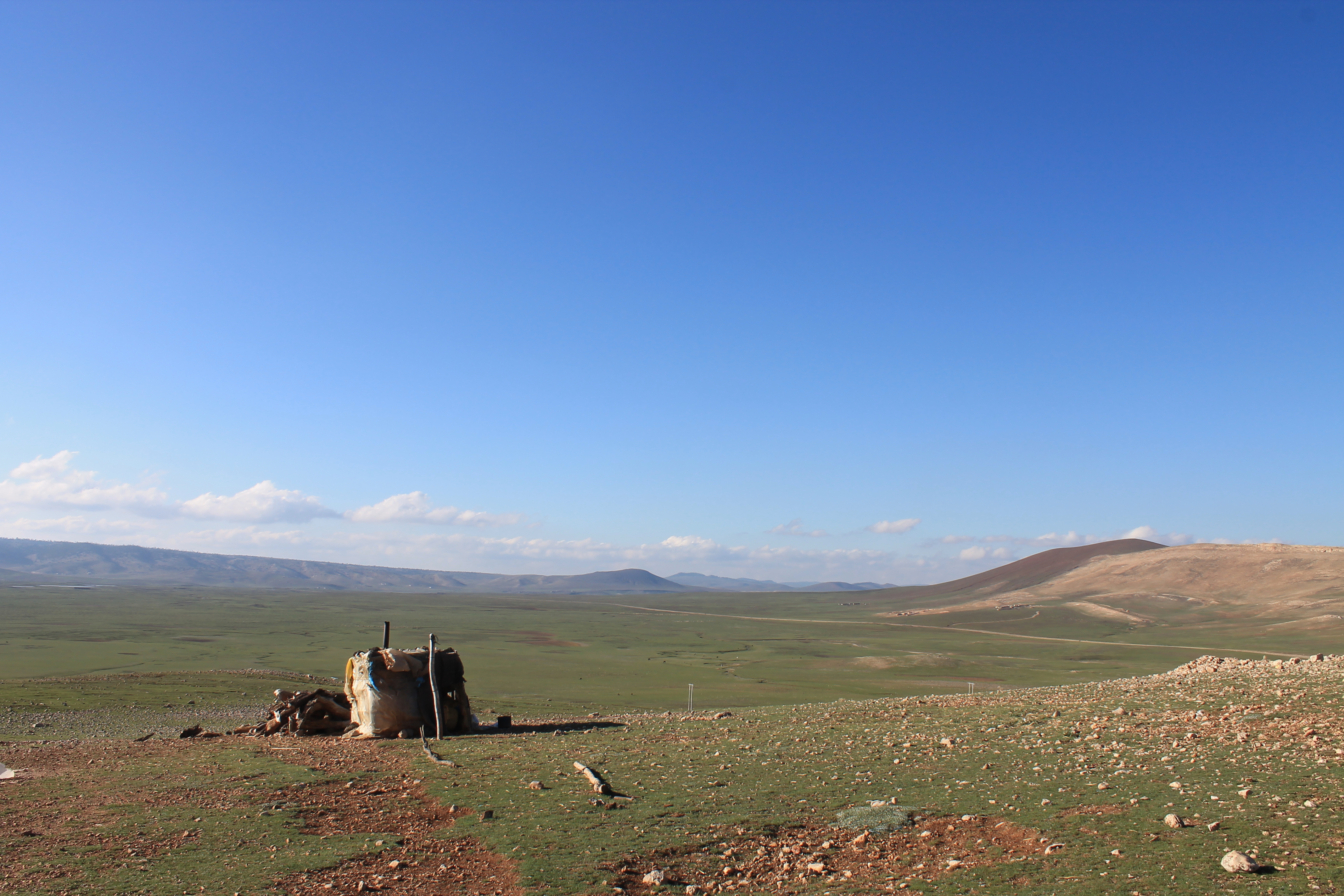
small shack among rolling green hills

But it was wonderful to come home again!

Bread and soap operas

What do bread and soap operas have in common? Perhaps nothing. Yet recently, I’ve been beginning to wonder if there indeed is some sort of correlation.

Imagine bread for every meal—breakfast, lunch, afternoon coffee time, and dinner—and soap operas, not between those meals, mind you, but before during and after those meals.

Lest you become concerned that I have just wasted a week of my life by living with a local family, rest assured that not all of my energy was spent in anticipating the next show.

More than spicing my limited vocabulary, the week marinated me in the flavor of the culture. What do their homes look like? What do they eat? What do they do during the day? How do they use a bathroom without an American toilet? How does a typical family function (or dysfunction)?

Overall, the week was culturally awakening. Now the North Africans I pass on the street aren’t just people–they belong to a home and a family…and maybe I’ve just sampled a slice of their typical day.

Having said that, I still might be able to tell you the time of day according to what soap opera is on.

A day of successful tourism

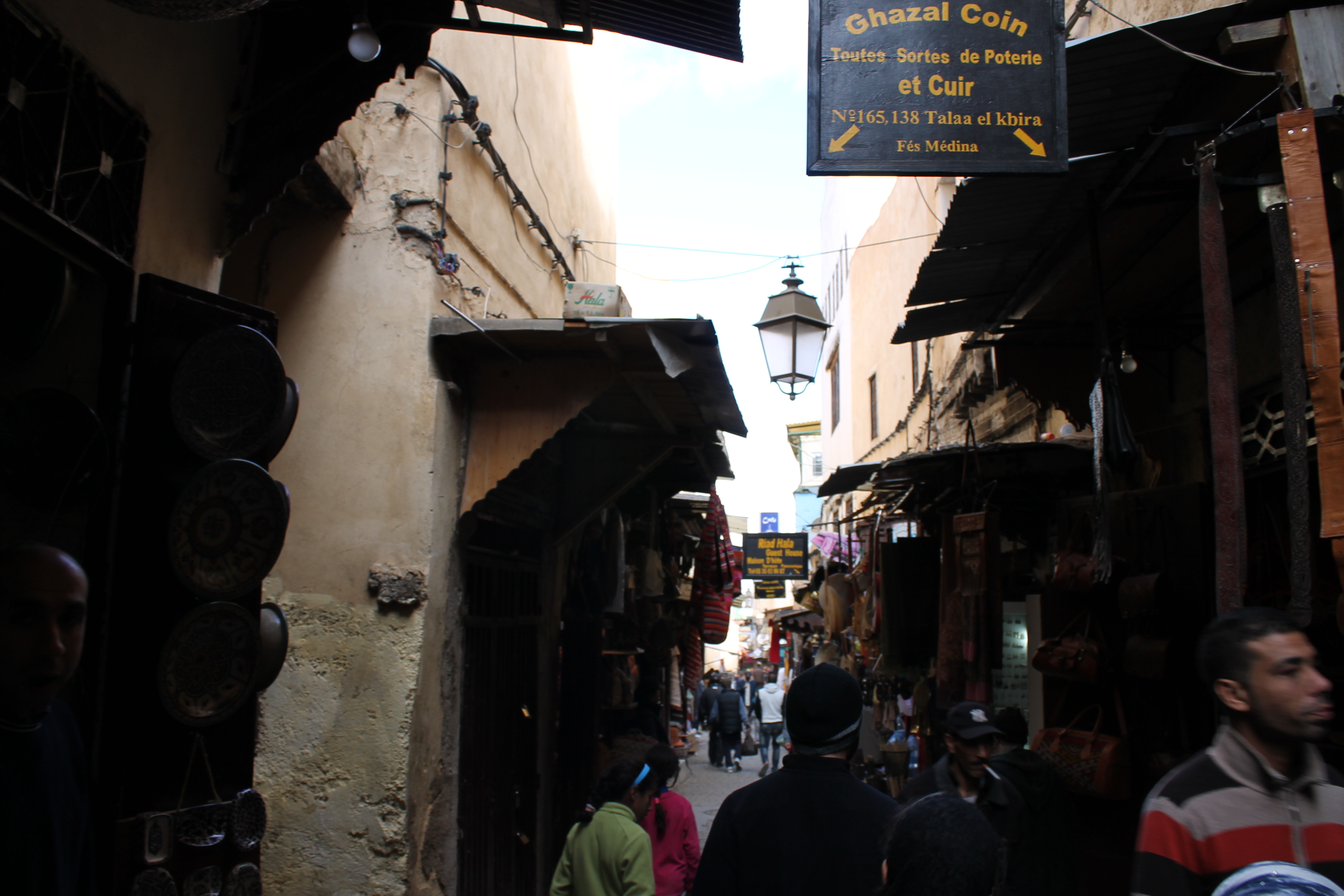
These are some of my favorite pictures from yesterday. A friend took me down into the dark depths of the Old City and out the other side, through a people-less village of makeshift houses, and up a hill. It was quiet up there. No hollering. No one trying to be our tour guide or pull us into their shop to buy merchandise. And the scenery was lovely: the city, the sky, the ruins.

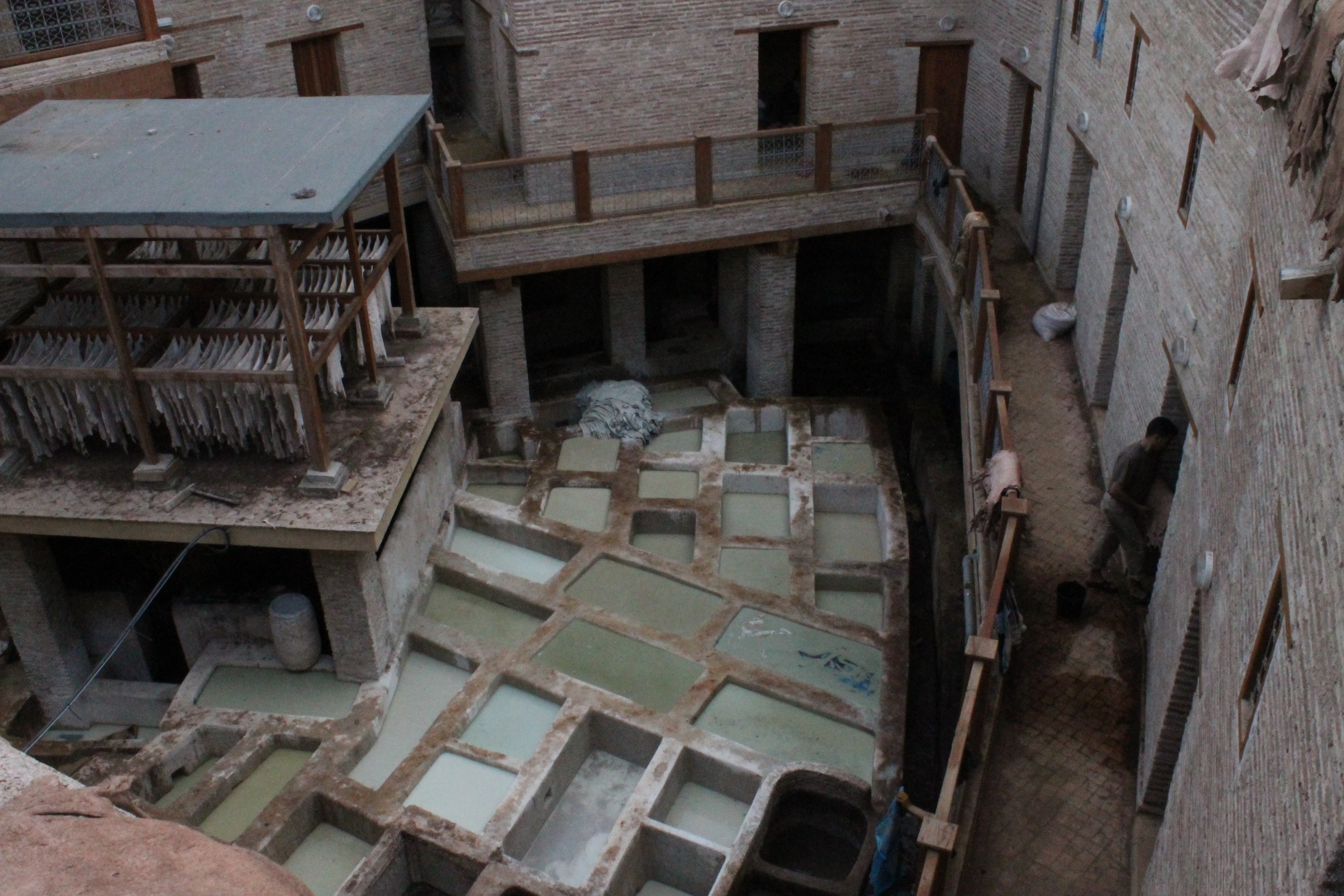
On our way back, we even visited a tannery (one that I had missed the other week) where we happened upon our very own tour guide.

After our smelly visit to the tannery, our guide took us to a friend’s shop to buy something. We weren’t very good tourists. After tolerantly sniffing the bottles of spices and perfumes that were thrust in our faces, we smiled and said, “Thank you! Good bye!”

Then we were off to the guide’s friend’s café where we were directed up a ladder-like staircase to the upper room: the room where women were allowed to sip their tea and coffee. “Watch your head.” My head almost brushed the ceiling. The owner followed us up the stairs and wiped off the dusty table and chairs. Our guide plucked some trash off the floor and tossed it into a nearby bucket. The owner crept back down the ladder to start our tea. “Half sugar, please.” Our guide parked himself at our table. Conversation was lethargic until the delicious, syrupy tea arrived. It was then that our guide gave a parting handshake and left us alone.

street of shacks
aerial view of north african city
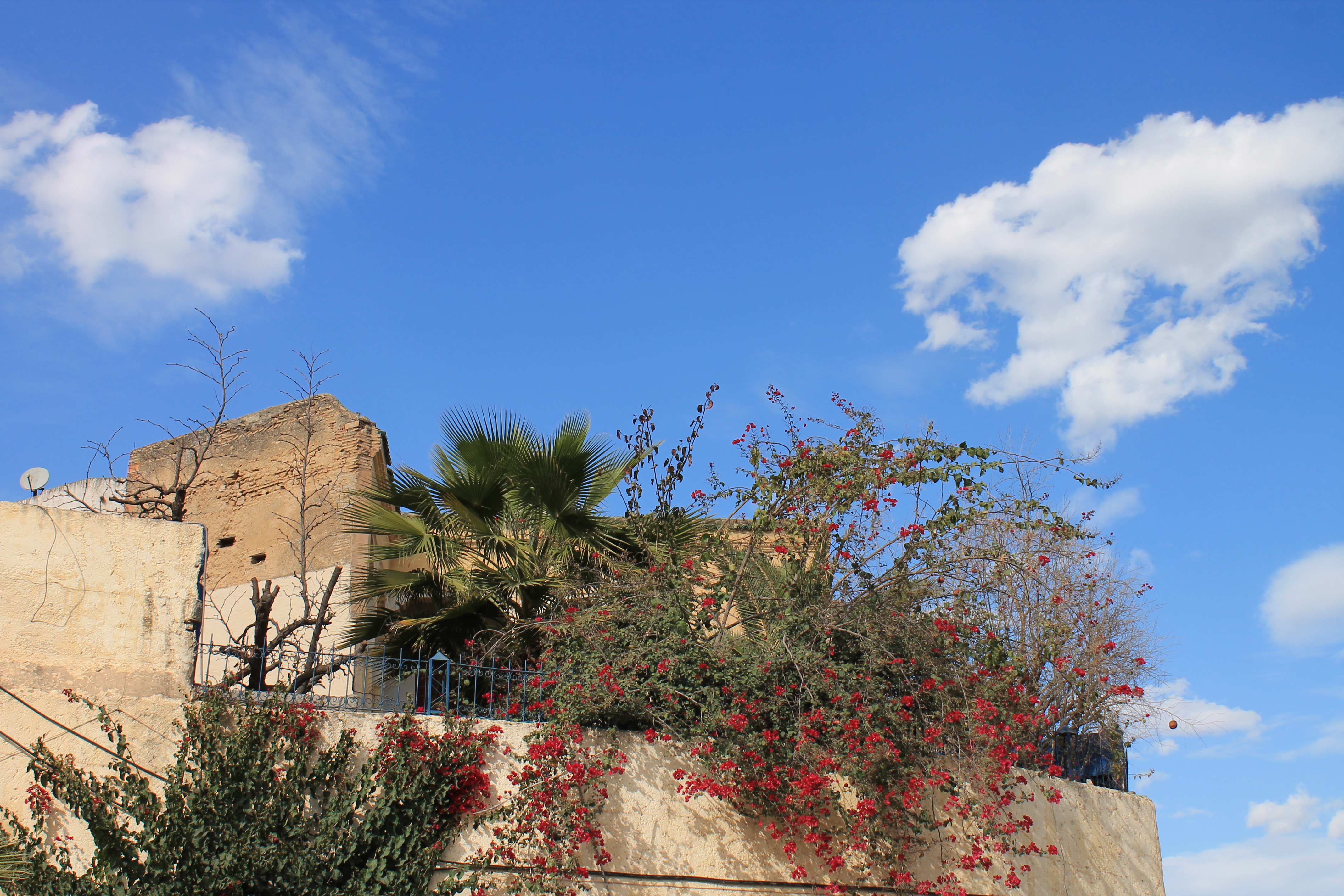
house top overflowing with plants and flowers
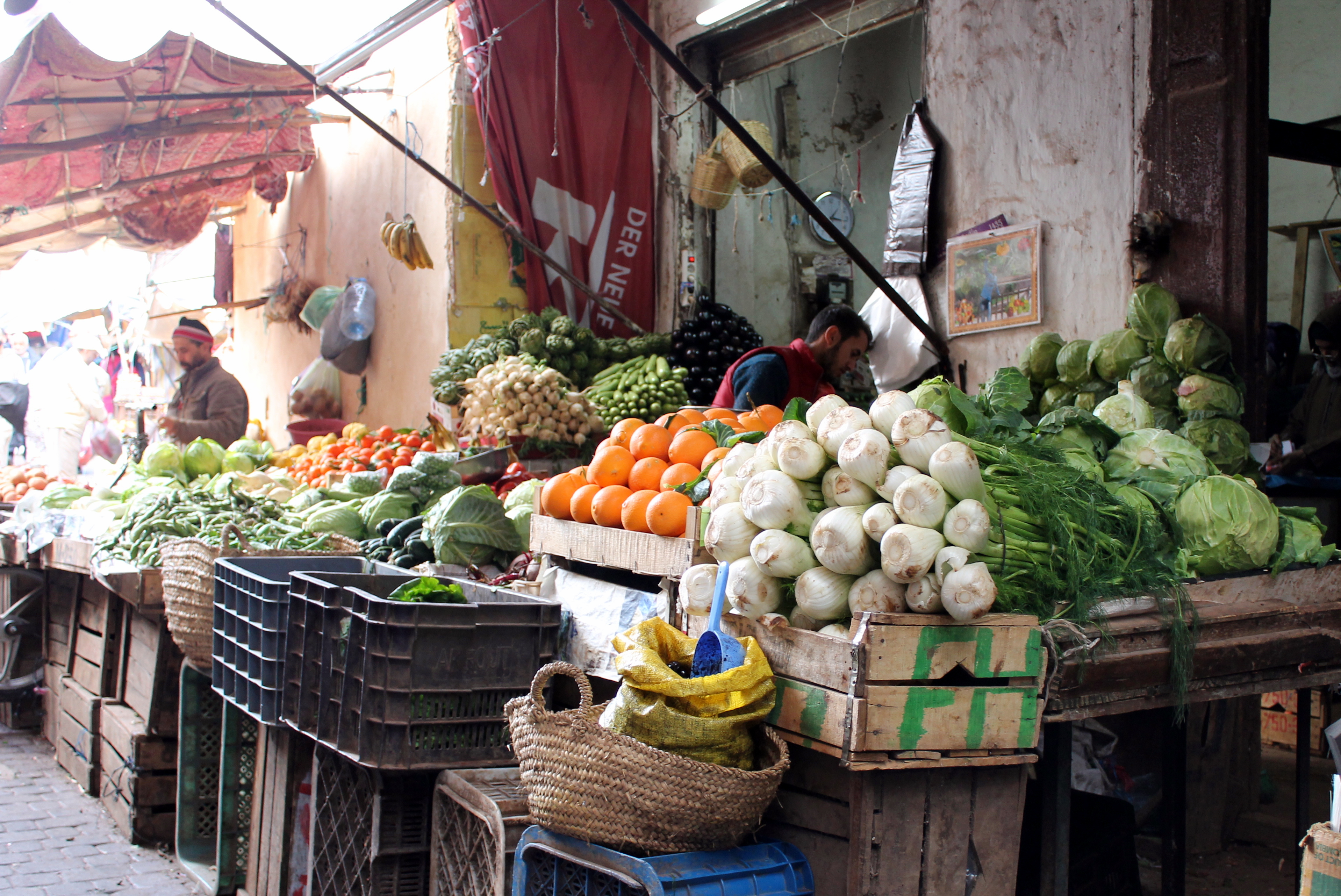
stacked sacks lined against crumbling wall
bird's eye view of ancient tanneries
drying skins

A day of smells

What does a typical day in North Africa smell like? Well, this is my day in smells:

  • the cold of the morning outside of my blankets
  • the bathroom: a strange mingling of soap, wet, and a scent that creeps up the drain overnight
  • the sweet of a clean kitchen until I open the refrigerator and catch a whiff of leftovers with a hint of aged dairy
  • outside the front door, there is a deeper cold smell mixed with the trash that cats have been sorting through during the night
  • and speaking of cats, their odor lingers despite their absence–not overwhelming, just there
  • walking past several men’s cafes guarantees a pair of lungs full of cigarette smoke
  • exhaust fumes from cars, taxis, and buses
  • the smell of used taxi seats partially covered by an air freshener and the cold
  • trash, fumes, and the sweet citrus of the orange trees on the walk from the taxi to school
  • the faint smell of gas from the lounge heater
  • wood smoke seeping out of a nearby house
  • food cooking in the cafes mixed with the ever-present cigarette smoke and the scattered trash
  • rotting fruit rolling along the sidewalk, kicked and trodden upon by passersby
  • garlic and chicken for lunch and consequently garlic on my breath after lunch
  • exhaust fumes and the sharp stench of urine on my walk to the park
  • the lovely freshness in the sweet acres of green and water: herbs, damp dirt, falling leaves
  • drifting in the open taxi window on my way to teach English is cigarette smoke, meat cooking on open grills, smell of humanity, and exhaust fumes
  • the pungent scent left over on the school desks of my classroom: what I imagine to be from unwashed hands
  • dry erase markers
  • mixed scents emanating from my junior high students: perfume, body odor, energy
  • and as the darkness falls, so does the cold, again suppressing the daytime scents
  • but there is still a damp that hovers in the air
  • and there is still the soap scent lingering on my sweatshirt as I cuddle up to study Arabic before bed

Photo by Brian Jimenez on Unsplash