Bargaining and boxing class: North Africa part 4

In December, I spent most of a week in North Africa, visiting friends. My intention is to give you a glimpse of my trip. Please forgive me for omitting certain details and for changing names in order to protect my friends.

“Can I have your phone number?” The taxi driver didn’t waste much time.

When I explained why that wasn’t possible, he asked if I was a Muslim.

“No. I follow Jesus the Messiah.”

He pondered this through several streets of traffic. As he pulled up to the curb to drop me off, he spoke again, “You should read the Qur’an.”

I sighed. “I do read the Qur’an. You should read the Bible.”

He frowned and shook his head at me in the rearview mirror as I handed him the fare.

In light of his suggestion, my own suggestion had been logical. But apparently only to me. “Why not? Are you scared?” I punctuated my challenge with a cheerful goodbye and a hasty exit.

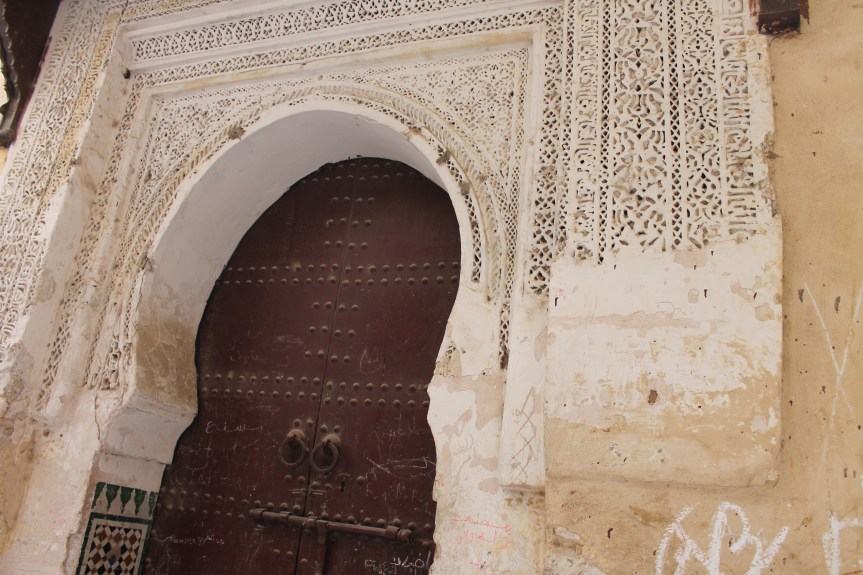
This morning was my morning to go shopping in the old city. The sights and smells of the old city had remained unchanged for centuries and had certainly not changed in the year and a half of my absence. There is a forever skirmish between fragrant and repulsive: baking bread, roasting chicken, urine, a blend of fresh spices, rotting fruit, soaps and perfumes, trash.

Rather than the narrow cobblestone streets accommodating their pedestrians, tourists and residents alike pressed in close to accommodate the streets.

“Where have you been?” several vendors called to me as I bustled along. Did they– could they?!— really remember me?

To my disappointment, I had forgotten how to bargain. No longer was it a matter of easy banter and good deals; it felt exhausting and cheap. Fortunately, shopping didn’t take long since I could only buy what would fit in my backpack between my clothes.

I caught a taxi to my friend’s neighborhood only to find that Khadija and her neighbor, Fusia, were out studying. They would be back soon, said Khadija’s niece. I sat in the salon, watching TV and wondering how my two eighty-year-old friends were doing in their studies.

Suddenly, the door opened and everyone piled into the apartment. There were hugs and greetings that came so fast that I could only repeat “Praise God” and laugh. Someone made tea. Another ran out to buy cookies. We talked and watched a Turkish soap opera until dark.

“I’ll walk with you,” Fusia said. She held my hand and led me along the street. “We’re going to go see my grandson. He will be sad if he doesn’t see you.”

What I didn’t realize was that her grandson’s boxing class did not allow interruptions. Two women screened everyone who entered, and one looked like she could flatten anyone who crossed her. I was making plans for a polite retreat when Fusia asked if her friend all of the way from Spain could just greet dear little Ali.

“Of course! Come with me!”

And so I interrupted the boxing class, a whole room full of gawking children and their annoyed instructor. Ali ran over to kiss me. His cheeks were pink. Mine may have been too.

Only after that, I was allowed to get a taxi and return home.
Words were more than just words: North Africa part 3

In December, I spent most of a week in North Africa, visiting friends. My intention is to give you a glimpse of my trip. Please forgive me for omitting certain details and for changing names in order to protect my friends.

Chaimae’s hug was long and tight, trying to make up for the year and a half of missed embraces. Her mother gave me the same hug. They led me into the salon, not the fancy one for guests, but the family salon that doubled as a bedroom. I wasn’t a guest; I was still family.

“Did you eat lunch?”

Chaimae fried fish and reheated chicken and potatoes already in a pot. We ate, talked about our families, and showed pictures from our time apart. Both mother and daughter were amazed that I remembered Arabic, or at least a semblance of it.

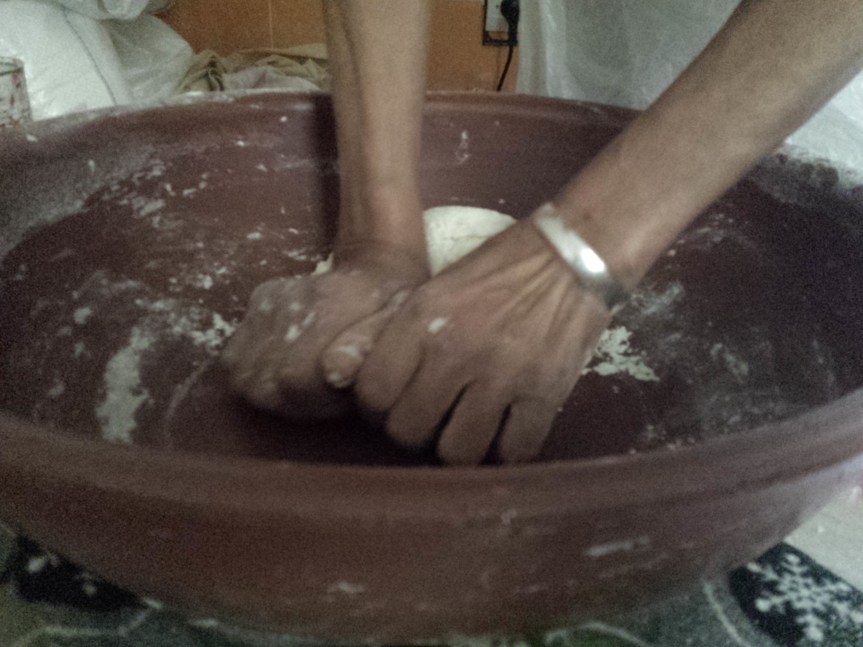
After the bread was patted into round loaves, Chaimae and I went for a stroll around the neighborhood. By the time we returned, the older brothers had arrived for afternoon tea.

It was after sipping cups of syrupy tea and eating mounds of oily bread that one of the brothers wiped his hands on the community napkin, leaned back against the couch, and pinned me with probing eyes. “Who is Jesus to you?”

I was ready.

The entire family listened as I shared. I listened as they shared. The conversation grew thick and loud. My face turned hot in animation. But their faces were hot too.

We discussed our differences and how our separate paths could not both be the path of God. Yet, beneath our disagreement was a profound respect for one another. We had known each other long enough now that words were more than just words; our words were what we had seen each other living and breathing.

And our words were as different as our lives.

Tea time blurred into dinner and more food appeared on the table, but no one seemed interested in another round of feasting.

My Arabic was worn out. So was the rest of me. When family members started to trickle out the door, I slipped into the kitchen to wash dishes. Chaimae made beds on the floor. She gave me a couch pillow so high that my neck immediately began to ache. I waited until the light was out to quietly set it aside.

Partway through the night, the light switched on.

“Chaimae! Chaimae! Wake up! Trish isn’t on her pillow!” They tucked the pillow under my kinked neck, and Chaimae’s mother tucked more blankets around me.

“It’s good that I slept in the room with you,” she told me after my interrupted night of sleep. “To take care of you.”

I smiled, hoping my expression reflected more of the endearment and less of the suffocation I was feeling.

After breakfast, they sent me to the taxi with enough tears to let me know I would be missed.

How do I love her?: North Africa part 2

In December, I spent most of a week in North Africa, visiting friends. My intention is to give you a glimpse of my trip. Please forgive me for omitting certain details and for changing names in order to protect my friends.

I woke up early. If I had known all that the day held, I may have tried harder to fall back asleep.

“Do you have a friend to meet you at the taxi stand?”

It was the normal question taxi drivers asked whenever they took me to Aisha’s neighborhood. And I was a bit nervous about locating the house without wandering up and down the streets of this particular neighborhood.

“Do you want me to walk you to the door?”

Then I saw it. The taxi driver had pulled ahead far enough that I could see the doorway from the taxi stand. “That’s it!” At least I was 90% sure.

At the top of those countless concrete stairs, I found the family at home, bursting with a warm welcome.

But all was not well.

The tension I had felt in their home more than a year ago had only increased. Sporadic and often violent discipline left the children confused, angry, and out of control.

Aisha invited me to sit on the naked couches. She had washed the covers for my visit, she said. She shook her head and clicked her tongue. Someone had slipped over the roof and stolen them off of the line as they dried in the sunshine.

As Aisha cooked (she refused my help, which was fortunate since her kitchen can only fit one person at a time), I slipped out to the rooftop to pray and to watch the world from the 6th story. The neighborhood was a moving I Spy book: a man leans over a roof parapet with a paint roller on a stick, turning dingy white to barn red. He calls to the men on the roof below to move their things so he doesn’t drip paint on them. His daughter swings on the clothesline behind him, laughing in delight as the wire stretches wider and wider. Boys play cards on the street below. Across the way, a woman gathers laundry. Just next door, a teenage girl drapes a blanket over the parapet, stops to watch the world, and spots me doing the same. I am fascinated by the movement—a symphony of together-life, sometimes harmonious, sometimes not.

More family came for a lunch of fried fish. And then we went for a walk. Rivers of mud flowed through the dirty market, splattering our shoes as motorcycles roared by. We came to an open area of crab grass, where families sat on blankets and pieces of cardboard and peeled mandarins while the children ran wild.

Aisha and I peeled mandarins together and had the first meaningful conversation of the day. But something in her expression and words spoke of stale panic.

The explosion came a little later, on our way home. Slaps, a bruised eye, and suddenly wood pieces hurled through the air as mother and daughter screamed at each other. Onlookers interceded, patching the family’s distress with layers of shame.

In the taxi on the way home, I hugged my backpack that now smelled like leftover cigarette smoke. “God, help this family!” I prayed until the words felt worn out. But God knew the layers in those words. How could I– a long-distance friend– initiate the healing of a crushed and bleeding family?

A few days later, we met for a final goodbye, just Aisha and I. We talked about her daughter. After listening to stories of behavior problems and irresponsibility, I begged Aisha to love her daughter.

“How do I love her?” she asked.

How does she show unconditional love when she may have never known it? How can she pass on what has never been passed on to her?

As we parted ways, I tried to scrape together my broken heart and wished I could scrape together hers too.

Welcome back: North Africa part 1

In December, I spent most of a week in North Africa, visiting friends. My intention is to give you a glimpse of my trip. Please forgive me for omitting certain details and for changing names in order to protect my friends.

Nine hours to kill in the airport. I hunched over a Burger King coffee and read.

Traveling dehumanizes people. We turn into frantic, herded animals. Carrying our belongings with us everywhere: hanging over-stuffed carry-ons on wimpy bathroom stall hooks (and watching in helpless horror as a scarf or jacket slides to the floor), propping our feet on suitcases to pretend we’re relaxing when we’re really just looking out for our stuff, and even getting desperate enough to sprawl across the grimy airport carpet and rest our head on the knobby bulk of our backpack. I have done all of this, so I know. I also know about frozen water bottles and trying to eat my lunch before I check into an international flight… just in case they try to confiscate my hard-boiled eggs.

Seven hours on an overnight bus just to wait 9 hours in the airport. But I was feeling surprisingly human. A cup of coffee and a good book can do that, I guess.

A couple of hours later, I touched down in North Africa, only a little queasy. Not enough to use the handy baggie I was gripping. But just enough for the man across the aisle to eye me nervously.

I had the equivalent of $3.35 in my pocket when I emerged from the airport—not enough for a taxi. And the 40 cent bus was pulling away. I waited for an hour with a diverse crew of other penny-pinchers.

As the bus seats filled, I chatted with a young family that piled into one seat beside me. The 3 children were almost as charmed by me as I was by them.

“Auntie, how long are you here?” Ilyas, the oldest boy asked.
“Until Thursday.”
He was crushed. “So we won’t see you again? You won’t have time to visit us?”
“Ilyas.” His mother took him by the shoulder. “We have her here—” she tapped his heart. “And here—” she tapped his head.

When they got off the bus, someone rapped on the window behind me. Ilyas was there, grinning and waving his final goodbye.

Darkness had fallen by the time we reached the heart of the city. The landmarks had changed since I had lived there and it was hard to stay oriented in the dark. I missed my stop.

I jumped off at the next stop and walked, hoping to find a place to exchange my euros. But exchange stores had closed early this Saturday night. So had phone stores.

At random, I popped into a tiny store and asked the owner if he had any SIM cards. He pulled a box out of a dusty drawer and dug through it until he found one. He was scrawling my passport number on a scrap of notebook paper when I remembered I didn’t have enough of the local currency.

“No problem,” he assured me as I emptied my coin purse on the counter and offered to pay in euro.
“No problem. How much do you have?”
Together, we totaled $2.95—five cents short.
“No problem!”

Since he didn’t seem to care, I decided not to care either.

With my new number, I called my former roommate and made a beeline for her house. She wasn’t home yet, but had left the key with the upstairs neighbors. A short chat and a key later, I entered the apartment to find that I had been much anticipated.

Handwritten notes were stuck all over the house, guiding me to my bedroom, the shower, tea, and waiting food. After almost 24 hours in transit with very little sleep, such a welcome brought me near to tears.

Religious hurricane

The sweeping wind
of religious authority
scatters humanity
to drown in waters
of blind idolatry
of human effort.
Flailing arms
reach out to me.
Instead of “Save us!”
they cry, “Join us!
We have the truth!”
But why would I
search for truth
when I have found it?
Why would I
search for peace
when I am in
the eye of the storm?
And how can I rescue
those who want to drown?

Christmas this year

Christmas this year looks different. There is a usual busyness, made busier by a short trip to Africa wedged in between full weeks (more on that later).

It’s my second year of celebrating Christmas in Spain. But unlike last year, this year I have the opportunity to be with friends that don’t celebrate Christmas.

I love Christmas: lights, carols, gifts, markets, chocolates, roasted chestnuts, scarves and winter coats. It gives me a warm, fuzzy feeling.

This year I want to indulge in that warm, fuzzy feeling. I want to enjoy the celebration of Christmas. And primarily, not secondarily, I want to experience a fresh joy and excitement of the Messiah’s birth. A Savior, born into the world, a light born into thick darkness.

He’s still shining.

Sometimes, surrounded by people who know the Christmas story by heart and perform it every year, I forget to savor that first Christmas joy.

My sister has been telling my 1-year-old niece the Christmas story using a miniature nativity set (minus the minor character sheep which may have gone out with the trash).

Telling the story to someone who has never heard it makes the story exciting again. What would happen in my own heart this year if I could share the wonder of Christmas with those who have never heard?

I once was young, but now…

I found my first gray hair after more than a year in North Africa. I wailed as I looked at its reflection in the mirror. Was it really gray or just blond? I yanked it out and gingerly carried it to my roommate. She inspected it too, pulling out her flashlight for better lighting.

There, in the glaring battery-powered light, we knew the truth. Grimacing, my roommate (only one year younger than I) looked up at me, “I’m sorry!”

I could have wallowed in despair. But I didn’t. For some reason it didn’t bother me as much as I was expecting.

Long, long ago—and I’m pretty sure I’m qualified to use this phrase now that I’m over 30—long, loooong ago, my older sister told me that she didn’t think there was any point in feeling old. “We’re never going to be any younger than we are right now.”

I’ve remembered that.

Why are we so afraid of age? Is it the aches and pains? The slowing metabolism? The realization that our bodies are “past their prime”? The imminence of the grave (even though “to die is gain”? Why do we focus on the negative aspects?

Long, long ago, an English professor told me that the best part about getting older is the accumulation of knowledge. I’m not sure I would agree that knowledge is the best part, but it’s a pretty hefty perk.

As we get older, we get to embrace adulthood, make our own decisions, continue maturing, grow in wisdom, and teach the younger generation.

In Arabic (at least in this North African dialect), the verbs “to grow old” and “to honor” are almost identical. In the culture, gray-haired people are respected because of their life experience and wisdom. For some reason, my one gray hair—or maybe five or six by now—doesn’t hold a lot of weight yet. Maybe in another ten years I will be ten years wiser, and ten years more worthy of respect.

Dare to give away your dream

“Twelve dirham.”

I picked eight dirham out of my coin purse. “Here you are.”

The produce vendor looked down at the coins in his palm and waited.

I stared at the eight dirham and felt the heat creep up my face as my mind replayed the Arabic word he had used. He had said, “tnash” and I had given him “tminia.” I had been in North Africa for six months and still didn’t know my numbers? Good grief.

Despite the countless hours of study, I was, in fact, the worst language student in all of history.

The sting of my disappointment worsened when I saw others fulfilling my dream. While I plodded through language school, feeling like a daily failure, I was forced to watch other students blossom. It wasn’t fair.

Seeing others fulfill my dreams made me insecure and envious.

During my time in North Africa, I heard of a man and his wife who had a vision similar to mine. But because of circumstances outside of their control, they could not move overseas. Instead of being jealous and closing up their heart to this dream, they sent me a donation to carry on with my work. Several hundred dollars to someone who was living out their dream. Their heart was for the dream rather than who was fulfilling the dream.

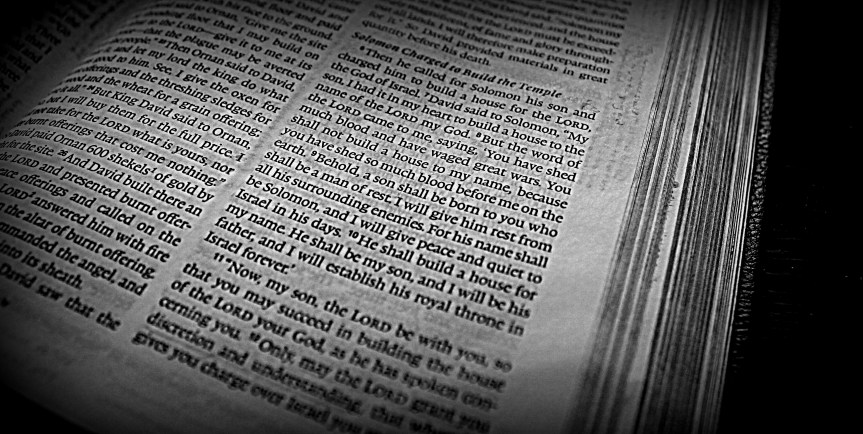
Thousands of years ago, King David realized that he was living in a palace while God dwelt in a tent. He decided to honor God by building a gorgeous temple. It was his dream, and a worthy dream at that. But God said “no.”

Instead of pouting, King David helped to plan and gather building materials. He even blessed his successor to complete the God-given privilege of building the temple.

So when you see other people being or doing what you would like to be or do, don’t soothe your pride with the camaraderie of other envious people around you. Share your dream with others, even if they are better at it than you are. But beware: it’s much harder to give away your dream than it is to give it up! Trust me; I know because it’s a lesson I’m still learning.

Do you want to know the apricot tree?- Part 3

The uneven cobblestone streets wound down into the old medina. It was my last big shopping trip before I left the country. I wasn’t going to rush. Not many people were out today- was it a holiday? Who cared?

I had already bought a neat little set of tea glasses and stopped to chat with the rug seller who invited me into his shop whenever I strolled by. Then I paused in front of a shop to look for a piece of jewelry someone had asked me to look for. Earrings with a ship anchors on them.

“Can I help you?” The idle shopkeeper was suddenly at attention.

“Yes, do you have… do you have… Do you have earrings with-” How in the world was I going to describe an anchor?

“Yes! Here are the earrings! I have this kind, and this kind-” His hands flew as he pointed out his worthy merchandise. “Do you want camels? I have camel earrings!”

“No. I want… I want earrings with something from a ship. Something they throw into the water.”

He covered his confusion by pointing out more undesired sets.

Then I spotted a keychain with a ship anchor. “There! I want earrings with this! What is this?”

He shrugged and grinned. “Something from a ship that they throw into the water.”

I rolled my eyes, but he urged me into his shop to look at other things. After a quick glance around, I was ready to go.

But he had spotted the set of tea glasses sticking out of the cloth bag I had draped over my arm. “Are those colored?”

“No. They’re just normal.”

Uninvited, he pulled them out of my bag. Carefully, he opened the box and seeing the set of shining but very normal glasses, he said reverently, “They’re nice.”

I agreed as I took the box back from him.

He was still staring at the box as I replaced it my shopping bag. “How much did you pay for them?”

The moment I had been waiting for had sneaked up and caught me unaware. Almost. But not quite.

“Do you want to know the apricot tree and who planted her?” I didn’t say the words loudly; I was too preoccupied with saying them correctly. But they hit their mark.

The storekeeper took a step backward before bursting into hearty laughter. It was several moments before he was able to respond. “You are not a foreigner. You are a North African! You speak North African!”

Do you want to know the apricot tree?- Part 2

There was coffee with milk, mint tea, several types of bread, cookies, brownies, chocolate pastries, hard-boiled eggs with salt and cumin, strawberries…

We three roommates beamed at each other across the table. We had pulled off a luscious North African tea time. Our two guests were relaxed and carried on a lilting conversation that didn’t seem to notice our limited vocabulary.

“Eat! Eat!” We urged as we refilled coffee glasses and set plates of food in front of them.

The topic turned to people who ask too many questions. I shared my story with the woman at the store. Our guests burst into laughter, amused at how annoyed I still was, days later.

“What should I say when people ask me that?” I hollered over their laughter. My teacher had taught me the phrase, “Is it your market?” but I had only ever heard sassy children use that with each other. It hardly seemed appropriate to be so blunt with another adult.

Still laughing, one of the ladies said, “Do you want to know the apricot tree and who planted her?”

Captivated, we asked her to repeat the phrase over and over. As foreigners, we probably got more than our fair share of nosy questions. Having a bit of good-natured ammunition would be refreshing. Our guests assured us that no one would take offense at such a remark, but they would get the hint to get their nose out of of your business.

We practiced the awkward words and intonation until our pronunciation was acceptable by North African standards.

And I filed that helpful tidbit in my mind for easy access.


Photo by Pratik Gupta on Unsplash