Enjoying the journey

“When I’m finished with school-”
“After work today-”
“When we get old, we’ll retire and be able to do the things we always wanted to do.”

Sound familiar? Those words could be snatched from the mouths of most western culture citizens.

That’s when I look at North Africans and realize that they understand the brevity of life better than we do. For many of them, it’s not about the next thing; it’s about today.

I thought about it while shopping one day. It would have been much simpler to taxi to the supermarket and buy all of my groceries in one place (and sometimes I do this). Instead, I went from little shop to shop, little vendor to vendor to find what I was looking for. I was not just another face in the checkout line; I was “my sister” to some of the shopkeepers. There was conversation and relationship.

It wasn’t about being efficient; it was about having interaction. It wasn’t about finishing the task; it was about enjoying the moment that you have while you have it.

This method of thinking has its drawbacks, but it is a rich way to live life. Maybe someday I will learn how to implement it in my western mindset. 

Who do I laugh at?

The sun came and went as ominous clouds marched across the sky. I shivered and wondered why I hadn’t checked the weather before I had walked to the park to study. Winter was coming; that was certain.

On the other side of the bubbling fountain of the garden plaza, a man was stretched out on a bench in front of the bamboo forest. I had seen him there before. He wore several layers of clothing all with that grimy, unwashed tinge. He was a perfect picture of a North African homeless. But he didn’t bother anyone. Even when he awoke, stood up, and stumbled to another part of the garden.Beside me, just on the other side of the fig tree, were two boys pretending to be men. They smoked cigarettes, played music, and took selfies.

But when the homeless man got up and walked away, the boys gawked at him. Then they whispered something to each other and snickered.

I was angry. If the man had bothered them, I could have understood the sentiment to mock him. But as it was, the man had done nothing to deserve anything less than their respect. And yet they laughed at him. How dare they!

While I was still high on my judgment throne, God asked me, “Who do you laugh at?”

Me? Laugh at someone?

How many times have I amused myself at the expense of another? In short, who do I look at and tell myself I am better than they? Maybe it’s not the homeless man. But it could be the boys smoking cigarettes. And really, does that make my pride any less hideous than theirs?

I’m a good person

“You’re the perfect Muslim.”

“Huh?”

“Yah, except that you’re not a Muslim.” My friend began to list the ways in which I fulfilled the religious requirements: “You pray. You don’t lie or cheat. You dress modestly…”

She wasn’t talking about my heart; she was talking about my actions. And she wasn’t the first person to praise me for things I do right.

When I hear continual praises of my good deeds, it is easy to internally echo what I’m hearing. “Yes, I am pretty good. I pray. I don’t lie or cheat…”

Essentially, it is easy to forget this: if not motivated by my love for God, my good deeds mean nothing. The blackness of my heart only blackens as I bow to the idol of man’s praise.

I protested to my friend’s assessment of my character. However, she insisted that my heart is inherently good and that is why I do good things.

People will continue to praise me because they like to believe that I am being good on my own. They like to think that being “perfect” is humanly achievable. But when they walk away from an encounter with me, I want them to be praising God, not me.

One day of autumn

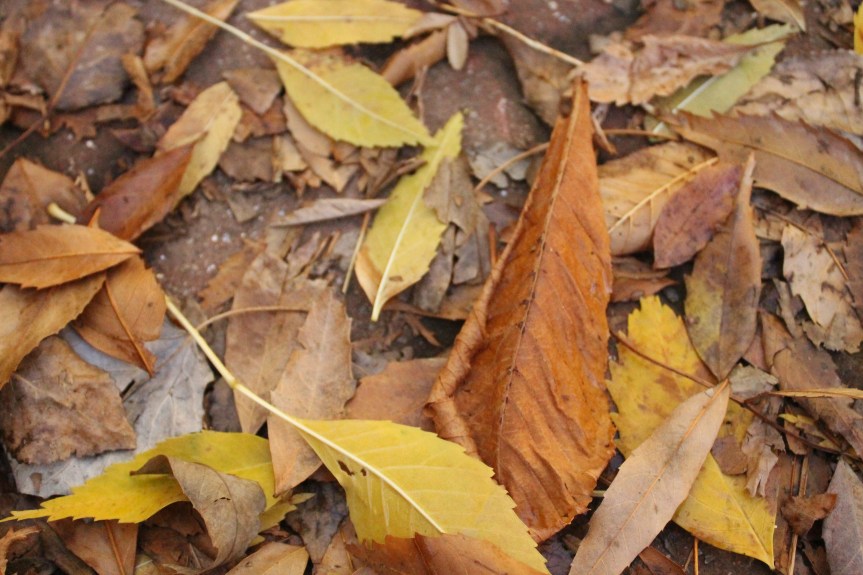
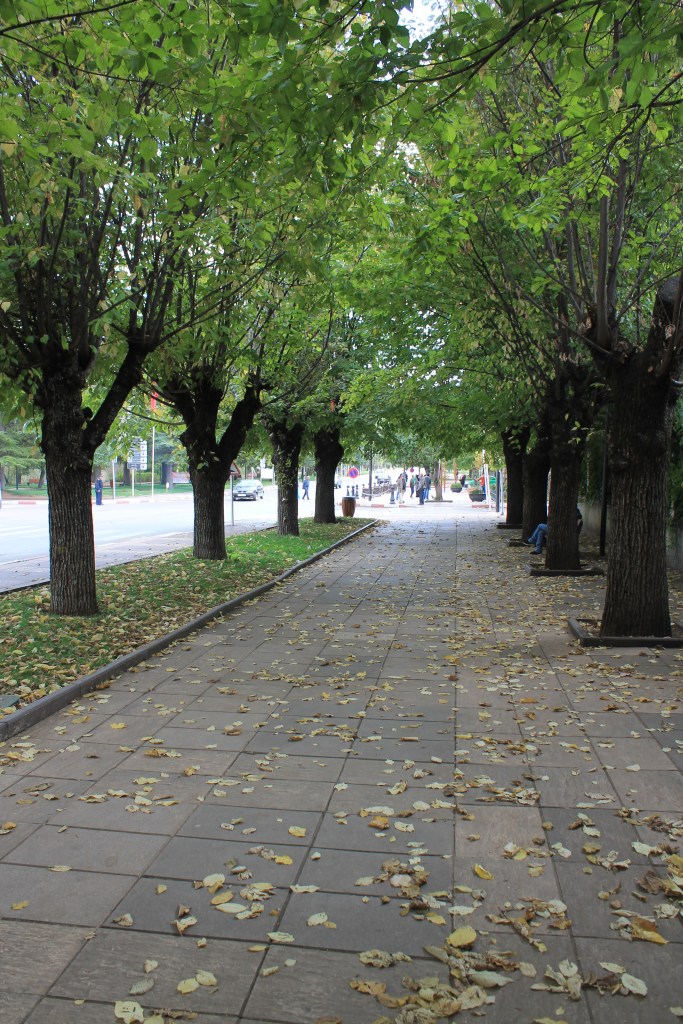
Autumn is my favorite season. This year I had one day of what I would consider true autumn: the sweet smell of damp and fallen leaves, apples, pumpkin bread, brisk air. It was lovely. I had to enjoy the entire season in only one day in that mountain town. But I think I succeeded.

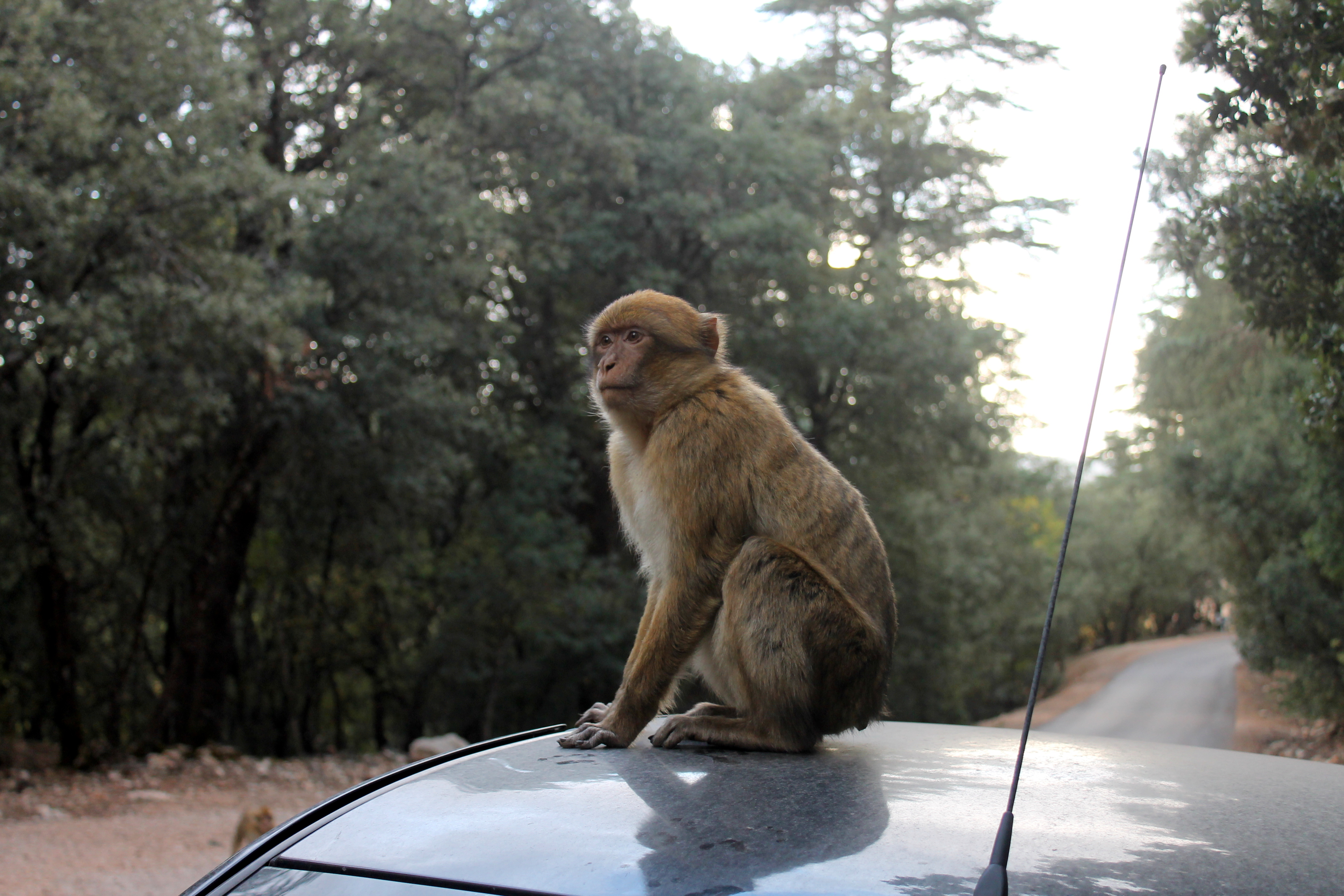
Despite the Midwest feeling of that fall day, now and then there was a reminder that I wasn’t in central Illinois:

What if you were Soukaina?

Have you ever stepped into someone else’s shoes and tried walking around in them?

Soukaina is sixteen years old. She lives with her parents and two year old brother in a poor neighborhood of a bustling North African city. In that tiny, sixth floor apartment, personal property and space are out of the question. She doesn’t have her own bedroom. In fact, there is only one bedroom for the entire family.

She usually attends school but spends her free time on the streets. She gets in trouble for bullying neighborhood kids. Her parents send her out of their way, but paradoxically rebuke her for spending too much time on the streets.

Her father is diabetic and doesn’t have a job. Her mother works herself to the bone six days a week. Her little brother follows her around and gets into everything.

To get anyone to listen to her, she has to yell. Sometimes, it’s just easier to hide. Once, she said, “I don’t like to live here. There are many bad people.”

Yet, she is loved. Despite the abstract and irregular displays of affection, her parents love her.

So what if you were Soukaina? Well, what if you were? What would your life look like? What choices would you make?

I’m not asking these questions so you can recognize your privileges or count your blessings. I’m asking you because looking at the world from someone else’s perspective makes you better capable of loving them.

30

Turning thirty is means that I have a fair amount of life under my belt. Instead of being sad that I am leaving the 20s behind, I’m pondering the things I would like to do during my 31st year. You might call it a bucket list. You might not.

  • See more parts of this North African country
  • Finish language and culture study (well, the official stage anyway)
  • Learn how to cook North African food
  • Spend lots of time with family
  • Meet my nephew and make him fall as in love with me as I am with him
  • Renew friendships and relationships at home
  • Gather the required paperwork for my Spanish residence visa
  • Daily recognize my reliance upon One who loves me completely

The wedding I didn’t attend

I didn’t attend a wedding. That statement, of course, depends on one’s definition of “wedding”, I suppose. I did attend one or two ceremonies during the six day celebration, but the ceremonies were so low-key that I didn’t even see the bride. That’s why I say I didn’t attend because how can one attend a wedding without seeing who the wedding was for?

What I did experience, however, was enough to send my cultural senses spinning. Colorful clothing, drums and horns, dancing, green and rolling countryside, bread baking in an outside oven, a restless night curled up foot-to-foot with a stranger who kept stealing my blanket, mint tea and sweets to accompany the luscious wedding feast…

But I wasn’t only observing; I was being observed. My status as the only foreigner at this countryside wedding earned me plenty of stares, questions, and giggling girls developing heroine crushes on the uncomfortable-looking foreigner in the green dress.

After only 29 hours away from home, I returned feeling both culturally enriched and overwhelmed.

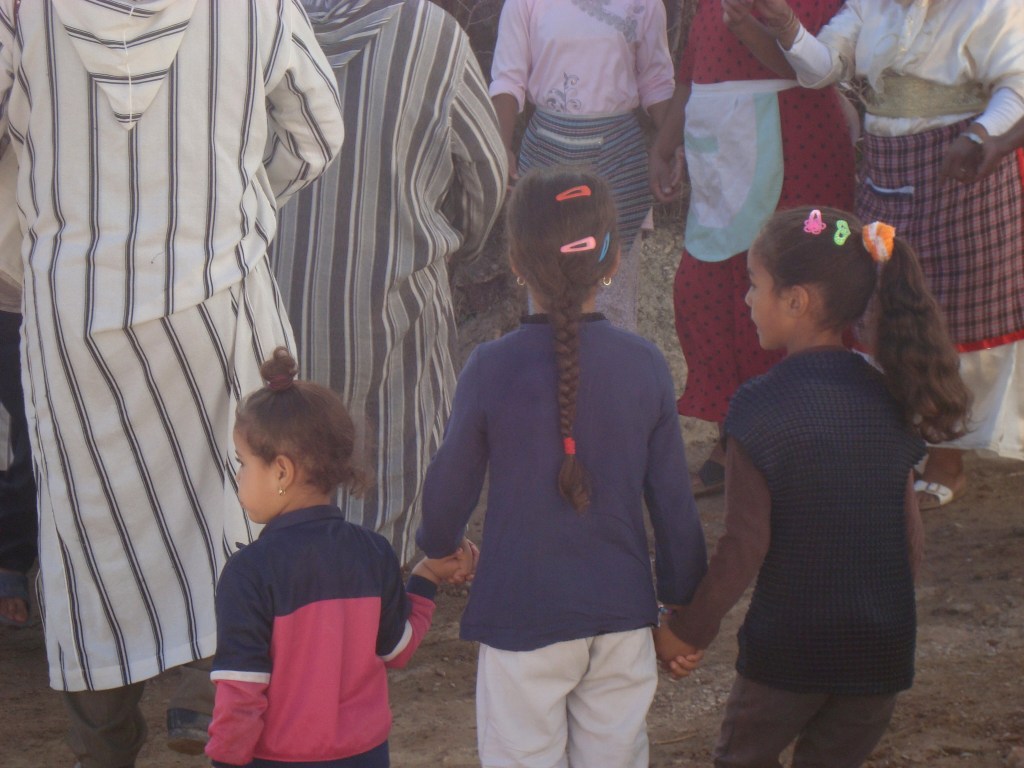
little girls holding hands next to adults in robes
people dancing
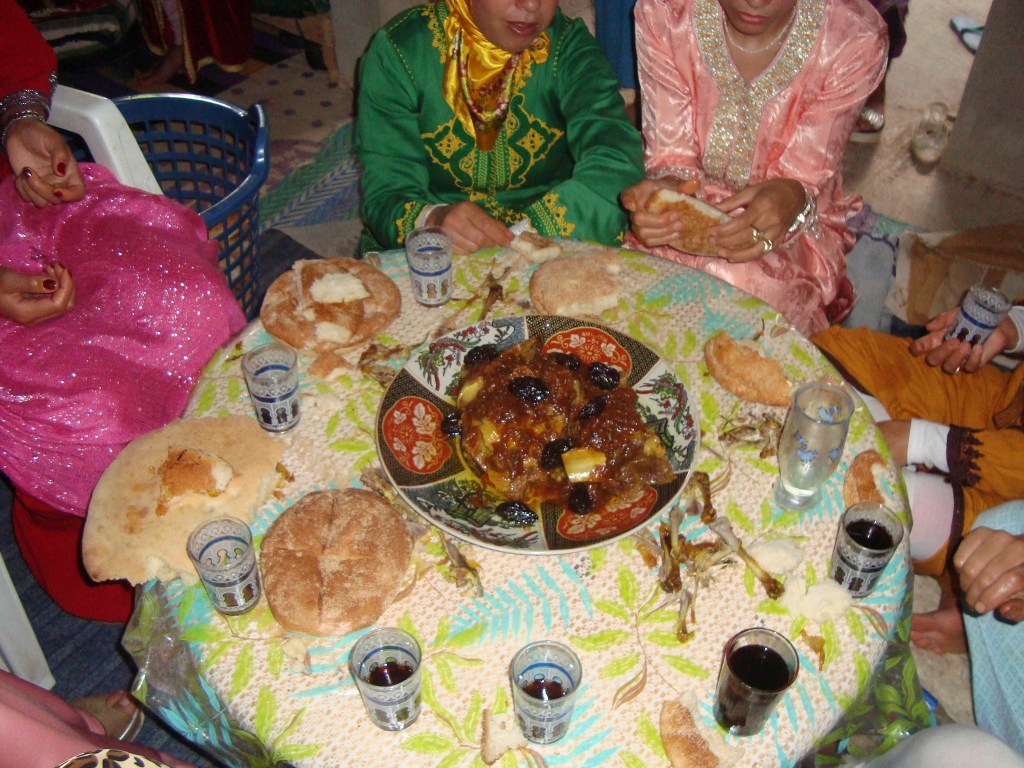
beef and prune tagine in center of table

I forgot to see the sky

Trees were only trunks, lining my peripheral with motionless human beings beside the square tiled sidewalk. But at the rhythmic slapping of wings against broad leaves, I looked up at the silhouettes of startled birds in the bright sky.

The sky. When was the last time I had seen the expanse of soft blue, white, and gray? Far above the wailing streets of traffic and layered buildings was majesty. And it watched me with quiet pleasure, waiting for me to remember.

Redeemed opportunities

Where do missed opportunities go? Are they gone forever or does God redeem them by giving us new opportunities?

Here in North Africa, where living intentionally should be as easy as breathing, I still miss opportunities. Why? Well, I’m busy; there is always language to study, classes to teach, emails to write, friends to visit, etc.

But those excuses aren’t good enough. Try telling a little boy that preparing lunch is more important than his soul. Maybe that’s not exactly what I said, but it is most likely what I communicated.

I was in the middle of a bad day when he followed me home from the store. People had been raining expectations down on me and I was exhausted although the day was only half finished. So when he jumped up and followed me, I rolled my eyes.

He only wanted one coin, he said. But to me, he was just one more beggar with just one more fabulous fable to accompany the outstretched palm. I tried to be pleasant, but my smile faded with his persistence. “Enough!” I said as he fell in step with me. “Be quiet!” I said. He didn’t. He followed me to my doorstep and only stopped when I closed the door behind me.

I had just started putting groceries away when my conscience awakened. What if I was the only person in that boy’s life who could have shared truth with him?

It took an hour or so before I was ready to face him again and apologize for my heartlessness. But when I went outside, he wasn’t there. Nor was he in front of the store. He had vanished.

So had my opportunity.

But my question is this: Has God redeemed my mistake by giving me another opportunity? Could it be having tea with that lonely widow? Or maybe taking time for a girl whose insecurity manifests itself in bullying?

God is a God of redemption. Because He has redeemed me, I know He is capable of redeeming my missed opportunities.


This post was first published on https://lucindajmiller.com