




I have spent most of my summers in humid Illinois, a few in Mexico, and last summer in Phoenix, Arizona. Yet, every time spring yields to an overpowering summer, the heat catches me off guard.
Sure there are ways to survive even without air conditioning. Here in North Africa, spray bottles, fans, popsicles, and cold water bottles come to mind.
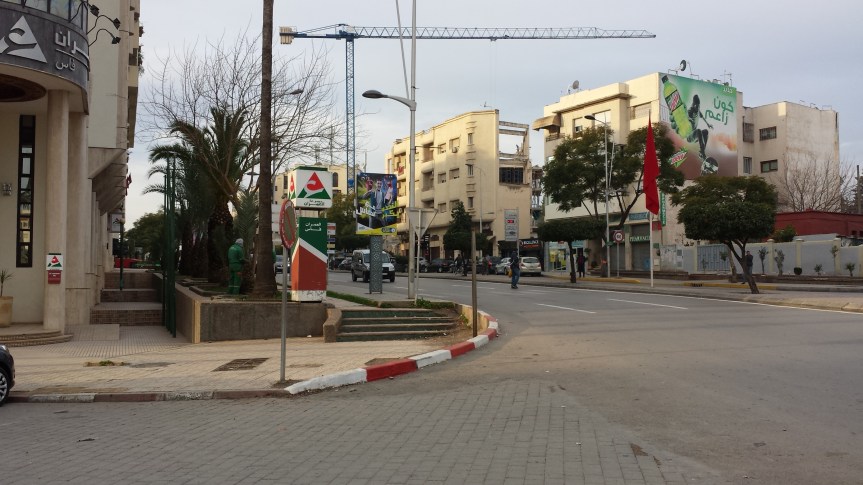
The sun hovers directly above the city and beats its rays into the vast stretches of concrete and tile. Don’t picture me lounging on lush green grass under a generous shade tree. If I reclined on the ground, I would probably fry like an egg. And most of the shade comes when the sun dips behind the concrete buildings.
I have little energy. Staying hydrated is a chore. Headaches are routine. Sometimes I’m even sick to my stomach.
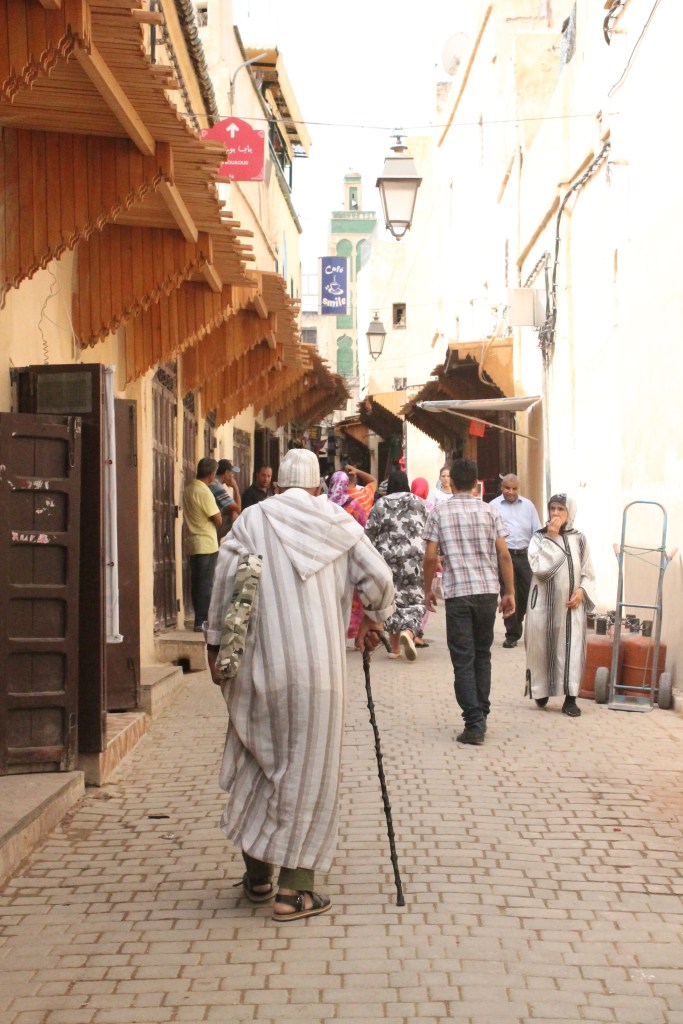
Yet, this miserable heat brings out the camaraderie that wouldn’t be here if the weather were perfect. After the sun goes down, people unite on the streets, visiting, shopping, or just watching the world go by. The carefree atmosphere comes from the underlying sensation of “Whew! We survived another day together!”
“Am I hungry or just bored?” I muse as I peer into the refrigerator.
Summer has set in where the nights rarely descend with a breath of cool air. It is warm all of the time. And what is worse is that I feel trapped inside. And what is even worse is that my roommate chose this month to travel to Germany, another friend left forever, one classmate is in the UK and another classmate is in Spain. I am trapped with myself.
I make plans here and there, but the reality is that any plans are contingent upon the time of day. The hours that are too hot are off limits because street robbers might prey on the few people who are out. The hours right before the breaking of fast are even worse; there are hardly any people or cars to be seen and a fog of silence enshrouds the street.
Even if I do go out, most stores would be closed anyway. And the cafés and restaurants definitely are.
Why didn’t I just go home for part of the summer? Never mind the long journey or the money. Maybe that would have cured some of my recent homesickness.
I am tired of studying on my own, reviewing, practicing, listening, jotting down notes. I am tired of the food in my fridge. I am tired of sleeping.
For a melancholy, boredom breeds self-pity. At least it does in this melancholy. The light at the end of the tunnel is fading. Ramadan will NEVER end! Instead of thinking how hard it would be to fast for thirty days, I think about how unfair it is to plan my life around those who are fasting.
Selfishness. Yes, it all comes down to a perspective saturated in selfishness. Time to go count my blessings.
Photo by Erik Mclean on Unsplash
I am telling myself it’s a combination of yet another rainy day and of not having a break from school. I’m exhausted and on the last day of the school week, I am required to slosh through puddles and mud and still be late for class.
And then I get home, reheat the coffee I didn’t have time to finish before school, and try to drown my melancholy mood in language study.
But in the apartment below, I hear the neighbors playing the Qur’an. The sing-songy chant grates on me. So I turn on my own music:
You’re the God of this city.
You’re the King of these people.
You’re the Lord of this nation.
You are.You’re the Light in this darkness.
You’re the Hope to the hopeless.
You’re the Peace to the restless.
You are.There is no one like our God.
For greater things have yet to come
And greater things are still to be done in this city.
No matter how “done” I feel with life right now, His work has only begun in this city. And He wants to use me now, right where I am. In the middle of puddles, mud, and too much homework.
My calling to glorify Him isn’t based on circumstance.
Isolated. That was the flavor of the air as we walked down streets that were merely variations of the same. I was the only foreigner in the neighborhood, strange considering that just over the hill, tourists were thick within the shadowy walls of the old city.
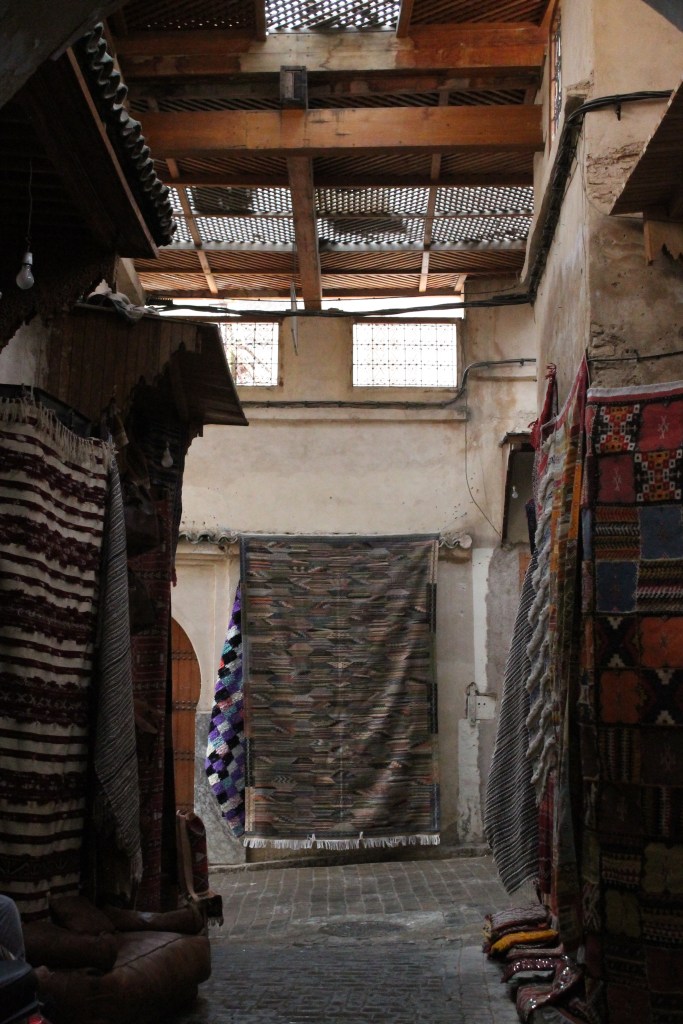
But here, crumbling buildings full of tiny apartments stretched toward the overcast sky. Cobblestone streets cupped leftover puddles and floating litter. Laundry was strung everywhere: on wires, through window grates, on rooftop clotheslines. Curious faces darkened whitewashed doorways and window ledges. Children danced along the streets in endless game.
Much of the world was happening outside. Together. As if the culture didn’t realize that people didn’t have enough room to live.
Our first stop was a relative’s home. We entered a low doorway and were enveloped in a world of chattering woman. It was a noise that trailed up several flights of uneven concrete steps. There Aisha picked up her 1 1/2 year-old son. And there, we were offered coffee so sweet it made my teeth cringe. My coffee cup smelled like the residue of someone else’s saliva. I smiled and drank the coffee anyway. Our hostess was a dainty woman. Her face was young, but her smile revealed only a few teeth scattered along her gums.
I met in-laws, nephews, sisters, and other connections I no longer remember. It didn’t help that I was struggling to remember my family vocabulary! After a few more stops, we wound our way to Aisha’s apartment. She insisted on carrying the juices I had brought with me even though she was also carrying her little boy.
The apartment building was cold and concrete. With every floor that we climbed, I would turn and ask Aisha, “Here?” She would shake her head, “Still!” She said that all of the way to the sixth floor after dozens and dozens of uneven concrete steps.
In each woman, there is a certain amount of pride for her home. Aisha was no exception, although her home consisted of a closet-sized wash room and kitchen, one salon, and one bedroom. That was all.
Aisha’s 16-year-old daughter Soukaina and I walked out on the roof to stare at the world six stories below. Heads walked by–heads without faces from my point of view. A woman dumped a bucket of water over the cobblestones in front of her home and scrubbed vigorously. Two little girls played school. A man propped himself in the doorway and watched the world. A woman two doors down did the same. But it wasn’t just the street that was alive; all throughout the apartment towers, people were moving: appearing in windows, hollering to someone below, gathering laundry on the rooftop, smoking a cigarette, or talking across the street with someone in the opposite building.
Once Aisha ascertained that I liked couscous, the lunch preparations began. I offered to help once, but only once. I was a guest. When the food was ready around 4 p.m., the family pulled down the table for my sake. (I heard the father say, “She’s American.”) There were some other random family members around the table, and I couldn’t remember exactly how they fit in the family. But it didn’t really matter.
We all dug into the center plate. Aisha kept tossing potatoes and carrots onto my side of the platter. Whenever I tried to stop eating, they demanded I eat more. No amount of “I’m full, praise God!”s could satisfy their vicious desire to watch me glut myself.
For me, mealtime was tense because in their attempt to honor me, they set my presumed needs so far above their own comforts that I felt the separation deeply. I was given two cushions to sit on at the table and the older woman present was given none. When I tried to share, I only succeeded in raising a chorus of protests. I was incapable of experiencing their everyday life because I had the prestige of a guest.
After an hour of TV and conversation over the TV, the preparation for the afternoon tea began. I offered to go with Soukaina to buy doughnuts, but the father turned down my offer on account of my being American. “This is not like the new city!” he declared. My presence would attract attention and a 16-year-old companion didn’t provide the necessary protection.
More female relatives joined us for tea and the conversation livened. We laughed, ate, and took pictures. And then it was time to go. We descended–down down down–until the precarious stairwell spewed us onto the narrow cobblestone street again.
We sloshed through the evening drizzle to the taxis. Aisha and Soukaina tried to accompany me home in the taxi, but when I put up a protest that rivaled their insistence, they relented. But Aisha gave the driver precise instructions where I needed to be deposited and made sure that I had enough money with me. I kissed them both goodbye.
For now.
We had seen each other before. Most mornings I passed her by on my way to school. She and a friend would sit on a concrete bench under a tree. Noting the consistency of our timing and location, I greeted the women regularly. But I never slowed enough to make conversation.
Until the day I needed help with my homework. Both ladies were startled when I plopped down beside them and asked them to help me. With no context for this encounter, they were full of questions: Was I a student? Where was I studying? What kind of Arabic was I studying? What was my name?
The conversation was labored, but I finished the assignment and arrived at class, breathless and only a few minutes late.
A few days later, I was striding to school with my normal stoic street face when a lady in my peripheral became animated and shouted to get my attention.
Another beggar, I surmised, and turned to greet her without reaching for my change purse. But then I recognized her face, although she wasn’t in her usual place under the tree.
As we greeted each other in somewhat reserved familiarity, I studied her for the first time. She wore old clothes and the kind of shoes that most women only wore to the public bath house. Her face was enveloped in the odor of her breath, which I smelled as I embraced her. She was a tiny woman, not built for the hard work that life required of her.
Who was this woman? And what did she want from me? She insisted on walking with me on my way to school; she said she worked as a maid at a house nearby.
Her speech was complimented with gestures. “You—come—my house—to sleep.” She isolated her words with the intention of helping me understand. “Do you understand?”
I did understand, but said only, “God willing” which was neither a commitment nor a refusal.
Before we parted ways, she asked for my phone number. That evening she called me and together we weathered my first phone call in Arabic. We exchanged greetings and a few other bits of information among the numerous confessions of “I’m sorry; I don’t understand.”
She told me she would wait for me the next day on my way to school.
I shielded my eyes from the morning sun as we walked the familiar streets to church. My heart was quiet and my mind was ready to receive a word from Him. Any word. Yet, I was still grappling with the paradox of God feeling absent even when I knew He wasn’t.
“Let us become more aware of Your presence.”
The words became my prayer as we sang them together. And it happened. Not in a warm, fuzzy feeling, but in the faces around me.
It wasn’t until I was home that I realized what had happened. And I thought of Martin in Tolstoy’s “Where Love Is, There God Is Also.” Sometimes God’s presence is as quiet as the weak and powerless.
Right now, perhaps you are imagining me in loose desert garb astride a handsome camel under the blazing Saharan sun. Well, now you have pictured exactly how my trip wasn’t.
The Sahara trip officially started when eight of us girls piled into a tourist mini-bus. “Oh no! People will think we’re tourists!” It took a few kilometers of riding the tourist bus through my own city to realize that I was a tourist. I had just traded in my student identity.
The changing landscape sang the mighty power of God as we bumped along in our bus along paved highways and skinny mountain paths.
There were tree trunks covered in brilliant green moss, flat orange plateaus with snow-covered mountains beyond, and startling blue lakes.


We spent the night in a hotel on the edge of the desert. The next morning, a driver took us to the edge of the dunes. “Are these even real?” we wondered. The dunes looked exactly like the myriad pictures one might find anywhere. It was almost anti-climatic to see exactly what I had expected.

In the early evening, we started across the dunes on camels. The first 30 minutes may have been more enjoyable if a paparazzi hadn’t followed us to snap pictures of our camel train.
When we arrived at our desert camp, we ate a big meal and then strolled around outside of the camp to gaze at the expanse of bright stars that blanketed the dark sky. We contemplated the insignificance of man (Ps. 8) and then joined a group of other tourist around a campfire.

The next morning, we watched the sun rise over the dunes and then rode our camels back to civilization. On the way home we made several stops, one of them to have tea with our driver’s family who lived far up in the mountains. The scenery along the way was breathtaking.

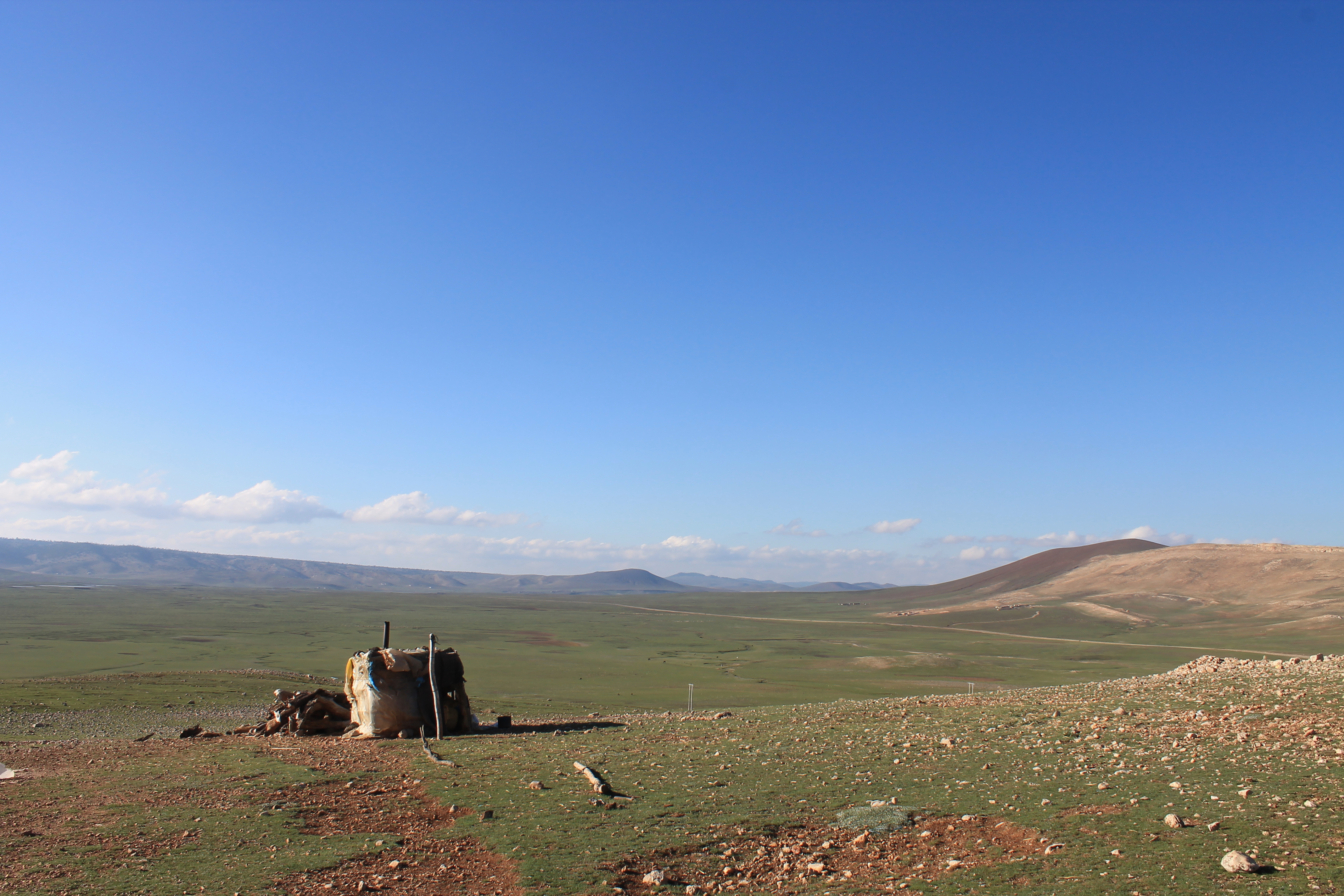
But it was wonderful to come home again!
What does my typical North African morning sound like?




 My Thoughts From Afar |