

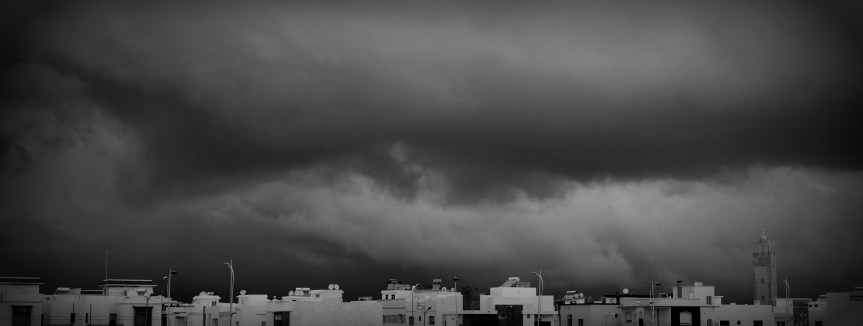
The sweeping wind
of religious authority
scatters humanity
to drown in waters
of blind idolatry
of human effort.
Flailing arms
reach out to me.
Instead of “Save us!”
they cry, “Join us!
We have the truth!”
But why would I
search for truth
when I have found it?
Why would I
search for peace
when I am in
the eye of the storm?
And how can I rescue
those who want to drown?
Tag: religion
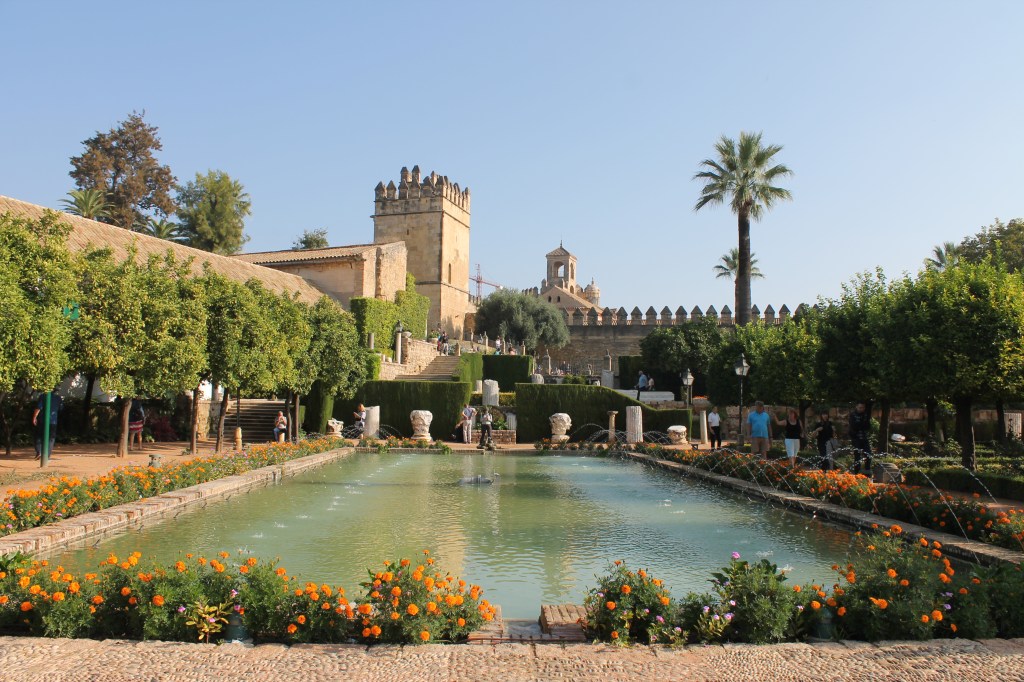
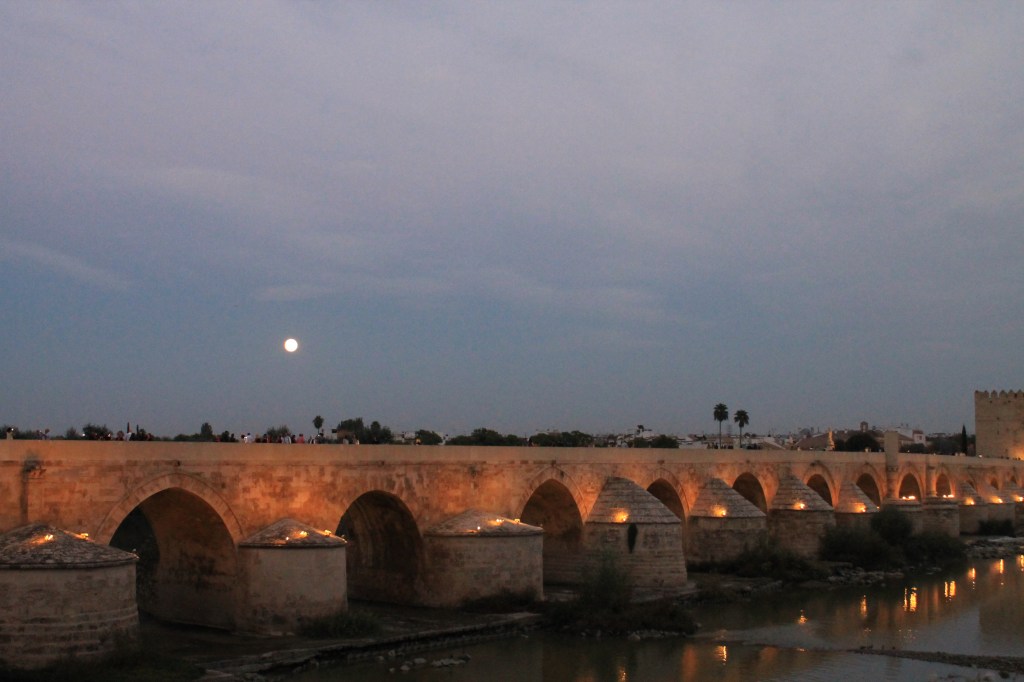
Visiting Córdoba



It begins again

Today is the first day of Ramadan. Earlier this week, a friend told me that Ramadan is a time of growing close to God.
Whether or not her comment reflects her true goal during the obligatory month of fasting, there are many who are seeking God. And many are finding. Sometimes in ways they don’t expect.
“You will seek me and find me, when you seek me with all your heart.”
(Jer. 29:13)
Pray that those who are seeking will find.
A Good Friday stroll

The Good Friday streets were quieter than normal. I plodded along, bracing myself against the wind.
When I was young—not more than ten—I overheard a conversation between my mom and her friend. The friend claimed that it always rained on Good Friday, even if it was just a little. Mom was politely dubious, but the statement impressed itself upon my impressionable mind. Did it really? Was God reminding us of the death of Jesus through a sky full of tears?
However, since this friend had revealed the fact after Good Friday, I had to wait an entire year to see if the statement were true. By then, I had forgotten about it. And I forgot the next year and the next until more than twenty years later, I still had never noted whether or not the rain dutifully came on Good Friday. Would it come to every part of the world if it indeed came at all? Would it come to Spain?
To be my age and wondering these things made me question my sanity. Why would I believe something that had neither Biblical nor meteorological basis?
I continued to walk, lost in rambling thoughts. My morning plans had been changed at the last minute, making me wish I had stayed in bed longer. But since I was up, I thought I might as well go for a stroll. My relaxed pace allowed a stooped, old man to zip around me. As he passed, I wondered what his story was.
Today the world was worth noticing: young voices pouring out of open cafés, elderly men congregating on park benches, a boy with a soccer ball. What did Easter mean to these people?
I wandered into my favorite café. “Coffee with milk?” The server asked before I had selected my chair.
“Thank you.” I smiled and pulled out my Kindle. I read, inhaling a fair amount of secondhand smoke and sipping my coffee from the sweet rim of my mug—I hadn’t used sugar and tried not to think too hard why the rim tasted sweet.
“One euro, guapa.” The server made change for my ten euro bill.
“Have a good Easter.” I smiled at her.
But would she? In Spain, the climax of Holy Week is the passion of Christ. That part of the holiday is celebrated and reenacted until resurrection Sunday is almost lost. Like their Jesus, did these people also keep their faith eternally nailed to the cross? Did they believe in victorious faith? Victorious life?
A dog trotted along a crosswalk, confident he owned the street. His owner followed a few paces behind.
The North African store was one of the only stores open on Good Friday. It bustled with limp produce, loud Arabic, and bodies that were busy making room for themselves in the small shop.
I dropped a euro on the floor as I paid for a few too-ripe tomatoes. The clerk gently smiled at my clumsiness. And then he switched from Spanish to Arabic to bid me farewell.
I greeted the mother of a lesser-known acquaintance and we walked home together in the powerful wind.
“I have laundry on our roof,” I told her as a gale threatened to carry us off like Mary Poppinses.
She had also hung her morning laundry on the roof, so at her street corner we said hasty goodbyes and rushed to rescue our scattered clothing.
It was afternoon when I opened my laptop to write an email. Outside my bedroom window, the clouds lowered over the mountains while the sky and the sea simultaneously turned gray. Then from somewhere came enough drops of rain to make me wonder, against all logic, if Mom’s friend had been right after all.
Photo by Anant Jain on Unsplash
Tips for surviving Spain- Part 2

Previously, my roommate and I compiled a list of a few hints to help you survive living in Spain (or just visiting us!). Click here to read part one. Below are a few more helpful hints…
- If you want American coffee, order an “americano” or you’ll get an espresso.
- Realize that alcohol is a big part of the culture. Social drinking is everyday life, but drunkenness is not (at least for most people).
- Never expect drink refills of any kind.
- Learn to ask your server for the bill. For some reason, giving a customer their bill isn’t a high priority. You almost may have to beg for it.
- Put your breath mints away. Having good breath isn’t as important in Spain. And Spaniards laugh at Americans for constantly freshening their breath.
- Beware of scammers. They aren’t limited to persistently calling your phone and tipping you off with a mispronunciation of your name. They may knock on your door with a fistful of official-looking documents.
- Don’t be surprised if the line between church and state is a bit blurred in Spain. More than 70% of Spaniards identify as Catholic. Even the schools teach religion, although there is often a variety of classes to choose from.
- When you forget a name, just guess. Many women have the name “María” somewhere in their name. Men often have “José” or “Juan.”
- Don’t assume that Mr. Smith’s wife is Mrs. Smith. Women don’t usually change their last names when they marry. And most Spaniards have two last names.
- Be aware that the word “husband” or “wife” is more inclusive than an official spouse. It might mean “partner.”
- When you visit the beach, prepare yourself to see more epidermis than you bargained for. In fact, you might be shocked by the billboards and TV commercials as well.
- Plan your laundry days with the weather. Most places don’t have dryers. And washing machines take longer to run a cycle.
- In the winter, dress warmly, even inside of the house… unless you’re running the oven while simultaneously doing aerobics.
- Keep your road rage in check. Apparently, double parking is permitted (and sometimes necessary). And street parking is still considered street parking as long as two of the wheels are on the street.
- Plan ahead. Public restrooms are hard to find.
Stay tuned! I’m sure we’ll find more things to add to our list!
A dog and a man

It was a quiet Sunday morning. Very little traffic. Very few people out except the dedicated who had rolled out of bed for 10 o’clock mass.
The evangelical service didn’t start until 11. And a crisp morning stroll was a good remedy for lethargy during church. Obviously, I was fairly alone in my opinion, or at least alone in the motivation for its practice.
I jammed my fists into my coat pockets to keep them warm. I was headed nowhere in particular and anyone looking at me could tell. Who cared? The hushed activity was restful and I talked with God as I walked.
Along the boulevard, there was a big piece of cardboard spread out on a bench. Had a homeless person slept there? Where was he now? Had the police chased him away? Why was he homeless?
As I continued strolling, I prayed for the needy of our quiet little town. Up a block or two along the boulevard, I noticed a dog shying away from a man on a bench. The skinny beast had belonged to somebody at some point in time—I knew because of the collar—but now his ribs were jutting through his thin white coat.
Again, the dog approached the man with great skepticism and was rewarded with a chunk of bread. He shied away again, but watched for the next morsel.
And the man. As I got closer, I noticed him. He had that look. Like someone who had spent more than one night on a park bench. Next to him was a childless stroller piled high with things, earthly treasures that may have come from a nightly raid of the neighborhood trash bins.
I passed the scene, wondering why the man was throwing away his bread to a dog. Wasn’t that proof of his bad stewardship that had probably put him out on the street in the first place?
Or could it be that he knew need—true, desperate need—and he had compassion on another needy creature?
On my return loop, my view was from the back of the scene. The dog was still there, darting in and shying away, but not quite so shyly anymore. He and the man understood each other.
I was the outsider, passing by the scene without really understanding.
Djellaba shopping

We were supposed to be going djellaba shopping. Aisha had volunteered to help me when she found out I wanted to buy a traditional dress. I had agreed to meet her at her house, knowing well what would happen.
I was right. After an hour or so, when lunch was cleaned up and everyone was dressed, we moseyed out to a shop that happened to be closed. So we spent another half hour sitting on her mother’s couch and chatting over cups of thick coffee as someone dozed under a wool blanket across the room.
We entered a tiny shop that sold mostly pajamas. They did have a few djellabas, however. The tailor made me try them on and was disheartened when they all ended before my wrists and above my ankles.
So he took my measurements and told me to pick out a fabric. Aisha negotiated the price alone. When we walked away, she squealed. “That is the local price. You would not get a price like that. If I wasn’t with you, people would take advantage of you.” I didn’t doubt it.
She still had my money in her pocket and waving the scrap of fabric the tailor had snipped off for us, she insisted that we find a headscarf and traditional shoes to match my new outfit.
In that neighborhood there was such a camaraderie of poverty- a people that hovered just above the grime of life, but hovered together. Still, admonitions came to “hold your sack in front of you, not behind you!” Indeed, a lady in front of us paused when she realized that she no longer had her wallet.
But I was so watched that I couldn’t imagine how anyone could have stolen anything from me without someone else noticing. People swarmed around us, bumped into us, gawked at us.
A shopkeeper motioned to me while addressing Aisha. “Is she a Muslim?”
“No.”
“Not yet.” He eyed me. “Why aren’t you a Muslim?”
Taken off-guard, I straightened. “Why do I need to be?”
“She prays!” Aisha inserted, intent on protecting my religious freedom.
“Who is she?”
“My sister.”
“You’re short and she’s tall. How can you be sisters?”
I cleared my throat. “She is like our mother and I am like our father.”
Then Aisha and I giggled together, and the shopkeeper gave an irritated but irrepressible grin.
Another lady stopped us and Aisha proudly told her that I was getting a djellaba made by a local tailor.
“Is she a Muslim?”
“No.”
“Does she pray?”
“Yes.”
“Does she fast?”
“Yes, she fasts.”
“Well then, what does it matter what she is?”
I spoke up then, but the lady was more interested in the fact that I was speaking her dialect than in what I had to say. And she walked away, still convinced that my good deeds gave me a good shot at paradise.
The sundown prayer call sounded. Aisha kissed me goodbye and tucked me into a taxi, even while insisting that I stay for tea.
I stared out the window at the sunset on the way home, pensive and full. It was one of those days that I would like to store in my pocket and pull out when I get lonesome for these people.
It’s okay to be a foreigner

Sometimes it’s okay not to fit into every aspect of the local culture.
In a culture so linked to religion, I would make a lot of compromises and outright denials of my faith if I were to fully acclimate. So where do I draw the line between foreigner and local? I have faced a lot of cultural quirks that have made me uncomfortable. Sometimes I bit my tongue before I blurted out my opinion. Other times, I didn’t bite my tongue fast enough.
Understanding the drive behind a behavior helps me determine whether or not I want to conform. I often ask questions, especially when I’m with friends and teachers:
“Why do you act like that people group is dirty?”
“Why don’t you throw your bread in the trash?”
“Why don’t North Africans trust each other?”
“Why do men sit in coffee shops so long?”
Some things I obviously don’t want to take part in. Other things have etched question marks in my conscience. Sometimes I make a judgment and confront a North African only to discover that I have interpreted the matter through my Western worldview. I also find many cultural aspects that are a beautiful representation of God’s character.
Every culture has its ups and downs. And every foreigner should determine how to accept the good in a culture without the bad; thus, our right choices will set us apart from mainstream culture. That’s why I say it’s okay to be a foreigner.
Khadija

When we sat down on that bench along the boulevard, weary from hauling our backpacks around all day, my roommate and I didn’t imagine that the elderly lady who sat down next to us would become anything more than the elderly lady who sat down next to us.
But I smiled and said, “Peace be upon you.”
“And upon you.”
“Are you from here?”
It didn’t take long to find out that she was proud of her Berber heritage. Her opinionated brusqueness appealed to me. There were no fluffy, flattering words. No acting like we were movie stars. Just an invitation to tea the next day.
At tea, she spoke clearly and explained the words I didn’t understand. She understood that I was from a different culture and a different religion without treating me as if I were ignorant. And the way that she told stories inspired me to one day be like her.
In the months that followed, she told more stories, including part of her own story… a disappointing trail of heartache with oases of happiness. Whether I visited her with my roommate or alone, I always felt at rest. She didn’t pressure me to stay when I needed to go, or pressure me to eat when I was full. It was like she welcomed the relationship with no expectations. And she liked me for being me and not what I could do for her or who I might one day become.
One day, we went to visit her when she was ill. But she didn’t answer her door. After knocking and calling, I was concerned. Was she in the hospital? Was she too ill to come to the door?
We knocked on the neighbor’s door and were welcomed into the life of the next door family. They fed us, helped me with my homework, and chatted with that same element of acceptance. They were, in short, delightful. And Khadija was fine after all; just late with running errands.
She invited my family for tea when they visited North Africa. She admired pictures of my nephew and showed me her grandchildren. Her broken family had broken her heart. But after quickly wiping away her tears, she seemed content with the good people in her life. And her yearly pilgrimage to Mecca gave her an element of peace that she was doing what was right.
During one of my visits, I was sipping tea with her and the lady next door when Khadija switched the TV channel to sumo wrestling. I was repulsed until I realized I was living one of those moments that I would never be able to relive. How many times would I recline on the sofa, sipping sweet mint tea, and watching sumo wrestling with two 70-year-old ladies?
That was the same visit that she brought me a traditional robe to put on over my clothes. When she left to start the coffee, the neighbor lady patted my arm, “Now you are really her daughter. She is treating you like a daughter.”
Oh, the people you meet

A short two-day trip to a land not so far away yielded a wealth of interactions and acquaintances that made it hard to leave. Oh, the people you meet!
- A fellow passenger in a grand taxi, who spoke to me only a few minutes before inviting my roommate and me to her niece’s evening wedding.
- A lady passing by on the street who helped us pound on the locked riad door and stuck with us until the owner and his maid came back from the market.
- The riad owner with a surprisingly Western perspective and his maid who loved engaging in deep conversation about cross-cultural marriage and religion. But just when I thought I was making an excellent point, the owner leaned back in his chair, grinned, and said that if he had met me 24 years ago, he would have married me. The maid, an adorable but hopeless romantic, kept returning to the cross-cultural marriage part of the conversation.
- A young lady who seemed to know everyone in town and was delighted to take us around to her favorite places…and even fish out a party invitation for us (which we turned down). But before we parted, she took us to a crumbling café for evening tea above the sea. There, she told us about her life. At the end of her story she shrugged away any traces of self-pity, smiled, and said, “Well, what are we going to do? Praise God.”
- An old gentleman who led me to a store to buy water, waited for me, and led me back. He escaped before I could thank him.
- A taxi driver who took us to an ancient ruins sight and then meekly offered his phone number in case we couldn’t find a taxi back into town.
- Our guide at the ruins who led us through the layers of sights on the hillside. But he stayed far ahead of us to not disturb our sight-seeing. And he topped off his hospitality by calling the taxi driver to return for us (thus saving me a phone call in Arabic).
- Our guide at the music conservatory who didn’t seem to mind that class was in session as he banged around on a piano in the courtyard… and then tried to get us to show off as well. He made my heart swell in hollow pride when he mistook me for a local.
- The owner of a souvenir shop who seemed sincere in his beliefs, but wanting to listen as much as explain.
- A family on the train who knew how to enjoy each other and the people around them. What fun to be a part of their lives for that ride. And before they got off at their stop, the father found us seats with other women so we wouldn’t have to travel alone in our cabin.
 My Thoughts From Afar |