God doesn’t owe me results

The night was a failure. Even after a day of prayer and fasting.

No one noticed that my heart was beating in time with the Father’s. No one noticed that my soul was alive and refreshed.

People were out breathing in the cool night after the long, scorching day. Last week on my nightly strolls, I had met several women. Under the cover of dusk, we had sat on park benches and talked while children played around us.

But tonight there was nothing invigorating.

A stop at the local store made me wonder where the line between friendly and amorous should be drawn. And why was I always the one to draw the line?

And then there was that woman again. The shriveled Gypsy for whom I had once bought bread and eggs and now every time she saw me she snagged me with a long, anguished tale and a request for a couple of euros. How could I communicate love? Bread, eggs, and euros were not going to alleviate her poverty of soul.  Her granddaughters averted their blushing faces.

And that was all. No one else seemed open to conversation. Alone and discouraged, I finished my route and turned toward home.

That’s when truth started to sink it, settling between the churning waves of injured pride and self-pity.

God doesn’t owe me results. He doesn’t owe me deep, blossoming friendships and engaging conversations. If I cultivate a certain level of spiritual maturity, He doesn’t owe me the world on a silver platter.

My service is not qualified by my carnally-defined successes but by my faithfulness. Am I loving (and consequently serving) God with all of my heart? My soul? My strength? My mind?

Years and years ago, my Sunday school teacher gave me a quote that I have kept tucked inside of my Bible ever since. “There is no more powerful force for rebuking all evil things, whether of conduct or of opinion, than that of the quiet, strong, persistent life of a man or woman who goes on from day to day doing the duties of the day well, cheerfully, and with joy.”

As I walked those final blocks home, my sense of entitlement slipped away. “What if?” I wondered. “What if in my day to day journey, I start counting each blossoming friendship and engaging conversation as a blessing rather than my entitlement? What if I named each interaction as a gift rather than my payment for growing in Christ?”

The neighbor man waved and smiled. “Good evening.”

I waved back. “Good evening.” And it was.

A cathedral, cave houses, and amateur flamenco

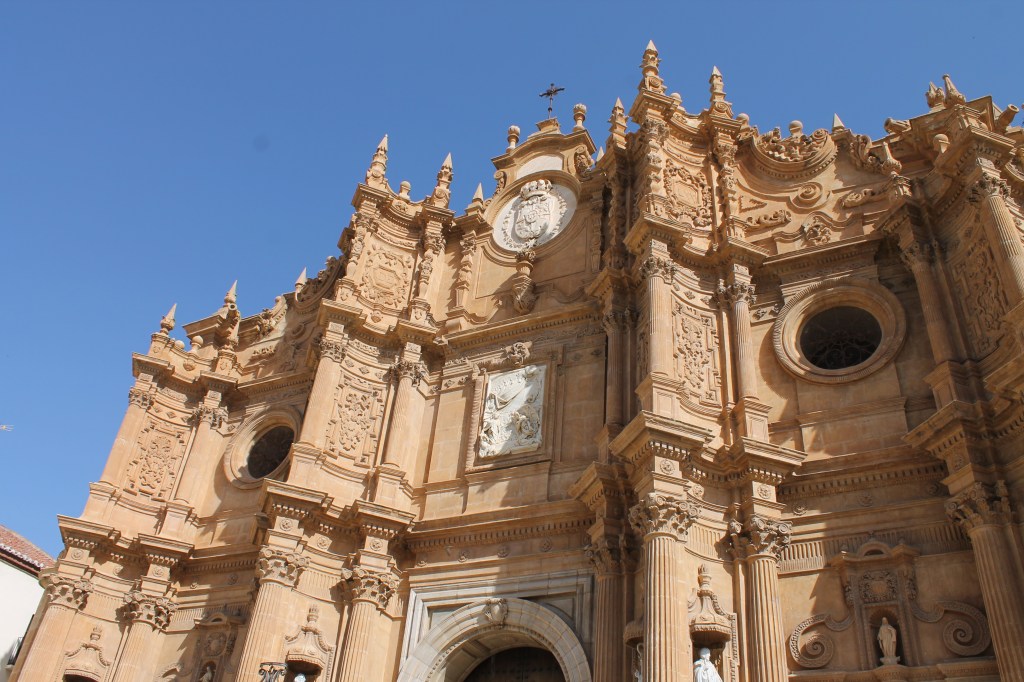
The end of June, just before I left for the States, my roommate and I took a short trip to the nearby city, Guadix. In all of the July activities, I neglected to put up pictures… until now.

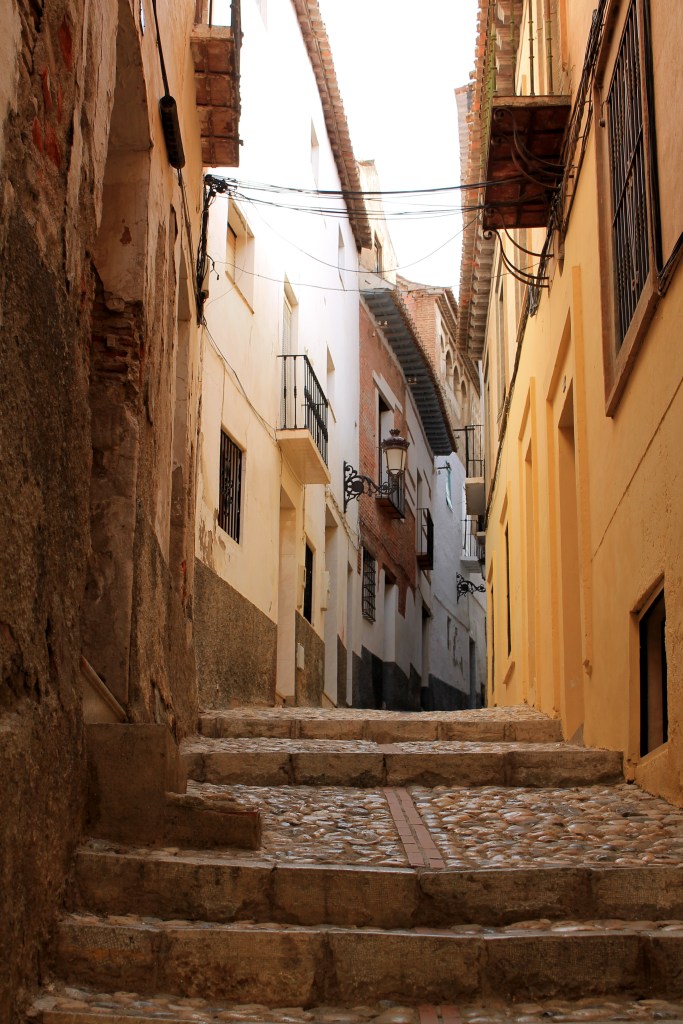
Overall, it was a good trip, although it did have its downsides… like being in town on a holiday weekend when businesses were closed, realizing that our trusty map was on my broken-down phone, getting hot and tired from wandering through the old city streets in search of our elusive airbnb. But those were the not-so-fun things that I didn’t bother to capture on my camera. So enjoy the happier things that I did…

Guadix is known for its splendid Baroque cathedral which was built from the 15th to mid-18th century.

Guadix is also known for its cave houses. Before you start picturing primitive etchings in rock walls and cavemen wielding stout clubs, take a look at these pictures.

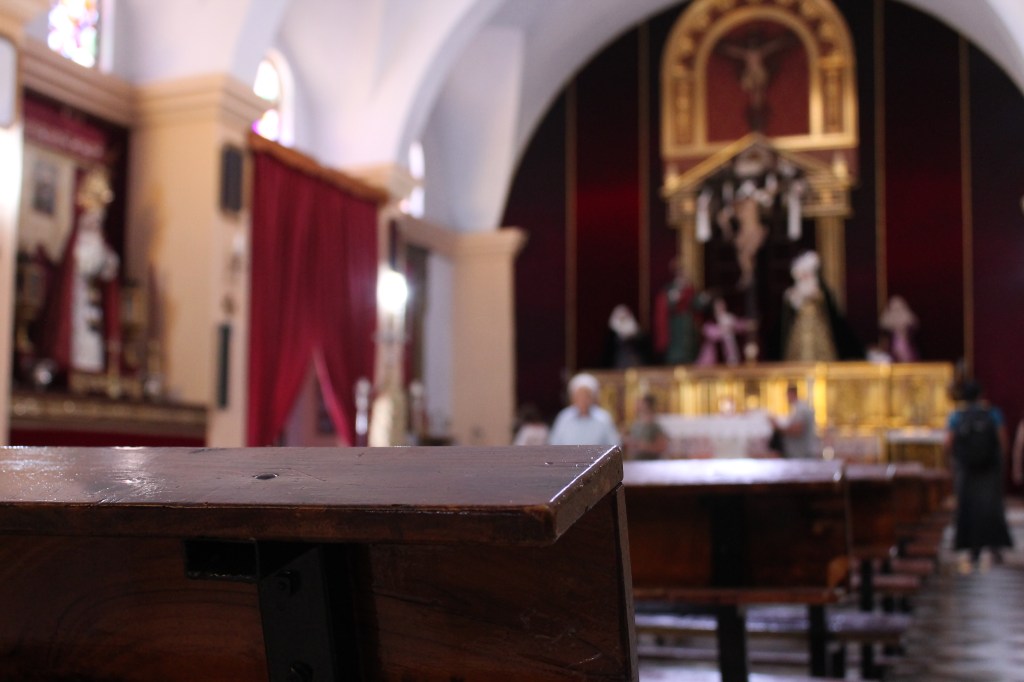
Rather from being formed from natural caves, these cave houses or “troglodyte houses” are carved into the rocky landscape. The cave houses maintain a temperature of 18º C (64ºF.).We toured a church in the cave community. The church had marvelous nooks and crannies and tottering staircases to explore.

I noticed the window shoppers after I took the picture. And I definitely don’t have anything against window shopping. Especially since that’s how my roommate and I found a flyer for a charitable event hosted by a flamenco school of dance. We went.

group of female flamenco dancers in black

Summer in Immigrantville

Summer in Immigrantville, Spain is not an easy thing to endure.

Why not? For one reason, it’s hot. As I write, a breeze billows the curtain, bringing dust and the sensation of standing within range of a hairdryer. They say it has been a relatively cool summer so far. Fine. But I’m still turning on the fan.

With heat comes lethargy. Trying to think of something to ingest other than iced coffee. Trying to drag myself off of the couch to get out and talk to people. Of course, this whole “getting out” thing is over-rated anyway; very few people brave the heat of the day, so why should I? On the other hand, staying “in” should produce deliberate choices to study language rather than Dickens.

But heat and lethargy are not all that is wrong with the summer here. The worst part of summer is summer vacation. In Immigrantville, this means that families scrape together the means to travel back to their countries for months at a time. Slowly, the town empties and the streets grow quieter. There are fewer people to bump into. Fewer people to talk with.

But that’s the pessimistic view of summer life in Immigrantville. Fortunately for all of us, I can only think of 3 negative aspects. And I can think of a few more positive aspects from my experience so far. Like…

  • Volunteering to help a local thrift store employee reorganize her store. Mostly, I just put clothes on hangers and affirmed her ideas to rearrange clothing displays.
  • Washing my clothes by hand because splashing around in cool water helps beat the heat.
  • Preparing new recipes for foods that can be eaten cold.
  • Taking a grocery trip to a nearby city. Of course, the trip required a date with my Kindle at an air-conditioned café in order to fortify me to haul heavy groceries from store to bus station and bus stop to home.
  • Learning it’s okay to rest in the afternoon while the town is hiding in their respective homes under their respective fans.
  • Strolling down the boulevard after sunset when the remnants of the population emerge from their homes. In fact, one time I even walked home with an invitation to couscous and another to an afternoon tea.
  • And last and least but not least, studying. The quieter days provide a chance to brush up on my languages and pertinent topics. (Note: As much as I love the idea of this opportunity, I am still learning the art of self-discipline.)

See? Rather than wallow in sweat and loneliness, I might be able to enjoy my summer in Immigrantville after all!

Me and my fat, drippy plum

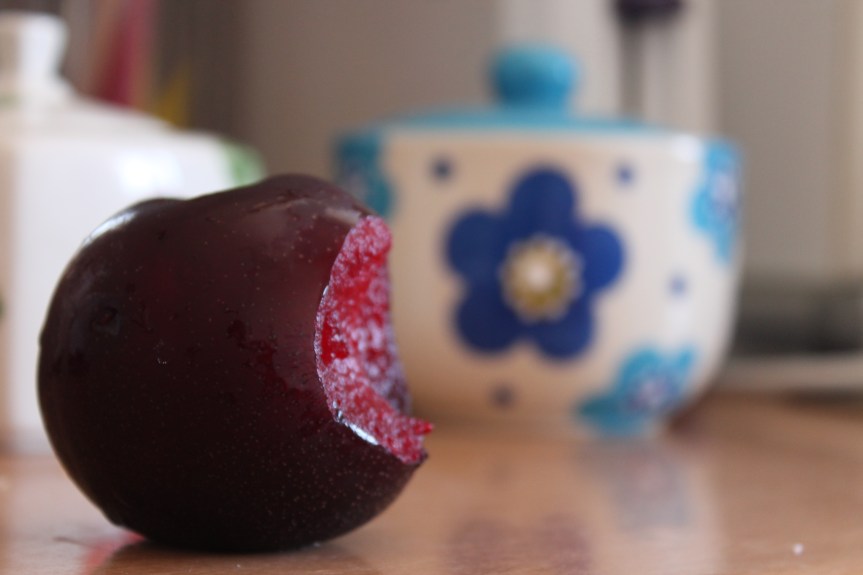
I was sitting on a kitchen stool, devouring a fat, drippy plum. “Wouldn’t this be a nice way to start a blog?” I thought and wished for inspiration to descend upon me. Something that would touch a spiritual or emotional vein. “I was sitting on a kitchen stool, devouring a fat, drippy plum when it suddenly occurred to me that…”

Instead, during a particularly juicy bite, I dropped the plum and it rolled across the neglected kitchen floor, gathering bits of lunch leftovers as it went. I picked it up, washed it off, and kept eating… and waiting for inspiration. But my mind strayed to menu ideas for cold main dishes and luscious salads.

And then I thought of how my last evening in Illinois was damp with just a smidgen of chill. We sat on the front porch and blew bubbles to delight my nephews. And how I didn’t want that night to end. Ever.

How pleased I was that my brother had married, but how melancholy I was at another evidence that life keeps changing. And we have to keep adjusting.

How hard it had been to leave Illinois, but how I had been ready to get back to Spain and what has become normal life for me.

How, more than once, I had accidentally referred to Spain as “home” which got confusing when I referred to Illinois as “home” in the same sentence.

How I had asked God to let the seat beside me be empty on my 8 hour flight over the Atlantic. I wanted to sleep. Instead, He placed a Palestinian man beside me. And we talked.

How after I had unpacked, I discovered an empty shelf in my tiny room. What a delight!

How timid I was to go out and buy groceries because my Spanish felt rusty and I knew that shopkeepers would ask about my trip. And how they did, but how I survived.

How 3 weeks was not enough time to catch up with family and friends and how the days had gone so hard and fast that they now seemed a lifetime ago as I sat on the kitchen stool and devoured my fat, drippy plum.

That’s what I thought about. Nothing profound or inspiring. Just life right now.

Río Duero

Río Duero, río Duero,
nadie a acompañarte baja;
nadie se detiene a oír
tu eterna estrofa de agua.*

(Douro River, Douro River,
no one to accompany your descent;
no one to stop and hear
your eternal stanza of water.)

We had gone over this poem for the last five classes. At least. We had already unpacked the literal and figurative meaning of each word and noted the poetic devices.

We had written paragraphs and held discussions on the importance of water. And we had drawn a map of all the important rivers in Spain.

And still…

Río Duero, río Duero,
nadie a acompañarte baja;

“Trish, you read. The first stanza.”

Fine. “RíoDueroRíoDuero…”

“Ah! That’s not poetry! That’s prose… badly read prose! Listen…”

My teacher burst into a triumphant recitation of the first lines. Once again, those syllables rattled around in my head.

I imitated her enthusiasm, but my version may have been more obnoxious than triumphant. “RÍO DUERO, RÍO DUERO…”

The second hour students paused their pencils over their copy books and stared at me. But my teacher remained unimpressed. “Not that either!”

What did I care about the Duero River with its silver beard and its eternal water stanzas?

But I tried again. And as I read, I heard the poem… maybe for the first time. I saw the Duero flowing on alone, used but unseen.

Used. Unseen. But still flowing.

And suddenly the poem was less about a river and more about a life lesson I needed to be learning.


* The first stanza of “Río Duero” by Gerardo Diego
Photo by Migsar Navarro on Unsplash

Spanish with the nuns

Buried in my neighborhood is a tiny green door that leads to a tiled courtyard full of vibrant plants. Charming little rooms surround the tiled courtyard, completing the charming little haven.

In one room, there is a set of five sewing machines. Four treadle. One electric.

In another room, there is a plastic table with accompanying plastic chairs and a rough blackboard.

This is a sewing and Spanish school for immigrants. It is managed by nuns. A friend brought me along to class one day to see if I could enroll.

The first time I met the nuns, I had to bend over at the waist to greet them with kisses on their dainty little faces. Only one seemed more than five feet tall. And not one of them was under seventy. Maybe eighty.

I was captivated. “Is it possible to sign up for Spanish class?” I gripped my friend’s elbow as I awaited the nuns’ answer.

It was possible. After Semana Santa, I officially enrolled for the final trimester of the school year. (And by officially enrolling, I mean that I jotted my information on a scrap of notebook paper.)

On the first day of class—a lesson of body parts vocabulary—the teacher chalked a stick figure on the board with a rectangular trunk. For good measure, she placed a few wild curls on the faceless head to classify the figure as “female.”

During class, the figure was blessed with a chalky esophagus. No other organ required equal visual explanation, so the figure proudly sported her solitary organ until the end of class. And as the teacher erased both the figure and her esophagus, we students trickled out of the shadowy room and into the blast of sunlight that spread across the courtyard.

Since then, class has brought me in close contact with other immigrants as we reveal tidbits of our lives in choppy Spanish and laugh about our language woes. We share struggle and community. We even share goods: sometimes we carry home peppers, cucumbers, handcrafted sewing class projects, or even potted plants.

As the final trimester enters the final month, attendance has dwindled as most of the women fast for Ramadan.

The first and second hour classes combined and I suddenly found myself in a class of women who struggle with pronouns and simple verbs. But the energy and fun we have together is rewarding enough for me.

Yesterday, while practicing the structure “I like,” a classmate smiled and said, “I like Trish’s face.”

“Yes, yes,” agreed the teacher. “Trish has a nice face.”

The other students murmured their agreement and admired my reddening cheeks. Until, for lack of a Spanish equivalent, I burst out the Arabic expression, “God be blessed!”

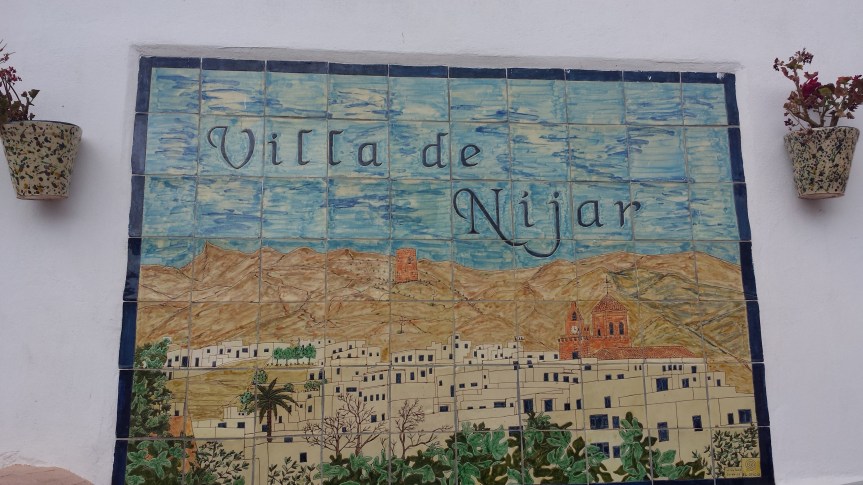
Spontaneous in Níjar

The weekend finally came after a long, busy week.

“I’m sipping the last of my now-cold coffee and enjoying the fact that I have nowhere I need to go today,” I wrote in an email to my parents.

Five minutes later, a friend whatsapped me: “If it works and you want to…” She and her husband were planning to pick up a load of donated clothing for our second-hand shop. Could I help?

“Yes, I can. What time?”

“Ten minutes.”

Even though it was after ten o’clock, I was still in pajamas with a bedhead. But I dashed around the house and out the door just in time, bedhead (calmed but not conquered), coffee breath, and all. Had I remembered to put on deodorant?

As we were loading the last of the clothes along the winding streets of downtown Almería, my friend’s husband said, “We would like to take you to Níjar.”

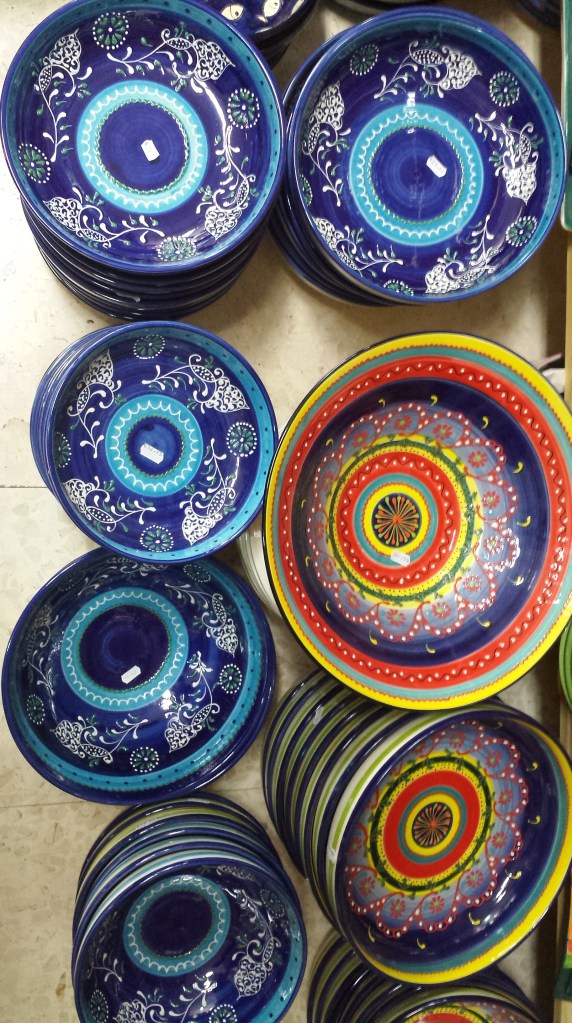
Of course, this statement wasn’t as unprecedented as I make it sound. They knew I had been wanting to browse through handmade pottery and they were willing to drive me to a quaint, mountain town to do my browsing.

There I stood with my bedhead and bad breath. But I wasted only a moment in indecision before heartily agreeing to the spontaneous plan.

So we went. And it was lovely. The spontaneity made it delightful. The handcrafted merchandise made it breathtaking.

Today I will see beauty- Part 2

In my blog post last week, I told you that I wanted to see beauty in the daily grind of life. I wanted to intentionally notice.

I managed to get a photo from each day and multiple photos from several days. My self-induced challenge made me look for beauty, even when I wasn’t snapping pictures. I liked that.

There were a lot of photos I would have liked to have had and one I accidentally deleted… but instead of telling you about those, I’ll show you these:

(Most of the photos below were taken on my phone, so I won’t vouch for their quality.)

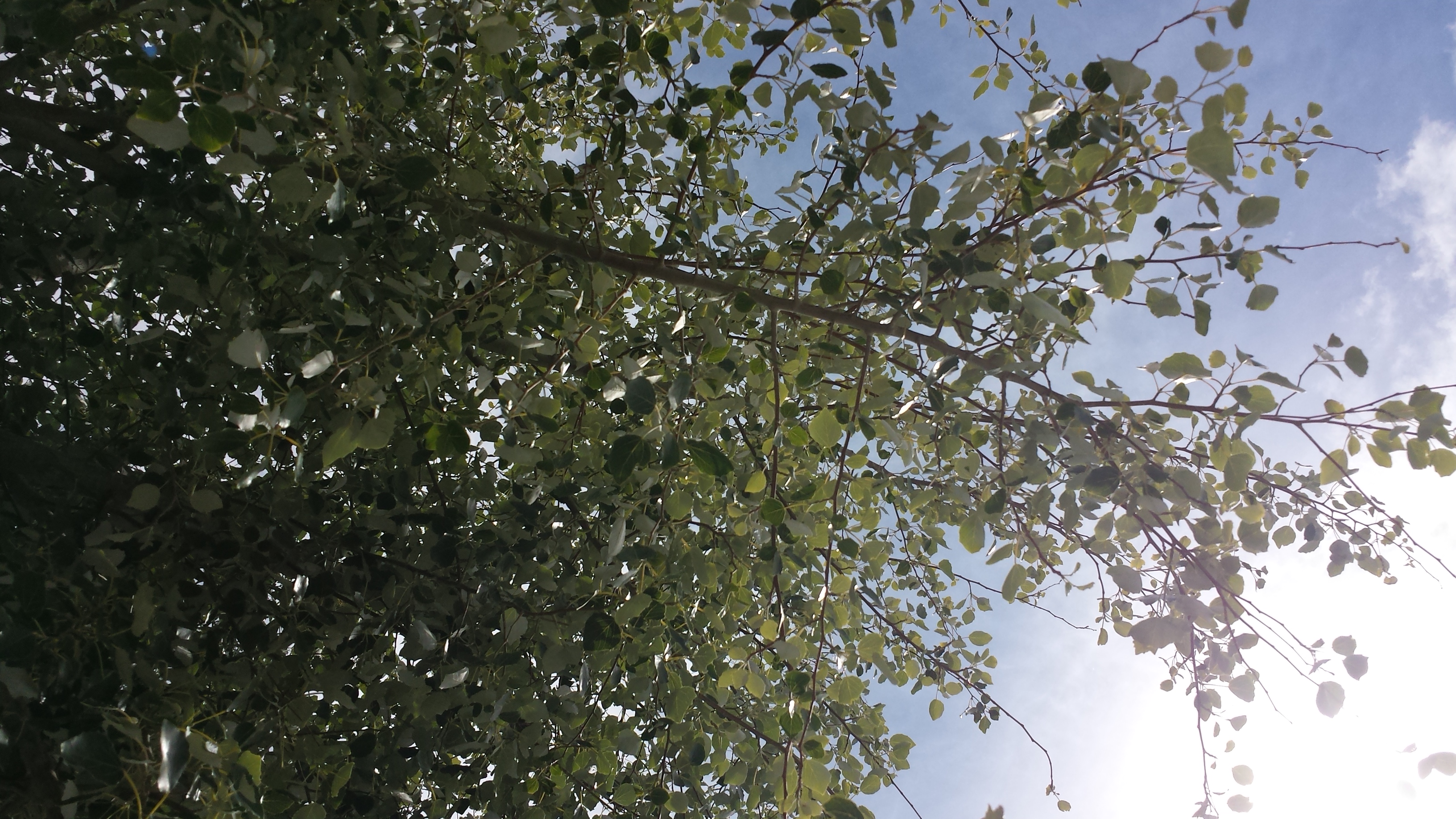
silvery underside of tree
Thursday: My favorite tree. When I pass under it, I love to look up at the silverly undersides of the leaves.
sun shining through clouds over city
Friday: After an early morning rain
trees and roses lining boulevard
Saturday: The roses are still blooming
silhouettes of two women
Sunday: Friendship
family of three with sombrilla and market bag walking along tree-lined boulevard
Sunday (again): A family walking home from the market
elderly couple seated on bench along tree-lined boulevard
Monday: An elderly couple enjoying the tranquil boulevard
open cupboard
Tuesday: Organized cupboards!
water bottle in case made out of aluminum bottle tabs
Wednesday: The water bottle holder itself is not very beautiful, but two things make it beautiful to me: 1) it was a gift and 2) it’s made from recycled aluminum can pull tabs.

Today I will see beauty- Part 1

Sometimes beauty gets lost in the daily grind of life until I hardly notice it anymore. Noticing the beautiful things in life generally doesn’t happen unless it’s intentional… at least for me.

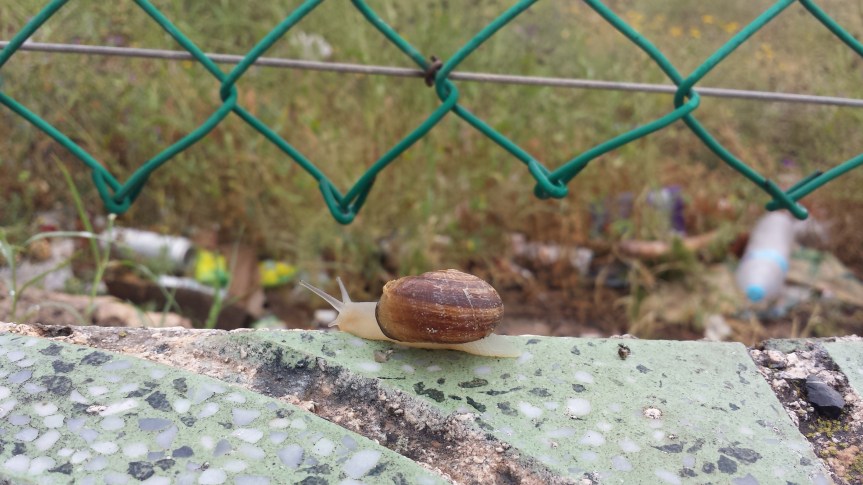
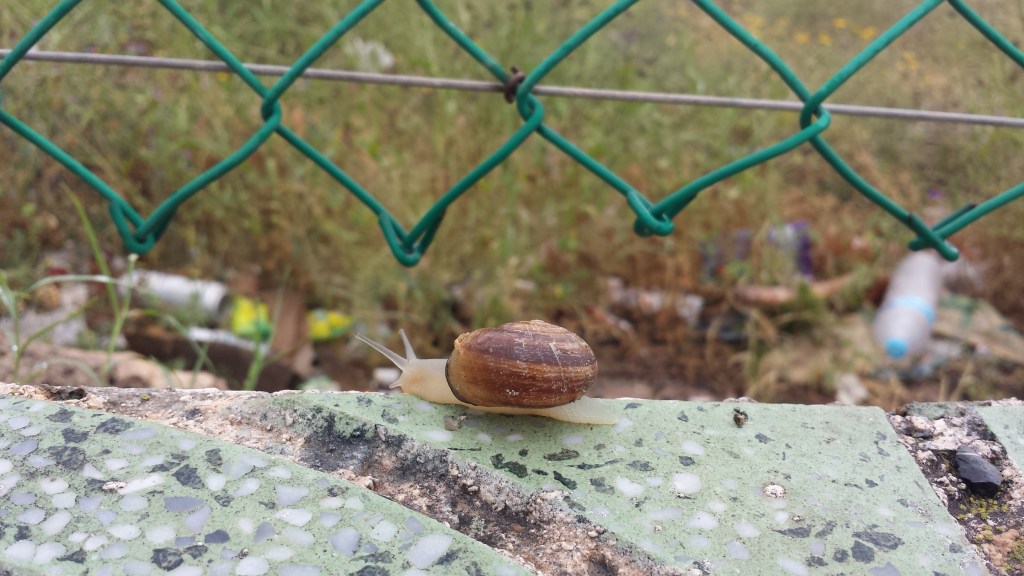
snail gliding along tile sidewalk

Many days, I would notice the trash, but not the snail.

This week, I want to be intentional about noticing beauty.  I propose one photo or descriptive scene each day.

I’m making the “descriptive scene” an option because sometimes the best photos lodge themselves in my mind and never make it to my camera. Sometimes because pulling out my camera would detract from the beauty. Sometimes because the moments happen too fast. Sometimes I am trying to be culturally sensitive.

(Pictures speak a thousand words, but sometimes words can speak a thousand pictures because words come from human perception rather than a camera lens.)

So for one week, I will look for beauty in every day… and give you an update next Thursday.

Join me?

Small town librarying

After a couple of months of life in Spain, I gathered up courage to visit the local library. Through the park that hosts elderly men in the morning and rebellious teenagers in the afternoon. Down a long hallway lined with local photography. Until I stood in a room full of books.

Unruffled by my presence, the librarian looked at me over a piece of cardboard she was painting. A prop for a children’s program? “Can I help you?” she asked.

There would be no subtle spying out of the library grounds. I was an outsider and expected to state the purpose for my unheralded intrusion. “Uh, I live here now and-and I would like to read m-more books in Spanish.”

“You need proof of residency from city hall and a copy of your residency card.”

I retrieved the documents and filled out the paperwork. Then I selected a book.

The librarian scrawled the due date on a slip of paper inside the front cover of my selection. I admit that even in that small town, one-room library, I was startled by the lack of technology.

The book I had chosen was boring, so I returned it the next week.

“Did you finish it?” the unruffleable librarian asked without glancing up from her new craft project.

Why this sudden sense of guilt? “No.” I cleared my throat.

“Okay. Just leave it there on the desk.” And she continued unruffledly crafting.

A week later I slipped in again, determined to select a more interesting book. This time, the unruffled librarian was in the middle of a sewing class. She barely looked up while I selected Las Memorias de Sherlock Holmes.

She pulled out my file without confirming my name, made a phone call to the main branch—the internet was down, she said—and then picked up a pencil.

I’m sure my eyes widened when she penciled the due date in the corner inside the front cover.

Sherlock Holmes was a better choice, but I still didn’t finish it by the due date. So I attempted my first renewal.

The librarian’s hands were covered in black paint as she was undertaking yet another craft project. “Did you finish it?”

“No. I would like to renew it.”

“No problem. Just bring it back when you finish.”

Assuming she was referring to the due date, I pointed out that the date inside the front cover said tomorrow.

“No, not when it is due. When you finish,” she clarified. She held up a black hand while the other still clutched a dripping paintbrush. “My hands are covered in paint right now. When you finish, bring the book back and I will erase your fine.”

This week, I returned the overdue book. There was a painting project spread across the entire library floor. The librarian’s pre-teen volunteers cleared a skinny path for me between the massive sheets of damp paper. The unruffled librarian continued hot-gluing safety pins to name tags as I selected another book and brought it to her.

Inside the cover of the old book, she jotted down the number of the new book, handed the new book to me, and returned to her gluing. Apparently, she didn’t feel like traversing the skinny path to her desk.

But this time, she was not the only one unruffled. I had grown accustomed to small town library dynamics and was quite unruffled myself.