Cuisine and pirates: what’s been happening recently

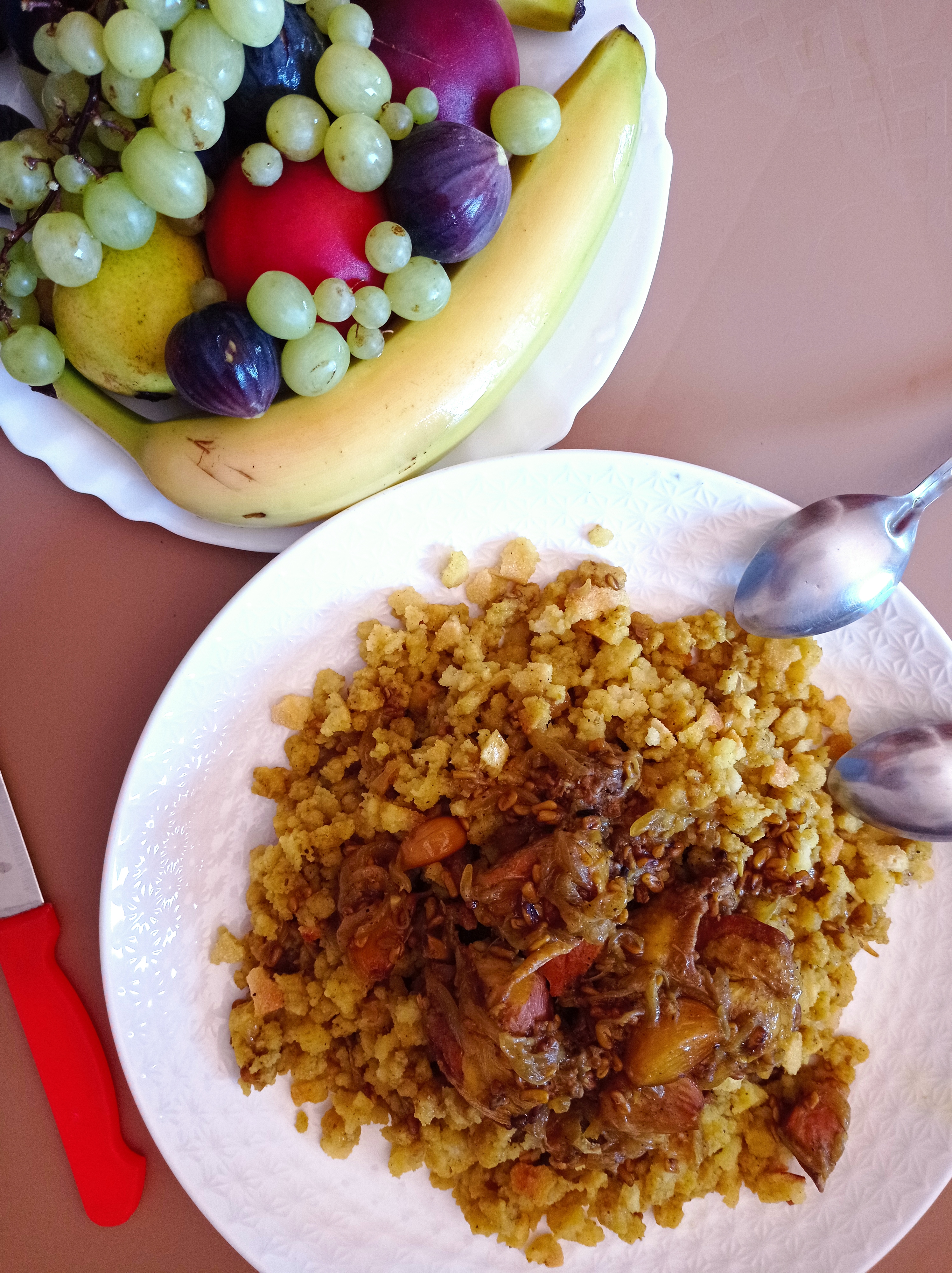
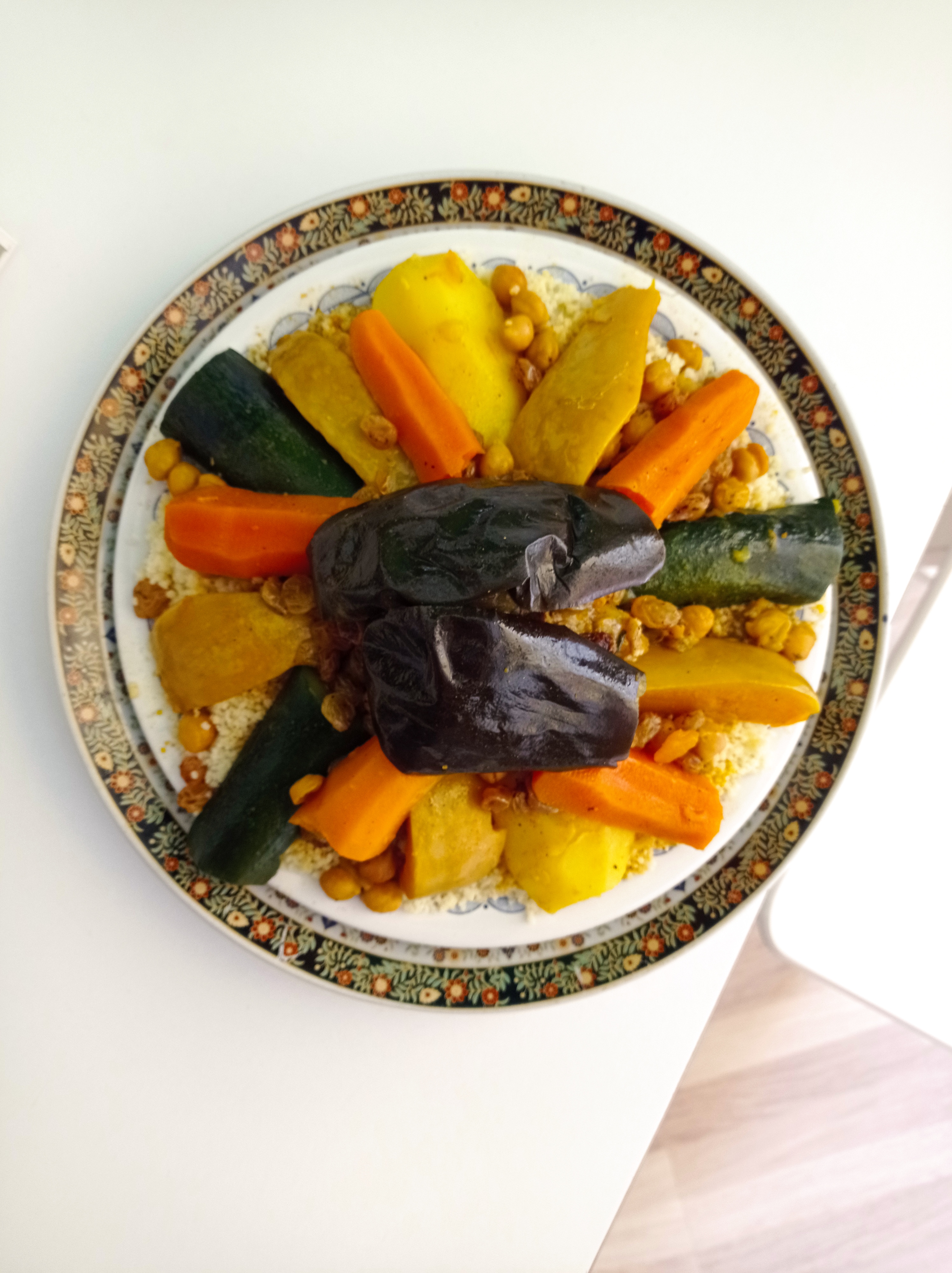
  • I decided it’s time to learn to cook the North African cuisine. I’ve put it off for years, learning things here and there, but always timid because of how unforgiving the culture can be with their own cuisine–“You used milk in your harcha?!” I don’t think like they do. I don’t grate my onions or peel my tomatoes. I don’t grab for the same spices. I don’t have the same cookware. But I’m trying. And my friends are delighted to train me. Although, truth be told, I still look up recipes, fusing my hands-on experience and American measurements. (Note: The photos below are of food made by friends who gave me cooking lessons.)
  • I finished editing Level 1, Units 1-2 of an English curriculum that I’ve been modifying for several years. I printed and bound the notebook (and now I feel positively published!), which will make for easy lesson prep in the future. Now, on to units 3-8…
  • One day, I asked my downstairs neighbor if I could pop in and play with her little boy. “I miss my nieces and nephews,” I explained. “Of course. Come.” Was her response. So we linked monkeys in a barrel and looked at books. He didn’t know what books were, supposing that they were just to be opened and closed. So I pulled him on my lap and pointed, “Blue hat, green hat…” Soon he was pointing too.
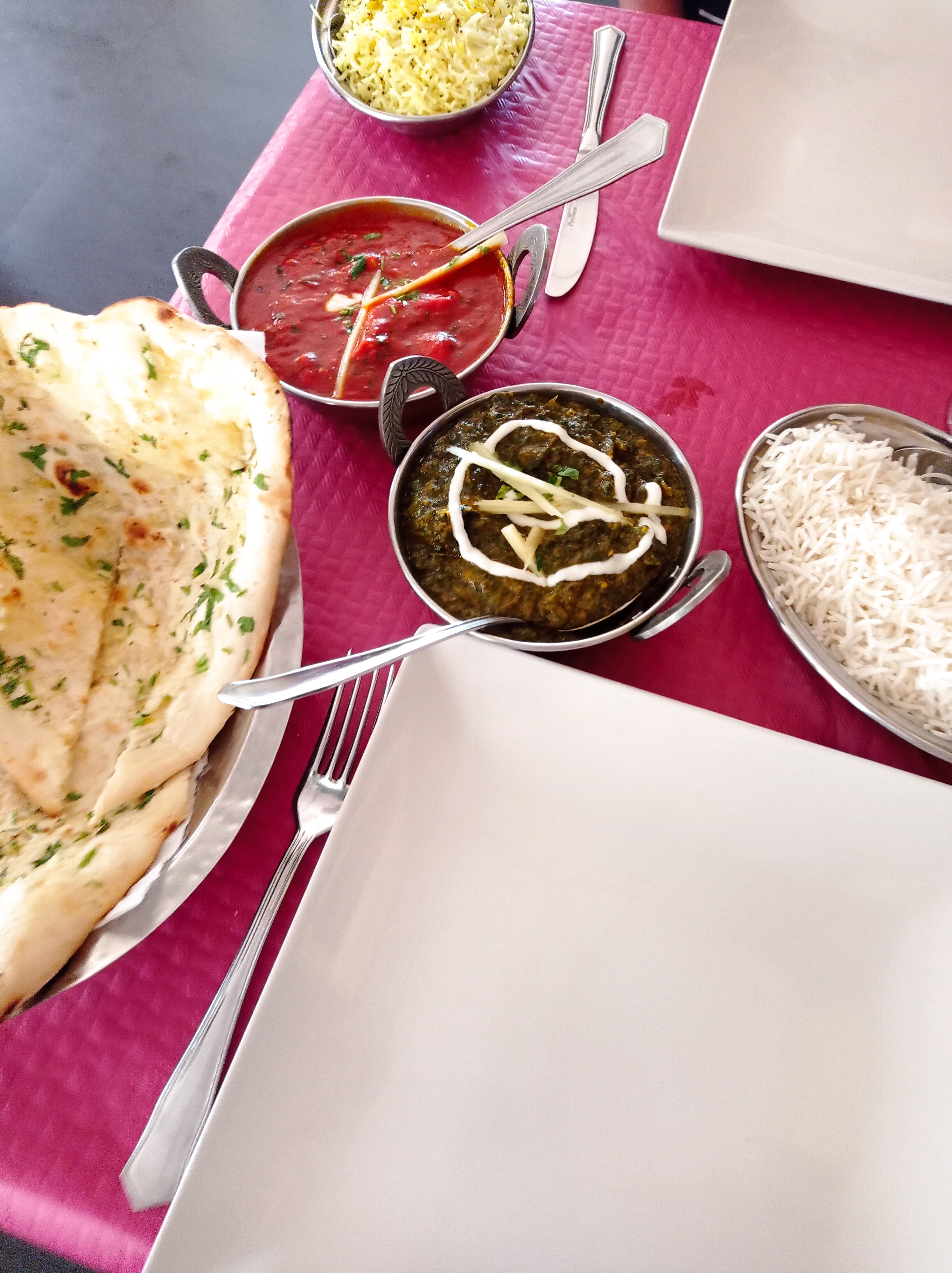
  • A teammate and I went to see a traveling pirate exhibit. It was interesting–horrifying, really. The barbarism was rooted in the understanding that a fight was a fight to the death. While eyeing the grubby wax figures, I couldn’t shake the realization that these people probably smelled worse than they looked. That oughta erase any of those romantic pirate notions for you! We topped off the day with saag and curry that is making my mouth water as I upload the picture.
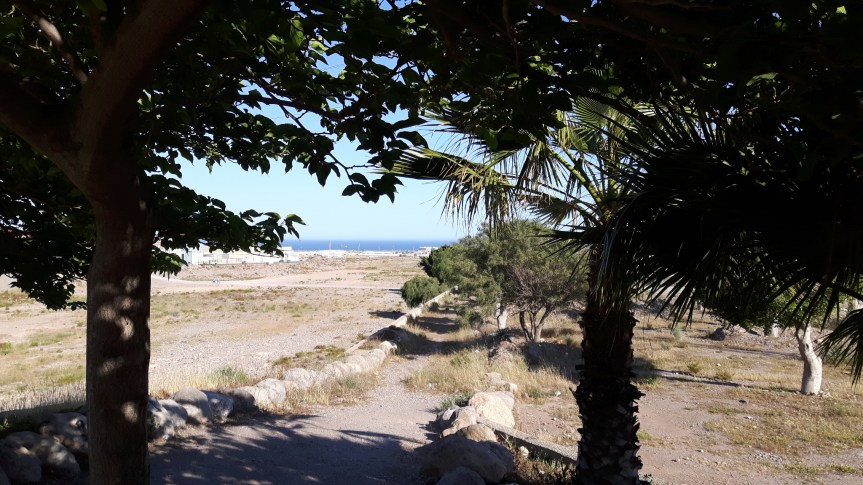
  • We have been meeting new people as we pass out flyers in the settlements among the greenhouses. Way out there in the boonies, a man told me, “You’re from Immigrantville.” Apparently, we had both lived in the same town at one point. So maybe you can “dance like no one is watching” in the privacy of your own home, but never stroll down the street like no one is watching!

There has been much, much more that has been happening, but “time would fail me to tell” all that I could say, or what I should say on a public platform. So, I will end here and get back to work. 🙂

Lord of the shadows

Something about the book begs tears. I don’t know what it is exactly; there’s no paragraph or even chapter that particularly resonates. Perhaps it’s the undertone of sorrow mingled with hope in everyday sacred moments.

“God, where are you?” And I set aside the book and turn off the reading light to stare into the shadows of the 9:30 world. “Please meet me here.”

He does. And I have my own mingling of sorrow and hope. Of homesickness and gratitude. Of reluctance and awe. 

And, refusing to turn on the light, I stumble in the shadows to make a cup of tea, fumbling for the tea kettle and spilling leaves from the tea ball. Strawberry cream. I found it at the market today. It leaves a thick aftertaste of comfort although it’s new to my palate. I sip it from the robin’s egg mug I found while shopping with a new friend. The mug makes me think of her, this new friend full of intense questions ever since our first encounter.  She is working hard to please Allah. “Please meet her too.”

Down below, are voices. Arabic. I peek over the balcony to see two men and one woman leaving the nightclub next door. But no, only the men are leaving, caressing the woman’s hand in parting. “See you on Saturday,” they say. She tugs up her blouse neckline as she returns to that dark doorway that heaves its sweet and sick breath. “Oh God, please meet her there!”

With the light on, now I can see God was in the cooling rain this morning. In the huge, toothless smile from a friend’s husband who pretended to steal my market bag. In the husky greeting from a melancholy neighbor puffing a cigarette on the front stoop. In a phone call from a chatty acquaintance-turning-friend. In the final save of a document that took countless hours and headaches to create.

As I finish my cup of strawberry cream tea in the lamplight, the shadows have faded. But they lurk. There will always be shadows, I think. But even in the glow of the light, there is comfort knowing that He is Lord of the shadows too.

We must endure

“Pero que hacemos? Hay que aguantar.” But what do we do? We must endure.

The phrase caught me off-guard. I am used to hearing North Africans talk like that, especially if they throw in a “praiseGod” or dozen and shake their heads with wry smiles that say what their words don’t. And then their words do, but they are followed so closely with more resigned “praiseGod”s that it all feels more like a question mark rather than a confirmation of faith. But I am not used to hearing Spaniards talk with the same resignation. What happened?

Meanwhile, in America we clamor for platforms that offer unfiltered voice on topics we may or may not understand when, in fact, the world would be better off if most of us suffered from stage fright. 

Are these our only options? Resignation or dogmatism?

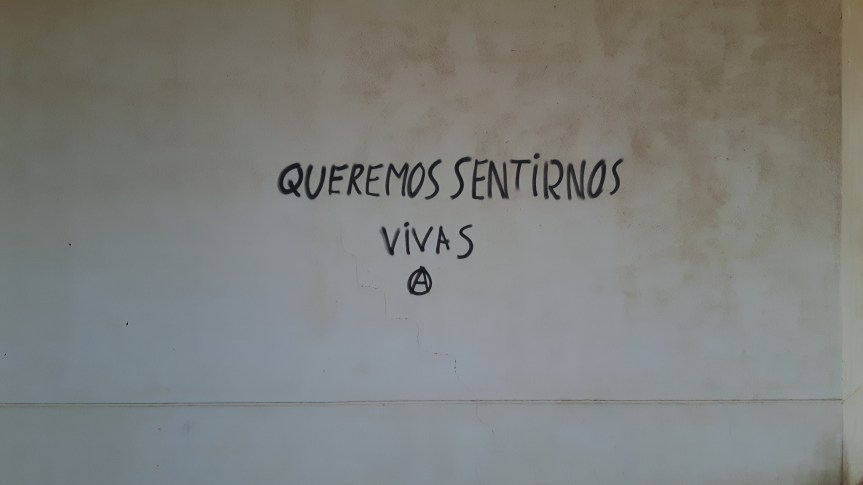
Almost every time I walk across town, some wanna-be graffiti slapped to the side of a décor shop catches my eye. “Queremos sentirnos vivas” We want to feel alive. It sounds like a cry, not to oppressors, not even to God, but just hurled into space from a spirit that wants more than resignation or dogmatism. It reminds me of another of another cry:

During those many days the king of Egypt died, and the people of Israel groaned because of their slavery and cried out for help. Their cry for rescue from slavery came up to God. And God heard their groaning, and God remembered his covenant with Abraham, with Isaac, and with Jacob. God saw the people of Israel—and God knew.

(Ex. 2:23-25)

Even though the cry was not to God, God heard and God knew. And He liberated His people. After this liberation, the following years in the desert were so hard that the ex-slaves began to daydream of life back in Egypt (Num. 11:5). God had promised a land flowing with milk and honey, but not yet.

Today as headlines continue to make history in ways we never would have chosen, we too are in that “not yet” pocket, basking in salvation (already) and looking forward to God’s promise of heaven (not yet).

What will choose in the meantime? Resignation or dogmatism?

Or life. Abundant life (Jn. 10:10). After all, we have a guarantee of our inheritance as heirs with Christ:

In him you also, when you heard the word of truth, the gospel of your salvation, and believed in him, were sealed with the promised Holy Spirit, who is the guarantee of our inheritance until we acquire possession of it, to the praise of his glory.

(Eph. 1:13)

We don’t just have to endure and parrot “praiseGod.” We don’t all have to share our opinions about every topic all the time (and resent those who disagree). We don’t even have to assign divine meaning to suffering.

Yes, hay que aguantar, but that is not all. Whatever “not yet” desert we are stumbling through today is not the end of our stories. And right here in the middle of the dry, we can sentirnos vivos because the gift of abundant life transcends our desert.

Maskmaker, maskmaker, make me no masks

The outdoor mask mandate has finally lifted and we don’t know how to behave. In fact, many have opted not to change their behavior at all, continuing to wear masks out of precaution or habit, I’m not sure. We still have to slip on masks when we step indoors anyway, so we all wear them somewhere–if not on our faces then dangling from chins, wrists, or elbows.

I feel positively undressed leaving the house without a stifled nose and mouth. Sometimes in public I get that sudden cold sensation like those nightmares of being at church without sufficient attire.

And I realize how much I relied on my mask to skip flossing after breakfast. Or how I developed the habit of puffing a breath to push my mask away from my face. Now I let out a big puff and nothing happens (except the passerby who eyeballs me).

I’m now aware of the faces I’ve been making behind my mask. “No more beaver faces!” I remind myself now and then. Making beaver faces always gave me a private satisfaction when I was particularly tired of masks. I’m trying to kick the habit.

Yesterday, I saw the police and subconsciously grabbed for my mask before I remembered. How strange to march past them in a freedom that last week would have solicited a fine!

With this measure of freedom, I choose to be respectful of those who continue to wear masks, whatever their reason may be, giving them extra social distance or momentarily slipping on my mask in their presence. If I want them to respect my choice, I need to respect theirs. But don’t mind me over here doing a happy dance…


Photo by Vera Davidova on Unsplash

Spotted recently

A man in the front of the bus was deeply unsettled by a roaring conversation between a gypsy family and the bus driver. When the family got off, the man snarled about how loud and obnoxious they had been. (In truth, my nerves were a bit shattered too.) But the bus driver shrugged and instead of engaging in an argument, said, “That’s their way.” He, for one, was willing to roll with it.

Three women in brightly colored djellabas crowded around a fourth woman holding her large handicapped son in her lap. She spoon-fed him yogurt as he grinned at the women crowding around him. The women’s happy exclamations told him, in short, “We delight in you.”

In low tones, a new acquaintance assured me that even with multiple children with mental and physical disabilities, the last thing she wanted was people feeling sorry for her. When life got stressful, she danced. Literally. 

I was coming home, tired and worn. As I rounded the corner on my street, I heard a greeting… from above. I looked up and saw my neighbor’s fuzzy gray head peeking over the window sill. “I thought that was you!” she called cheerfully.

At the bus station, a demonstrative Spanish couple bid each other farewell with an exaggerated display of affection. The North African taxistas started shuffling their feet and darting glances at the walls and ceiling. Not part of either world, I just sat on my concrete bench and enjoyed the cultural clash. 

“I feel so alone,” my stooped neighbor told me, his eyes watery. His wife of many years had passed away suddenly and his loss was nearly unbearable. He couldn’t imagine life without the love of his life.

We all waited and waited and the bus driver fumed as the elderly man loaded his cart under the bus and carefully counted out his pennies for the bus fare. He stumbled into his seat, mask askew and tag peeking out from under his cap. And all I could see was that he was someone’s father. 

When I greeted a stranger on the street, she stopped and broke into a smile that spilled over the top of her lowered mask. Her cheerful conversation stunned me, even though I had been the initiator. Had I met her before? But no. Although most people are afraid to talk to strangers, it just turns out that there are a few friendly people in Mytown!


Photo by Annie Spratt on Unsplash

Welcome to Mytown

Nobody told me “Welcome to Mytown.” I had to interpret their welcome in other ways. 

Most don’t seem to know in which box to put me. So they gawk. Is this some weird North African-Spanish hybrid? Romanian? Russian? In small-town Immigrantville, people knew where I belonged, but in Mytown, a larger city, they don’t.

Sometimes, I enjoy shocking people. Once, I walked into a halal butcher shop and greeted the owner in Arabic. He began a lively exchange, incredulously. Arabs are varied enough that though light complexions are not common, neither are they impossible. Sometimes Arabs just assume I’m a rare breed of themselves. “Syrian? Palestinian?”

But other times, people can be downright rude. While I was waiting at the bus station with an Asian friend, a man sauntered over. He deliberately stopped in front of us but said nothing, just eavesdropped. After my friend left, he and two of his buddies approached me.

“Where are you going?”

“Where are you from?”

“Where is your friend from?”

And then, “What you don’t find in Mytown!” as if I, apparently a freak of geography, weren’t standing right in front of them.

Once, I stopped by the café next door to drop off something for the owner. My unanticipated entrance startled the old men circling tables of dominoes. As I walked out only seconds later, the rowdy conversation had ceased. The only sound was the clink, clink of dominoes.

Although I still don’t know them well, my neighbors have been fabulous (except one), offering to help me with things, greeting me on the streets, holding doors open for me, and so on. One gave me a watermelon when I happened upon him rolling watermelons to the front door. 

“You want watermelon? You have a family? Children? Take some!”

I imagined myself rolling little watermelons through the front door to the elevator like he was doing. “Thank you. Just one.”

“Just put it over there,” he suggested, probably because he didn’t want me squeezing into the elevator with him and the watermelons that wobbled around his feet. “No one will take it,” he assured me. 

I balanced my watermelon on top of the apartment mailboxes, confident that he was right. We were both wrong and I never saw my watermelon again. But that same night, a neighbor asked me to drop by and pick up some sweets she had made me. Those fried balls of dough dripping with honey were sweeter than the watermelon in more ways than one. 

My acclimation to Mytown is taking longer than I had anticipated. When I mentioned this to a woman at the bus station, she peered at me over her glasses and explained that I shouldn’t just be friendly to everyone I meet because there is no reason to trust them. You have to grow your friend base slowly and carefully, she said.

If this is how people think, no wonder they greet my persistent friendliness with suspicious stares!

Then, still watching me over her glasses, the woman said, “I’ve been living in Murcia for 16 years and I still haven’t grown used to it.” Well then, I guess 3 months isn’t so bad.

Telemarketers and tempers

I lost my temper. Telemarketers had been calling at least twice a day for weeks, making me jump, startling me from whatever I was doing to dig my phone out of my bag in the middle of the store or turn off my bluetooth speaker. They called from various numbers but they always played the same music when I answered. Because of my pending residency, I didn’t have the luxury of not answering calls from unknown numbers. Initially, I told them I wasn’t interested in their internet offer, and then mostly just ignored them. But one day I lost my temper.

“Look, who are you with? Stop calling me! I’m tired of you calling me! Do you understand me?” My rush of emotion garbled my Spanish.

“No, I don’t understand.”

“Who are you with?” I demanded again.

She hesitated split second, thrown off-script. “I’m calling for María…” Liar.

“I’m not María and I have had this number for three years!”

“I’m sorry for bothering you.”

After I cooled down, I began to wonder if this poor lady had received the brunt of my anger at a Spanish demographic. Not at Spanish culture as a whole–more often than not, I view the culture as a welcome Western break from North African culture–but at a certain bossy attitude I bump into. In America, the current lingo has something to do with the name “Karen” (which I believe is an injustice to the name since no Karens I know act like the memes). It’s the women who believe it is their duty to uphold every law they can get their hands on. And they enforce invisible laws too. 

“You can’t sit there! We’re supposed to keep a distance of 2 meters!” The bossy voice at my ear caused me to jump.

And the familiar dread rose. “No?” The last I had heard was that we were allowed to sit side by side on the bus. Had regulations changed again?

The man behind the sharp voice piped up: “Yes, we’re allowed to sit with a partner.” His tone was just as blessedly bossy.

“No, we’re supposed to keep a distance of 2 meters!” she bugled. 

I closed my eyes. As if anyone on the bus could sit 2 meters apart. Then again, I sure wouldn’t mind having more than 2 meters separating me from that voice. They fought it out, those two equally matched enemies while I sat, staring forward, trying to talk myself out of venomous irritation.

Sometimes I deserve a reprimand as I cut a corner here or there. Most of us probably do. After a sharp comment at the post office after I violated a hyper-enforced regulation (Note: no getting a number to wait outside while “Karen” is on duty), I obediently returned outside and pondered what in the world made me so angry about that attitude. Spanish culture is abrasive, yes, especially for thin-skinned Americans, but this went deeper than hurt feelings.

Then I found it: shame. It was shame. Every time someone barked at me, whether or not it was to enforce a covid regulation (or an imagined one!), they reinforced my sense of incompetence in their culture. And deeper still, they contributed to a deep-seated fear that I did not nor would I ever belong. 

That fear is what bubbled to the angry surface with the unsuspecting telemarketer. The solution? Probably a cocktail of growing a few more layers of skin as long as I am a “stranger and pilgrim” while simultaneously rooting myself deeper in the One I belong to.

I’m still working on that, but in the meantime, I’m learning that shouting at telemarketers probably doesn’t solve anything. Although, they haven’t called me since that day…

Trying dieting

I’ve never been the person watching what she ate, until I came to Spain. Then it was simple: overdose on protein and stay away from sugar and caffeine. Until I got back from the States this fall and my blood test revealed shocking cholesterol numbers. 

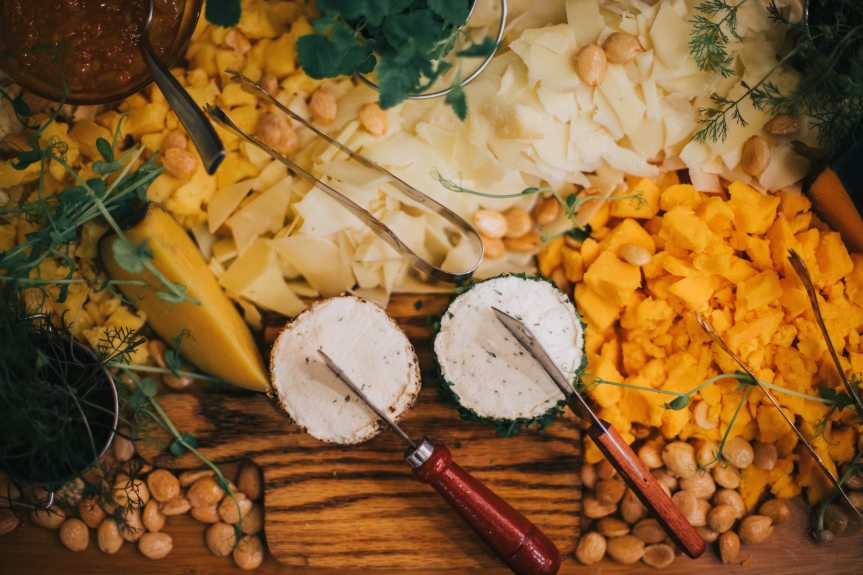
Genetics? Yes. Well, partly. Also, my love affair with cheese. After visiting France a couple of years ago, I thought it would be nice for God to call me to a country where one can eat a different kind of cheese every day of the year. Now I’m thankful I’m in Spain, where cheeses are outstanding, but numbered. 

The doctor gave me a “to eat and not to eat” list. I did my own research, plugged a basic menu into a nutrition calculator and stuck to it for the most part. I’ve been eating well, make no mistake, but food prep takes longer than it used to. Plus, I spent a couple of months enduring my roommates snickers when I weighed almost everything I ate. I also had to endure my sister’s judgment when I feasted on a rosy salmon fillet, roasted brussel sprouts, rye crackers with homemade hummus, with a mango and 85% chocolate for dessert. 

I love baking. I would probably bake every day if it weren’t for the piles of dishes. Or the piles of sweets. When I had a roommate, it was easier to dispose of my leftover baked goods. Granted, she was not always pleased to see another plateful of a sugary something with an attached note: “EAT!” 

Honestly, I am a healthy eater by discipline, not naturally. If you’re going to trip me up, set out a cracker variety and a luscious cheeseball, chips and salsa, or just mounds of greasy potato chips. I don’t even like bread, but once and a while, I pig out on bread, especially if it’s loaded with heart-stopping slabs of cold butter.  It hasn’t been all that long ago since I ate an entire bag of chips in one day. Or one day, I was walking down the street and smelled hot dogs. Hot dogs! And I could taste them, roasted over a fire, overloaded with tangy mustard and a heap of shredded cheddar. I admitted this craving to my roommate who, after watching me carefully blend kale smoothies, was amused. Rightfully so. 

For us first-worlders, food, like so many other things in life, is a choice. What we choose today may affect our tomorrow. 

Do you have a food plan? What do you do? Do you make allowances or take days off? Wedge in a bit of space for that mousse au chocolat? Speaking of which…


Photo by Cody Pulliam on Unsplash