Was it worth it?

“Was my time in Spain worth it?” This question has crossed my mind a hundred times since I started winding down my life here. Was all of the time, energy, and finances invested worth the results I see? Or rather, the lack of results? Were they worth the years of being far from the people I love best in the world? Far from my own culture and community?

Lord willing, I plan to move back to the States in just over 2 weeks. My emotions are everywhere, leaking out in goodbye tears with a friend or bouncing in sheer giddiness as I remember that I don’t have to face upcoming life transitions alone anymore.

But was my time worth it?

I came across a quote from Elisabeth Elliott that I had jotted down long ago: “[People] cannot be hustled into the kingdom of God. And it is well to remember Christ’s own descriptions of that kingdom–leaven and seed, things that work slowly and out of sight. We long for visible evidence of our effectiveness and when it is not forthcoming, we are tempted to conclude that our efforts never had anything to do with the kingdom.” (From Made for the Journey by Elisabeth Elliott)

Exactly. I have coached myself not to dwell on the question of whether or not my time in Spain was worthwhile. After all, God works in ways we can’t see and I don’t have to understand the whys of His calling. Like Elisabeth Elliott said, God’s work is often slow and hidden.

When I shared my thoughts with J,  he suggested a new perspective, one he had gleaned from an article he had read. In his unimposing way of communicating truth, he suggested that rather than asking myself, “Was the sacrifice worth it?” it’s better to remind myself: “He is worth it.”

My personal fulfillment takes a backseat to God’s glory. 

This doesn’t mean I can’t evaluate my work and make adjustments. Neither does it mean I cannot grieve my losses or my lack of perceived success. But staying stuck in my questioning grief reveals a lack of divine perspective because neither sacrifice nor success can define the worth of a kingdom endeavor. 

A life spent for God is worth it, no matter what.

Deeper sorrow, deeper joy

I know how to hide my feelings from myself. I’ve had practice telling those miniature white lies about how I don’t mind or that I’m unconditionally happy and galloping through life without unwanted feelings lassoing me.

My body gives me a jolt now and then: a wrinkled forehead glimpsed in the mirror, indigestion, weight loss, fatigue. But look on the bright side, I think. I don’t really feel that stressed, weary, cranky, or conflicted. I am living the ideal life. Who in their right mind wouldn’t want to be me right now?

What I don’t remember is that shutting down my “negative” feelings also shuts down my capacity to deeply feel joy.

Earlier this month, I realized that wedding planning all day on my day of rest was not a sustainable pattern. So on my next day off, I forced myself to rest, really rest. I wrote “read” on my to-do list and that was all. As evening came, I transitioned into watching Call the Midwife. Two episodes later, I shut down my computer and cried. It was as if feeling vicariously for almost 2 hours helped to release my store of pent-up feelings.

This is where I want to be: feeling. Even if sometimes it means feeling an aching loneliness or feeling downright scared at what looms ahead. When I open my heart to feel, I experience the richness of the ups and downs of a life fully-lived. Because joy is right there too, every bit as deep… deeper even, but I can’t notice it when I’m only skimming along the top of life.

This season of life is filled with lasts and goodbyes as I prepare to leave Spain in 3 1/2 weeks. “Another last,” said my teammate when we dropped off my final guests. My guests and I had had a marvelous time, exploring and talking, processing and laughing. Their leaving set me into motion, clearing out my house and closing up my life here. It aches, but not all aches are bad.

I’m also filled with energy as I think about trading this life for several months with family and friends in my home community. And then there’s the dizzying delight of marrying J in three short months.

God meant the sorrows and joys of this season to be felt rather than ignored. So today, I choose to stay in this vibrant sense of being alive.

Everyday insanity

A loud voice burst behind me, and I glanced over my shoulder before I could stop myself. 

I recognized the man. I’d often seen him wandering the streets while talking at high decibels. Usually, he wore the same outfit: a too-tight, long-sleeved white T-shirt, tan pants, and a disposable mask. 

The first few times I had seen him, I had glanced around to find the second half of the heated discussion. Someone behind him? Someone above, leaning over a balcony railing? But then I realized the other participant was invisible. The man was talking to the voice in his head. 

As our paths crisscrossed today, his loud monologue slid into song with one of the most guttural singing voices I had ever heard. It began with the quality of a deep belch and moved into a haunting tune, with an almost flamenco sway. But different. 

Captivated, I had to force myself to keep walking. 

The church plaza was full of elderly gentlemen with canes and audacious pigeons that only fluttered away when they realized I wasn’t planning to step around them. As I started down the street to the supermarket, I crossed paths with another man. This man was also bellowing a one-sided conversation at an invisible participant. 

What distinguished this man from the one I had just left behind? Did that tiny black device nestled in his ear give him license to be publicly lost in his own world?

Maybe it’s just because I’m growing older, but sometimes I find it odd that the things that used to send people to asylums have become part of our everyday lives.

I’m doing terrible, terrible

Estoy fatal, fatal…” I’m doing terrible, terrible. That’s how an elderly neighbor typically greets me. 

Maybe I’ve lent an ear too many times. Or, for all I know, she dumps her health issues on everyone she comes in contact with. 

Being on the receiving end of her complaints isn’t much fun. It’s hard to listen to how the doctors can’t give her any answers, about her latest trip to the pharmacy, or how her legs refuse to work (although they mysteriously carried her several blocks from home). 

She never asks how I am or what I’m doing. I doubt she even knows my name. 

I help roll her walker down the ramp from the elevator, open the door, and stop for a “Oh, uh-huh, oh that’s too bad” chat on the street. I even take her cinnamon rolls at Christmas because I know she likes them. Still, I inwardly groan every time our paths cross.

Estoy fatal, fatal…

As much as I hate to admit this, I know that sometimes I sound just like my neighbor: “Why me? Why do I have to be the one to deal with this bumpy relationship/chronic illness/broken heart/smashed dream? I’m doing terrible, terrible…”

When life doesn’t feel fair, it can be an easy slide from lament to griping, from heartache to bitterness. Even with the Spirit of God dwelling in me. 

So it’s a good thing God sends my neighbor into my life every now and then to give a face to my inward grumblings and remind me to trust that God knows what He is doing. Then, as Jen Pollock Michel writes in her book In Good Time, I can receive life with gratitude and say, “Whatever you choose to give, Lord, I embrace” (p.99).


Pollock Michel, Jen. In Good Time: 8 Habits for Reimagining Productivity, Resisting Hurry, and Practicing Peace. Kindle ed., Baker Books, 2022.

There isn’t much that separates us

The public health clinic was teeming with people. Where was she?

“Over here!” My friend waved me over to a corner of the waiting room. She rushed to explain her health problem, pointing to various body parts while keeping an eye on the door where she was to go as soon as her number was called.

My breathless mind tried to keep up with her Arabic. I was still drumming up passable Spanish vocabulary when her number was called.

We squeezed around an old shopping cart piled high with unsupervised medical supplies and stepped into the consultation room.

“What is the problem?”

I took a deep breath and launched into an unrehearsed explanation. Interpreting between two foreign languages is always a workout for me, and not a flattering one.

The lady at the desk was silent until I paused. Then she said, “You both realize that I’m a nurse, not a doctor, right?” 

Actually, no. I had never been beyond the door in this particular public health clinic.

“Look, the only thing I can do is test and see if she still has the infection.” She handed my friend one of those flimsy plastic cups we use at children’s parties for juice or Jell-O. “Urinate in here and bring it back to me.”

Apparently dismissed, we squeezed around the shopping cart and wandered around the building in search of restrooms. Misplaced people were milling everywhere in a warm, concrete facility that smelled of metal and sweat. 

We eventually found the almost unmarked restroom, nestled between consultation rooms. Then back down the long hallway we went, my friend trying to hide her cup of pee in a plastic bag she’d dug out of her purse. “There wasn’t any paper in there to wrap the cup,” she said. “I don’t want everyone here to see it.”

We wiggled around the overflowing shopping cart again. The nurse stretched on a pair of gloves, stuck a testing strip into the urine, and told us to wait outside. My friend turned and left, still holding her cup.

“Uh… can she throw away the urine?” I asked. 

While I was still verifying this with the nurse-not-doctor, my friend lost her way and, unable to read, ended up in the men’s restroom. There was an unsettled man waiting outside when I arrived on the scene. “This is for men,” he said in Arabic when my friend emerged.

We found seats in the waiting room. As much as I love to people-watch, it was hard to look around without feeling absolutely hopeless. Did anyone in the healthcare system really care about these people?

As we waited, the lady next to us asked if her number was on the screen yet. She couldn’t read; she could only hear the tone and see the digits move without understanding what they meant. I looked at her tiny slip of paper, the kind of ticket you get while waiting in line for olives at the market. It was hard to see that wisp of green-blue and not see my own personalized number on a freshly printed ticket from the private health clinic across the street. My initials followed by 524. Always the same. Always announced over the speaker while I sat in the air-conditioned waiting room. 

Her number was 254. The number on the screen was 272. “It’s past,” I explained. By a good half hour, likely. She walked up to the desk and was sent to get another number and start the process again. 

Meanwhile, my friend and I were called back into the consultation room. The overflowing shopping cart had been removed and this time we could walk in without yoga posing our way through the doorway.

The nurse told me, “Tell her that she still has an infection, but she needs to finish the week of antibiotics she got yesterday.”

Oh.

That was a piece of information I had been missing. My friend had apparently just been to the emergency room the day before, but wasn’t satisfied with the lingering pain from the infection. As if one dose of antibiotics should have removed her aching like magic.

It was hard to look at the nurse sitting at her desk and not feel absolutely hopeless for her. Was this what she dealt with day after day? Confused immigrants expecting or even demanding immediate fixes without understanding her role as a nurse, not a doctor or a magician?

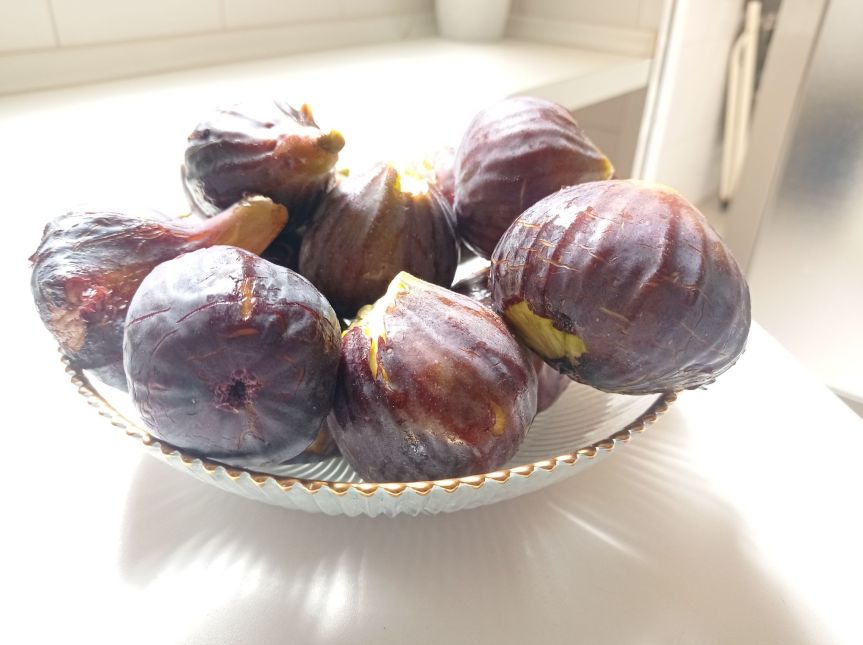
My friend and I walked toward home. She pulled me into a North African store and bought a bag of fresh figs: big, purple, and sweet. On the street again, she handed me the bag. “I got these for you because you helped me today.”

We sat on the front steps of my apartment building until the hopelessness of the morning faded with chatter and laughter. Deep down, there isn’t as much that separates us as we sometimes imagine.

And can it be…?

It’s my responsibility to choose the songs for our Sunday sunrise service. The Easter Sunday selection often falls on me, I think, or maybe it’s just a reflection of how many years I’ve been in Spain to have the selection fall on me (or a reflection of my age and coinciding inability to remember).

There is an overwhelming number of songs to choose from. The traditional hymns that make the male voices boom, “Up. From. The grave. He. Arose!” to some of the newer songs that encompass Jesus’ life and passion. I only get to choose a few, but that doesn’t stop me from snooping through other people’s Spotify playlists.

What are some of your favorites? And why?

One of mine (one of many) is “And Can It Be, That I Should Gain?” by Charles Wesley (1738). The lyrics are powerful, the music beautiful (especially with an organ!). The hymn starts with questions, evoking shame and guilt.

And can it be that I should gain
An interest in the Savior's blood?
Died He for me, who caused His pain?
For me, who Him to death pursued?

The hymn goes on to share the mystery and grit of the Savior’s death followed by the hymn writer’s own testimony of freedom and life from the living “Christ my own.” Yet, through the entire song, we are pulled back to the refrain:

Amazing love! how can it be
That Thou, my God, should die for me?

A reminder of our helplessness before God without Jesus’ death and resurrection for “Adam’s helpless race.” A reason to celebrate Resurrection Day with gratitude.


Photo by Henrique Jacob on Unsplash

Bricks and churros

Meeting her was like being handed an armload of bricks. Surprising, heavy, and requiring concentration to keep the bricks from tumbling everywhere. She was sturdy and strong. Like she was giving the world the finger, and the world was cowering. And yet… and yet, her inner chaos spilled over on everyone she touched. 

I had noticed her for years, only ever at the market. She was eye-catching: tall, broad, non-conformist, and always purposefully raiding booths at the traveling market. 

Then one day, we crossed paths. Literally. And she stopped me. “Who are you?” she asked with bright eyes. 

She was thrilled with my stumbling Arabic, my height (we stood eye-to-eye), and my nationality. We exchanged numbers and parted ways. I walked home, a little dazed by my ability to attract strong women who longed to take me under their wing. How many times had this happened before?

She and I messaged back and forth for a couple of weeks. She had a situation costing her a lot of time and energy. “Pray for me,” she said. 

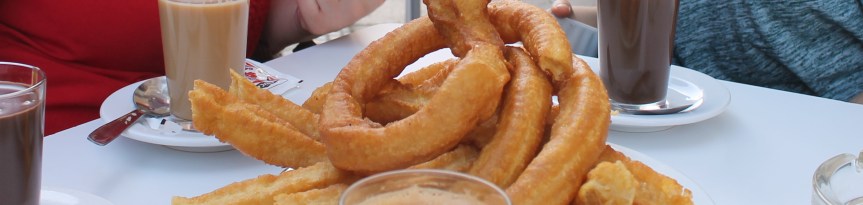
Last week, I messaged her. “Are you going to the market? Can we meet for churros?”

I found her at the market, rooting through piles of merchandise, somehow sniffing out deals I had already walked by once. 

When she reached out to hug me, body odor clogged my throat and I tried not to breathe. It wasn’t her, but her clothes, I thought. She might not have access to a washer. “SHE’S AMERICAN!” she blared at the market vendor in a voice as big as she was.

She insisted on paying for the churros. “It’s all the same.” She waved me off as I fought back. We found a table and she started talking. Loudly. As she told me her problems, neighboring tables shot us glances. 

I was hyper-aware of the intrusive volume as I munched on churros and wiped my fingertips on the gray churro wrap, but it took most of my concentration to follow her story. I felt like I was juggling those bricks now, trying to keep all of my senses from screaming at me while I focused on her words. There were a lot of them. Both senses and words.

When she told me why her marriage had crumbled, she shrugged. “We get along fine now. But you know, we were too young to know how to solve our problems.” Another shrug. Another middle finger to the world of pain.

An airborne brick was about to land on my foot. What should I say? Was she anything but “fine”? Even with all of the pain she had just detailed? Had anyone in her life ever let her be anything but “fine”?

I pressed my greasy fingers against the paper again, admiring the pristine fingerprints I left behind, dark against the pale gray. My fingerprints. Beautiful. Special.

And the woman sitting beside me left her own greasy fingerprints on everything she touched. Also beautiful. Also special.

“Was it hard to relate to his family?” I asked finally.

And when I looked up from our fingerprinted churro paper, my breath caught. This “load of bricks” in front of me was dabbing her eyes. She wasn’t crying. Not quite. But I had touched something still raw. I sat quietly, ignoring the cooling churros. Ignoring the eavesdroppers around us. She didn’t say more, and I didn’t pry. Our friendship was too new for that. 

But I walked home with this God-given reminder that I had just had greasy churros with God’s image bearer, His beautiful creation. Her wounds and scars would never be able to disguise that.

It’s quiet here

It’s quiet here.
Above, the sun comes and goes
More going than coming
Behind stubborn clouds.
Below is small but grinding
With a today of
Abuse and addiction
Suffering and slavery
In our own town, in our own people.

But it’s quiet here,
Here in my heart:
A mountain reaching up from a dark sea
To that sun swallowed by haze.

In a world gone mad
We long
We laugh
But we live following.
Because behind a cloud
The sun is quiet like the moon,
Searchable, findable.

Photo by Timothy Dykes on Unsplash

Recommended books for you

Merry Christmas everyone! A day late and a euro short, perhaps, but who wanted to sit down and read my blog yesterday anyway?

As 2019 closes, I decided to give you a few recommendations from my 2019 reading list. This is just a list; if you want to know more about a particular book, check out the link provided. 

Spiritual Enrichment

No God But One: Allah or Jesus? by Nabeel Qureshi. I have always appreciated Qureshi’s gentle but uncompromising approach to rift between Islam and Christianity.

The Insanity of God by Nik Ripken. This book is full of stories of God at work in the hardest places on earth. I also recommend The Insanity of Obedience

Every Bitter Thing is Sweet by Sara Hagerty is a true journey woven with story and reflection. This book helped me on my journey, realizing that God, in His love and sovereignty, wants to make the bitter times sweet times as we cling to Him.

Memoir / Non-Fiction

Behind the Veils of Yemen by Audra Grace Shelby. A peek into one woman’s life as she struggles to maintain her faith in Christ in the midst of conservative Islam. The author’s honesty about her struggles makes this book a gem, especially if you’ve worked in a similar setting.

My Name is Mahtob by Mahtob Mahmoody. Mahtob’s version of what happened in Not Without My Daughter. This fascinating book begins with a child’s perspective as she grapples with love, fear, anger, and forgiveness. 

The Secret Thoughts of an Unlikely Convert by Rosaria Butterfield is a woman’s journey to faith in Jesus.  Interesting and challenging. Although I didn’t read it this year, I also recommend her book on hospitality, The Gospel Comes with a House Key.

Surprised by Oxford by Carolyn Weber is a fantastic memoir. I don’t think I can explain why exactly. Although the author and I don’t have similar stories, this memoir hit many warm and familiar spots for me. Check it out for yourself.

Fiction

A Place for Us by Fatima Farheen Mirza. A story of a Muslim immigrant family in America. Although the work is fiction, the story is real. Today, many immigrant families deal with the shifting worldview between generations of immigrants, Islam mingling with the forbidden, honor and shame, etc. A teammate bought me this book and I’m glad she did!

Daddy-Long-Legs by Jean Webster. This is a free Kindle book that is worth much more than you’ll pay for it. It’s cute. It’s fun. It’s fiction. If you like it, note that the sequel, Dear Enemy, is also worth downloading. 

That’s all until next year! Lord willing, tomorrow at this time, I should be suspended somewhere between Madrid and Chicago. I can’t wait. You probably won’t be hearing from me for a few weeks. 🙂