A life of perpetual humiliation

I just finished reading Anthony Doerr’s Four Seasons in Rome. Someone discarded it, and I picked it up, curious. This isn’t a book recommendation unless you happen to know that you like Anthony Doerr, but Doerr’s descriptions of life on the outside of a culture cut me wide open. I didn’t know there were words for these “in but not of” feelings.

Apartness and perpetual humiliation are part of daily life for those living overseas. Sometimes we talk about it too much. Often we don’t even acknowledge it but let our frustration become part of the existing barrier, like a thick moss growing over a wall we’re trying to ignore.

We are outsiders, always outsiders, chipping at the barrier that stands between us. And there are successes! Moments when a chunk of the wall falls away and we glimpse the other side…only to find razor wire. 

“To be a nonfluent foreigner is to pass through one gate only to find yourself outside two more,” writes Doerr (p. 46). “We are humbled over and over–humility hangs over our heads like a sledgehammer… Oh, you think you’ve been here long enough to barter at the street markets? Guess what, you just spent €8 on three plastic clothes hangers” (p. 76).

After nine months in Rome, Doerr walks into a grocery store and makes an order without messing up a single syllable. “What happens?” he writes. “I get my groceries. No streamers drop from the ceiling, no strobe lights start flashing. The grocer doesn’t reach across the counter and take my face in her hands and kiss me on the forehead.” Instead, the grocer asks about his boys and speaks so quickly he can’t keep up. “…I miss 80 percent of it and sheepishly, stepping down from my throne of fluency, have to ask, ‘I’m sorry, more slowly, please?’” (p. 168)

For some, eventually the barriers do not loom so large or feel so insurmountable. But for many? “I know nothing… I never made it through the gates between myself and the Italians. I cannot claim to have become, in even the smallest manner, Roman” (p. 201).

True. Despite my efforts to integrate into the culture around me, my North American worldview remains mostly intact, placing me decidedly on the outside. 

But if we let it, doesn’t living on the outside help us accept who we are? After all, like it or not, we cannot cease being a part of something. Not being a part of the culture we’re living in is because we’re part of another, or even several. Being on the outside can help us identify our own “inside.”

Apartness and perpetual humiliation are hard, but they are also opportunities to learn and grow.* And we need these opportunities to understand ourselves.

So I will try to be grateful. Even as my neighbor gives me a list of what is wrong with my couscous. Next time, it will be better. I can promise.


Doerr, Anthony. Four Seasons in Rome. Scribner, 2007. 

*Thank you, J, for your positive spin on life to remind me to keep on growing!

From death comes life

Happy Easter to you all! I’m taking a break from logging our trip to Switzerland to wish you all a wonderful Easter weekend.

As you celebrate–maybe with communion, a sunrise service, cinnamon rolls, and candy-filled Easter eggs–celebrate the life that Jesus offers through His death and resurrection. John writes toward the end of his Gospel that he has recorded the signs of Jesus “…so that you may believe that Jesus is the Christ, the Son of God, and that by believing you may have life in his name” (Jn. 20:31).

From death comes life. From His death comes our life. Although that truth is the climax of anything I could write, this year I was reminded that our daily dying also brings life.

“We are called to die to our own righteousness and find our hope, help, and comfort in the righteousness of Jesus given over to our account. This death…is a process of daily scanning our lives to see where things still live in us that should not live, then praying for the strength to die once again. Like the death of Jesus, this death is not a defeat, but a huge and glorious victory. For everywhere you die, you will be resurrected to new life in that area.”

from Journey to the Cross by Paul David Tripp p. 36

Happy Easter, everyone!

The rain in Spain stays mainly in the tiles and a few other things about Spain

#1

The rain in Spain stays mainly in the tiles. If you live in a town with tiled sidewalks, you probably know what I mean. Tiled sidewalks are great as long as none of the tiles are loose. And even loose tiles are okay as long as it doesn’t rain.  

It rains. Then the sun begins to shine and a smiling you decides to go for a walk to enjoy the fresh air. You’re in high gear when it gets you: that warm splash up your ankle and along your hem. Sigh. That tippy tile was hiding a puddle of rainwater. Rainwater that had been flowing along a filthy street. 

There are some streets that I avoid after a rain because to walk along them is to feel the ground moving beneath you and hungry waves of brown water lapping your ankles. Most rainy days (and even 1-2 days afterwards) I long for drab concrete sidewalks with obvious puddles rather than the noble but surprising tile ones. 

#2

Most Spanish balconies have water spouts and people use them as they wash down their balconies. Beware, pedestrians below! Those of you who live in the city probably know what I mean, but balcony water spouts were a new concept to this country girl.

After the Saharan dust storms in March, everyone was splashing water on everything. At times, the streets flowed with orange water. My neighbor tossed a bucket at his balcony wall and seconds later heard a shout from below. Oops, he had nailed a passerby.

I think the proper etiquette is to check for any passersby before starting the flow. After that, they’ve been warned by the growing puddle on the sidewalk below the spout and if they’re unaware enough to walk within reach of your balcony spout, then that’s their problem, not yours. 

And, for the record, yes, I still get dripped on every now and then. And I just hope… hope that it was a harmless drip from someone’s squeaky clean mop bucket. 

#3

Some Spaniards set plastic water jugs on the sidewalks outside of their homes, often fastened to something with string or rope. The bottles are filled with liquid, sometimes clear, sometimes amber.

I have noticed this for years and finally asked my landlady about it. She acted like she’d never even noticed this strange habit. So I did a little research and found that the water bottles are supposed to scare away pets and stray animals from peeing in doorways or sidewalks in front of homes. Whether or not it works is up for debate, but it’s still widely practiced here. 

#4

I’m not sure what northern or central Spanish flies are like, but the ones on the coast have the ability to drive sane people mad (at least temporarily).

The lesser flies aren’t so bad, the ones that zip in jerky patterns in the center of the room and never seem to land. But the ones that I pick up by walking down the street can get my blood to a rolling boil in no time at all. 

They don’t leave me alone. I might only pick up one or two on my walk, but they follow me no matter how fast I walk. It’s like they believe they’ve found a friend and want to stick by my side–or on my nose–for the duration of my trip. I swat one away and walk a few meters, imagining that I have left him in the dust and suddenly he’s on my ear this time. The next time it’s my nose again. And then my chin. And I want to sprint down the street screaming bloody murder.

Would it hurt Spain to invest in some good ol’ American flies? Not that I ever liked American flies either, but they seem to respect boundaries a little better than coastal Spanish flies.

#5

Pepper spray is apparently only available on the black market. 

One day, I went to the police station to ask, “What can a woman in Spain do to protect herself?”

The officer’s eyebrows raised. He tried to explain how citizens were not allowed to bear arms. (Maybe I’m imagining things, but he seemed to emphasize this point when he realized I was American.)

“What about pepper spray?” I asked. 

“It’s only available on the black market.” He shrugged. Then he gave me a lecture about matching the defense with the assault. 

Right. “So how can a woman protect herself?” I repeated. 

“We are your protection.” 

“But you weren’t there when I needed help,” I pointed out. 

He sighed in assent and was quiet for a little. “Then what you need to do is report the incident.”

Right. But no pepper spray.


Well, those are a few things about life here. If you come for a visit, watch out for those loose tiles, dripping balcony spouts, plastic water bottles, pesky flies and, oh, BYOPS (bring your own pepper spray). 

Have a wonderful weekend!

Recipe: Gingerbread cookies

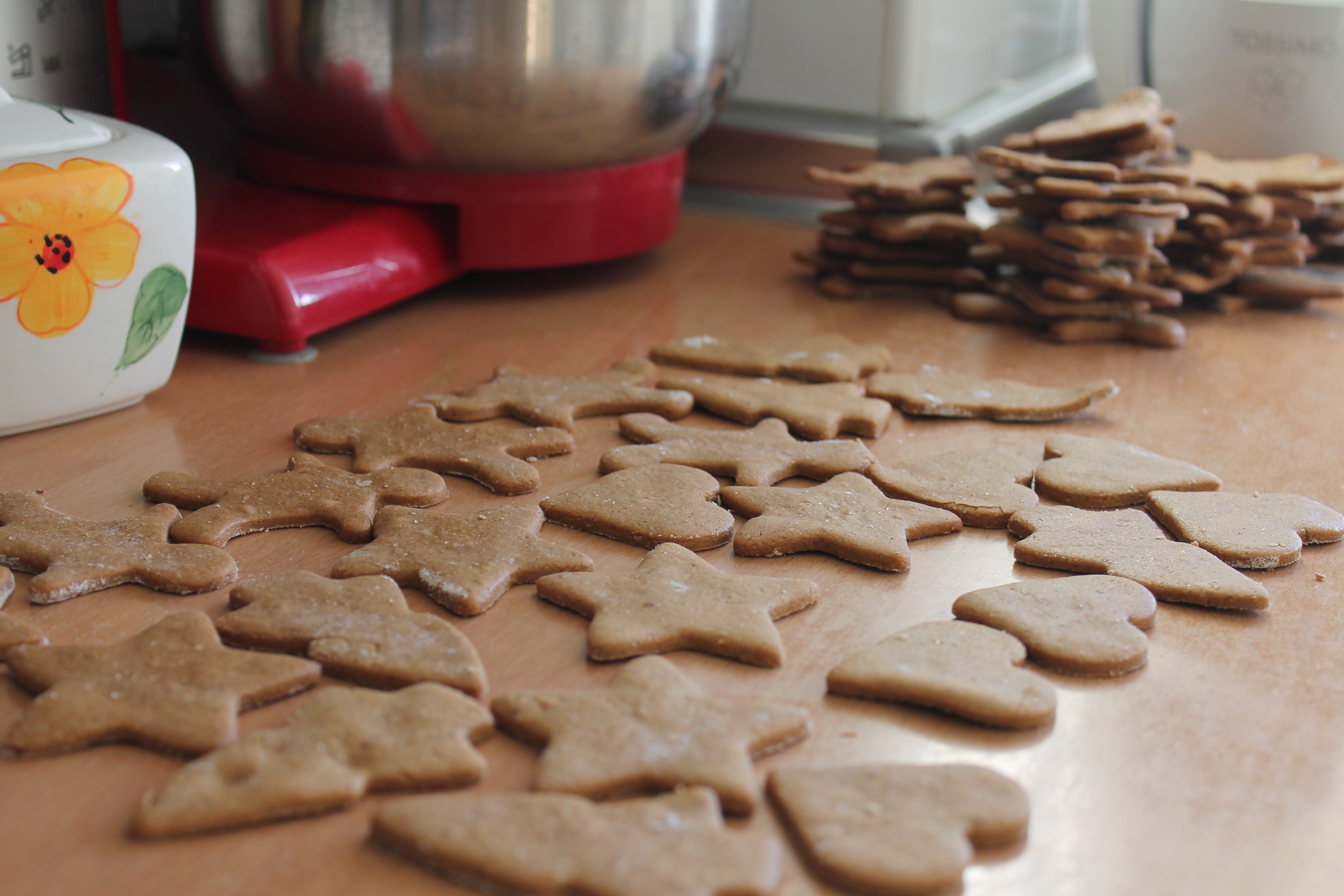
Ever since North Africa, these cookies have been my Christmas tradition. Not only are they yummy, but they are also fun to make because they retain their shape. The original recipe can be found on thekitchenpaper.com. I’ve altered it very slightly and included some notes at the bottom. I’ve also included some of the weights in case you weigh your ingredients like I tend to.

  • 3 c. (384 g) flour
  • 1/2 tsp. salt
  • 1+ tbsp. ground ginger (a smidgen more for a better kick)
  • 2 tsp. ground cinnamon
  • 1/4 tsp. ground cloves
  • 6 tbsp. (85 g) butter
  • 3/4 c. (150 g) brown sugar
  • 1 large egg
  • 1/2 c. (160 g) molasses
  • 2 tsp. vanilla

Whisk the flour, salt, and spices together. Cream the butter and sugar until they’ve just come together. Add the egg, and mix until incorporated. Add molasses and vanilla. Mix. Slowly mix in the flour mixture until your dough forms. If your dough is crumbly, add 1 tsp. of milk at a time until it comes together. Roll out at room temperature on a lightly floured surface to 1/4″ thickness. Bake at 375° F. (190° C) for 8-9 minutes.

shaped gingerbread cookies on counter

Note: You really don’t want your dough sticky. It’s a headache. The more flour you add to keep them from sticking to your rolling pin, the less flavorful they will be.

Also note: If you like your gingerbread cookies thin and crispy, by all means, roll them thin. But don’t forget to decrease the baking time like I forgot to do this year. 😦

Third note: These turn out best when you’re listening to Christmas music. 🙂