Making sentences

After 9 days of studying Arabic, we learned formulaic sentences today. I discovered I was capable of following a pattern… and making mistakes.

I plodded through the Arabic script, plugging in my information at the end of each sentence: “My last name is…”, “My country is…” The sentences ticked by, miraculously without authoritative interruption to correct my pronunciation. I gathered speed. “My city is…” And like a sentence-making machine, I burst out: “My wife is…” and then paused. I really didn’t know who my wife was. Hmm.

I wasn’t the only one making mistakes. My classmate smilingly informed us that she was a “teacher” of Arabic instead of a “student.”

We giggled at ourselves. But the fact we were making mistakes meant that we were producing the language (or at least some form thereof).

Language learning is tedious. I confess I think it unfair for an adult to struggle for speech and still be patronized by teachers. There must be a better way. But meanwhile, I’ll keep working.

The Arabic school director told me, “This will give you more sympathy for your English students.”

He’s right. I didn’t even laugh when a 15-year-old boy stood up and told the class that he was a “housewife.”

Update on taxis

In my last post, I mentioned how I liked to imagine myself as a taxi savvy. Well, ladies and gentlemen, the day has not arrived.

My first day of catching my very own taxi was yesterday. Perhaps the only reason any driver stopped at all was because I was a foreign target with light hair and trembling knees.

As the first taxi pulled up, I forgot to greet the driver. Instead, I stumbled over the two words that I needed to say. As we zipped down the road, I fretted that the driver would overcharge me. But I had prepared for this. I pulled out my orange sticky note and reviewed the transliterated Arabic phrases that, if correctly delivered, could save my pocketbook.

I was blessed, however. The driver began to chat with me in English and just before he deposited me on the side of the road, he tried to undercharge me. Imagine! The phrases I had reviewed were all for naught!

I was confident on my way home from school. So confident, in fact, that I when no “petit” taxi stopped for me, I decided to crawl in a “grand” one. The driver misunderstood my butchered pronunciation of my neighborhood and drove me in the opposite direction.

“Wait! No! This is wrong!” He slowed to a stop and had me repeat my neighborhood name several more times before realization dawned. “Aaaaaah!” And then he said the name with the emphasis on the second syllable instead of the first.

We cruised along in the “grand” taxi, the driver overeager to make conversation and the passenger overeager to remain in deflated silence. The driver pointed to random things along the street as we zoomed past them and projected loud words toward my side of the car, as if I was supposed to know what he had pointed at in the first place. I stared out my window.

When we arrived safely in my neighborhood, I looked at him and shrugged to indicate that I didn’t know what he would charge. He pulled out a bill from his stash as a suggestion. I laughed out loud. It was the equivalent of $10 for a ride that normally cost $1.10. Not encouraged by my response, he shrugged and pulled out a hopeful $5. I shook my head and rattled my coins then handed him $2 to compensate for riding in a “grand” taxi and getting lost. He shrugged again and then rushed to introduce himself.

So far, not one taxi driver has known of the school where I teach English. My afternoon driver was no exception. He made a phone call and tried to look at the map I gave him…upside down. I tried to direct him in Spanish while he interpreted through his French filter. He finally believed the school existed when we screeched to a halt in front of it.

The adventures in taxis are probably just beginning.


Photo credit: W.K.

Of taxis

One 24-hour period here has exposed me to a common piece of North African culture: taxis. The exposure I have had with taxis before North Africa is generally isolated to rides that cost both an arm and a leg. I believe, however, that my exposure is soon to be enhanced.

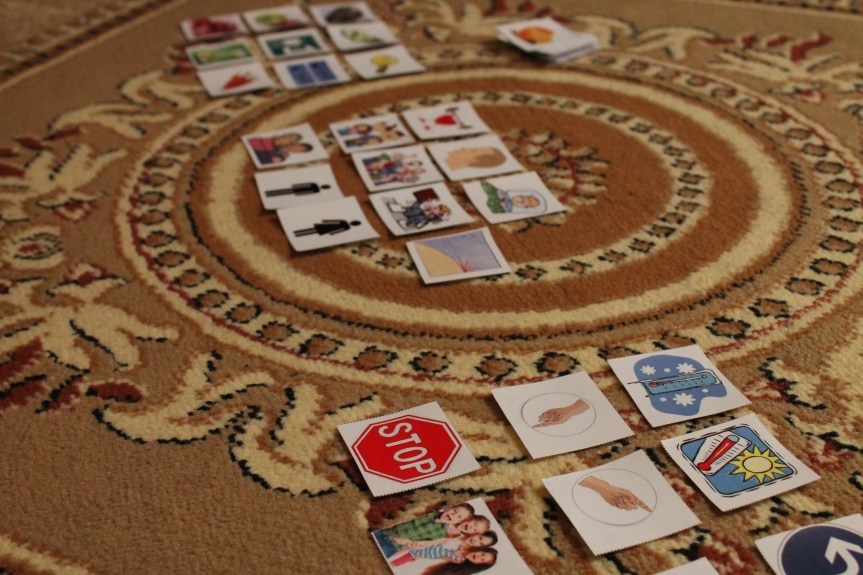
There are two kinds of taxis here: a “grand” taxi and a “petit” taxi, differing in both size and price. To flag one, hold out your finger(s) to show how many passengers would like to accompany the driver on his merry way. This way, the drivers can decide whether or not you will fit in their vehicle, depending upon the number of other passengers (if any). When (or if) the taxi squeals its worn brakes for you (and try not to leap out of the way), politely tell the driver where you need to go and he will determine whether or not he plans to venture to that part of the city. Also, it’s nice to greet the driver to show that you are not just a rich, clueless tourist.

I am not writing this from experience but from observation. Apparently, a key in succeeding in this culture is to act confident (regardless of how I feel). So I guess you could say that this is what I dream of doing someday with poise and expertise.

Yesterday morning a “petit” taxi picked us up and we were thrown into the morning traffic, swerving around a parked car and narrowly avoiding collision with a bus. The driver didn’t check his blind spots before attempting these distressing feats; rather, he trusted his side view mirrors, one so cracked that a chunk was missing. (I can’t imagine how that could have happened!)

The bright sun glared in the driver’s window and rather than adjust his sun visor, the driver pulled out a perfectly cut piece of cardboard and wedged it in the rubber window rim just above the open window.

Right now I am still just a clueless foreigner, but I may learn a lot about North African culture by riding in taxis.

A Steinway afternoon

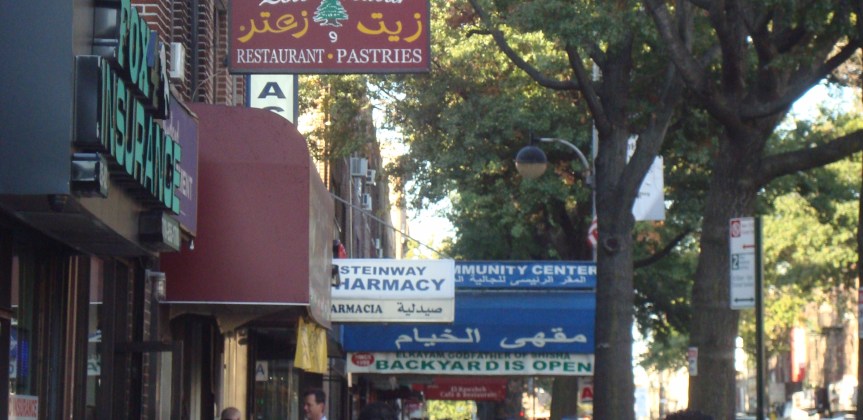
Despite the diversity of New York City, Steinway street is different for me. It feels as if God is showing me a map with a red arrow and a clarifying “You are here” hovering over Steinway Street. This is very well what my life might look like for the next year while I’m in North Africa.

What are these people really like? What are their hopes, longings, and hurts?

  • A woman escorting her aging mother to the doctor.
  • A Lebanese man selling pastries.
  • A man with a leg injury, lingering outside of the mosque.
  • An middle-aged Egyptian couple–he sipping coffee and she rattling Arabic, hoping for someone to see her beyond the Alzheimer’s.
  • A young lady with heavy, dark makeup–guarded and watchful.
  • A sales clerk turning every hopeful conversation into a potential sale.

“They don’t know! They don’t know You.”

TELL THEM.

How far is heaven?

Was it even open?

The handle turned beneath my eager fingertips. It was!

I hadn’t been to the library in months. I wasn’t even sure why I’d come today except that I wasn’t ready to leave town and go home. I wanted to be alone. It was one of those days: interruptions at every turn; repeating everything I said at least once; everyone expecting me to be a team player when I just wanted to grab my journal and disappear until next week.

That’s why the library was such a good place to vanish for an hour. Here, the shelves were lined with stories of people who had lived and breathed life’s struggle. They had faced the same problems I faced today. I felt a camaraderie with these characters beyond the lettered spines on floor-to-ceiling bookshelves.

“Are you looking for something in particular?” A librarian approached me, even as I was still inhaling the tawny scent of explored pages.

She seemed satisfied when I said, “No, just looking.”

I fought the urge to just stand and soak in the stories. I was in the fiction section anyway, so I slipped over to the next aisle. Art. Music. History. Sewing. Biography. Religion. I pulled books off the shelf to page through them before adding them to the growing stack tucked in the crook of my elbow.

There were books for sale- 5 cents each- that town citizens had donated to the library. I browsed that section and found a book about heaven.

Heaven.

I wove through the displays of cheap romance novels and heaved my stack onto the check-out counter.

“Do you need a sack?”

“No. Thanks. I have one in the car.”

“Can I get the door for you?”

“Thanks. I got it.”

I loaded my car and was on the way home–beside the elementary school and the reduced speed limit signs–when I remembered the book about heaven.

I had only forked over the nickel to give the book away. I didn’t read books about heaven. The incessant chatter of an afternoon radio show interrupted my emerging thoughts. I hit the power button.

“Why?” I said aloud. “Why don’t I think about heaven?”

Was it that I was comfortable on earth? Hardly! I was always yearning for something.

“But what is it?” Was I yearning for heaven or the “next big thing” in my life wherein lie coveted fulfillment? Couldn’t I pretend that it was all just a subconscious longing to be with God?

Or was it more like a choice of where I based my citizenship?

“These all died in faith, not having received the things promised, but having seem them and greeted them from afar, and having acknowledged that they were strangers and exiles on the earth. For people who speak thus make it clear that they are seeking a homeland.”

(Heb. 11:13-14)

On the drive home, the dusty wind and thick, angry raindrops reminded me of life’s trials. But somehow, with the hope of heaven, trials didn’t look so scary.

Celebration CELTA

Spicy chicken and Mexican coke tingled my tongue.

This was the last day, our last moments together. We had made it, all ten of us. Four weeks of labor, laughter, and tears were suspended in this memory: a memory that would never change by an updating database of other times together. Spain, Vietnam, United Arab Emirates, China. We were going places and would never see each other again.

Ashley and I ducked out of the dim pub and into the scorched air of a summer afternoon in downtown Phoenix. I pulled my sunglasses out of my backpack as the misters under the awning created a sheen over our hair.

“It’s sad to think we won’t see each other again.”

“Yah.”

When we reached the corner where she would walk one way to the parking garage and I would walk the other way to the metro, we hugged goodbye. There were so many things we could have said. Indeed, we said some of them, but nothing sounded as final as reality.

As I stood on the platform awaiting my train, I wondered, “Is this the end of an adventure or the beginning?”