I’m a failure

Recently, a friend prayed for me: “God, let her learn what you’re teaching her through what she considers failure.”

“Failure” is a word I bump up against often. Too often for my poor, wounded pride. Although I’ve learned this lesson dozens of times, it still hasn’t traversed the head-to-heart channel.

I want to be the best. The best foreign Arabic speaker in North Africa. The English teacher that inspires others to change the world. In short, I want people to reflect on my life and call me accomplished.

That’s one of the reasons I’m here. Not because I’m excelling but because I’m not excelling. God set me up for what I consider failure. He sees that deep down in the dank crevices of my heart, I believe the lie that it’s about me and what I accomplish. So when I’m struggling to survive instead of excelling, I label it “failure” and try to soothe my pride in other ways.

But at the end of the day:

“It is good for me that I was afflicted, that I might learn your statutes.”

Ps. 119:71

Maybe this time the lesson will reach my heart.

The Arabic screenplay

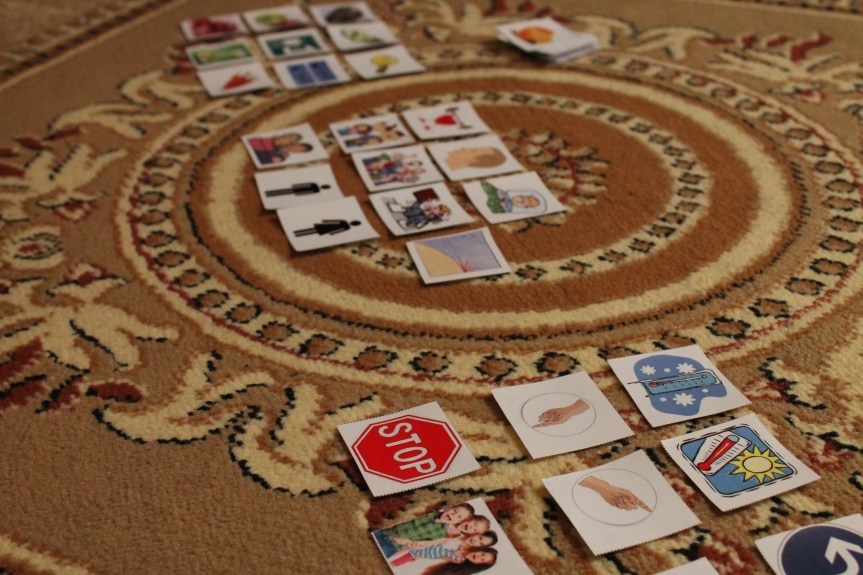
The more I study Arabic, the more I feel like the language is a screenplay and I am simply an actress who doesn’t know my lines. When tossed onto the stage of real life, I am lost, babbling my way through awkward situations.

“In the name of God, start eating.”

“Your greeting is welcome!” Oops. Or worse: “Goodbye!”

“Thank you” in response to polite comments is effective in both English and Spanish, and I don’t see why Arabic should be any exception.

“Send greetings to your family!” “Thank you!” (But not in Arabic.)

“Here. Wash your hands.” “Thank you!” (But not in Arabic.)

Somehow, one must learn and say beautifully trite phrases after anything. The problem for language learners is which phrases to say when. Saying “Praise God!” after someone sneezes is not acceptable.

Often when comments are made, I don’t even open my mouth, harnessed by the fear of reciting the wrong line.


Photo by Kyle Head on Unsplash

A day of smells

What does a typical day in North Africa smell like? Well, this is my day in smells:

  • the cold of the morning outside of my blankets
  • the bathroom: a strange mingling of soap, wet, and a scent that creeps up the drain overnight
  • the sweet of a clean kitchen until I open the refrigerator and catch a whiff of leftovers with a hint of aged dairy
  • outside the front door, there is a deeper cold smell mixed with the trash that cats have been sorting through during the night
  • and speaking of cats, their odor lingers despite their absence–not overwhelming, just there
  • walking past several men’s cafes guarantees a pair of lungs full of cigarette smoke
  • exhaust fumes from cars, taxis, and buses
  • the smell of used taxi seats partially covered by an air freshener and the cold
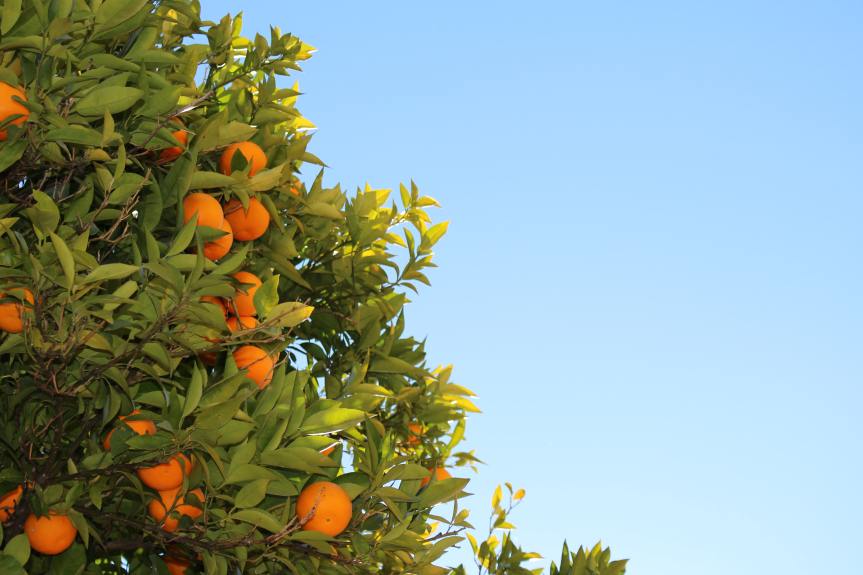
  • trash, fumes, and the sweet citrus of the orange trees on the walk from the taxi to school
  • the faint smell of gas from the lounge heater
  • wood smoke seeping out of a nearby house
  • food cooking in the cafes mixed with the ever-present cigarette smoke and the scattered trash
  • rotting fruit rolling along the sidewalk, kicked and trodden upon by passersby
  • garlic and chicken for lunch and consequently garlic on my breath after lunch
  • exhaust fumes and the sharp stench of urine on my walk to the park
  • the lovely freshness in the sweet acres of green and water: herbs, damp dirt, falling leaves
  • drifting in the open taxi window on my way to teach English is cigarette smoke, meat cooking on open grills, smell of humanity, and exhaust fumes
  • the pungent scent left over on the school desks of my classroom: what I imagine to be from unwashed hands
  • dry erase markers
  • mixed scents emanating from my junior high students: perfume, body odor, energy
  • and as the darkness falls, so does the cold, again suppressing the daytime scents
  • but there is still a damp that hovers in the air
  • and there is still the soap scent lingering on my sweatshirt as I cuddle up to study Arabic before bed

Photo by Brian Jimenez on Unsplash

The tourist attempt

Today I got my first taste of the unique flavor of tourist and local culture…alone. That taste has shaken me. Upon returning home, I brewed myself a pot of coffee and put in the remainder of a carton of cream. Just try to convince me that I don’t deserve every calorie.

My intention was to get home from school and join some friends at the leather tanneries in the old city. They left before I got home. So I grabbed my camera, a little cash, and my phone and started after them. The brisk walk took me down familiar streets full of familiar vendors. The colors, activity, and smells are why I like the old city.

The tanneries are located at the bottom of a very long street. Although I had never been there, it was simple. I would keep walking until I met up with a group of white foreigners with cameras around their necks.

After shaking a few persistent vendors who believed that they were selling what I was looking for, I put it in high gear for the downward trek, dodging children as well as the elderly, carts, donkeys, and cats.

No, I didn’t recognize the area, but of course I wouldn’t since I’d never taken the street down so far. I was encouraged by the faint stench of the nearby tanneries. But then I came to a T. And then another T. I paled and stood up against a jewelry vendor to let the crowd press by me. The streets had disappeared into tunnels. At the call to prayer, vendors began closing up their shops with thick wooden doors.

I pulled out my phone. “Um… where are you guys?” As long as I was on my phone, passersby were less likely to approach me, right?

Fat chance. “Hiiii. How are you? What’s your name?”

The jewelry vendor tried to help me when talking with friends unveiled no solutions. Before I left, he told me to come back to his shop if I ever wanted earrings. I’ll keep that in mind, thanks.

I started back the way I had come, but the closing doors of the shops threw off my sense of direction. The landmarks were disappearing. I started down one side street, only to realize that it looked more like a public bath entrance than a street. I spun around and kept walking…and walking.

Look confident!

I turned down a promising street and marched onward. The overhead daylight was a good sign.

“Where are you going, madame? That street goes nowhere.” A schoolboy approached and promised to take me to find my friends. “It goes to the tanneries.”

I explained that I wanted to meet my friends at the tanneries, and the boy insisted on being my guide. I tried to shake him, but he refused to go…and I was beginning to realize just how lost I was. When I came face to face with a few haughty men who wanted to take me through deserted buildings to the tannery, I told the boy to take me back to the main street. I was going home.

He led me to the back streets, narrow alleyways between towering concrete walls. Something was dripping ominously. A few men wandered in and out of partially hidden doorways.

Look confident! Don’t act afraid! But if I would scream right now, who would hear me? I had no concept of how close I was to the public. This school boy was relatively harmless, but was he leading me into a trap?

It took many more little streets and uphill climbs for him to point me to the correct street that would take me home.

“Thank you!” I talked to him as I paid him and found out that he spoke several languages; what a perfect little tour guide.

I turned down his offer to go to coffee (perhaps he didn’t realize I could almost be his mother?) and scuttled toward the street. I wanted to kiss the familiar vendors and buy everything in their shops, but I charged uphill toward home.

I nearly collapsed when I stepped inside the front door. That’s why I made myself a pot of coffee. I guess I’m not cut out to be a tourist. No tanneries for me today. Maybe ever! At least without people I know chained to my wrist.

Making sentences

After 9 days of studying Arabic, we learned formulaic sentences today. I discovered I was capable of following a pattern… and making mistakes.

I plodded through the Arabic script, plugging in my information at the end of each sentence: “My last name is…”, “My country is…” The sentences ticked by, miraculously without authoritative interruption to correct my pronunciation. I gathered speed. “My city is…” And like a sentence-making machine, I burst out: “My wife is…” and then paused. I really didn’t know who my wife was. Hmm.

I wasn’t the only one making mistakes. My classmate smilingly informed us that she was a “teacher” of Arabic instead of a “student.”

We giggled at ourselves. But the fact we were making mistakes meant that we were producing the language (or at least some form thereof).

Language learning is tedious. I confess I think it unfair for an adult to struggle for speech and still be patronized by teachers. There must be a better way. But meanwhile, I’ll keep working.

The Arabic school director told me, “This will give you more sympathy for your English students.”

He’s right. I didn’t even laugh when a 15-year-old boy stood up and told the class that he was a “housewife.”

Update on taxis

In my last post, I mentioned how I liked to imagine myself as a taxi savvy. Well, ladies and gentlemen, the day has not arrived.

My first day of catching my very own taxi was yesterday. Perhaps the only reason any driver stopped at all was because I was a foreign target with light hair and trembling knees.

As the first taxi pulled up, I forgot to greet the driver. Instead, I stumbled over the two words that I needed to say. As we zipped down the road, I fretted that the driver would overcharge me. But I had prepared for this. I pulled out my orange sticky note and reviewed the transliterated Arabic phrases that, if correctly delivered, could save my pocketbook.

I was blessed, however. The driver began to chat with me in English and just before he deposited me on the side of the road, he tried to undercharge me. Imagine! The phrases I had reviewed were all for naught!

I was confident on my way home from school. So confident, in fact, that I when no “petit” taxi stopped for me, I decided to crawl in a “grand” one. The driver misunderstood my butchered pronunciation of my neighborhood and drove me in the opposite direction.

“Wait! No! This is wrong!” He slowed to a stop and had me repeat my neighborhood name several more times before realization dawned. “Aaaaaah!” And then he said the name with the emphasis on the second syllable instead of the first.

We cruised along in the “grand” taxi, the driver overeager to make conversation and the passenger overeager to remain in deflated silence. The driver pointed to random things along the street as we zoomed past them and projected loud words toward my side of the car, as if I was supposed to know what he had pointed at in the first place. I stared out my window.

When we arrived safely in my neighborhood, I looked at him and shrugged to indicate that I didn’t know what he would charge. He pulled out a bill from his stash as a suggestion. I laughed out loud. It was the equivalent of $10 for a ride that normally cost $1.10. Not encouraged by my response, he shrugged and pulled out a hopeful $5. I shook my head and rattled my coins then handed him $2 to compensate for riding in a “grand” taxi and getting lost. He shrugged again and then rushed to introduce himself.

So far, not one taxi driver has known of the school where I teach English. My afternoon driver was no exception. He made a phone call and tried to look at the map I gave him…upside down. I tried to direct him in Spanish while he interpreted through his French filter. He finally believed the school existed when we screeched to a halt in front of it.

The adventures in taxis are probably just beginning.


Photo credit: W.K.

A Steinway afternoon

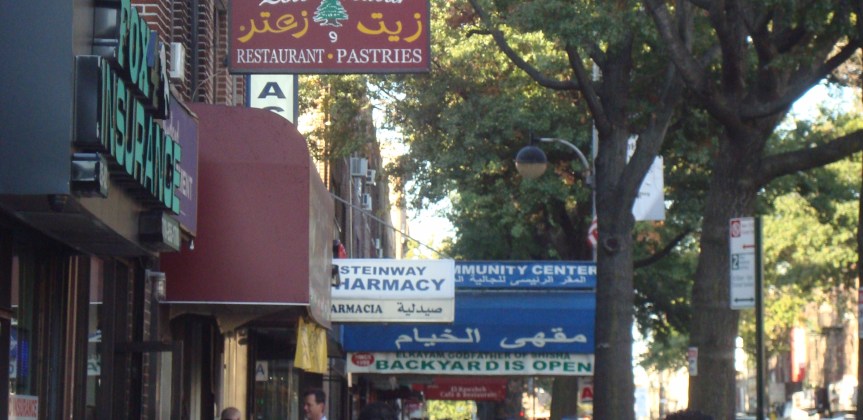
Despite the diversity of New York City, Steinway street is different for me. It feels as if God is showing me a map with a red arrow and a clarifying “You are here” hovering over Steinway Street. This is very well what my life might look like for the next year while I’m in North Africa.

What are these people really like? What are their hopes, longings, and hurts?

  • A woman escorting her aging mother to the doctor.
  • A Lebanese man selling pastries.
  • A man with a leg injury, lingering outside of the mosque.
  • An middle-aged Egyptian couple–he sipping coffee and she rattling Arabic, hoping for someone to see her beyond the Alzheimer’s.
  • A young lady with heavy, dark makeup–guarded and watchful.
  • A sales clerk turning every hopeful conversation into a potential sale.

“They don’t know! They don’t know You.”

TELL THEM.