Part three: Relationship advice and edible puzzles

Click to read: Part one: A palace and a hostel and Part two: A stolen sandwich and art


J and I spent almost a week in Mytown. He stepped into my life and met my people. Yes, I continued to feel the emotional dissonance of my meshing worlds, but assigning a name to the feeling seemed to rob it of its power. 

“Does he have money to take care of you?” 

My friends and neighbors invited themselves into the particulars of our relationship. They all had advice about where we should live, how soon we should get married and start a family, etc.– but they always expressed their approval of J in the end.

We found park benches to sit on and people-watch. We discussed things we hadn’t thought to discuss on the phone or through emails and messages. Sometimes we didn’t bother to do anything except “be” with each other. 

Two men on a park bench in a plaza

But that’s not all we did. We had British breakfast at the port. And on the beach, I collected broken shells while he went for a jog along the shoreline. A teammate borrowed J for morning bike rides, giving him the chance to burn off some of his morning energy before I even rolled out of bed. 

Late one morning, we bussed to a neighboring town’s restaurant where my friend cooks. She gave me a tour of the kitchen, lifting kettle lids and describing everything inside. She heaped our table full of food we hardly made a dent in: chicken with rice, lentils, beef and prune tagine, salads, fries, bread, vegetables, and tall glasses of orange juice. “I was so happy when you said you were coming that I cried,” she told me later. She expressed her appreciation for our visit by making sure that we were taken care of… right down to ordering our pirated taxi ride home.
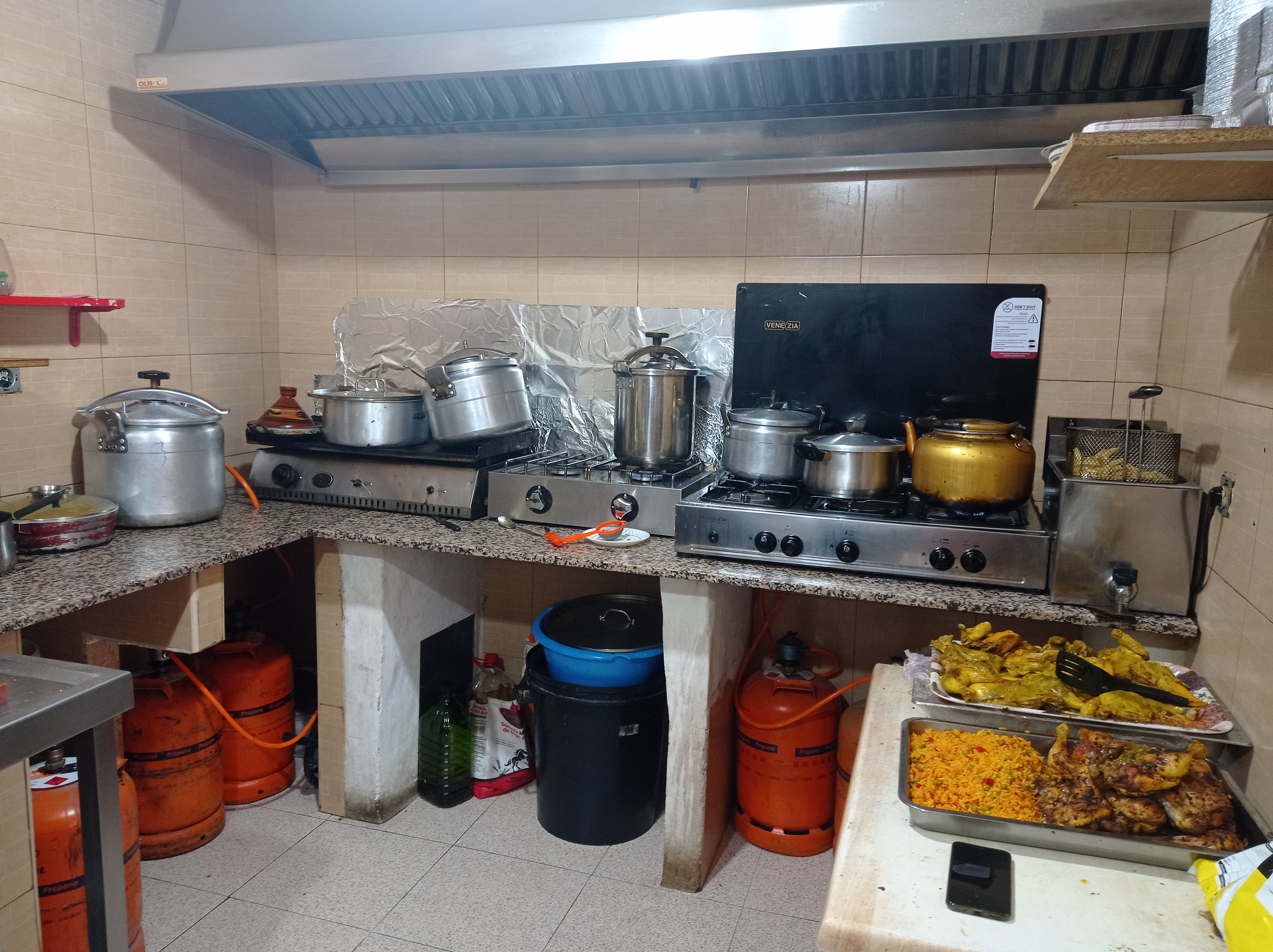
Restaurant kitchen filled with prepared food

We delivered birthday gifts to my neighbor boys. We went to the market and bought a buffet of olives and other pickled delights. And J chatted with the various Chinese store owners around town. His Mandarin was typically met with surprise and guarded curiosity… or even an expletive.

We spent a warm afternoon volunteering with the Red Cross, entertaining a group of children while the village women studied basic Spanish. The director had brought puzzles for the children, but the puzzles were too advanced for their ages. One little boy leaned into an open puzzle box and scooped the pieces to his mouth, pretending to eat them: “Om! Om!” he said over and over again. The other children weren’t too concerned as long as his appetite didn’t extend to their puzzle. There were some wild moments, some tattle-tale stories, and a mini lesson on forgiveness. A volunteer from another district had brought virtual reality glasses which entertained a few adults and children at a time. 

Over the course of the week, we spent a lot of time at the center where J was staying, learning how to bump around in the same kitchen together while on task. J faithfully washed the dishes after our meals; I could probably count on one hand the number of dishes I washed when he was around. Our team met on Sunday and for a few other activities scattered throughout the week. 

In the evenings, J would walk me home. And in the mornings, he would usually meet me on my way to the center. In fact, there was rarely a time that I walked that three-minute walk entirely alone. A delighted smile to greet me on the street was one of those small things that made me miss him terribly when he was gone. 

And then, on Thursday evening, we finished our laundry, packed our backpacks, and attempted an early bedtime. The next morning, we left for North Africa. 

And can it be…?

It’s my responsibility to choose the songs for our Sunday sunrise service. The Easter Sunday selection often falls on me, I think, or maybe it’s just a reflection of how many years I’ve been in Spain to have the selection fall on me (or a reflection of my age and coinciding inability to remember).

There is an overwhelming number of songs to choose from. The traditional hymns that make the male voices boom, “Up. From. The grave. He. Arose!” to some of the newer songs that encompass Jesus’ life and passion. I only get to choose a few, but that doesn’t stop me from snooping through other people’s Spotify playlists.

What are some of your favorites? And why?

One of mine (one of many) is “And Can It Be, That I Should Gain?” by Charles Wesley (1738). The lyrics are powerful, the music beautiful (especially with an organ!). The hymn starts with questions, evoking shame and guilt.

And can it be that I should gain
An interest in the Savior's blood?
Died He for me, who caused His pain?
For me, who Him to death pursued?

The hymn goes on to share the mystery and grit of the Savior’s death followed by the hymn writer’s own testimony of freedom and life from the living “Christ my own.” Yet, through the entire song, we are pulled back to the refrain:

Amazing love! how can it be
That Thou, my God, should die for me?

A reminder of our helplessness before God without Jesus’ death and resurrection for “Adam’s helpless race.” A reason to celebrate Resurrection Day with gratitude.


Photo by Henrique Jacob on Unsplash

Christmas earthiness

Have you taken the time to contemplate Christmas: the beauty and hope…but also the earthiness? God made flesh. Immanuel. 

I read recently that the Bible doesn’t record the bloody agony of Jesus’ entrance into the world, not because God is ashamed of Jesus’ humanity in light of His deity, but because those things were so normal that they weren’t noted. Everything was remarkable about a virgin great with child. What wasn’t so remarkable were the hours she spent delivering that Child. 

Jesus was divine, yes. But He was also human. And when we forget His humanity, we forget how much we are known. 

Hebrews says, “Let us then with confidence draw near to the throne of grace” (4:16). Why? Because He was tempted as we are, yet without sin. Therefore, He can sympathize with us in our weaknesses (Heb. 4:15). 

That, of course, is only one part of the Word being made flesh, but it’s a part that I tend to forget. We are not fighting life’s battles alone. We can come boldly to the throne of grace to “receive mercy and find grace to help in time of need” (Heb. 4:16).

Merry Christmas to you all!

With the best of intentions

I weathered another round of what I assumed to be food poisoning. Tired of hanging out in the bathroom, I put on a brave face to hostess visitors, babysit, teach an English class, and drop by the neighbor’s with a plate of crepes.

But when holes were poked in my food poisoning theory, suddenly my bright shades of resiliency and selflessness took on a contaminated hue.

I had been so sure I could trace it back to those fried sardines…

I took a too-late day of quarantine to keep me from infecting the rest of the world. The next morning I dropped by the post office and the grocery store. On the way home, I noticed I was being dogged by the persistent admirer who, after a clarifying encounter months earlier, had vanished from my life. Until now. And there he was, looking bigger, older, and maybe even a little more unhinged than the last time I had seen him.

My intention to weave myself into this community’s tapestry put me in his way. Or maybe he put himself in my way. Or maybe we’re simply two clashing fibers woven side by side, which is bound to happen now and then in every community. Just wishing him away rather than confronting him probably was never the answer.

Why do best intentions sometimes sour?

My recent decision in the best interest of all turned out to be in the best interest of none… and involved a fair amount of straightening out.

I suppose it’s fanciful to believe that sacrifice can validate decisions. Still, why do some of the decisions we make, even at our own expense, turn out to be the wrong ones?

Maybe it’s because we don’t understand the big picture. Or because our decisions are not the only decisions affecting lives.

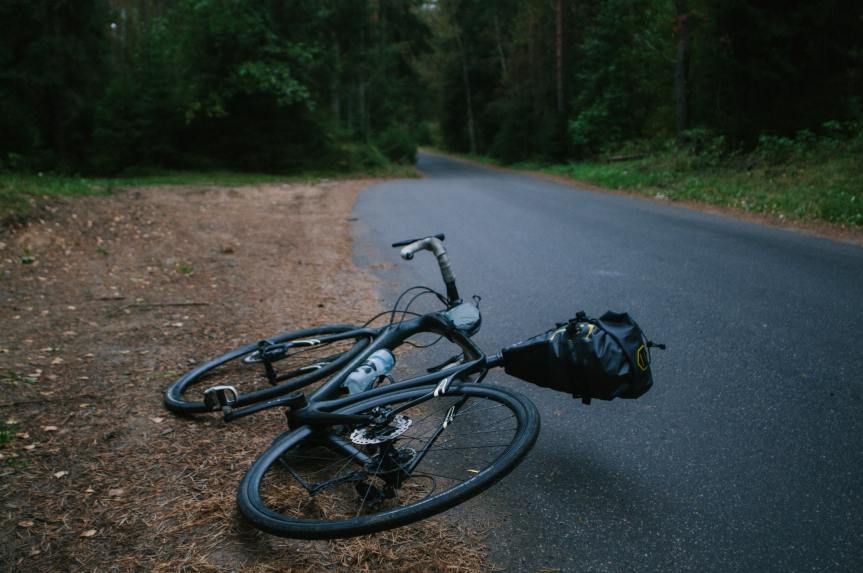
When we take a spill on our good intention bicycle, the true measure of resiliency and selflessness may be found in our ability to stand up, gently brush the gravel from the crevices of our knees and continue on our way.

And be grateful when others forgive our mistakes and miscalculations.

And thank God for the neighborly shopkeeper who is standing in his doorway to watch us safely home.


Photo by Dmitrii Vaccinium on Unsplash

Made in God’s image: thoughts on sexual harassment- Part 1

I hesitate to approach this topic because I have so much to learn. Yet, my silence isn’t much use to anyone. So, I’m lunging forward, hoping that victims of sexual harassment will grasp the power of knowing that harassment cannot touch their intrinsic worth. 

MADE IN GOD’S IMAGE

“So God created man in his own image, in the image of God he created him; male and female he created them… And God saw everything that he had made, and behold, it was very good.” (Gen. 1:27&31a)

God made man and woman–He made you— in His image. And He called you “very good.” Although “very good” included the human body, God wasn’t just talking about the shape of your nose or how pleasing your figure might be.

At a deeper level, God’s image on your being–the rational, moral, and spiritual–is what gives you beauty and worth. You are “very good” because you were created in God’s image. It’s integral; you cannot be separated from it.

But you can choose not to believe it. 

When someone’s value as an image bearer is undercut, there is pain. It’s the sort of pain that no amount of “I must have done something to deserve this” can take away. We can bury it, but we can’t really hide it. And after a while, we start to believe that we are no longer worthy of God’s image. 

Today, the discussion focuses on sexual abuse, a much more intricate and painful topic. But sometimes in our haste to address the big issues, we skim over the lingering pain of those who have been harassed but not abused. 

“Harassment is normal,” we think. Indeed, we have normalized harassment to the degree that we don’t bother addressing it. Even as a victim, this was my approach… until recently. 

IS SEXUAL HARASSMENT OKAY?

Harassment is common, not normal, and the more we normalize it, the more we give the message that it’s acceptable to harass and to be harassed. 

During my first experience with harassment, I thought I was overreacting because everyone else ignored it. So, after a few fumbled attempts at addressing it, I accepted it as par for the course in my work environment. 

Only recently have I been able to say, “This is not okay.” Why not? Because someone is trying to cheapen the image of God in me. God’s image is being objectified for the sake of someone’s pleasure or lust for power.

Clearly, harassment isn’t something we should dwell on; but, until we find healing, we will dwell on it, like it or not. By “dwell,” I don’t mean in conscious thought only; much of our “dwelling” can happen in the subconscious realm. My first incident was set aside and rarely thought of. Yet, inside of me there was a simultaneous shrinking from and hunger for the positive attention of men. 

MY EXPERIENCE

I didn’t know how much my first experience with sexual harassment had affected me until another incident occurred. Suddenly, I was dealing with the emotional aftermath of two incidents instead of one. 

But the emotions didn’t come from the incidents themselves as much as from the shame that wound its way through the memories. 

  • It is my fault. Someone implied that I had been too friendly, too familiar. 
  • I have to get over it. It wasn’t a big deal. Nobody else thought I was worth standing up for. Nobody seemed to think he should get into trouble. I tried to ignore it, but week after week of the same issue left my defenses ragged. (Sometimes I felt like I could just give in.)
  • Maybe I haven’t forgiven. Surely, if I just forgave, all of the pain and shame would vanish. 

Along with sexual harassment, there is often a sense of pleasure that comes with being noticed and desirable. That sense of pleasure is God-given (read Song of Solomon!), but in cases of sexual harassment, it typically serves to deepen the shame. We think to be a “real” victim, we must never feel anything except disgust. 

Sexual harassment attacks a vulnerable spot; therefore calling the pain to light also calls our vulnerability to light. So we hide behind masks of disgust, anger, or indifference, to name a few.

The offender is not the only victimizer. Many of us have also experienced a level of rejection from those looking on. “Get over it,” is a common sentiment from those who acknowledge what happened but don’t believe in the emotional aftermath. And there are always people who are skeptical, downplay the incident, or even defend the offender. 

Regardless of how others respond to your experience, it still happened. 

Next week, I’ll share a few ways to respond during and after an incident. In the meantime, I would be glad to hear your advice and wisdom as well. 🙂 See you next time. 


Photo by Shoeib Abolhassani on Unsplash

His pleasure in forgiveness

I always assumed that God forgave sinners because He had to. Not grudgingly necessarily, but because He needed to uphold His end of the bargain. Jesus, the sinless, took our sin and our shame, and God chose to look on Him and forgive us.

But recently I read the phrase “God’s pleasure in forgiveness.” It made me stop and wonder: Does God really take pleasure in forgiving us?

Can He really be pleased to erase our shame when justice demands that we remain alienated from Him forever?

I am beginning to grasp a level of God’s grace that goes beyond fulfilling an obligation or “just doing His job.” He wants us to be restored to a right relationship with Him. If He didn’t, He would not have provided a Way.

Jesus stands with arms outstretched, beckoning us to step into His perfection. 

And I continue to wonder: God finds pleasure in forgiving us. But how much pleasure do we find in repentance?

Neither do I condemn you

Whenever I read the story of the woman caught in adultery, I get caught up in Jesus’ brilliant suggestion for the one without sin to cast the first stone (Jn. 8:7).

Today was different. When I read the story this time, I saw His mercy.

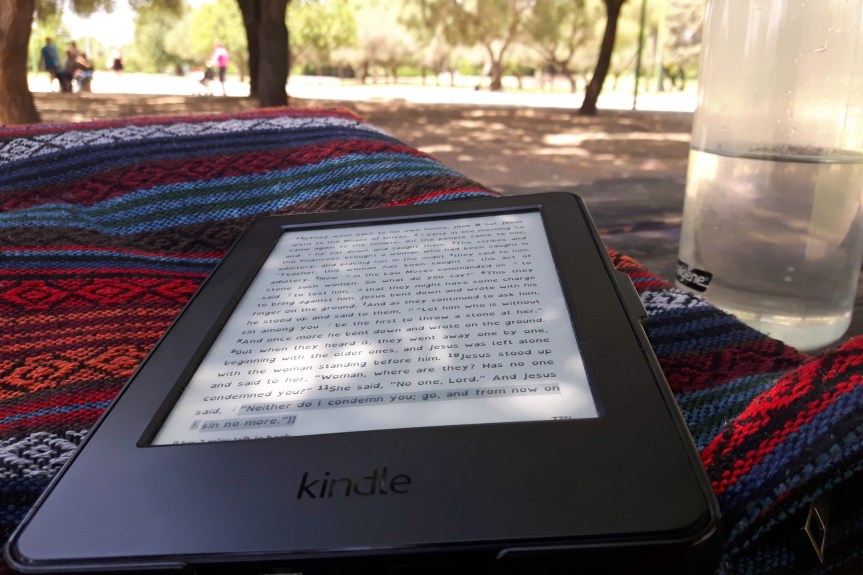
Jesus did not condemn the sinful woman. “Neither do I condemn you; go, and from now on sin no more” (Jn. 8:11).

The One qualified to condemn did not. Instead, He freed her not only from shame and condemnation but also from the power of the sin in her life. “So if the Son sets you free, you will be free indeed” (Jn. 8:36).

What freedom that must have brought to a self-condemning heart!

And that’s the same freedom that should be evident in my own life and sometimes isn’t. I ignore Jesus’ words, believing that my own self-condemnation is greater than His promise. That His blood wasn’t worth the price of my sin.

That’s it, isn’t it? Unbelief masked as ongoing remorse.

Am I “free indeed”? Do I believe that there is truly “no condemnation for those who are in Christ Jesus” (Rom. 8:1)?

Relaxed inside

A North African friend was searching for the English word “peace.” The word eluded her. Instead of asking for a translation, she created my new favorite collocation: “relaxed inside.”

Isn’t “relaxed inside” a beautiful description of peace? That inner knowledge that one’s slate is erased of error. That gentle cleansing after destruction of guilt. And the confidence that at the end of our life struggle is heaven.

Peace

This peace tonight
Surpasses understanding.
Fresh. Gentle.
A cool summer sunset
That settles in naked nothingness
Around my shoulders
Like slippery sheets.
A completed dream
That leaves me thirsty,
Arising in the blackness
To pray.
And when sleep comes again
There is only God.