I’m packing my bags

I’m packing my bags. Well, to be honest, I’ve been packing for a while now, trying to make every kilo count down to the last gram.

Mom told me the Amazon packages she’s piling on my desk in Illinois make her think of Mr. Grabbit. Toothbrushes, shoes, supplements, etc. Things I won’t have to bring with me.

I’m planning to wear multiple outfits to give myself several sets of clothes for the trip. “I might look homeless when you pick me up at the airport,” I tell J. The layers of clothing, the bulging pockets I stitched to the inside of my jacket, and the supermarket bag I’m planning to use as a carry-on might make me a key candidate for surveillance. Especially since I’m clambering into Chicago the weekend before the Democratic National Convention.

Time is winding down. Less than two more days now. My to-do list is moderate, all things considered. I put “mop the floor” at the top. The dirt on the bottoms of my feet comes off in rolls when I rub my feet together.

Below are a few snippets of summer life here that happen through the giddiness of preparing to see my family, friends, and J…

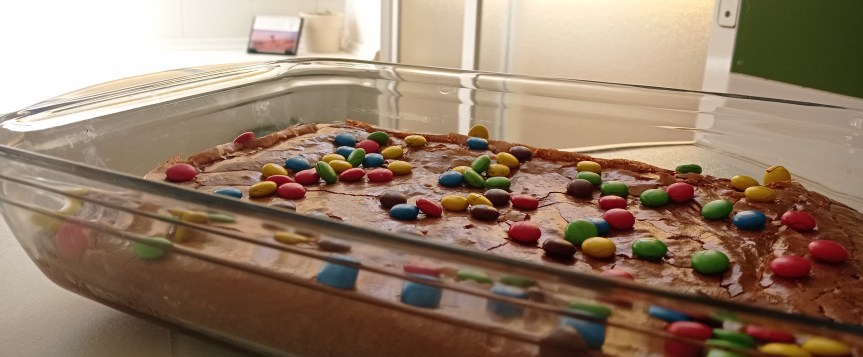
I love the extra wiggle room of a summer schedule. While most people choose not to cook or bake this time of year, I’ve tried North African bread, North African lentils, brownies with peanut butter and almond flour, and crackers with ground sunflower seeds. I’ve also attempted couscous twice and decided that “moderately close” is as good as it’s going to get for now. Puttering in my kitchen is delightful without the breath of a dozen other tasks at my neck.

I’ve been studying language at the local library. The walk across town in the afternoon sunshine is oppressive, but it doesn’t eclipse the joy of descending to the cool library basement. The summer crowd is sparse and the quiet is so thick it almost hurts until the ink chamber inside a pen rattles as someone write a note or careful feet tick down the stairs. I don’t use the library resources other than the air conditioning and the atmosphere, but it’s always worth it.

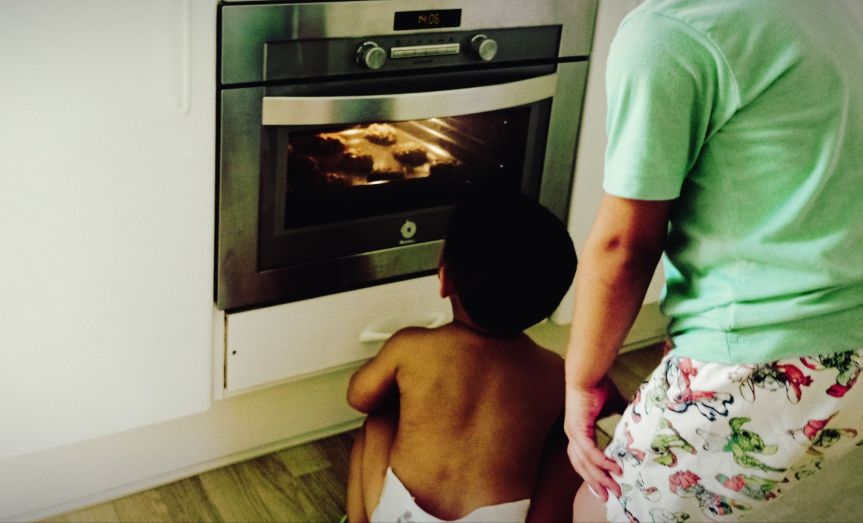
Summer has also been a good time to meet up with the friends who remain in Spain, to spend time in their worlds or let them be a part of mine. Maybe it’s English class or breakfast together. Or my little neighbor boys come up for a visit with their mommy to play with Legos, make the floor sticky with melon juice, and watch cookies bake with great anticipation.

While the cookies are still in the oven, I give them a drink of water which they drink with too-long straws. “Do you want one?” I ask the oldest boy, offering a container of dates I have on the counter. 

“No,” he says. “I want chocolate cookies.” And he returns to watch them through the oven door, content to wait.

There have been meetings, appointments, and the like. This week is also my week to work ahead on office manager responsibilities in an attempt to keep my absence from being too obvious.

I guess you might say that I’m planning to be distracted for the next few weeks. 😉 Until another day, then…

A life of perpetual humiliation

I just finished reading Anthony Doerr’s Four Seasons in Rome. Someone discarded it, and I picked it up, curious. This isn’t a book recommendation unless you happen to know that you like Anthony Doerr, but Doerr’s descriptions of life on the outside of a culture cut me wide open. I didn’t know there were words for these “in but not of” feelings.

Apartness and perpetual humiliation are part of daily life for those living overseas. Sometimes we talk about it too much. Often we don’t even acknowledge it but let our frustration become part of the existing barrier, like a thick moss growing over a wall we’re trying to ignore.

We are outsiders, always outsiders, chipping at the barrier that stands between us. And there are successes! Moments when a chunk of the wall falls away and we glimpse the other side…only to find razor wire. 

“To be a nonfluent foreigner is to pass through one gate only to find yourself outside two more,” writes Doerr (p. 46). “We are humbled over and over–humility hangs over our heads like a sledgehammer… Oh, you think you’ve been here long enough to barter at the street markets? Guess what, you just spent €8 on three plastic clothes hangers” (p. 76).

After nine months in Rome, Doerr walks into a grocery store and makes an order without messing up a single syllable. “What happens?” he writes. “I get my groceries. No streamers drop from the ceiling, no strobe lights start flashing. The grocer doesn’t reach across the counter and take my face in her hands and kiss me on the forehead.” Instead, the grocer asks about his boys and speaks so quickly he can’t keep up. “…I miss 80 percent of it and sheepishly, stepping down from my throne of fluency, have to ask, ‘I’m sorry, more slowly, please?’” (p. 168)

For some, eventually the barriers do not loom so large or feel so insurmountable. But for many? “I know nothing… I never made it through the gates between myself and the Italians. I cannot claim to have become, in even the smallest manner, Roman” (p. 201).

True. Despite my efforts to integrate into the culture around me, my North American worldview remains mostly intact, placing me decidedly on the outside. 

But if we let it, doesn’t living on the outside help us accept who we are? After all, like it or not, we cannot cease being a part of something. Not being a part of the culture we’re living in is because we’re part of another, or even several. Being on the outside can help us identify our own “inside.”

Apartness and perpetual humiliation are hard, but they are also opportunities to learn and grow.* And we need these opportunities to understand ourselves.

So I will try to be grateful. Even as my neighbor gives me a list of what is wrong with my couscous. Next time, it will be better. I can promise.


Doerr, Anthony. Four Seasons in Rome. Scribner, 2007. 

*Thank you, J, for your positive spin on life to remind me to keep on growing!

Part three: Relationship advice and edible puzzles

Click to read: Part one: A palace and a hostel and Part two: A stolen sandwich and art


J and I spent almost a week in Mytown. He stepped into my life and met my people. Yes, I continued to feel the emotional dissonance of my meshing worlds, but assigning a name to the feeling seemed to rob it of its power. 

“Does he have money to take care of you?” 

My friends and neighbors invited themselves into the particulars of our relationship. They all had advice about where we should live, how soon we should get married and start a family, etc.– but they always expressed their approval of J in the end.

We found park benches to sit on and people-watch. We discussed things we hadn’t thought to discuss on the phone or through emails and messages. Sometimes we didn’t bother to do anything except “be” with each other. 

Two men on a park bench in a plaza

But that’s not all we did. We had British breakfast at the port. And on the beach, I collected broken shells while he went for a jog along the shoreline. A teammate borrowed J for morning bike rides, giving him the chance to burn off some of his morning energy before I even rolled out of bed. 

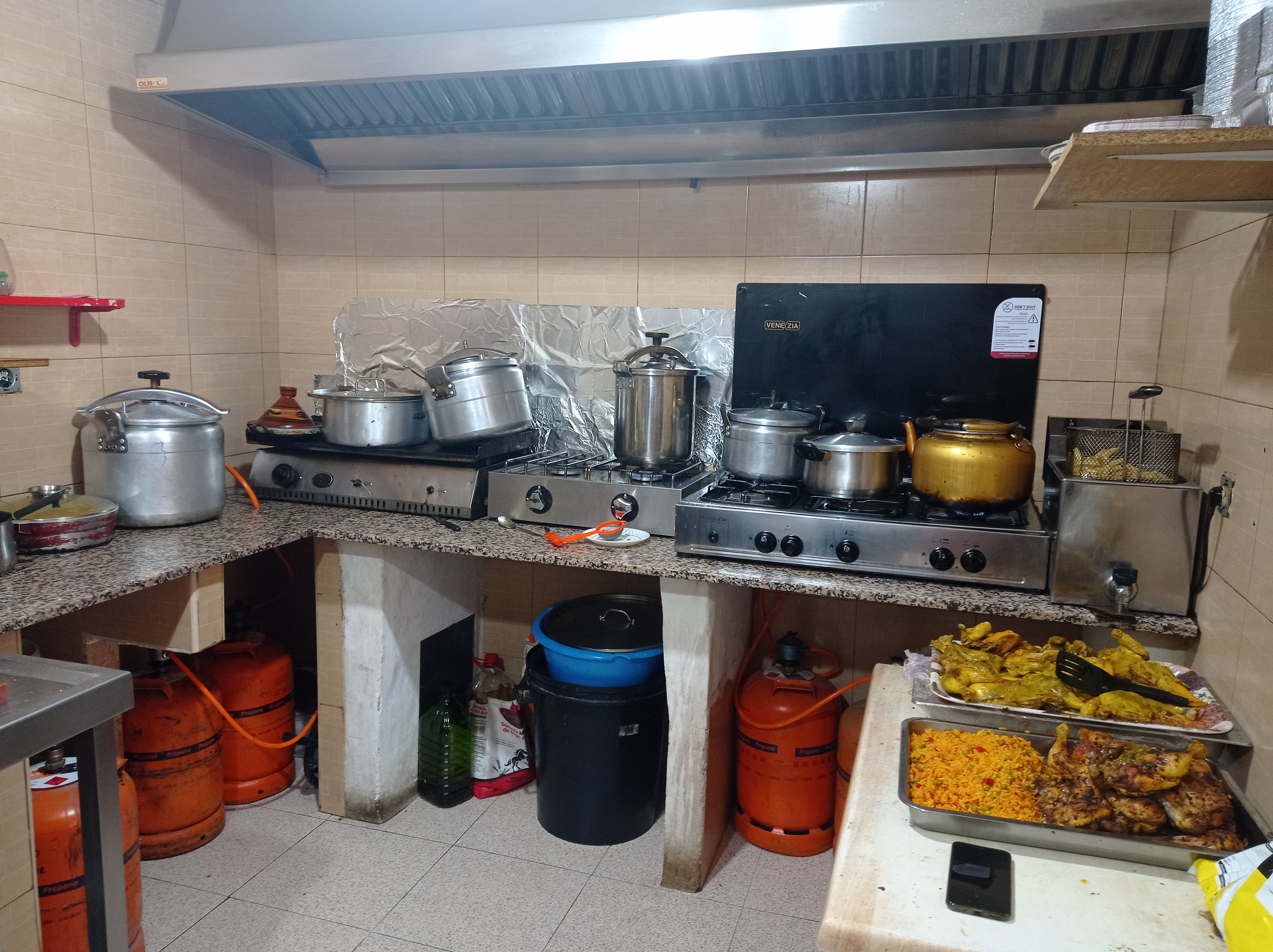
Late one morning, we bussed to a neighboring town’s restaurant where my friend cooks. She gave me a tour of the kitchen, lifting kettle lids and describing everything inside. She heaped our table full of food we hardly made a dent in: chicken with rice, lentils, beef and prune tagine, salads, fries, bread, vegetables, and tall glasses of orange juice. “I was so happy when you said you were coming that I cried,” she told me later. She expressed her appreciation for our visit by making sure that we were taken care of… right down to ordering our pirated taxi ride home.

Restaurant kitchen filled with prepared food

We delivered birthday gifts to my neighbor boys. We went to the market and bought a buffet of olives and other pickled delights. And J chatted with the various Chinese store owners around town. His Mandarin was typically met with surprise and guarded curiosity… or even an expletive.

We spent a warm afternoon volunteering with the Red Cross, entertaining a group of children while the village women studied basic Spanish. The director had brought puzzles for the children, but the puzzles were too advanced for their ages. One little boy leaned into an open puzzle box and scooped the pieces to his mouth, pretending to eat them: “Om! Om!” he said over and over again. The other children weren’t too concerned as long as his appetite didn’t extend to their puzzle. There were some wild moments, some tattle-tale stories, and a mini lesson on forgiveness. A volunteer from another district had brought virtual reality glasses which entertained a few adults and children at a time. 

Over the course of the week, we spent a lot of time at the center where J was staying, learning how to bump around in the same kitchen together while on task. J faithfully washed the dishes after our meals; I could probably count on one hand the number of dishes I washed when he was around. Our team met on Sunday and for a few other activities scattered throughout the week. 

In the evenings, J would walk me home. And in the mornings, he would usually meet me on my way to the center. In fact, there was rarely a time that I walked that three-minute walk entirely alone. A delighted smile to greet me on the street was one of those small things that made me miss him terribly when he was gone. 

And then, on Thursday evening, we finished our laundry, packed our backpacks, and attempted an early bedtime. The next morning, we left for North Africa. 

Some of what’s been happening recently

Trying to have a day of rest

I would sleep all day tomorrow, I decided. After a filled-to-the-brim month, my body was worn out.

Then the instructor from a nearby language school responded to an email that evening, asking to meet at 9 a.m. the next morning. I tried not to panic–“Nine o’clock on my day off!?”–and kept reading the email. “Or 12:00.” I supposed I could drag myself out of bed by then and agreed. But I must have been a little too agreeable because I ended up agreeing to start Spanish class the following Monday, although I hadn’t meant to.

My agreeable mood would be tested yet again. Early in the afternoon, my landlady messaged me. “The grandpa upstairs died. His funeral mass is at 6:30.” The “grandpa upstairs” had always been kind. I hadn’t seen him often, but when I’d stop by to visit, he’d invite me in to sit and chat. I knew his three daughters by sight, but attend his funeral? Why oh why had my landlady told me about it? I could no longer feign ignorance.

I pictured myself tromping into the Spanish funeral mass, outrageously uncatholic. What kind of rituals would they perform? Would I be required to take part? Goodness, what in the world would I wear? My only pair of dress shoes had long since passed their prime. I meticulously de-pilled my black sweater.

“It would be good to go, wouldn’t it? I don’t know your culture very well…” I tried, hoping that my landlady would say that it wasn’t a big deal. I wanted a loophole so I could conveniently lose my nerve.

“Yes, clearly.”

All righty then.

As it turned out, several of the pallbearers wore hoodies and sneakers, and I don’t think people bothered to notice my scruffy dress shoes at all.

Ramadan

All year long, we can pretend that we aren’t so different after all. Then Ramadan starts and suddenly we’re at a fork in the road. I choose one way and my friends choose the other. I catch myself lingering there at the fork, wondering how many want to go that way and how many go because that’s how it’s done.

Yes, Ramadan has a way of waking me up again.

A creep at my elbow

I was meandering to a local shop on a sunny afternoon when a presence at my elbow startled me. The presence wasn’t inclined to pass me. Oh brother. A creep. Adrenaline shot through my veins as decided what to do.

Then he greeted me. And grinned, like the twerp he can be sometimes, when he realized that he had successfully disconcerted me.

Interns.

Breaking the fast with pre-packaged cakes

The call to prayer sounded. Allahu Akbar! Time to break the fast.

Noura, the lady beside me, closed her eyes and whispered a prayer. I sat in my bus seat, still and alert, curious what the Muslims around me would do to break the fast. Or if the cantankerous bus driver would allow them to do anything at all.

“I don’t have anything halal!” The guys in the seat behind me frantically rustled through the plastic bags at their feet.

Ashhadu alla ilaha illallah!

Then they broke the fast with pre-packaged cakes, half dipped in chocolate. Hayya ‘alas-Salah!

After rustling up their own ftur, they began offering cakes to the Muslims around them. A sub-Saharan man declined politely. They threw a package to one of their buddies in the front and he caught it with a crackle. Then across the aisle to another buddy. Last, they peeked through the gap of the seat in front of them.

“Is she North African or Romanian?” they asked each other. My ethnicity was in question. Noura turned to me with a smirk. I smirked back.

“Sister, do you want one?” one asked at last.

I smiled. “No, thank you.”

“She’s a Christian,” said Noura.

And I’d been eating all day.

Snippets of life

Below are a few things I’ve seen or experienced recently. They’re not written in any particular order or of any particular importance (or of any particular grammatical observance, truth be told). Just some snippets of life.

  • Speakers wound up in trees and fastened to light posts play “Joy to the World” as I walk down the street, in step with the music. Then I notice others in step with the music–a Muslim family, several Spanish businessmen, and others. “Let eevery heeeart prepaare hiim rooom…”
  • Russian classmate #1 is disgruntled that she cannot absorb a complex Spanish grammar structure. Russian classmate #2 says: “You’ve only been here 7 years and you want to understand everything. Calm down. We’ve been here for 20 and we still confuse this.” Bulgarian classmate begins to giggle. “Yes, calm down! You still have 13 years of confusion ahead of you!”
  • After a rain, crushed snails in crushed shells dot the walking/biking trail like flattened M&M buttons.
  • An elderly man I meet on my morning walk that tells me that his mornings are better on the days we cross paths.
  • Little boys at the Kings’ Day parade, squeeze around me to get to the front, chattering in hopeful Arabic and clutching rumpled plastic grocery bags to fill with candy.
  • A winter evening curled up with a book and a cup of lemon balm tea…and Christmas lights I hesitate to take down. 
  • A shopkeeper tells me how long I should spend with the friend I am planning to visit in another town. “Are you going to spend the night at her place? No? Then you need to go before lunch and eat with her and spend a lot of time with her before you leave in the evening.” Oh, how I love to hear the North African perspective on relationships!
  • As I walk by, an elderly man comes out of a café to speak to me. “How tall are you?” he asks and all five feet of him steps back in surprise when I tell him. He says that the other day he was breakfasting with another man in the café. When I walked by, the other man said he would not like to take me out for breakfast. Because I was so tall, surely I would eat a lot! That makes me self-conscious as I walk home, realizing that my oblivion doesn’t exempt me from being a topic of discussion.
  • On my way to catch a bus, I notice a lady with her head in the dumpster. She doesn’t have that look of someone who usually sifts through others’ garbage. (And I’m not judging because I have rescued a few garbage items in my life.) But I pause, curious as she bats her broom handle around. “Can I help you?” She mutters something about losing an item. She doesn’t know if it could possibly be in the garbage she took out. I peer in and see a lavender bag of trash on the very bottom of a very empty dumpster. She doesn’t relinquish the broom when I reach for it, but I hold open the dumpster lid while she fishes around. Finally, success! She snags the handles and pulls it out little by little (still muttering). I manage to avoid the linty end of the broom that is headed my way and still make it to my bus on time.
  • I am at the counter of a North African store when a little boy comes in, not even big enough to see over the counter. He sets a hand-written list on the counter. The shopkeeper grins at him, “Peace be upon you, Arkan. How are you? At peace?” He looks down at Arkan’s mother’s list, reading aloud the first item before Arkan interrupts him. “I want a sucker.” Ahh, that’s how it’s done. And I wonder if suckers are free because he is so stinkin’ cute or if his mother ever notices that the grocery bill is always a little more than she anticipated.

Conglomeration of life

Below is a conglomeration of life I either noticed or experienced in recent weeks. The thoughts are scattered and unpolished (like everything else on my blog, except maybe just a bit more). But I hope you enjoy a peek into life here.


“Hola, American.” A sub-Saharan man said the words almost under his breath as we passed on the street.

I didn’t think much about it until I was a few steps beyond him. How did he know I was American? Someone must have told him.

Due to the abundance of Russian immigrants and the lack of North American ones, my community assumes I’m Russian. In fact, when I started Spanish class, my Russian classmate told me that she’s seen me around and always thought I was a Russian.

Last night in class, she worked on forming a sentence with the imperfect subjunctive: “Trish has a face as if she were Russian.” After various corrections and alterations, we all were very familiar with the idea that Trish looks Russian.


“I thought to myself: I hope she makes brownies. And you did!” My student pulled the brownie plate closer to her and grinned at me with shining eyes. And she didn’t protest when I sent the leftovers home with her after class.


Little arms thrown wide with delight in overhead bubbles.


Four neighbors were on the front stoop when I stepped out the front door of the apartment building.

“Are you having a meeting?” I asked with a laugh.

No, two were just out for a smoke and had collected the others coming in or out the door. Like me.

“Sit down here. Join us.” Demanded the middle-aged man from the second floor. We hadn’t seen each other for a while so maybe he thought he needed the latest scoop on my life.
Not really wanting to wedge myself between two people with lit cigarettes, I stood back just enough to enjoy the breeze that waltzed down the street.

“You don’t smoke, do you?” The second floor neighbor asked.

“No.”

“Do you drink?”

“Not that either.”

“What about the other thing?”

Was this a morality test? I hesitated, not knowing for sure what he meant. “Marijuana?” I asked hopefully. “No, not that either.”

“No. Making love.” He tinged a bit with this. I suppose you could say I had forced him to say it.

The lady on the other side of the stoop eyed me. “It’s not worth it. Men are too complicated.”

“You say men are too complicated!” He was indignant. “It’s the women who are too complicated.”

It was a good time to leave. So I made a light, overgeneralized comment. They laughed. I told them goodbye and continued on my way.


I had almost reached the language school when I noticed a woman was getting out of her car. She was a bleached blonde with dark eye makeup. The combination made her seem sad somehow. Behind her was a mural of a woman with streaking mascara.

Two sad ladies on the corner, almost like a piece of visual poetry, I thought, and continued walking.

I was in the middle of the crosswalk when muffins, donuts, and bread came skidding across the road toward me. I hesitated mid-stride. Was I hallucinating, my subconscious pulling up cravings for foods I rarely ate?

But no. A delivery van’s door had slid open as the van bumbled through the roundabout. The goodies inside had tumbled onto the street with enough momentum to shoot them in my direction.

I helped gather the packages littered across the roundabout and toss them into crates. The poetic sad lady from the corner helped too.

“Gracias!” the man told Sad Lady. “Chokran!” he told me.

I paused and looked down. Sometimes when I wear a dress, people ignore my fair coloring and assume I’m North African. Not that it matters, I suppose. Russian. North African.

Why not?


I trailed Sad Lady into the language school–who knew she was going there too?!–and when I couldn’t get my questions answered at the front desk as I had hoped, I began to chat with her.

She was planning to test for English; I for Spanish. “Let’s meet for coffee to practice!” she said and we exchanged phone numbers.


The next evening, my neighbor and I were only a couple of blocks from home when we saw the drunkest person I have ever seen in Spain. He stumbled out of a salón de juegos and clambered on his bike. Both he and the bike splattered onto the sidewalk. He gave an unintelligible monologue at high decibels but appeared relatively undamaged.

Just a block later, a man bumped into my neighbor. “I’m sorry! I was looking over there while I was walking and didn’t see you!” he said while his arm gave an exaggerated swing in the direction of the park.

“No problem,” my neighbor said graciously. “It happens.”

“I’m sorry. I’m not a racist. And I’m not a thief. You have to be careful on the street. Hold your bag like this!” He tugged the strap of his man purse. Then he clasped his hands together, and gave a wobbly bow in mid-stride and began the same speech again.

And again.

And so we continued several blocks with his cycle of effervescent apologies and wobbly bowing.

My neighbor and I finally stopped at a store to let him get ahead of us.

“Well,” I sighed. “We’re only a few blocks from home. What else is going to happen? Should we go back?”


Hopscotch boxes drawn all of the way to 85, progressively lopsided from weary little hands.


I fell out of bed the other morning. I was freshly awake and rolled over, only to realize that during the night, I had perched myself on the edge of the bed. Fortunately, I caught myself with flailing limbs before I made a resounding boom on the downstairs neighbors’ ceiling.

Who needs caffeine? There’s nothing quite like tumbling out of bed for a delightful adrenaline rush.


A friend cried when I brought her a gift. We sat on the floor together just inside her front door while she fingered every item in the gift bag with grateful tears. Someone cared.


The safety of Grandma’s hand holding fast.


A house with crumbs and sticky that remind me that someone has honored me with their presence in my home.

When will summer come?

One of these days summer will come. I’m not talking about the heat; I’m talking about the time. Summer is the season I have been holding out for in the crazy March, April, May, saying, “During summer, I will finally get to this or that.” I had a list of goals: learn how to sew better, develop materials for an English curriculum, refresh my Arabic, houseclean, and other noble goals like that.

It’s July, but I’m still waiting, thinking that summer and its abundance of time must begin soon.

In the meantime, life is full. Full of time with friends. Visits. Meeting new babies, both here and via WhatsApp. Appointments. Meetings. And even a chance to be a witness for my friend’s paperwork-only wedding at the mosque.

Maybe I need to redefine “summer.” Instead of labeling it as “extra time,” I should just label it as “life.” “Life” is a more realistic expectation anyway.

Life and smelly summer laundry.

Crocheting in Spanish

In October, I started something I never dreamed I would start: crochet class. Last semester, I always left the nun’s home directly after Spanish class. But this year, I carved a little more time out of my schedule for the second hour of craft class.

My first class, I forgot to bring yarn with me. I sat with the other ladies and we chatted in Spanish and Arabic as I unraveled a sweater to recycle the yarn.

“I’m better at undoing than doing,” I warned María, the nun in charge of the class.

That day, I went to the store and bought a ball of yarn and my very first crochet hook. I still was less than enamored with the idea of crochet, but I knew I would enjoy the fellowship with the ladies.

It turns out that the fellowship came at a pretty steep price for me: my pride.

I was usually ahead of the ladies in Spanish class, but this time, they were far beyond me. Even when we started on the same level of nothingness, they were crocheting in squares  by the second class. One show-off was even making a doily. I plugged away at my simple chain, class after class.

As a left-hander, I struggled to imitate instructions, especially since they came at me in rapid Andalusian. Not only that, but sitting in the courtyard made me vulnerable to anyone and everyone passing by on their way to class.

One moment, I would be wiggling my crochet hook through the invisible yarn triangle, and the next moment, my project would be whisked out of my hands and somebody else would take a shot at it. Or another would critique how I held my needle and try to teach me something new.

Once, an elderly nun came to teach me a stitch. A few minutes later, she came to check on me… only to be disappointed. “No, no, no! That’s not how you do it!”

I sighed and half-laughed to cover my frustration. “I think I need to practice in private.”

She backed away quickly. “Okay. Okay. You practice in private.”

I went home and watched youtube tutorials to no avail. I was a terrible crocheter.

One day, I went to the store and impulsively bought thicker yarn. (Maybe now I would be able to see what I was doing.)

I made a scarf. Success!

María proudly examined my work and told me that no one would even notice how I went from 13 squares to 12.

20 even more things I’m thankful for

  1. Dreams I can climb out of
  2. A quiet market
  3. Syrupy tea poured from a neighbor’s kettle
  4. Observations so true they hurt
  5. Little boy grins that come shy and blushing
  6. Remembering the awe of a blessing forgotten
  7. A cheerful chat at the bus stop
  8. Hearing my name on the street
  9. Language lesson over towers of fruit and vegetables
  10. Cicadas
  11. Damp outlines around fallen leaves
  12. A speedboat skimming along the horizon
  13. Middle of the day thunder
  14. A pale lizard running along the boulevard just ahead of me
  15. Opening a door to find a cool breeze
  16. Fresh paint
  17. Humor when I’m not expecting it
  18. Heads bent in prayer
  19. Conversation so long we forget to clean up dinner
  20. A Kindle full of waiting books

Summer in Immigrantville

Summer in Immigrantville, Spain is not an easy thing to endure.

Why not? For one reason, it’s hot. As I write, a breeze billows the curtain, bringing dust and the sensation of standing within range of a hairdryer. They say it has been a relatively cool summer so far. Fine. But I’m still turning on the fan.

With heat comes lethargy. Trying to think of something to ingest other than iced coffee. Trying to drag myself off of the couch to get out and talk to people. Of course, this whole “getting out” thing is over-rated anyway; very few people brave the heat of the day, so why should I? On the other hand, staying “in” should produce deliberate choices to study language rather than Dickens.

But heat and lethargy are not all that is wrong with the summer here. The worst part of summer is summer vacation. In Immigrantville, this means that families scrape together the means to travel back to their countries for months at a time. Slowly, the town empties and the streets grow quieter. There are fewer people to bump into. Fewer people to talk with.

But that’s the pessimistic view of summer life in Immigrantville. Fortunately for all of us, I can only think of 3 negative aspects. And I can think of a few more positive aspects from my experience so far. Like…

  • Volunteering to help a local thrift store employee reorganize her store. Mostly, I just put clothes on hangers and affirmed her ideas to rearrange clothing displays.
  • Washing my clothes by hand because splashing around in cool water helps beat the heat.
  • Preparing new recipes for foods that can be eaten cold.
  • Taking a grocery trip to a nearby city. Of course, the trip required a date with my Kindle at an air-conditioned café in order to fortify me to haul heavy groceries from store to bus station and bus stop to home.
  • Learning it’s okay to rest in the afternoon while the town is hiding in their respective homes under their respective fans.
  • Strolling down the boulevard after sunset when the remnants of the population emerge from their homes. In fact, one time I even walked home with an invitation to couscous and another to an afternoon tea.
  • And last and least but not least, studying. The quieter days provide a chance to brush up on my languages and pertinent topics. (Note: As much as I love the idea of this opportunity, I am still learning the art of self-discipline.)

See? Rather than wallow in sweat and loneliness, I might be able to enjoy my summer in Immigrantville after all!