Victim of the Tower of Babel

As a life-long language learner, I often always struggle to find the right word in the right language. And I always often end up using the wrong word anyway.

One time, a friend in the thick of language school told me that she had burst into laughter when a non-native English speaker used the word “elephant” to describe an “eggplant” dish. Although she was embarrassed by her own uncontrollable giggles, she knew that it was coming from a sense of relief that other people make mistakes too.

I can understand.

Heavily accented English. Mispronounced vocabulary. Misused idioms. Misspellings. I can smile… because when I do, I am smiling at my own mistakes too.

Like my language school director once told me on a particularly bad language day: “You’re a victim of the Tower of Babel!”

I’m glad I’m not the only one.

peanut butter label
electric lint remover instructions

Embarrassment in an airport

Some embarrassing moments haunt you all of your life and make you groan whenever you remember them. Other moments are so embarrassing at the time that they are not easily forgotten; yet, their memory makes you giggle instead of groan. Why? Maybe because we can relive the humor without reliving the embarrassment.

For example, recently I had a embarrassing moment that was completely mortifying for about 20 minutes before I started giggling. Why so short? Well, it happened in another city in an airport with people I am 99% sure I will never see again.

My friend and I took a trip to the desert for the holidays. We had a lot of luggage due to the fact that we had to haul bedding and towels with us (“a lot” perhaps being relative to someone who usually travels with a backpack). Therefore, when our train arrived at the small airport, we decided to take turns using the restroom. I went first and my friend waited at the bottom of the stairs with our suitcases.

Although I had never used the upstairs restrooms at this airport before, I followed the signs. But there appeared to only be one option. At least, there was a “WC” sign with a little man beside it. But where was the women’s? I looked farther down the hallway, but there was nothing close by. I was ready to continue on my way when a woman appeared in the restroom doorway.

Startled, I asked, “Is this for women?”

She gave an affirmative response. And spotting another woman behind her in the restroom, I shrugged off my hesitation and entered. But at some point, behind that closed stall door, I realized that I was no longer hearing women’s voices, but men’s.

I admit that I wasn’t initially embarrassed and just tried to decide whether to hang out indefinitely in the stall or make my entrance into the male-dominated room. But I couldn’t hang out in the restroom forever. I would miss my flight!

So I emerged. I kept my head down as I walked to the sink to wash my hands. Therefore, I don’t know how the men reacted to my presence. I assume it wasn’t favorably. After all, we were still in a culture where gender distinctions are clearly defined. But they didn’t say a word to me. Maybe they didn’t know how to confront the foreigner who was pretending to be oblivious.

Actually, it was the cleaning lady passing by the open door that hollered inside, “Madame! Madame!” When she had my attention, she continued in French, pointing to the little man symbol next to the WC sign.

Feeling the need to justify  myself (human nature, I suppose), I protested that someone had told me it was for ladies. But the delay only prolonged my presence in the room of unsettled men. Finally, I gathered my wits enough to apologize and scurry down the stairs to where my friend awaited me.

“Don’t go to the first restroom!” I admonished her wisely. And she vanished up the stairs while I waited with the heap of luggage. But as I waited, I realized I was standing by the doorway of the only restroom exit.

And there I stood, incapable of desertion for the sake of our luggage as one by one the men emerged from the restroom and came down the stairs to find me blushing on the bottom platform.


My November guests

In November, three guests traversed the Atlantic to visit me: my mom, my brother, and my friend. Some of our adventures included:

  • Finding each other at the airport… and managing to convince security that I was not a risk
  • Traipsing around the city as each phone place we had been directed to directed us to someone else
  • Arguing with taxi drivers who were even more stubborn than I
  • Tasting the old medina, literally and figuratively
  • Posing for awkward pictures
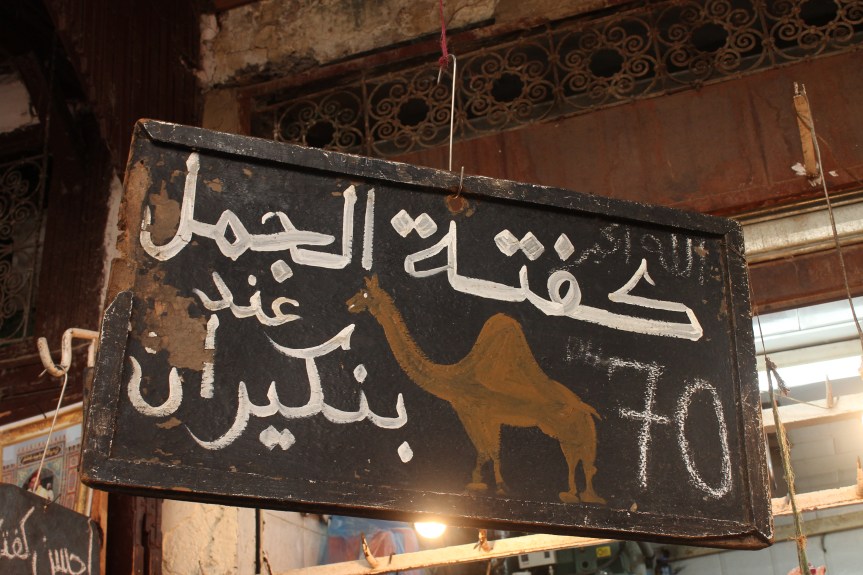
  • Sampling camel burgers and a salad that tasted “like donkeys”
  • Wiggling cooked snails out of their shells with wooden toothpicks…and sampling them too
  • Long talks
  • Laughing until we cried
  • Visiting my friends for tea, dinner, or just to say “hi”
  • Tasting uncured olives that pickled our mouths
  • Eating most of our meals standing around in the kitchen
  • Souvenir shopping in the rain
  • Souvenir shopping in the rain again
  • A long train ride in the rain
  • Walking along the bay in the rain
  • Two nights of cold showers
  • Spending a night snuggled in the musty hotel blankets
  • Staying in a concrete hotel room which reverberated with the early morning call to prayer and reading of the Qur’an
  • Crossing the Strait of Gibraltar by ferry only to find that the rain in Spain does not stay mainly on the plain!
  • A long bus ride around many many roundabouts…in the rain
  • A bus break-down which seemed to temporarily mend itself
  • A few days in Spain with friends, church, a birthday party,  an open air market, olives, churros, pastries, cocido, and tapas
  • Goodbyes

Who do I laugh at?

The sun came and went as ominous clouds marched across the sky. I shivered and wondered why I hadn’t checked the weather before I had walked to the park to study. Winter was coming; that was certain.

On the other side of the bubbling fountain of the garden plaza, a man was stretched out on a bench in front of the bamboo forest. I had seen him there before. He wore several layers of clothing all with that grimy, unwashed tinge. He was a perfect picture of a North African homeless. But he didn’t bother anyone. Even when he awoke, stood up, and stumbled to another part of the garden.Beside me, just on the other side of the fig tree, were two boys pretending to be men. They smoked cigarettes, played music, and took selfies.

But when the homeless man got up and walked away, the boys gawked at him. Then they whispered something to each other and snickered.

I was angry. If the man had bothered them, I could have understood the sentiment to mock him. But as it was, the man had done nothing to deserve anything less than their respect. And yet they laughed at him. How dare they!

While I was still high on my judgment throne, God asked me, “Who do you laugh at?”

Me? Laugh at someone?

How many times have I amused myself at the expense of another? In short, who do I look at and tell myself I am better than they? Maybe it’s not the homeless man. But it could be the boys smoking cigarettes. And really, does that make my pride any less hideous than theirs?

The lighter side of language learning

I have no history with the other foreigners I have met here in North Africa: no previous inside jokes, no awkward memories of growing up together, etc.

Yet, because we are here together, we have begun to share something that I cannot share with people from home: the joy of mixing our common languages. And the beautiful thing is that we understand each other.

My class is known as the class that laughs a lot. My classmates and I are often drawing parallels from Arabic to English. There are verbs that in their conjugated forms sound like “guilty” and “dirty”, and nouns that sounds like “slave” and “smelly.” So we utilize them as their false English cognate, so much that our teachers have begun to do the same.

We also like directly translating from Arabic. In Arabic, many verbs are a slight variation of their nouns. “Do you want to coffee with me and have coffee at the coffee?”or “The chicken eggs eggs.”

And then there are times when we make up our own words completely such as tacking an English ending onto an Arabic verb or even using both Arabic and English constructions on the same root word.

For example, in Arabic the passive voice is typically the normal verb preceded by a “t” sound. And, as you know, the regular past tense verb in English ends in “ed”.

One day, as a friend and I were walking down the street, a guy from a passing vehicle hollered, “Bonjour!”

We giggled. “We’ve just been tbonjoured.”

Hot

I have spent most of my summers in humid Illinois, a few in Mexico, and last summer in Phoenix, Arizona. Yet, every time spring yields to an overpowering summer, the heat catches me off guard.

Sure there are ways to survive even without air conditioning. Here in North Africa, spray bottles, fans, popsicles,  and cold water bottles come to mind.

The sun hovers directly above the city and beats its rays into the vast stretches of concrete and tile. Don’t picture me lounging on lush green grass under a generous shade tree. If I reclined on the ground, I would probably fry like an egg. And most of the shade comes when the sun dips behind the concrete buildings.

I have little energy. Staying hydrated is a chore. Headaches are routine. Sometimes I’m even sick to my stomach.

Yet, this miserable heat brings out the camaraderie that wouldn’t be here if the weather were perfect. After the sun goes down, people unite on the streets, visiting, shopping, or just watching the world go by. The carefree atmosphere comes from the underlying sensation of “Whew! We survived another day together!”

The belt slinger

Sitting in the shade of a damp sheet strung across two clotheslines hadn’t been too bad. But now out on the street, I had to stop pretending it wasn’t hot. The concrete tossed the day’s heat into my face as we walked down narrow streets of the tall apartment buildings in Aisha’s neighborhood.

It was the day of Eid, the celebration at the end of Ramadan. As the sun considered setting, people started to appear on the streets, freshly scrubbed and in new clothes. Time for the party!

Aisha had explained that all of the children would be out on the streets in their new clothes, playing, dancing, and laughing. We were on our way to witness this delightful street party now.

But we were only approaching Aisha’s mother’s apartment when we encountered a slight glitch in our plans: apparently, Aisha’s nephew had whacked a neighbor girl with his belt. The girl’s mother approached the few family members lingering outside of Aisha’s mother’s apartment. She was furious as she displayed the belt’s point of contact with her daughter’s face.

Along with the others, I peered at the unbruised, unbroken skin, trying to ascertain the validity of the crime. Her inflammatory remarks didn’t set well with the boy’s family. An instant wall of excuses met her accusations: this wasn’t the boy’s problem, but her daughter’s problem, the family told her.

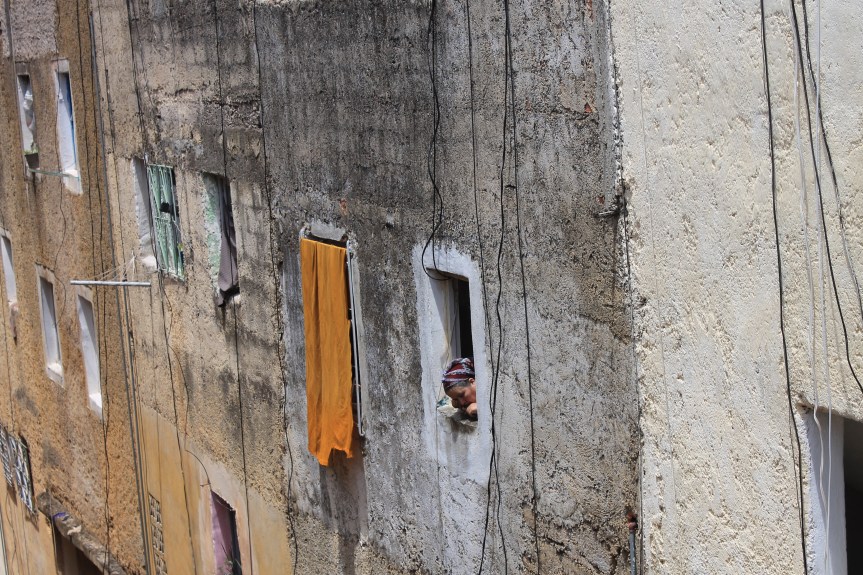
The little girl’s shaky sobs were lost as the confrontation exploded. Hollering escalated, echoing up and down the street. Neighbors rushed to the scene to offer unwanted advice and intercession. Others stood in the background to observe. Above us, others leaned out of windows to watch the drama unfold on the street below. A bit of pushing began, but tapered off quickly as friends dragged the more aggressive ones away. There was little effort to control any display of temper.

I was the only foreigner, the only one who didn’t quite culturally grasp what was happening. I leaned awkwardly against the doors of a closed shop to watch, fighting my own instincts to intervene.

The original crime had been so trivial. Why the big fight in the middle of the street?

Meanwhile, the little belt slinging offender was running around slaying other children with his belt, unhindered and unnoticed altogether… except by me!

Good windows make good neighbors

Robert Frost once wrote a poem about good fences making good neighbors. But what if there are no fences, only windows that overlook walls of windows from neighboring apartments? Do good windows make good neighbors too?

Through the windows, I can sample the lives of my neighbors. Without really knowing them or even really knowing exactly what apartment they live in, I know certain things.

For example, a man sneezes about 9:00 every evening. It’s not just a sneeze, but a SNEEZE. Actually, it is a series of sneezes that gives me an estimate of the time not unlike the call to prayer. And since the Ramadan time change, the sneezes have been coming at 8 p.m.

There is an unpleasant child in a lower level apartment, whose screams are punctuated by the parents’ roars of disapproval.

I can smell what neighbors are cooking, at times even identifying individual spices. And there is often the clattering of women washing dishes or the hissing of a pressure cooker.

In a tiny courtyard below, some neighbors play soccer with friends. When there are five or six of them, I don’t know how they manage to fit, let alone play a game. Their shouting in African French echoes all over our mini community.

Parties on the roof until the wee hours of the morning mean that talking and laughter float through our windows with the cool night breeze.

One evening, a little boy appeared in his window wearing only a T-shirt and his underwear. Silently, he climbed up in the window sill and measured the window with a tape measure. Then he climbed back down.

See, good windows must make good neighbors… or at least provide daily entertainment.