Do you want to know the apricot tree?- Part 1

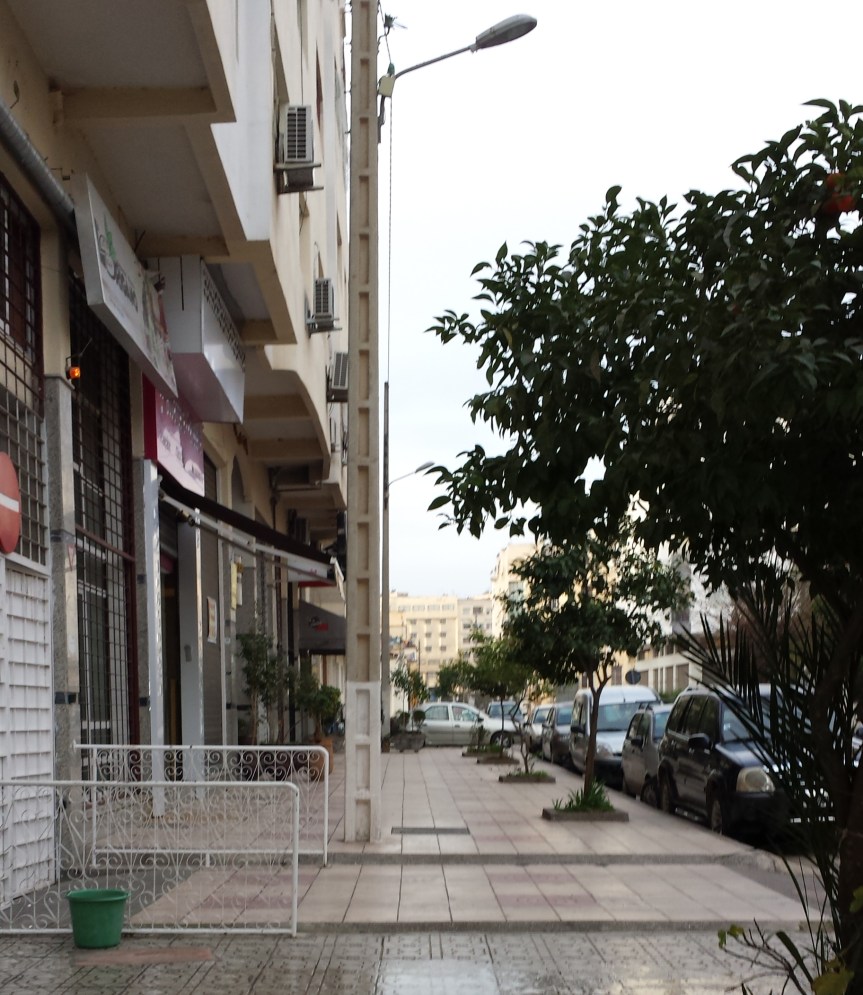
Just a quick trip to the store and I would be back in a jiffy. Humming, I pranced down the flights of stairs and onto the street that baked in the warm March sun.

“Peace be upon you,” I greeted the storekeeper.

“And upon you.”

A woman was in front of me at the counter. She turned to me with an intrusive stare. “Is she English?” she addressed the storekeeper.

“No, I’m American.” I answered for myself and then looked away to avoid further questions.

Some North African women could smell evasion. They went around, rooting out people who dared to hide anything from them. Her eyebrows lifted. “You speak Arabic?”

“Yes. I live here.”

“How much do you pay for rent?”

Really? All I need is two eggs. I bit back a smart reply that would probably be effective. It would also probably be rude. So I cleared my throat and tried to dance around the question. “I live with two other girls.”

The storekeeper was smirking. I could feel it more than I saw it. But despite our months of trust-building and extraordinary civility, he refused to come to my rescue. Then again, maybe I had rescued him.

The woman hung on like an un-oiled tick. “But how much do you pay?”

Exsparated, I gave her an amount.

She gasped. “What? All of you pay that together?”

A gusty sigh escaped before I could stop it. “Noooo. Each of us pays that amount.” I had yet to acquire the linguistic ability to defend myself and my private information around women like her.

“Oh.” She glanced at the ceiling as she did some quick math. “That’s not very much.”

Glad you think so. Now, could you please finish?

When she had vanished, carrying with her the essence of satisfied control, I stepped up the counter, deflated. “Eggs.”

“How many?” The store keeper was still smirking.

“Just two.”

I have found a cause

A personality test told me that I am an advocate. That means I need a cause to fight for, but which one? There are so many causes. I could collect labels that define me as pro-choice, pro-life, Republican, Democrat, Libertarian, etc. I could fight for women’s rights, for the environment, or against human trafficking…

But who am I really? That’s a question I have been asking myself since returning to my passport country. I could become an advocate for any of these causes, but will I let these causes define who I am?

In a heroic declaration of national allegiance, Nathan Hale once said, “I only regret that I have but one life to lose for my country.” As an independence fighter, he clearly had a cause.

But what if those words of beautiful loyalty were assigned to a cause greater than any of the causes listed above? I want to be able to say from depth of my soul: “I only regret that I have but one life to lose for my Savior.”

The Bible talks about losing our lives for the cause of Christ. And when we lose it for His cause, then we are truly living. That sounds like a cause worth advocating.

For whoever would save his life will lose it, but whoever loses his life for my sake will find it.

Matt. 16:25

Some things I miss/ Things I don’t (so far)

Things I miss:

  • Friends
  • Making friends quickly
  • A respect for morals rather than a disdain of them
  • Bringing God into everyday conversation without people thinking you are overly pious
  • Easy and cheap transportation
  • Inexpensive produce
  • Going out to eat on a whim because of inexpensive menu prices
  • Bargaining for prices
  • Warm and constant hospitality
  • Crossing the street without a crosswalk… and not feeling guilty
  • People looking excited when you speak to them in their language
  • People watching out for you

Things I don’t miss:

  • The class system and discrimination
  • Being addressed in French
  • Being treated as a trophy friend
  • Being treated as better than others
  • The façade of open-mindedness
  • A monotonous cuisine
  • Bread
  • Catcalls
  • Being targeted by people asking for things because you are a foreigner
  • People budging
  • People asking invasive questions

Djellaba shopping

We were supposed to be going djellaba shopping. Aisha had volunteered to help me when she found out I wanted to buy a traditional dress. I had agreed to meet her at her house, knowing well what would happen.

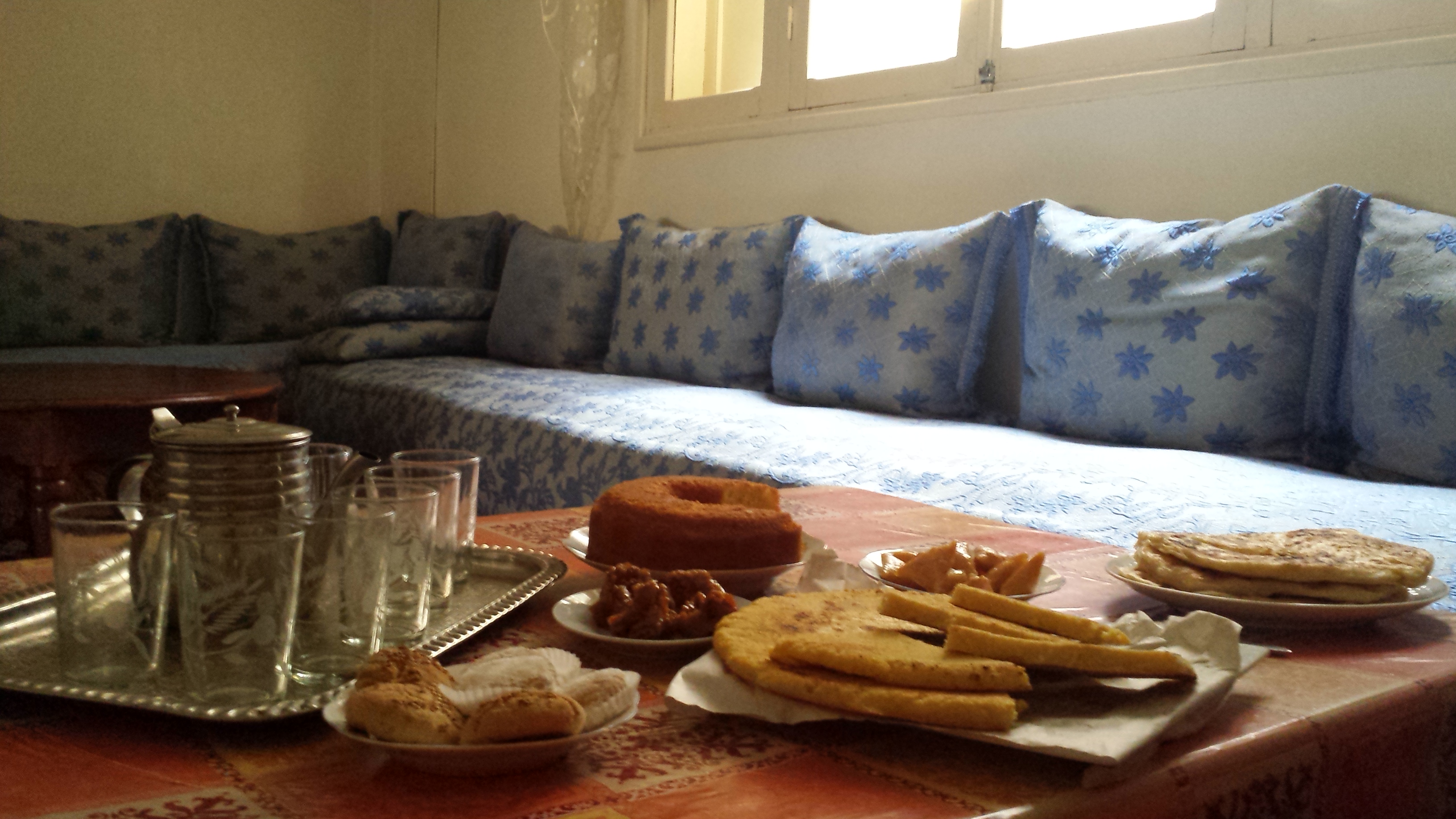
I was right. After an hour or so, when lunch was cleaned up and everyone was dressed, we moseyed out to a shop that happened to be closed. So we spent another half hour sitting on her mother’s couch and chatting over cups of thick coffee as someone dozed under a wool blanket across the room.

We entered a tiny shop that sold mostly pajamas. They did have a few djellabas, however. The tailor made me try them on and was disheartened when they all ended before my wrists and above my ankles.

So he took my measurements and told me to pick out a fabric. Aisha negotiated the price alone. When we walked away, she squealed. “That is the local price. You would not get a price like that. If I wasn’t with you, people would take advantage of you.” I didn’t doubt it.

She still had my money in her pocket and waving the scrap of fabric the tailor had snipped off for us, she insisted that we find a headscarf and traditional shoes to match my new outfit.

In that neighborhood there was such a camaraderie of poverty- a people that hovered just above the grime of life, but hovered together. Still, admonitions came to “hold your sack in front of you, not behind you!” Indeed, a lady in front of us paused when she realized that she no longer had her wallet.

But I was so watched that I couldn’t imagine how anyone could have stolen anything from me without someone else noticing. People swarmed around us, bumped into us, gawked at us.

A shopkeeper motioned to me while addressing Aisha. “Is she a Muslim?”
“No.”
“Not yet.” He eyed me. “Why aren’t you a Muslim?”
Taken off-guard, I straightened. “Why do I need to be?”
“She prays!” Aisha inserted, intent on protecting my religious freedom.
“Who is she?”
“My sister.”
“You’re short and she’s tall. How can you be sisters?”
I cleared my throat. “She is like our mother and I am like our father.”
Then Aisha and I giggled together, and the shopkeeper gave an irritated but irrepressible grin.

Another lady stopped us and Aisha proudly told her that I was getting a djellaba made by a local tailor.
“Is she a Muslim?”
“No.”
“Does she pray?”
“Yes.”
“Does she fast?”
“Yes, she fasts.”
“Well then, what does it matter what she is?”

I spoke up then, but the lady was more interested in the fact that I was speaking her dialect than in what I had to say. And she walked away, still convinced that my good deeds gave me a good shot at paradise.

The sundown prayer call sounded. Aisha kissed me goodbye and tucked me into a taxi, even while insisting that I stay for tea.

I stared out the window at the sunset on the way home, pensive and full. It was one of those days that I would like to store in my pocket and pull out when I get lonesome for these people.

Living memories

People
Are living memories of all you’ve
Seen, heard, smelled, tasted, and felt
With them.
You wake up one morning
And find you married
The reality you love.
And before you go
You must have that
Last walk to school
Last taxi ride
Last cup of tea.
Then you close the door behind you,
Taking only lifeless photos
And stale words in worn journals.

It’s okay to be a foreigner

Sometimes it’s okay not to fit into every aspect of the local culture.

In a culture so linked to religion, I would make a lot of compromises and outright denials of my faith if I were to fully acclimate. So where do I draw the line between foreigner and local? I have faced a lot of cultural quirks that have made me uncomfortable. Sometimes I bit my tongue before I blurted out my opinion. Other times, I didn’t bite my tongue fast enough.

Understanding the drive behind a behavior helps me determine whether or not I want to conform. I often ask questions, especially when I’m with friends and teachers:

“Why do you act like that people group is dirty?”
“Why don’t you throw your bread in the trash?”
“Why don’t North Africans trust each other?”
“Why do men sit in coffee shops so long?”

Some things I obviously don’t want to take part in. Other things have etched question marks in my conscience. Sometimes I make a judgment and confront a North African only to discover that I have interpreted the matter through my Western worldview. I also find many cultural aspects that are a beautiful representation of God’s character.

Every culture has its ups and downs. And every foreigner should determine how to accept the good in a culture without the bad; thus, our right choices will set us apart from mainstream culture. That’s why I say it’s okay to be a foreigner.

Not so glamorous

I asked my roommate for ideas for my blog. She suggested that I write about how life abroad isn’t necessarily glamorous. The common misconception is that life at home is mundane, but those who live abroad are enveloped in a never-ending adventure. Yet, those who have live out of the country soon realize that there is a difference between traveling abroad and living abroad.

I dug around in my old emails to find my initial impressions of my “exotic” life. It turns out that despite the initial culture shock, I soon settled into a routine, much like life at home.

From February 2016: “It was hard to decide what to write about this month. If I only mention the highlights, you assume that my life is one big, adrenaline-laden adventure. It’s not. Each day is unique, but I have developed a pattern and am beginning to plod down the same cowpath day after day. Even the grass is wearing out beneath my hooves. Moo… In spite of these very normal circumstances, occasionally I do experience variation from normal life. It’s like happening on an untasted meadow (to continue the bovine analogy). Sometimes the meadow is sweet grass, other times it’s mostly thistles.”

From April 2016: “Perhaps my life sounds glamorous to you. I suppose it is in theory, but it’s been hard to give up close interaction with family, church, and friends while what used to be my everyday life changes without me. And looking like an ignorant tourist isn’t particularly glamorous or comfortable..”

What’s new quickly becomes normal when you experience it enough. Flagging down taxis, crossing the street amidst moving traffic, watching things shatter when dropped on hard tile, eating piles of bread and drinking liters of syrupy tea is all commonplace.

See, the glamorous part happens in the initial stages. A North African immigrant in America might be startled at the wealth of personal space, how difficult it is to make friends, traffic that is relatively decent and in order, prices that are non-negotiable, and everything running on time. That is something to write home about…initially. Until the glamour of the foreign adventure becomes everyday life.

Also from an email from April 2016: “A recent sermon has given me a few thoughts to ponder. Using John 21, the speaker proclaimed that our duty is to follow Him, not to compare ourselves to others and decide that our personal callings are unjust. No matter where we are, whether glamorous or not glamorous at all, our duty is to follow, day by day and hour by hour.”

Aisha- part 4

She lost her job. Just when things had been going well. Just when little by little she had been saving up to furnish the tiny salon. She had talked of buying an oven. She had talked of the circumcision party she wanted to hold for her son in April. Now that was gone. There were no more dreams because there was no more money.

Her husband was working a little, she explained, but she never saw the money.

“It goes for cigarettes and coffee with his friends at the coffee shop.”
“Praise God he doesn’t use your money for that!” I reminded her. But I still hurt for her.

Eventually she found work two days a week. Enough to survive, but not enough to live.

It seemed that every time I entered her home, there was a storm brewing between mother and daughter. Today was no exception.

When I had reached Aisha’s house, things were calm. We sat in the salon, talking and watching Bollywood. God’s grace bridged the language deficit. We talked about life, about marriage, about her children, about her job hunt.

Her daughter, Soukaina, disappeared to be with her friends. A long time later, Aisha hollered across the rooftops of that tiny, sunken neighborhood: “Soukaina! Soukaina!” Soukaina emerged from her friend’s house and soon thereafter two young men followed.

To a mother with no education, a girl’s purity and family honor are the only things worth living for. There is no other option. And with her husband generally absent, Aisha is the guardian of her daughter and, essentially, the family honor.

I just wanted to hide. I had already had an encounter on the street with a man who left my blood boiling in his wake. And upon arrival to Aisha’s neighborhood, I had an argument with the taxi driver whether or not it was safe for me to walk the ½ block from the taxi stand to Aisha’s house. I didn’t want to get involved in anything else, for goodness’ sake!

Aisha offered me a way out: to go with her to buy sweets for the afternoon tea.

But God said, “Stay here with Soukaina.”

So I stayed and listened to the 16-year-old, heart-broken side of the story. Then I touched her hot and teary face and wondered what kind of life lay ahead of this girl. What opportunities did she have? What opportunities would she have?

My own heart felt achy for the women of the family, even as we sipped syrupy tea and I made boats, airplanes, and trains out of each bite of cookie for Aisha’s 2-year-old son.

Aisha walked me to the taxis, telling me again and again how “dear” I am to the family.

I responded with the appropriate reciprocal response, but I really meant it. Aisha will always be dear to me. As we turned out of the neighborhood, the evening sky came into view with bright pinks and oranges. It was so breathtaking I started to cry from the bittersweet mingling of Aisha’s pain and God’s faithfulness.

Loyal or practical?

My roommate and I have the same problem. After more than a year of living in the same area, we find that we are loyal to shop owners. That doesn’t sound so bad, but we both wonder about the practicality of it. We go back to the same shops again and again, even if another place has better merchandise or better prices. This is especially true if new shops are in sight of our normal shop.

For example, my preferred produce vendor is on my way home from school. One day, when I was feeling sick to my stomach, I stopped and asked if he had bananas.

“No, they will come in later today. Maybe an hour or hour and a half.”

“Okay.” And I continued on my way, walking right past a vendor cart of bananas…sold by someone else.

My struggle became evident over Eid Kbir when many of my normal vendors disappeared for the holiday. I found new people to be faithful to…until my usuals returned. So now I have two produce vendors. One is in a busier section of the neighborhood which I usually avoid, but when I do stop there, I take a route home that avoids my usual vendor.

My roommate likes to give business to an elderly man in the old medina who usually has about four things for sale. Sometimes she takes inventory of his stock, decides she needs nothing, and then buys something anyway.

Is this practical? Probably not. At least not at first glance. Then again, by sticking with the chosen few, we are able to build solid professional relationships and perhaps protect ourselves from those less honest.