There isn’t much that separates us

The public health clinic was teeming with people. Where was she?

“Over here!” My friend waved me over to a corner of the waiting room. She rushed to explain her health problem, pointing to various body parts while keeping an eye on the door where she was to go as soon as her number was called.

My breathless mind tried to keep up with her Arabic. I was still drumming up passable Spanish vocabulary when her number was called.

We squeezed around an old shopping cart piled high with unsupervised medical supplies and stepped into the consultation room.

“What is the problem?”

I took a deep breath and launched into an unrehearsed explanation. Interpreting between two foreign languages is always a workout for me, and not a flattering one.

The lady at the desk was silent until I paused. Then she said, “You both realize that I’m a nurse, not a doctor, right?” 

Actually, no. I had never been beyond the door in this particular public health clinic.

“Look, the only thing I can do is test and see if she still has the infection.” She handed my friend one of those flimsy plastic cups we use at children’s parties for juice or Jell-O. “Urinate in here and bring it back to me.”

Apparently dismissed, we squeezed around the shopping cart and wandered around the building in search of restrooms. Misplaced people were milling everywhere in a warm, concrete facility that smelled of metal and sweat. 

We eventually found the almost unmarked restroom, nestled between consultation rooms. Then back down the long hallway we went, my friend trying to hide her cup of pee in a plastic bag she’d dug out of her purse. “There wasn’t any paper in there to wrap the cup,” she said. “I don’t want everyone here to see it.”

We wiggled around the overflowing shopping cart again. The nurse stretched on a pair of gloves, stuck a testing strip into the urine, and told us to wait outside. My friend turned and left, still holding her cup.

“Uh… can she throw away the urine?” I asked. 

While I was still verifying this with the nurse-not-doctor, my friend lost her way and, unable to read, ended up in the men’s restroom. There was an unsettled man waiting outside when I arrived on the scene. “This is for men,” he said in Arabic when my friend emerged.

We found seats in the waiting room. As much as I love to people-watch, it was hard to look around without feeling absolutely hopeless. Did anyone in the healthcare system really care about these people?

As we waited, the lady next to us asked if her number was on the screen yet. She couldn’t read; she could only hear the tone and see the digits move without understanding what they meant. I looked at her tiny slip of paper, the kind of ticket you get while waiting in line for olives at the market. It was hard to see that wisp of green-blue and not see my own personalized number on a freshly printed ticket from the private health clinic across the street. My initials followed by 524. Always the same. Always announced over the speaker while I sat in the air-conditioned waiting room. 

Her number was 254. The number on the screen was 272. “It’s past,” I explained. By a good half hour, likely. She walked up to the desk and was sent to get another number and start the process again. 

Meanwhile, my friend and I were called back into the consultation room. The overflowing shopping cart had been removed and this time we could walk in without yoga posing our way through the doorway.

The nurse told me, “Tell her that she still has an infection, but she needs to finish the week of antibiotics she got yesterday.”

Oh.

That was a piece of information I had been missing. My friend had apparently just been to the emergency room the day before, but wasn’t satisfied with the lingering pain from the infection. As if one dose of antibiotics should have removed her aching like magic.

It was hard to look at the nurse sitting at her desk and not feel absolutely hopeless for her. Was this what she dealt with day after day? Confused immigrants expecting or even demanding immediate fixes without understanding her role as a nurse, not a doctor or a magician?

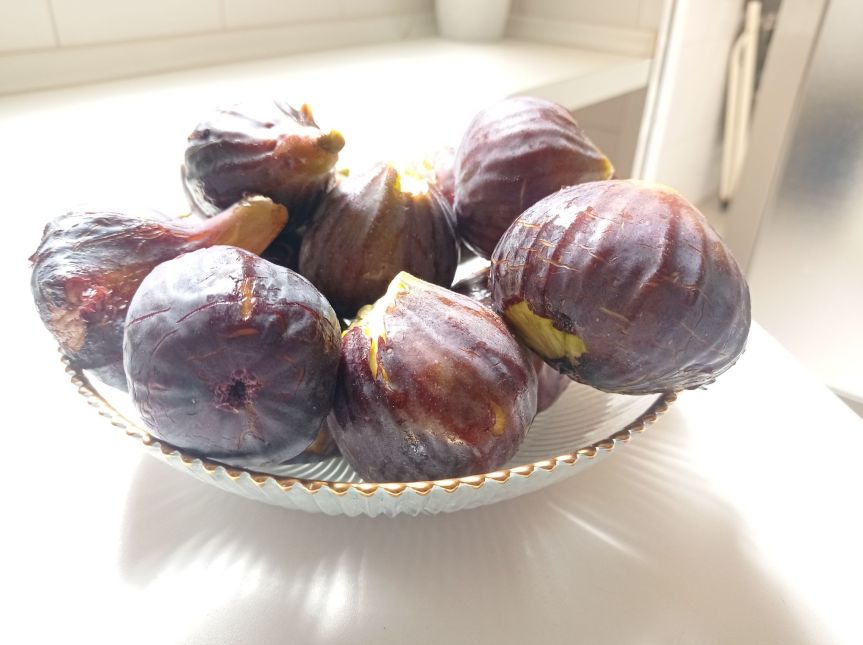
My friend and I walked toward home. She pulled me into a North African store and bought a bag of fresh figs: big, purple, and sweet. On the street again, she handed me the bag. “I got these for you because you helped me today.”

We sat on the front steps of my apartment building until the hopelessness of the morning faded with chatter and laughter. Deep down, there isn’t as much that separates us as we sometimes imagine.
Part four: Tanneries and street food

Click to read: Part one: A palace and a hostel, Part two: A stolen sandwich and art, and Part three: Relationship advice and edible puzzles


I had never used the BlaBlaCar app before. Surely a carpooling app couldn’t be as pain-free as it looked. But it was! J and I arrived at the Málaga Costa del Sol airport in plenty of time. We checked in and zipped through security and border control before parking ourselves just inside of the international gate area to people-watch.

We were some of the last passengers to board our flight. Why rush to constrain yourself to a seat that’s already reserved for you? Our 15 euro flight got us to North Africa safely. After we landed, J and I stayed in our seats rather than smashing ourselves against the other passengers in the aisle. We didn’t even stand up, necks bent at unnatural angles under the overhead bins. (Why do we do this?!)

A man who had been watching us announced to the other passengers: “These are the most intelligent people on here! They waited to get on the plane until the last and they are waiting to get off the plane too!”

As we waited in the customs line, I couldn’t wait and asked J, “What do you think of North Africa so far?” Wisely, he returned that he wasn’t sure if his first impressions were accurate and that he’d rather wait to give them.

We stepped out of the airport and were spat into North African culture where overly helpful taxi drivers swarmed. After hemming and hawing, we agreed to a ride for 150 dirham, 50 dirham less than the initial asking price.

Once we had been deposited in our friends’ neighborhood, I asked the neighborhood guard where the Americans lived. He pointed me to a black gate and told me how many stories up. Americans in that part of the world don’t have much anonymity, and that is what I had been counting on. 

We joined the family, catching up on life, hanging out with the children, and feasting on a giant stir-fry for supper. 

The next day was our day to tour the city. It was my chance to show J the world that had been mine for 16 months. We passed my old language school and I recalled the hours I had spent exhausting my sweat and tears while learning Arabic. We dropped by my old neighborhood too, even popping in at the little store around the corner to say hello and buy a Snicker bar just because. (We also forgot about that Snicker bar until it became a squished pile in the bottom of our warm and sweaty backpack.) 

From there, we snagged a taxi to the old city. I could already feel myself shriveling into a prune. The weather was hotter than I had expected and much drier than either of us were used to. We couldn’t keep up with our water intake. 

We descended into the heart of the old city to the renowned tanneries, avoiding anyone who was too helpful. In fact, over the course of the day we managed to disappoint a lot of hopeful shopkeepers, browsing rather than buying. At the tanneries, we stood at the lookout and peered down on all of the action. There was so much to watch at once. J shooed away an over-eager tour guide, preferring to figure things out on his own.

colorful tannery vats

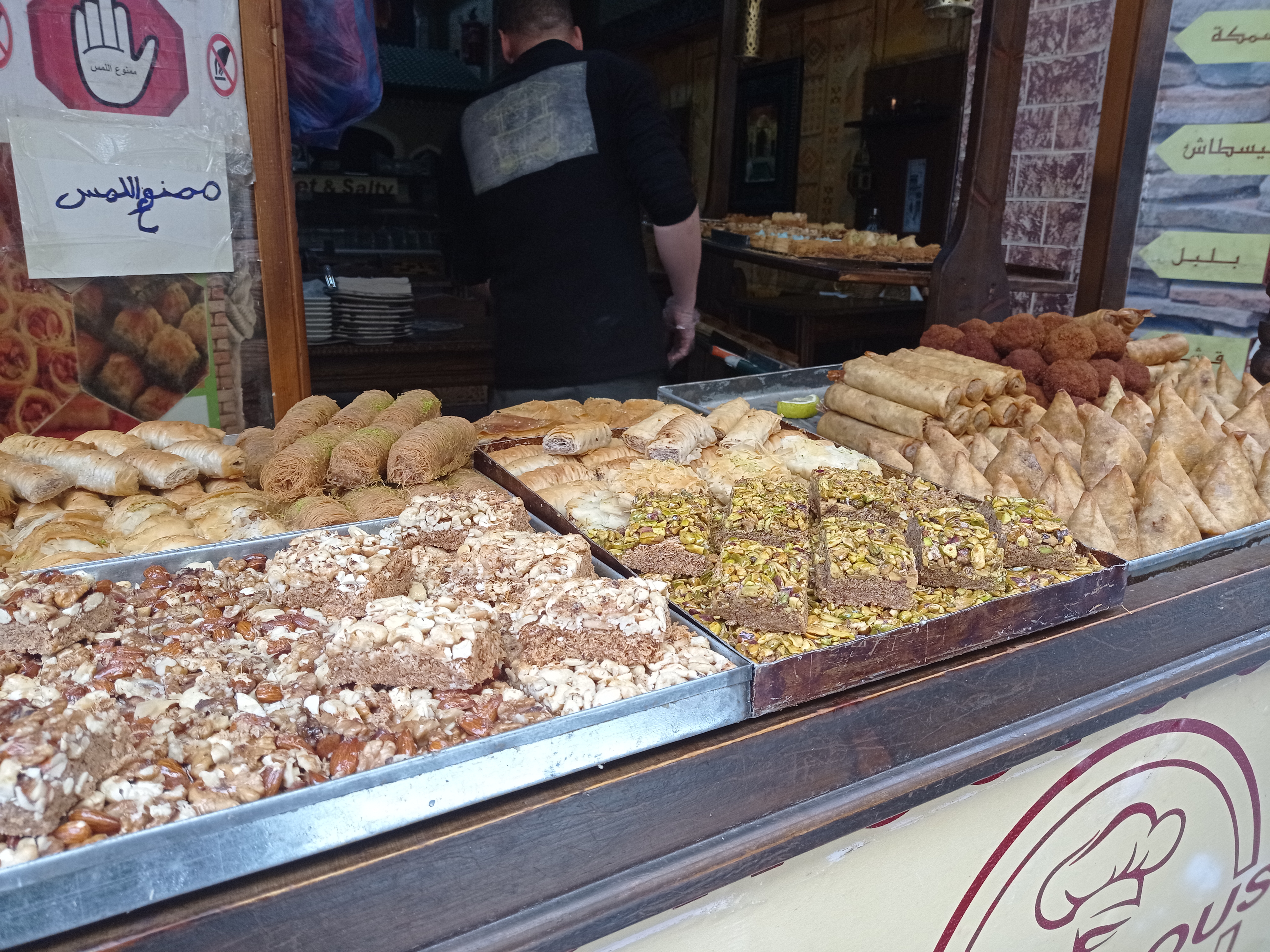
We hunted for a hole-in-the-wall restaurant, but the only one I remembered wasn’t serving lunch yet. So we bought street food instead: neems (fried spring rolls), briouats (a triangular, chicken filled pastry), kalinte (chickpea flan) sprinkled with cumin and red pepper, and olives with lemon and parsley. 

We looked for a place to eat our collection, and finally found a sunny spot along the ledge of a fence. But first on our menu was activated charcoal. Three pills before and three after a meal. With street food on a warm day, I got pretty bossy about following the instructions. We took our time, munching and tossing olive pits at the trunk of a scrawny tree in the sidewalk. Even there in that scorching African sunbeam, our repast was delicious.

street food cart

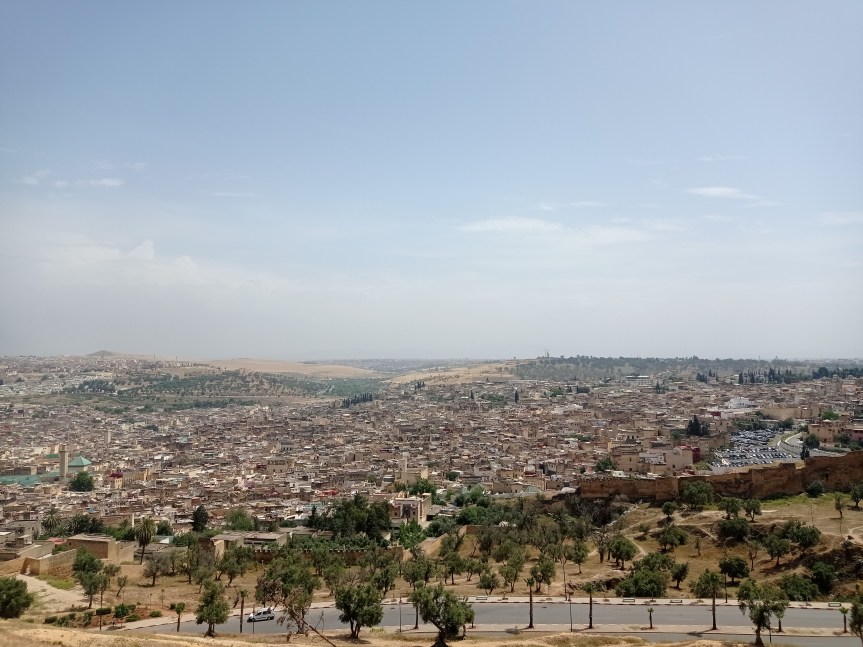
From my time of living in the city, I had fond memories of climbing up the side of a hill to a set of ancient tombs that overlooked the city. But how to get there? We stopped to ask directions. The shopkeeper gave us some of his life story for free as well as detailed directions, which I promptly forgot by trying to retain everything he said. No matter. We still had Google maps and what was left of my memory. We wound our way up the hill, admired the tombs and the view and then parked ourselves in the shade until my fantasy about a tall glass of fresh-squeezed orange juice overpowered the lure of a shady spot. 

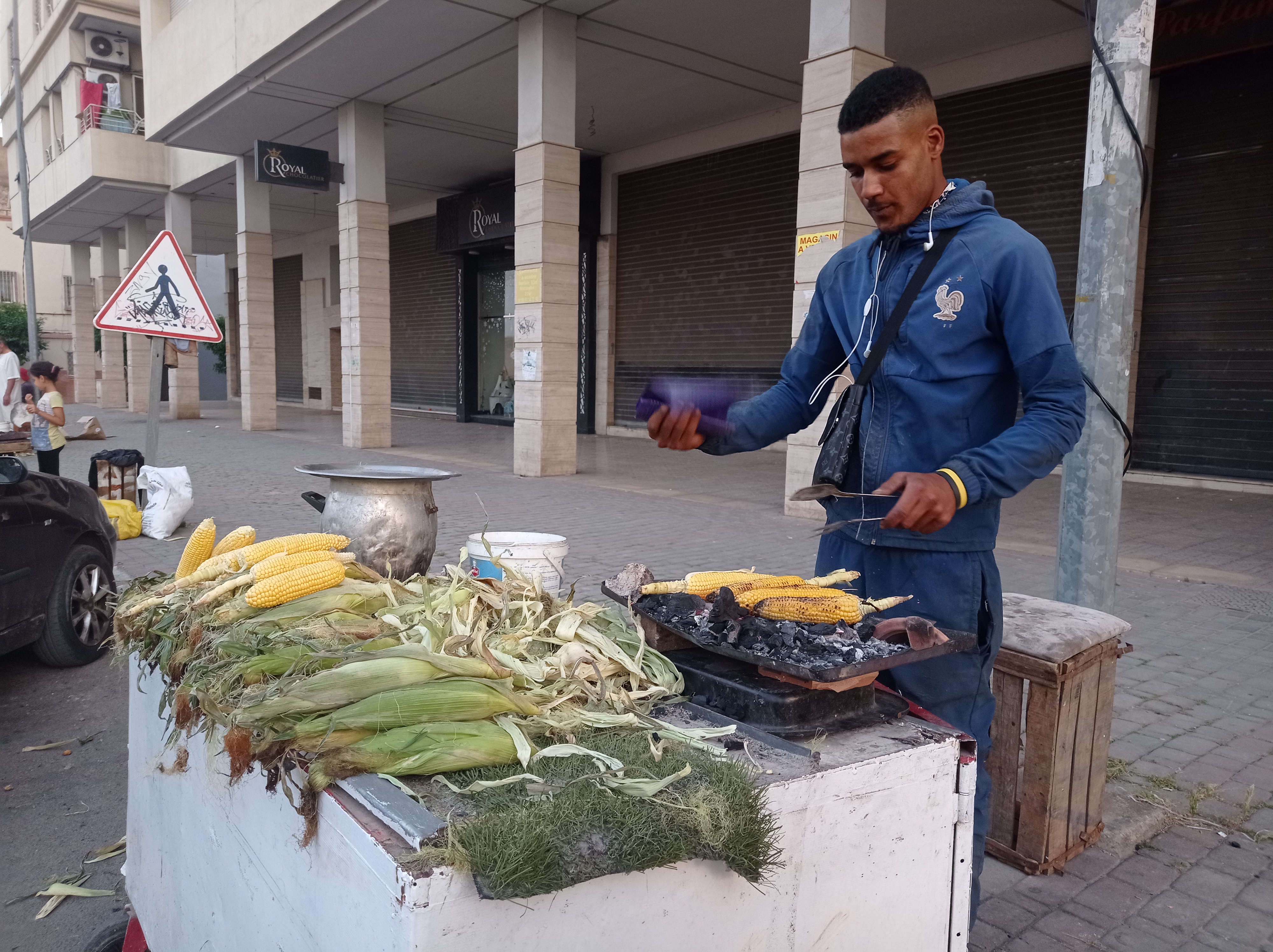
We spent a chunk of the afternoon perched on a restaurant’s third story, sipping orange juice, eating tagine, and watching people swirling in and out of the city gate below. Once we had cooled off, we meandered back to our friends’ house, with one last stop to buy an ear of roasted street corn.

Street corn vendor

The next morning, we envisioned ourselves arriving at the international church on time. Instead, with all of the careful packing that went into the morning–the gifts for a friend’s family, the trusty charcoal, and the Imodium, just in case–I managed to forget my wallet. My wallet which held our only local currency.

“I’m sorry. We don’t have money,” I told the taxi driver. “Take us back to the house.” Obligingly, he made a loop at the next roundabout and waited outside while I dashed up the flights of stairs to retrieve my wallet. Any dreams of arriving at church on time were crushed. 

Although the fellowship had changed since I had been there last, it was still charged with a buzzing energy of brothers and sisters in Christ uniting after a long week. After the service, I was able to reconnect with a few acquaintances before we were on our way to visit Chaimae and her family.

I was surprised by how Chaimae’s family remained unchanged. Throughout the day, most of the family dropped by, delighted to meet J and practice their English. They fed us breakfast and then fed us several courses of lunch a few hours later. That afternoon, J got a very long look into North African culture.

North African breakfast spread

Our time in the city was drawing to a close. The next morning we breakfasted on eggs and khlea, a cured beef that tastes like a barn. I hung out in the egg section, but J preferred the barny beef. The guy has an inexcusably tolerant palate. 

As we left the city, I looked out the bus window, wondering if I was saying goodbye forever. I felt nostalgic but realized I no longer had a lingering sense of belonging.

What am I fit for?!

If you’ve ever given your heart to more than one place in this world, you’ll know what I’m talking about. 

I am in a culture that is not my own; yet, in a strange way, I feel like I belong. But I will never fully belong because this is not who I am. Paradoxically, returning to the place I most expect to belong is not as comfortable as it used to be. I’ve changed, adapted, conformed–or whatever you want to call it–to my new culture, and I can’t go back without wearing that change. 

One evening not long ago, I was on my way home when suddenly confusion washed over me. Where was I going? “If I were to go to the homiest home I can think of right now, where would I go?” I asked myself. My flat in Spain? My room at my parents’ house? Or any of the other places I’ve lived in my lifetime? 

The concept of “home” was foggy, like waking from a dream and expecting to be in one place but being thousands of miles away instead.

When I feel that sense of homelessness, I think of Eliza Doolittle in the musical My Fair Lady. As the result of a wager between two learned men, Eliza has been transformed from a street flower girl into a proper lady. But now the experiment is done, and she is turned loose. But to where? In one world, she can only ever be an imposter; in the other world, she has changed too much to go back and belong. “What am I fit for?!” she cries.

I feel that agony sometimes. I want the luxury of fully belonging to one home and one culture, of not being different or feeling misplaced. 

But this strange in-between space is also held in the hand of my loving Father. Today, that is enough. And tomorrow it will be too.

When the world shifts

I awake to my bed shaking. The window frames click and tick with the shifting earth beneath them. Another earthquake. Is it a bad one? In my sleepy stupor, I wonder if this time we will all have to dash onto the street in our pajamas. My heart pounds as I listen for voices and wait for more tremors.

But all I hear is the thump and whine of the garbage truck making its rounds like it does every night. It is comforting to wake up in uncertainty and then find the world is familiar after all.

Is this what my neighbor boy thought when I slipped across the street in the middle of the night to pick him up? While Mommy and Daddy were at the hospital awaiting baby brother, Little S had spent the evening with another neighbor but would not consent to spending the night. He filled their home with his wails.

When he saw me standing at the front door, he ran into my arms, sobbing as if he had just been waiting for something that made sense.

I picked him up and brought him home. He knows my house, and he knows me. We curled up on the couch after he had fallen asleep from sheer exhaustion. For hours, his breath shuddered from leftover sobs. The body does not quickly forget its tears. Spending the night away from his parents for the first time in his life wasn’t easy…for either of us.

But in a sense, I got to be his garbage truck–the familiar presence as the earth shifted beneath him.


Photo credit: Lucas van Oort on unsplash.com

Ireland- part 4

You may be tired of hearing about Ireland. I was only there a few days, after all. I suppose I could be succinct, but where’s the fun in that?

Friday morning we rolled out of bed at 4:45. We had packed our lunches the night before, so it didn’t take us long to get out the door and to the bus stop. Some of the grief from our place of residence had been eased by sleep. We were determined to love the day.

We had booked a day tour from Dublin (east coast) to the Cliffs of Moher and Galway (west coast). Our guide gave us a fascinating peek into Ireland’s history and culture as our coach bumbled out of Dublin. Then it was time to sit back and enjoy the scenery as the sun rose over the Irish countryside. Mists came up from the green rolling land, promising that fairies and leprechauns were real after all. It was breathtaking, but only one small part of a breathtaking day.

The weather was perfect: a mixture of sun and clouds and a constant but empty threat of rain. And the cliffs–Oh, the cliffs! No wonder the place was full of tourists with their cameras. My heart wanted to stop at the wild beauty of the place. (And having a cardiac arrest at the Cliffs of Moher would not have been so bad, really. Rather romantic.)

As we wandered up and down the marked trails, soaking it in, I couldn’t shake the sensation that I had stepped into a very beautiful photo.

the cliffs of moher
cliffs of moher

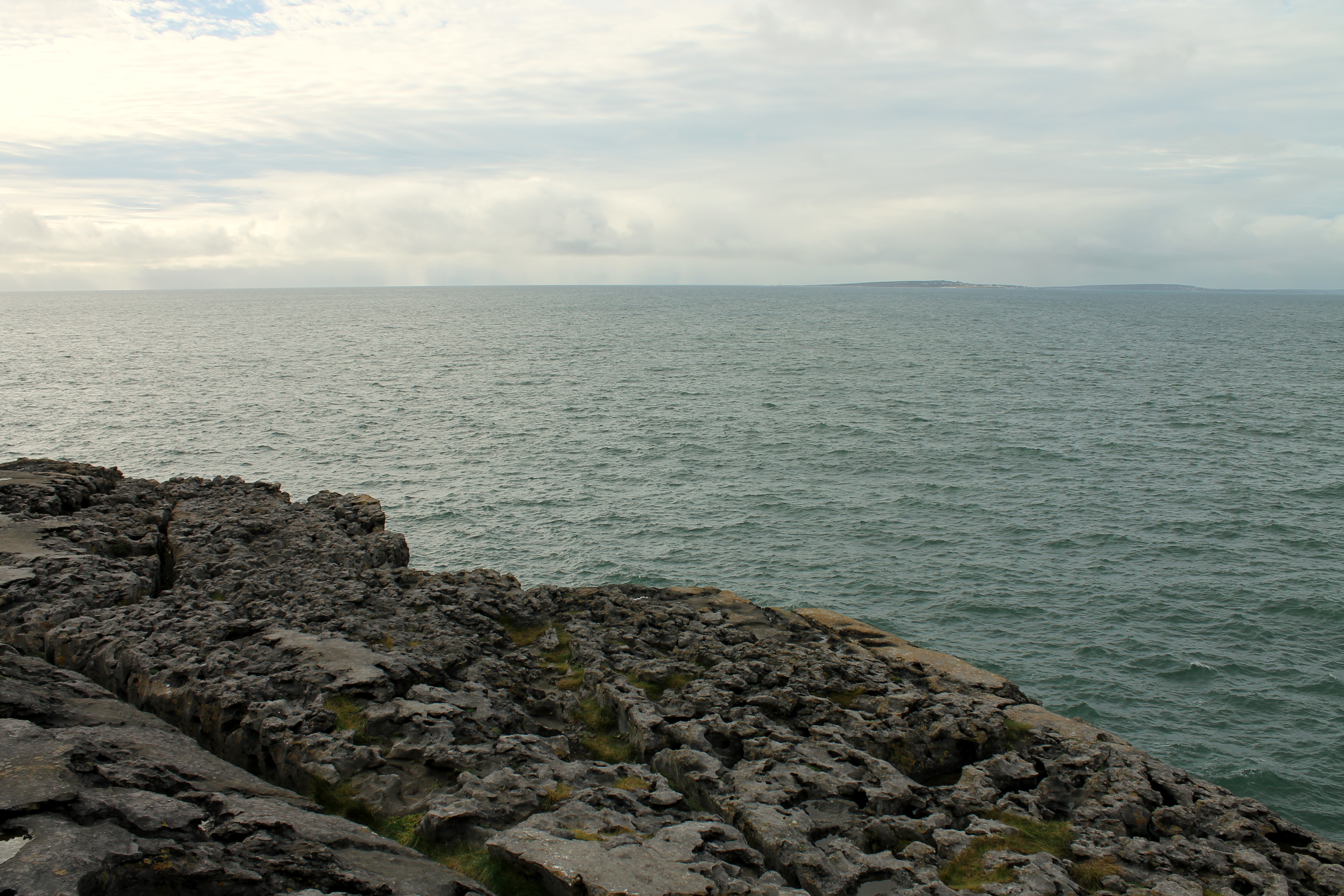
We traveled through the Burren, our driver skillfully maneuvering the mammoth tour coach down skinny roads next to steep drop offs. We made a brief stop for photos in the National Park where craggy rocks dropped off into the ocean in impressive cliffs.

craggy coast along atlantic ocean

Our guide gave us another fascinating history lesson before we stopped at the Kilmacduagh Abbey ruins. I wanted an hour or two to roam, not 10 minutes.

Kilmacduagh abbey ruins

Our last stop was Galway, an outstanding city on the west coast. Our guide told us just to go and enjoy the city without trying to see too much. That’s the best way to experience Galway, he said. He also gave us a list of restaurants, recommending the famous Galway fish and chips.

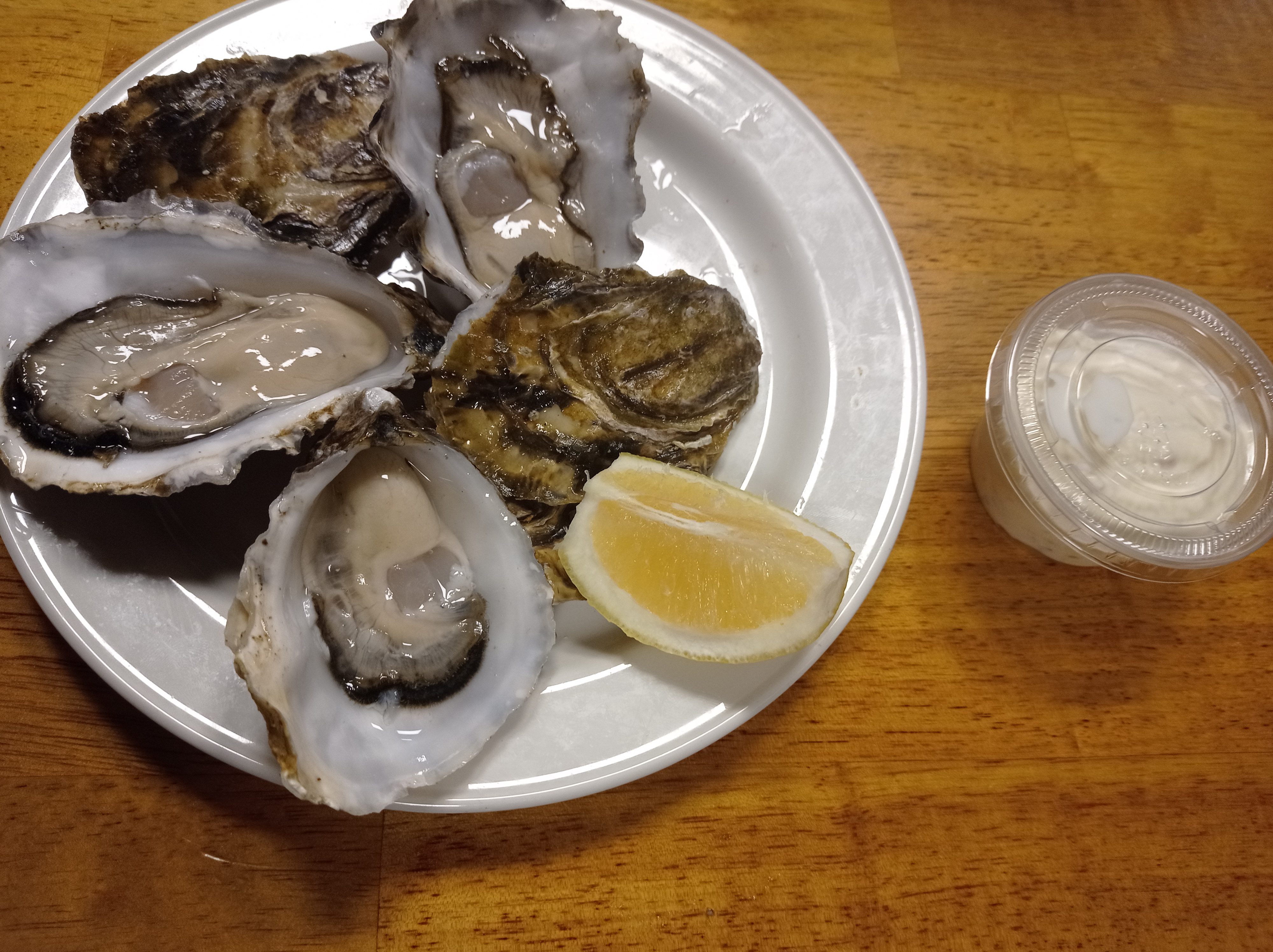
My friend bought us dinner at McDonagh’s for an early birthday gift–smoked fish and chips and fresh oysters. The last time I had tried oysters, I had wanted to gag. But that was in rural Illinois, about as far from the ocean as you can get. Would I gag this time? I was nervous as I squeezed lemon on my oyster. To make it worse, the place was packed even at this odd hour and we were sitting elbow to elbow with strangers.

But I didn’t gag. The smooth oyster that slipped from its shell into my mouth was fresh, clean, and sweet. I eyed the leftover oyster on the plate until my friend generously gave in.

fresh oysters with lemon

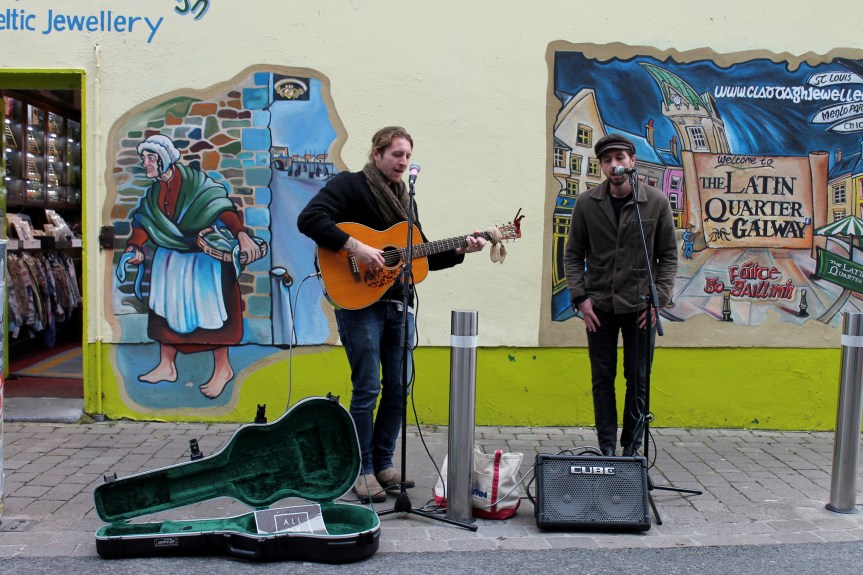
While my friend did a little shopping in an Aran Island wool shop, I sat outside to listen to buskers who looked like brothers. They seemed to enjoy my enjoyment of their harmony, maybe especially when I dropped coins in their guitar case.

The entire evening felt enchanted. I slipped a few euros in my pocket and we wandered the streets of downtown Galway, stopping to listen to almost every street musician, even the dude singing “Galway Girl.” The way the Irish value the arts is something one can sense, even in a brief interaction with the culture, such as I had.

galway city street

And, wouldn’t you know, we found another Butlers and strolled back to the bus, hot chocolates and truffles in hand. Darkness fell as we rode back across the island to Dublin. It was a day that made be believe I wanted to stay in Ireland forever.

Well, except the dirty little cottage that we had to return to.

I wish I knew you

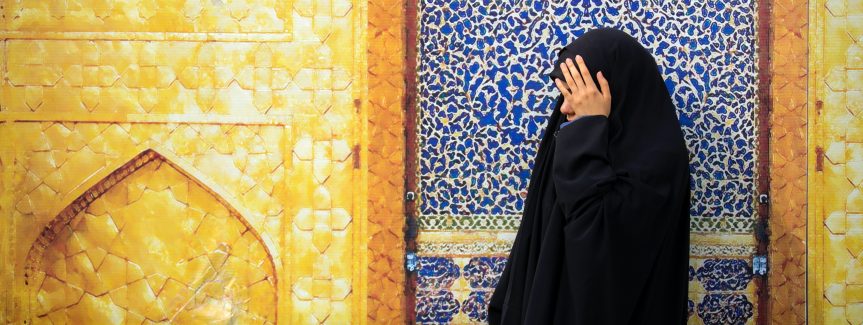
Maybe you think I don’t notice that bruise on half your face. You light the room with a smile and a dignified calm.

But I wish I could grab him by the throat and not let go until I know that he will never touch you again.

Except with love.

But how can I know unless you tell me? And how can you tell me unless you trust me? And how can you trust me when you just met me and he calls your phone and you need to go before we even know each other?

We say goodbye with an embrace, two kisses, and a few besides.

Then I stand and watch you walk away, wishing I knew the you behind that sparkling smile. 

And that black eye.


Photo by mostafa meraji on Unsplash

With the best of intentions

I weathered another round of what I assumed to be food poisoning. Tired of hanging out in the bathroom, I put on a brave face to hostess visitors, babysit, teach an English class, and drop by the neighbor’s with a plate of crepes.

But when holes were poked in my food poisoning theory, suddenly my bright shades of resiliency and selflessness took on a contaminated hue.

I had been so sure I could trace it back to those fried sardines…

I took a too-late day of quarantine to keep me from infecting the rest of the world. The next morning I dropped by the post office and the grocery store. On the way home, I noticed I was being dogged by the persistent admirer who, after a clarifying encounter months earlier, had vanished from my life. Until now. And there he was, looking bigger, older, and maybe even a little more unhinged than the last time I had seen him.

My intention to weave myself into this community’s tapestry put me in his way. Or maybe he put himself in my way. Or maybe we’re simply two clashing fibers woven side by side, which is bound to happen now and then in every community. Just wishing him away rather than confronting him probably was never the answer.

Why do best intentions sometimes sour?

My recent decision in the best interest of all turned out to be in the best interest of none… and involved a fair amount of straightening out.

I suppose it’s fanciful to believe that sacrifice can validate decisions. Still, why do some of the decisions we make, even at our own expense, turn out to be the wrong ones?

Maybe it’s because we don’t understand the big picture. Or because our decisions are not the only decisions affecting lives.

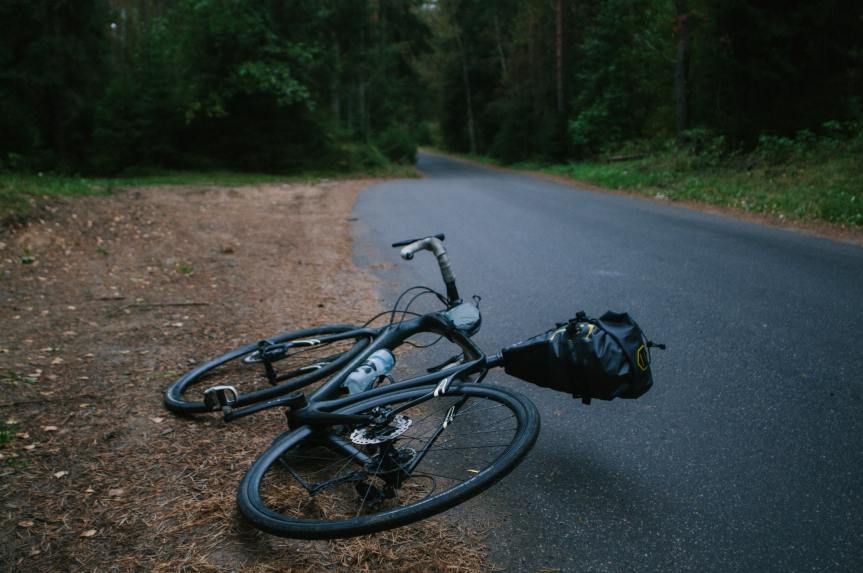
When we take a spill on our good intention bicycle, the true measure of resiliency and selflessness may be found in our ability to stand up, gently brush the gravel from the crevices of our knees and continue on our way.

And be grateful when others forgive our mistakes and miscalculations.

And thank God for the neighborly shopkeeper who is standing in his doorway to watch us safely home.


Photo by Dmitrii Vaccinium on Unsplash

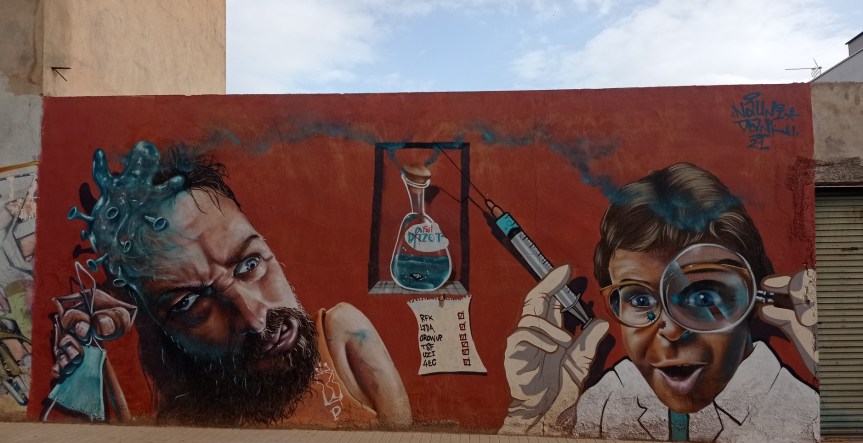
Mural: Living with science

As I mentioned a few weeks ago, I collected photos of murals as I prayer walked Mytown this spring.

Some of the murals were funny. Some were really odd. But then there were those that made me stop and wonder: What was the artist trying to say?

Over the next couple of months, I’ll share some of the murals with you. You can wonder with me or leave an interpretation in the comments below.

Refugee

Specially selected Friend,
Can you find a way to live?
To take advantage of every day
and be the first to make a home
inspired by your history?
To dare to dream of beauty?
To save your child- your perfect baby-
and to offer the gift of security?
Can you manage
to live better next year?
And is there a way to forget
this black adventure?

This is a work of appropriation (the art of intentionally altering or borrowing words from a pre-existing source). Pre-existing source: a department store’s Black Friday website page.


Photo by Julie Ricard on Unsplash