There isn’t much that separates us

The public health clinic was teeming with people. Where was she?

“Over here!” My friend waved me over to a corner of the waiting room. She rushed to explain her health problem, pointing to various body parts while keeping an eye on the door where she was to go as soon as her number was called.

My breathless mind tried to keep up with her Arabic. I was still drumming up passable Spanish vocabulary when her number was called.

We squeezed around an old shopping cart piled high with unsupervised medical supplies and stepped into the consultation room.

“What is the problem?”

I took a deep breath and launched into an unrehearsed explanation. Interpreting between two foreign languages is always a workout for me, and not a flattering one.

The lady at the desk was silent until I paused. Then she said, “You both realize that I’m a nurse, not a doctor, right?” 

Actually, no. I had never been beyond the door in this particular public health clinic.

“Look, the only thing I can do is test and see if she still has the infection.” She handed my friend one of those flimsy plastic cups we use at children’s parties for juice or Jell-O. “Urinate in here and bring it back to me.”

Apparently dismissed, we squeezed around the shopping cart and wandered around the building in search of restrooms. Misplaced people were milling everywhere in a warm, concrete facility that smelled of metal and sweat. 

We eventually found the almost unmarked restroom, nestled between consultation rooms. Then back down the long hallway we went, my friend trying to hide her cup of pee in a plastic bag she’d dug out of her purse. “There wasn’t any paper in there to wrap the cup,” she said. “I don’t want everyone here to see it.”

We wiggled around the overflowing shopping cart again. The nurse stretched on a pair of gloves, stuck a testing strip into the urine, and told us to wait outside. My friend turned and left, still holding her cup.

“Uh… can she throw away the urine?” I asked. 

While I was still verifying this with the nurse-not-doctor, my friend lost her way and, unable to read, ended up in the men’s restroom. There was an unsettled man waiting outside when I arrived on the scene. “This is for men,” he said in Arabic when my friend emerged.

We found seats in the waiting room. As much as I love to people-watch, it was hard to look around without feeling absolutely hopeless. Did anyone in the healthcare system really care about these people?

As we waited, the lady next to us asked if her number was on the screen yet. She couldn’t read; she could only hear the tone and see the digits move without understanding what they meant. I looked at her tiny slip of paper, the kind of ticket you get while waiting in line for olives at the market. It was hard to see that wisp of green-blue and not see my own personalized number on a freshly printed ticket from the private health clinic across the street. My initials followed by 524. Always the same. Always announced over the speaker while I sat in the air-conditioned waiting room. 

Her number was 254. The number on the screen was 272. “It’s past,” I explained. By a good half hour, likely. She walked up to the desk and was sent to get another number and start the process again. 

Meanwhile, my friend and I were called back into the consultation room. The overflowing shopping cart had been removed and this time we could walk in without yoga posing our way through the doorway.

The nurse told me, “Tell her that she still has an infection, but she needs to finish the week of antibiotics she got yesterday.”

Oh.

That was a piece of information I had been missing. My friend had apparently just been to the emergency room the day before, but wasn’t satisfied with the lingering pain from the infection. As if one dose of antibiotics should have removed her aching like magic.

It was hard to look at the nurse sitting at her desk and not feel absolutely hopeless for her. Was this what she dealt with day after day? Confused immigrants expecting or even demanding immediate fixes without understanding her role as a nurse, not a doctor or a magician?

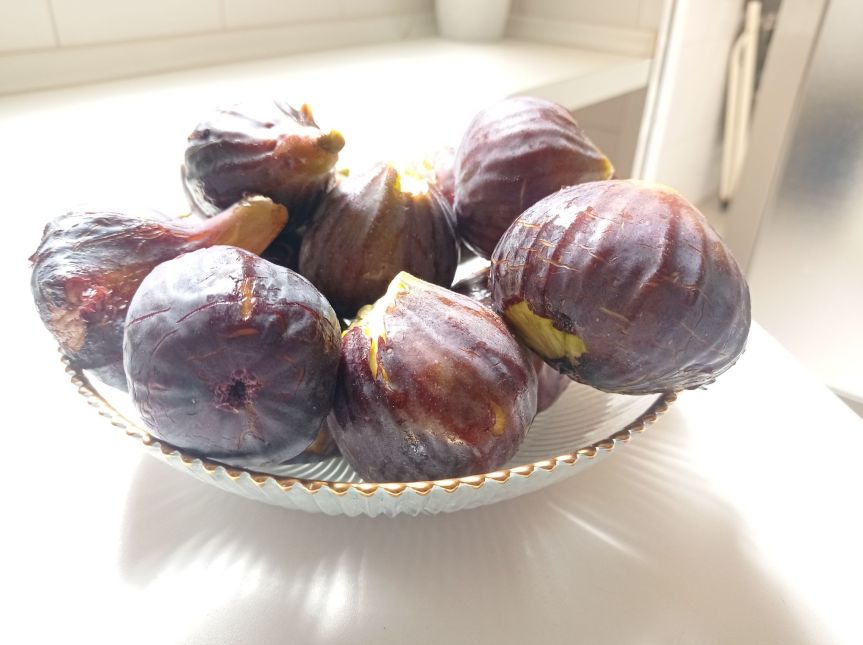
My friend and I walked toward home. She pulled me into a North African store and bought a bag of fresh figs: big, purple, and sweet. On the street again, she handed me the bag. “I got these for you because you helped me today.”

We sat on the front steps of my apartment building until the hopelessness of the morning faded with chatter and laughter. Deep down, there isn’t as much that separates us as we sometimes imagine.

What’s NOT been happening recently

I was planning to jot down a few of the things that have been happening recently here in my daily life in Spain.

So what’s been happening recently? When I thought about it, I realized that there have been a lot more things that haven’t been happening. In fact, it’s precisely because of what’s not been happening recently that gave me time to sit down and write today. 

At times, it’s hard to keep a full schedule in the summer. Most people don’t care to do things during the hottest part of the day, so social interaction hours are limited. Besides that, there are fewer people to do things with at this time of year. During summer vacation when the greenhouses and packing plants are mostly empty and the children are out of school, immigrants pile their cars and vans high with the gifts their families are expecting and return to their countries. 

That means that when plans are canceled here in Mytown, the backup plans are a wee bit sparse.

Take today, for instance. I had a full day planned. Actually, several layers planned. A friend had invited me to the restaurant where she works to learn how to cook lentils. Last night, she messaged to say that something in the restaurant was being repaired today and the restaurant would be closed. 

All right. My canceled English class from earlier in the week had been tentatively rescheduled for Saturday morning in case my first plans were canceled. “I hope you’re feeling better…” I wrote to my student. And she was, but not enough better to leave her house. 

So I reached out to my neighbor. I enjoy when she brings her boys over to play or when I pop down to visit, catching up on the happenings of life. But she was out of town visiting her sister. 

That was the point I gave up trying to be social. 

It was my week to clean the center anyway. And besides that, the inch of dust glaring at me from the baseboard in my own apartment attested to a month full of Saturdays of half-hearted cleaning around uncanceled plans.

So that’s what hasn’t been happening recently. What about you? Anything not happening in your day today?

A life of perpetual humiliation

I just finished reading Anthony Doerr’s Four Seasons in Rome. Someone discarded it, and I picked it up, curious. This isn’t a book recommendation unless you happen to know that you like Anthony Doerr, but Doerr’s descriptions of life on the outside of a culture cut me wide open. I didn’t know there were words for these “in but not of” feelings.

Apartness and perpetual humiliation are part of daily life for those living overseas. Sometimes we talk about it too much. Often we don’t even acknowledge it but let our frustration become part of the existing barrier, like a thick moss growing over a wall we’re trying to ignore.

We are outsiders, always outsiders, chipping at the barrier that stands between us. And there are successes! Moments when a chunk of the wall falls away and we glimpse the other side…only to find razor wire. 

“To be a nonfluent foreigner is to pass through one gate only to find yourself outside two more,” writes Doerr (p. 46). “We are humbled over and over–humility hangs over our heads like a sledgehammer… Oh, you think you’ve been here long enough to barter at the street markets? Guess what, you just spent €8 on three plastic clothes hangers” (p. 76).

After nine months in Rome, Doerr walks into a grocery store and makes an order without messing up a single syllable. “What happens?” he writes. “I get my groceries. No streamers drop from the ceiling, no strobe lights start flashing. The grocer doesn’t reach across the counter and take my face in her hands and kiss me on the forehead.” Instead, the grocer asks about his boys and speaks so quickly he can’t keep up. “…I miss 80 percent of it and sheepishly, stepping down from my throne of fluency, have to ask, ‘I’m sorry, more slowly, please?’” (p. 168)

For some, eventually the barriers do not loom so large or feel so insurmountable. But for many? “I know nothing… I never made it through the gates between myself and the Italians. I cannot claim to have become, in even the smallest manner, Roman” (p. 201).

True. Despite my efforts to integrate into the culture around me, my North American worldview remains mostly intact, placing me decidedly on the outside. 

But if we let it, doesn’t living on the outside help us accept who we are? After all, like it or not, we cannot cease being a part of something. Not being a part of the culture we’re living in is because we’re part of another, or even several. Being on the outside can help us identify our own “inside.”

Apartness and perpetual humiliation are hard, but they are also opportunities to learn and grow.* And we need these opportunities to understand ourselves.

So I will try to be grateful. Even as my neighbor gives me a list of what is wrong with my couscous. Next time, it will be better. I can promise.


Doerr, Anthony. Four Seasons in Rome. Scribner, 2007. 

*Thank you, J, for your positive spin on life to remind me to keep on growing!

Summer blessings

I could whine about whining mosquitos and the wet that blooms on my back as I walk to the store with the sun burning the top of my head. 

Summer is not my favorite season of the year, but today I choose to remember the things I like about summer…

Electrifying cold water descending down down to pool in my belly. Coconut oil that pours rather than being chipped from the edges of a jar and butter that comes pre-softened. The chorus of air conditioners from those lucky enough to have them. Shadows sharp from the bright sunlight. Coolness seeping out of underground parking garages to embrace passersby. People who aren’t afraid of the night because of other people who aren’t afraid of the night. Late morning yawns on balconies and on streets. The long shadows of morning and evening, wide enough for everyone to walk in the shade. The coolness of freshly mopped floors under my bare feet. Open windows, open doors. Always a conversation on the tips of tongues: the heat, the dust, the wind. The perfume of sunscreen–cocounty and sweet– from those in line at the supermarket. Every excuse for a siesta. The lack of hurry from a summer culture who has time to wait. Cars and vans leaving town, roof racks piled high with bundled gifts for family just a ferry-ride away. The lessening, the stealth of quietness that crawls into town as more and more people slip away for the summer. A pace of life that finally matches the projects at hand. And enough time in the day to spend with friends (those who remain).

Part six: Melancholy and sweet

Click to read: Part one: A palace and a hostel, Part two: A stolen sandwich and art, Part three: Relationship advice and edible puzzles, Part four: Tanneries and street food, and Part five: Friends and ferries


Melancholy and sweet. Those words describe the days following our return from North Africa. We knew our time together was winding down, and we were determined to make the most of it. 

At the beach, we walked along the shore until we were among a scruff of bushes and leftover seaweed. We spread our towel in a promising spot, but then had to scramble back to avoid a soaking. 

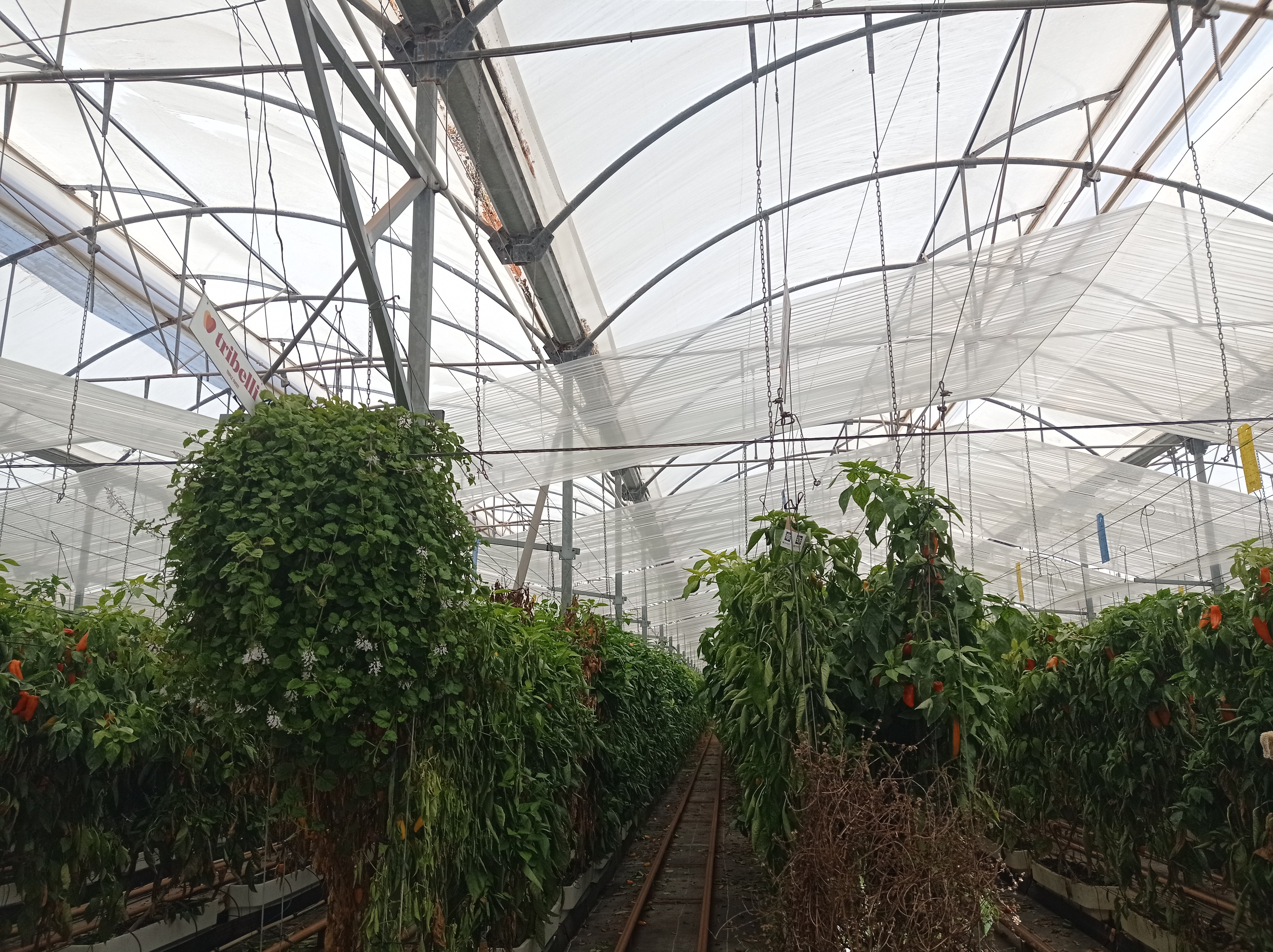
Next, we hiked a horse trail up the side of a cliff. The view of the town and the blue sea beyond was startling and we stopped to drink in the view… and let me catch my out-of-shape breath. From there, we joined a greenhouse tour with a group of German students. Some of them were in the eye-rolling stage and received lectures from our tour guide. J’s mind was brimming with questions, I could tell. But it wasn’t until we had munched our way through samples of tomatoes and cucumbers drizzled with olive oil that he was able to corner the guide and ask his questions.

Inside a plastic greenhouse

The next morning, we toured Almería’s Alcazaba (Arab fortress) with two teammates.

Arab fortress

On Saturday, we puttered around the center, cleaning and hanging out, then slipping over to my neighbor’s barber shop for J to get a trim.

That evening, my teammates hosted a “romantic date for two” in their living room. To dress up or not to dress up? Not to. That’s what we decided, knowing we would be most comfortable “as is.” So we arrived at the front door, barefoot and the day’s leftover sweat still clinging to our clothes. 

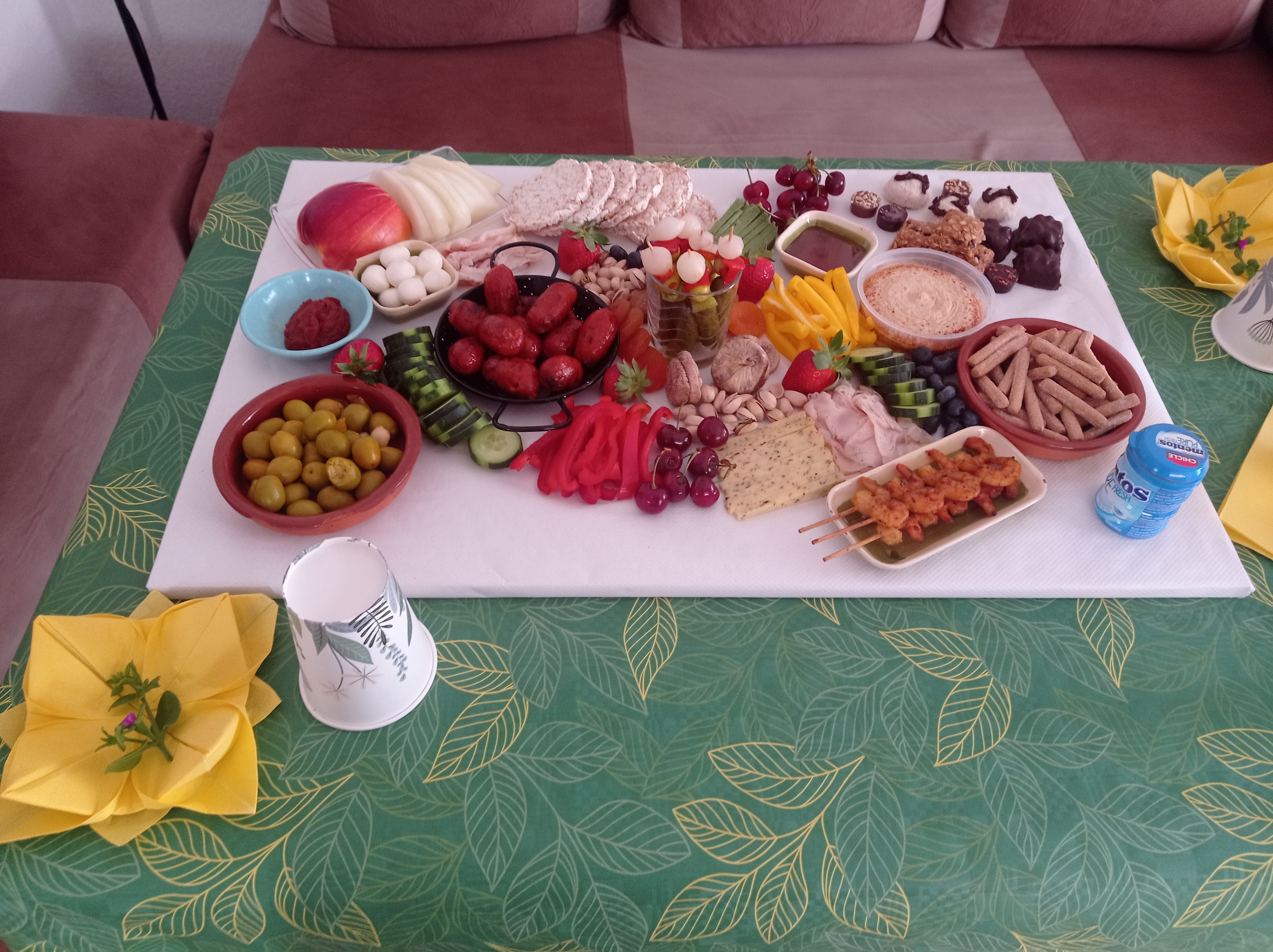
A smoldering incense stick, music, games, discussion questions, and a massive charcuterie board. We took a few moments to orient ourselves.

“Message us when you’re ready for tea!” And then they closed the door and left us alone. 

There were so many options that we hardly knew where to start. We sampled this and then that and then the other things. We paired foods, discussing the flavors and textures. Yes, for a long while our conversation revolved around food, but only because we were both enjoying the experience so much.

We played Dutch Blitz. I won, but he was such a good sport about it that it wasn’t even fun to gloat. We put a puzzle together and talked until we were yawning, or, in J’s case, until long after we were yawning. J managed to walk me home, even with drooping eyelids.

charcuterie board spread

We spent Sunday morning walking around town and looking for murals and other interesting sights. J had the sermon for our team service. I don’t remember how we spent all of our time that day; I just was aware that it was passing too quickly. 

Monday was our last day together. We took the bus up the mountain to the springs, spread our blanket, and sat on the thinly-covered knobby ground. We talked, played Qwirkle, and stuck our feet in the chilly stream. I managed to hike partway up the side of the mountain with him, but petered out and parked myself on a nice rock while he ran the rest of the way up. Yes, ran. When he returned, we meandered among the busy beehives we found there and managed not to get stung. 

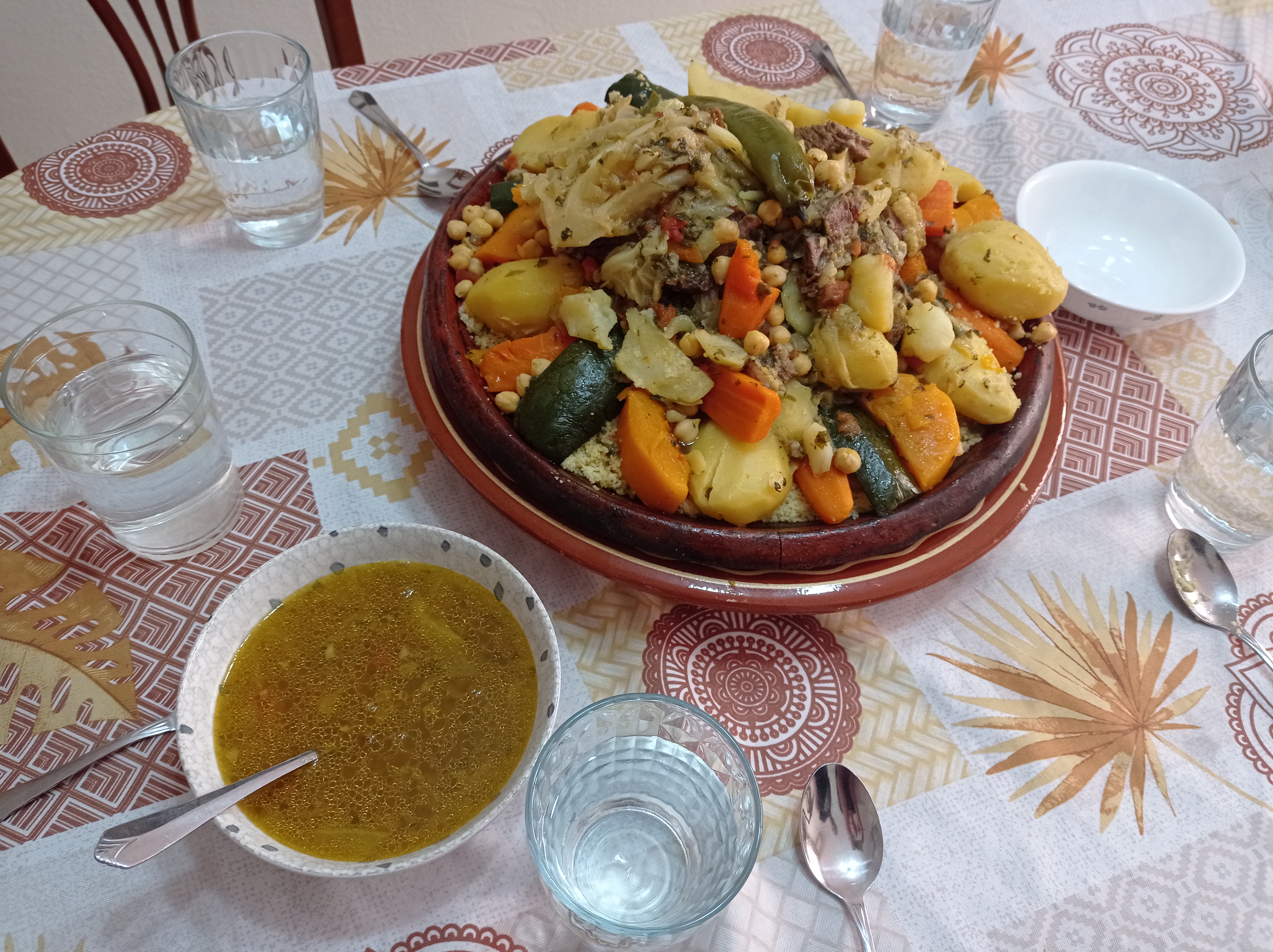
After a stroll through a sprawling Spanish town, we eventually caught the bus back to Mytown just in time to join teammates for a steaming plate of couscous that hit the spot exactly.

plate of couscous

A few hours, a walk, and a couple of park benches later, we ate our last supper together and J washed the dishes for the very last time. 

Then it was time to go.

We stood shivering in the chilly night air until the bus driver beckoned. It was over. For now.

But like J wrote the next day: “…we have accumulated some good memories and have many more to make.”

Part five: Friends and ferries

Click to read: Part one: A palace and a hostel, Part two: A stolen sandwich and art, Part three: Relationship advice and edible puzzles, and Part four: Tanneries and street food


My friend was waiting when our bus pulled into one of the country’s eastern-most cities. Back at the house, we joined her husband and a bubbling lasagna and caught up over supper.

When the guys left to check into J’s downtown hotel, J took my phone–the one with functioning data–in case he needed help getting back in the morning. As he left, I worried aloud. My fears were unreasonable, I knew, with his being a seasoned traveler, but he was blazing a new territory all alone. He told me that I was nervous so he wouldn’t have to be. 

As soon as they had gone, my friend and I got down to the heart-to-heart girl talk we’d been waiting for.😀

The next morning, her husband got up early to make the German version of cinnamon rolls, or “cinnamon snails.” After breakfast, we parted ways–the men for a hike, the women shopping. My friend and I moseyed through a shaded market area and even had the privilege of witnessing a fight involving a shattered shop display and two irate shopkeepers. We also meandered through the city and finally found an unoccupied shady spot in the park.

The only thing I bought was a notebook for writing letters. I figured J would approve since most of the letters would likely arrive to his mailbox.

Market wares

We met the men for lunch in a family restaurant with comfortable chairs. We lingered over the mouth-watering salads, reluctant to move on, even after the main course arrived. Our main course, tride au poulet, was chicken slathered in some sort of sweet sauce and covered with thin sheets of pastry dough. It was delicious, but far too sweet for either J or me. We made a valiant effort, but still couldn’t finish the dish.

bread and small dishes of various salads
tride au poulet

After an afternoon rest, we walked to a local park–a dot of refreshing green in the midst of vast brown. We picked up a few foods on our way home for a light supper. I may or may not have eaten more than my share of the maaqoudas (potato-based fritters) because I forgot how much I loved them.

The next morning, we said our goodbyes after breakfast. It had been a short but worthwhile visit. As we waited in line for a taxi to take us to the border city, I was unpleasantly surprised to see that our taxi would be an old Mercedes rather than a newer taxi where everyone was entitled to their own seat. The driver ordered J and me to sit together in the front seat. I attempted to be a good sport, but I could already picture us emerging from the taxi hours later with crooked spines and headaches. J perched himself on the center console and somehow managed to give me the majority of the front seat without interfering with the driver’s shifting. He even dozed off up there!

Our border crossing was smooth, thanks to our blue passports. From the border, we walked to the port and boarded our waiting ferry. We had the perfect amount of time, despite the fact that we had forgotten to calculate the hour time jump once we crossed the border. The ride was 6½ hours, so we had plenty of time both to rest and explore. We did both, but spent most of the time on the upper passenger deck. There, the wind was chilly and the sun bright. As we talked, we stared at the water, mesmerized by the swirling foam the ferry left behind. We even saw dolphins for a few magical minutes.

ferry on open sea

Soon, darkness was falling. Our ferry pulled into the Almería port and we disembarked into the familiar night air. After only five days in North Africa, Spain was downright homey.

Part four: Tanneries and street food

Click to read: Part one: A palace and a hostel, Part two: A stolen sandwich and art, and Part three: Relationship advice and edible puzzles


I had never used the BlaBlaCar app before. Surely a carpooling app couldn’t be as pain-free as it looked. But it was! J and I arrived at the Málaga Costa del Sol airport in plenty of time. We checked in and zipped through security and border control before parking ourselves just inside of the international gate area to people-watch.

We were some of the last passengers to board our flight. Why rush to constrain yourself to a seat that’s already reserved for you? Our 15 euro flight got us to North Africa safely. After we landed, J and I stayed in our seats rather than smashing ourselves against the other passengers in the aisle. We didn’t even stand up, necks bent at unnatural angles under the overhead bins. (Why do we do this?!)

A man who had been watching us announced to the other passengers: “These are the most intelligent people on here! They waited to get on the plane until the last and they are waiting to get off the plane too!”

As we waited in the customs line, I couldn’t wait and asked J, “What do you think of North Africa so far?” Wisely, he returned that he wasn’t sure if his first impressions were accurate and that he’d rather wait to give them.

We stepped out of the airport and were spat into North African culture where overly helpful taxi drivers swarmed. After hemming and hawing, we agreed to a ride for 150 dirham, 50 dirham less than the initial asking price.

Once we had been deposited in our friends’ neighborhood, I asked the neighborhood guard where the Americans lived. He pointed me to a black gate and told me how many stories up. Americans in that part of the world don’t have much anonymity, and that is what I had been counting on. 

We joined the family, catching up on life, hanging out with the children, and feasting on a giant stir-fry for supper. 

The next day was our day to tour the city. It was my chance to show J the world that had been mine for 16 months. We passed my old language school and I recalled the hours I had spent exhausting my sweat and tears while learning Arabic. We dropped by my old neighborhood too, even popping in at the little store around the corner to say hello and buy a Snicker bar just because. (We also forgot about that Snicker bar until it became a squished pile in the bottom of our warm and sweaty backpack.) 

From there, we snagged a taxi to the old city. I could already feel myself shriveling into a prune. The weather was hotter than I had expected and much drier than either of us were used to. We couldn’t keep up with our water intake. 

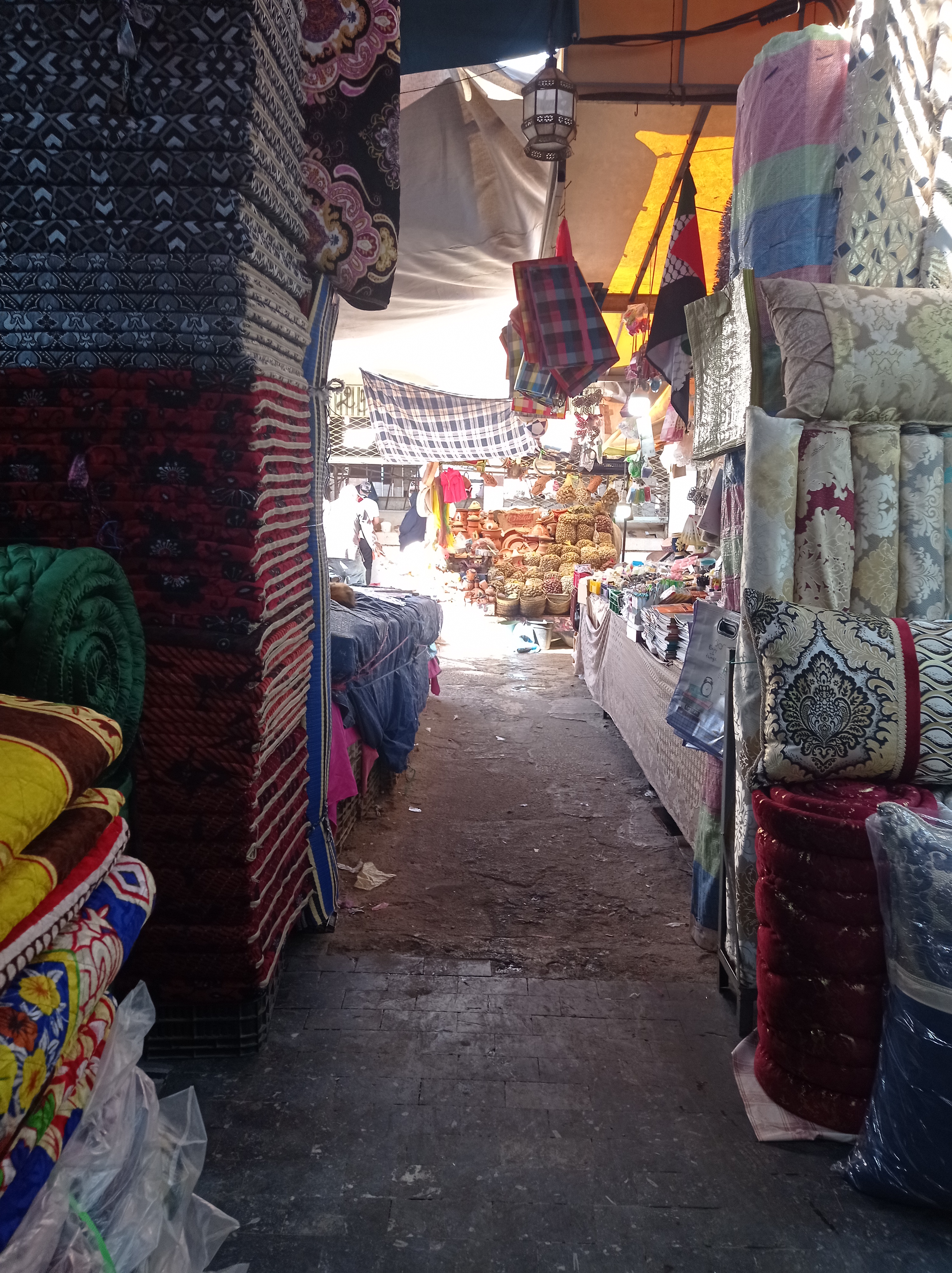
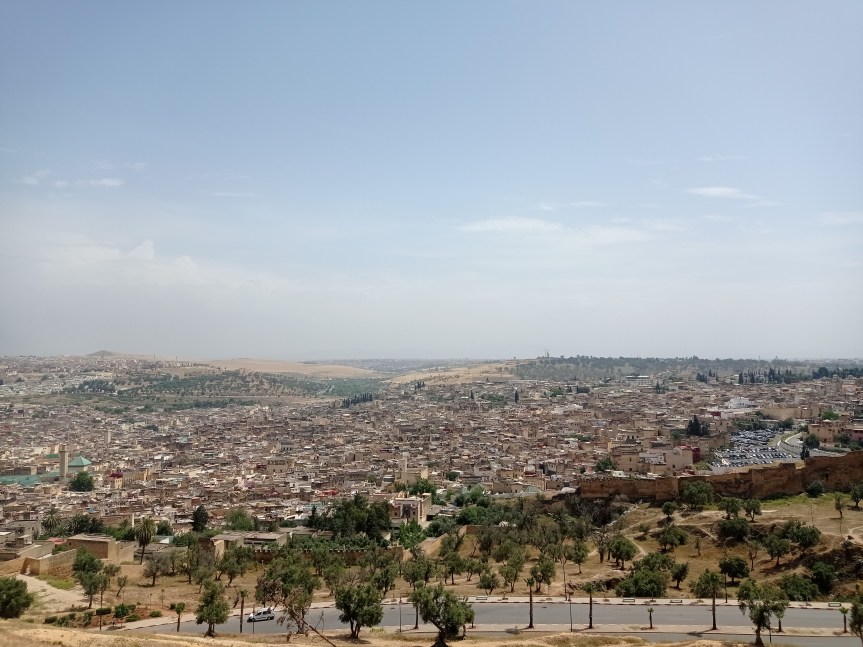
We descended into the heart of the old city to the renowned tanneries, avoiding anyone who was too helpful. In fact, over the course of the day we managed to disappoint a lot of hopeful shopkeepers, browsing rather than buying. At the tanneries, we stood at the lookout and peered down on all of the action. There was so much to watch at once. J shooed away an over-eager tour guide, preferring to figure things out on his own.

colorful tannery vats

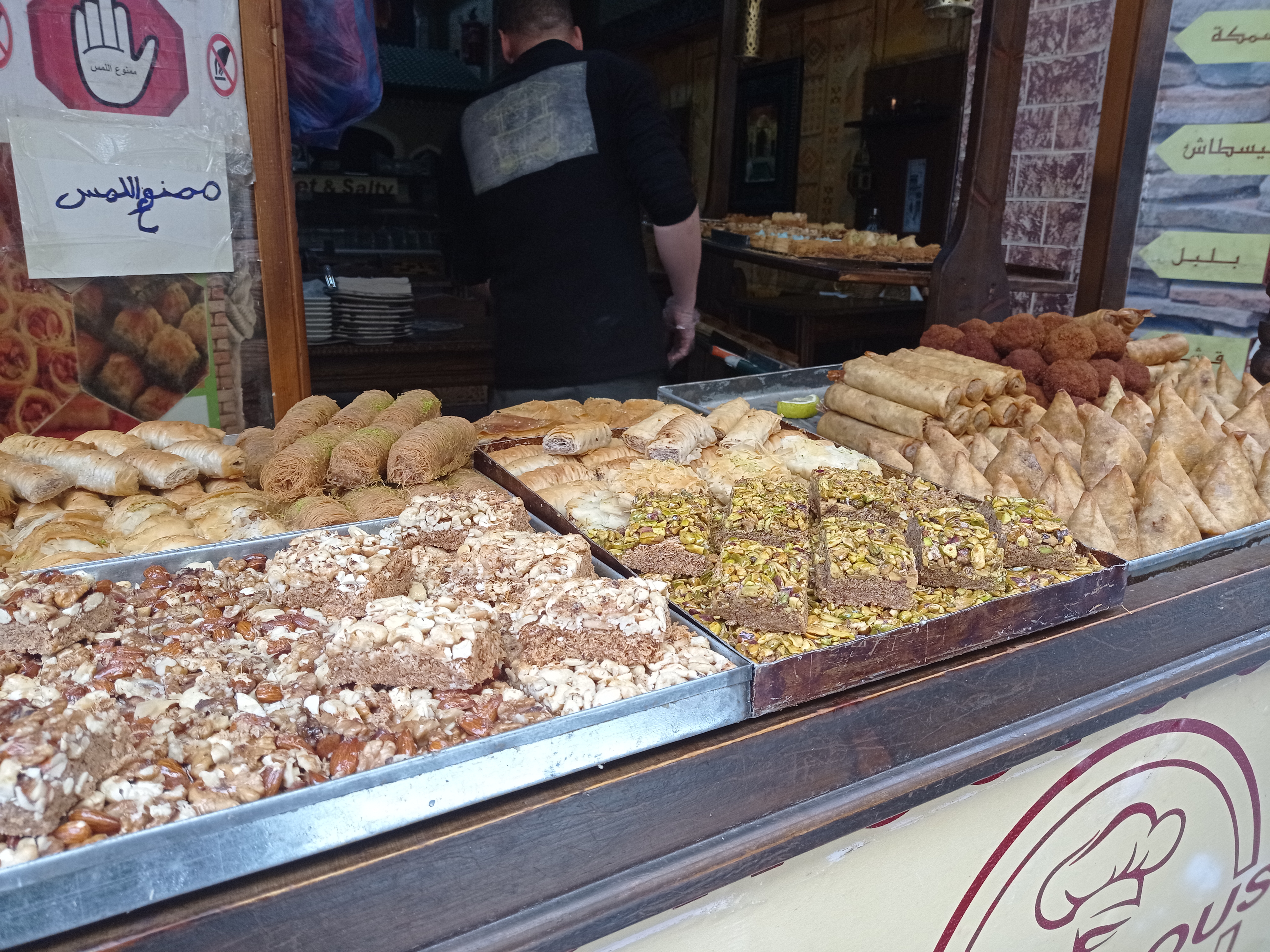
We hunted for a hole-in-the-wall restaurant, but the only one I remembered wasn’t serving lunch yet. So we bought street food instead: neems (fried spring rolls), briouats (a triangular, chicken filled pastry), kalinte (chickpea flan) sprinkled with cumin and red pepper, and olives with lemon and parsley. 

We looked for a place to eat our collection, and finally found a sunny spot along the ledge of a fence. But first on our menu was activated charcoal. Three pills before and three after a meal. With street food on a warm day, I got pretty bossy about following the instructions. We took our time, munching and tossing olive pits at the trunk of a scrawny tree in the sidewalk. Even there in that scorching African sunbeam, our repast was delicious.

street food cart

From my time of living in the city, I had fond memories of climbing up the side of a hill to a set of ancient tombs that overlooked the city. But how to get there? We stopped to ask directions. The shopkeeper gave us some of his life story for free as well as detailed directions, which I promptly forgot by trying to retain everything he said. No matter. We still had Google maps and what was left of my memory. We wound our way up the hill, admired the tombs and the view and then parked ourselves in the shade until my fantasy about a tall glass of fresh-squeezed orange juice overpowered the lure of a shady spot. 

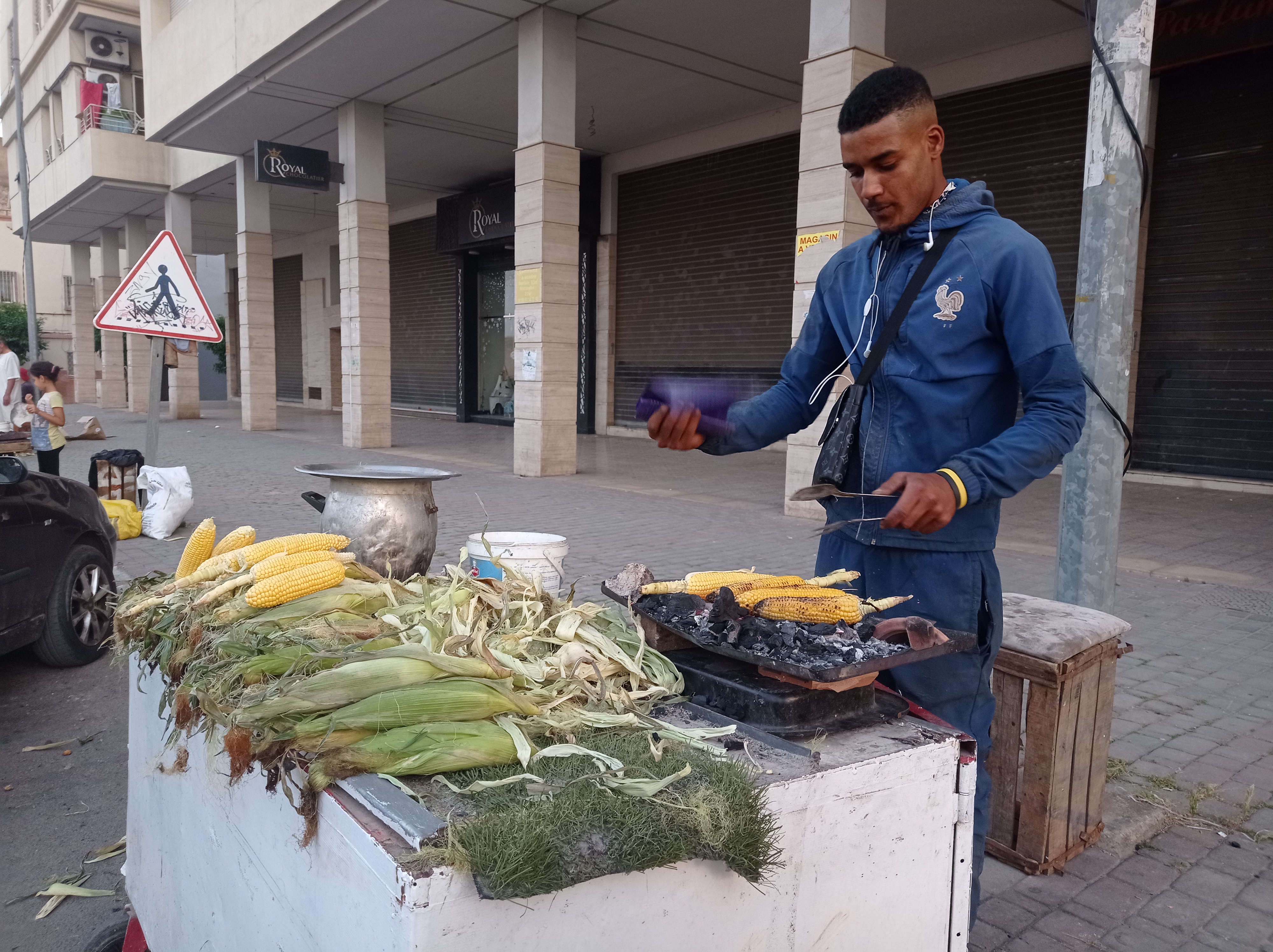
We spent a chunk of the afternoon perched on a restaurant’s third story, sipping orange juice, eating tagine, and watching people swirling in and out of the city gate below. Once we had cooled off, we meandered back to our friends’ house, with one last stop to buy an ear of roasted street corn.

Street corn vendor

The next morning, we envisioned ourselves arriving at the international church on time. Instead, with all of the careful packing that went into the morning–the gifts for a friend’s family, the trusty charcoal, and the Imodium, just in case–I managed to forget my wallet. My wallet which held our only local currency.

“I’m sorry. We don’t have money,” I told the taxi driver. “Take us back to the house.” Obligingly, he made a loop at the next roundabout and waited outside while I dashed up the flights of stairs to retrieve my wallet. Any dreams of arriving at church on time were crushed. 

Although the fellowship had changed since I had been there last, it was still charged with a buzzing energy of brothers and sisters in Christ uniting after a long week. After the service, I was able to reconnect with a few acquaintances before we were on our way to visit Chaimae and her family.

I was surprised by how Chaimae’s family remained unchanged. Throughout the day, most of the family dropped by, delighted to meet J and practice their English. They fed us breakfast and then fed us several courses of lunch a few hours later. That afternoon, J got a very long look into North African culture.

North African breakfast spread

Our time in the city was drawing to a close. The next morning we breakfasted on eggs and khlea, a cured beef that tastes like a barn. I hung out in the egg section, but J preferred the barny beef. The guy has an inexcusably tolerant palate. 

As we left the city, I looked out the bus window, wondering if I was saying goodbye forever. I felt nostalgic but realized I no longer had a lingering sense of belonging.

Part three: Relationship advice and edible puzzles

Click to read: Part one: A palace and a hostel and Part two: A stolen sandwich and art


J and I spent almost a week in Mytown. He stepped into my life and met my people. Yes, I continued to feel the emotional dissonance of my meshing worlds, but assigning a name to the feeling seemed to rob it of its power. 

“Does he have money to take care of you?” 

My friends and neighbors invited themselves into the particulars of our relationship. They all had advice about where we should live, how soon we should get married and start a family, etc.– but they always expressed their approval of J in the end.

We found park benches to sit on and people-watch. We discussed things we hadn’t thought to discuss on the phone or through emails and messages. Sometimes we didn’t bother to do anything except “be” with each other. 

Two men on a park bench in a plaza

But that’s not all we did. We had British breakfast at the port. And on the beach, I collected broken shells while he went for a jog along the shoreline. A teammate borrowed J for morning bike rides, giving him the chance to burn off some of his morning energy before I even rolled out of bed. 

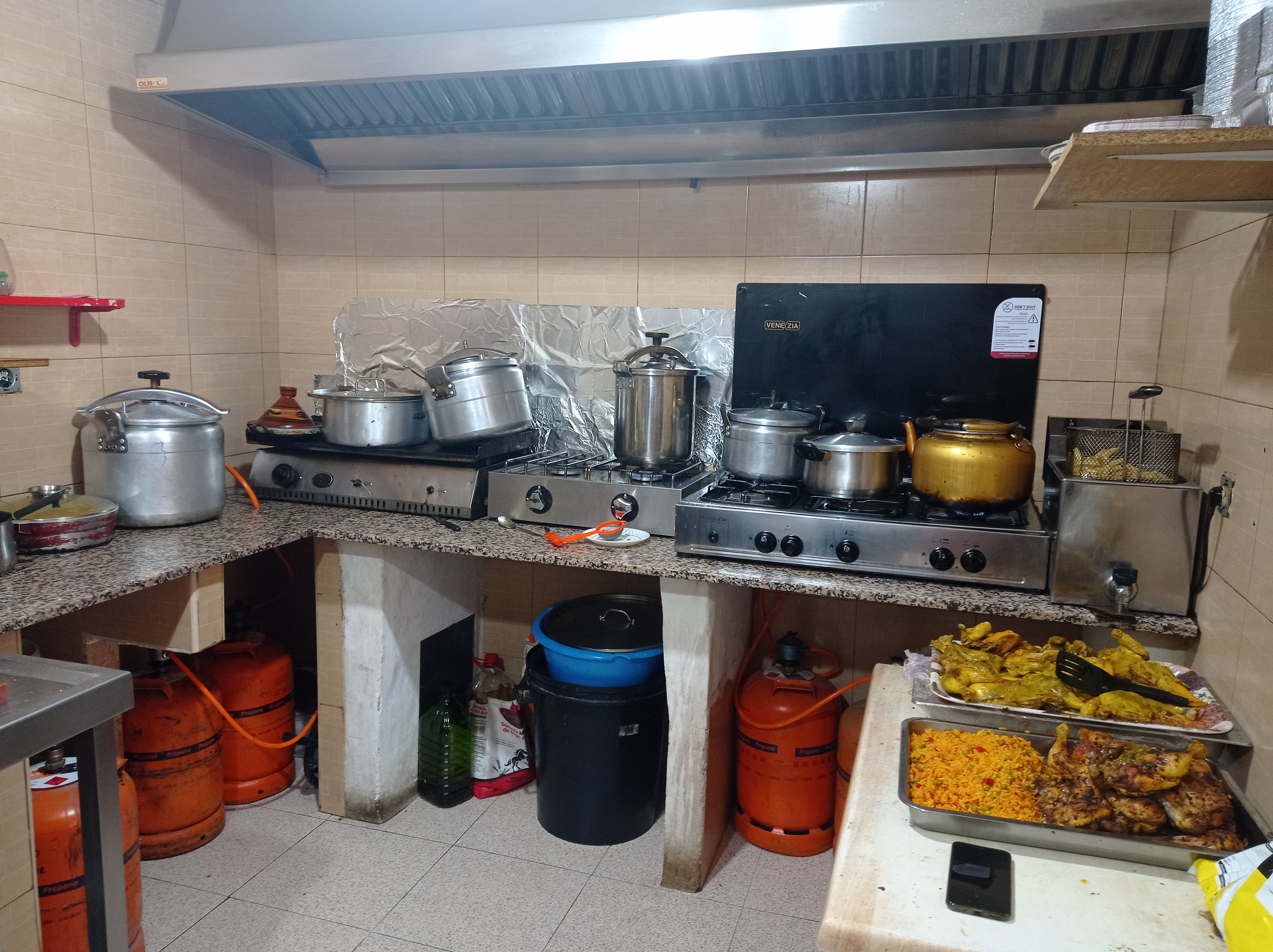
Late one morning, we bussed to a neighboring town’s restaurant where my friend cooks. She gave me a tour of the kitchen, lifting kettle lids and describing everything inside. She heaped our table full of food we hardly made a dent in: chicken with rice, lentils, beef and prune tagine, salads, fries, bread, vegetables, and tall glasses of orange juice. “I was so happy when you said you were coming that I cried,” she told me later. She expressed her appreciation for our visit by making sure that we were taken care of… right down to ordering our pirated taxi ride home.

Restaurant kitchen filled with prepared food

We delivered birthday gifts to my neighbor boys. We went to the market and bought a buffet of olives and other pickled delights. And J chatted with the various Chinese store owners around town. His Mandarin was typically met with surprise and guarded curiosity… or even an expletive.

We spent a warm afternoon volunteering with the Red Cross, entertaining a group of children while the village women studied basic Spanish. The director had brought puzzles for the children, but the puzzles were too advanced for their ages. One little boy leaned into an open puzzle box and scooped the pieces to his mouth, pretending to eat them: “Om! Om!” he said over and over again. The other children weren’t too concerned as long as his appetite didn’t extend to their puzzle. There were some wild moments, some tattle-tale stories, and a mini lesson on forgiveness. A volunteer from another district had brought virtual reality glasses which entertained a few adults and children at a time. 

Over the course of the week, we spent a lot of time at the center where J was staying, learning how to bump around in the same kitchen together while on task. J faithfully washed the dishes after our meals; I could probably count on one hand the number of dishes I washed when he was around. Our team met on Sunday and for a few other activities scattered throughout the week. 

In the evenings, J would walk me home. And in the mornings, he would usually meet me on my way to the center. In fact, there was rarely a time that I walked that three-minute walk entirely alone. A delighted smile to greet me on the street was one of those small things that made me miss him terribly when he was gone. 

And then, on Thursday evening, we finished our laundry, packed our backpacks, and attempted an early bedtime. The next morning, we left for North Africa. 

Part two: A stolen sandwich and art

Click to read Part one: A palace and a hostel.


J woke up after the time we had agreed to meet in the lobby. We had planned plenty of time, so I was content to let him sleep off as much jetlag as possible. Besides that, I wasn’t confident which bed was his. With those curtains, what if I reached in and poked the wrong man? I sneaked a snack from our stash in the communal refrigerator and then noticed that the second half of the sandwich was missing. Who would have nabbed a half-eaten sandwich? I wondered, pensive. I passed the time answering messages and chatting with a Lithuanian lady who had broken her phone at the beginning of her two week trip. 

Eventually, J came out to the lobby, looking much brighter than the night before, but still sleepy around the edges. He confessed to waking up in the wee hours of the morning to eat the rest of the sandwich. Mystery solved. 

The Puerta del Sol was on our way to breakfast and the museum, so we stopped to get our picture taken under the iconic bear. Because I am several inches taller than J, but our families didn’t know how many, we decided to exaggerate our height difference. I stood on my tiptoes and J bent his knees. The camera snapped and with a little cropping, our photo was ready to send. 

“Quite the height difference!” commented my sister with a laughing emoji. 

“Yes, it’s something to get used to,” I beamed back at her.

“I do believe he comes a little higher than your elbow…”

I guess we’d overdone it. 🙂 

Our breakfast was less than remarkable, but the Museo del Prado, the renowned art museum of Madrid, made up for it. We spent the entire morning there, wandering and wandering and still covering just over half before we were too exhausted to continue. I loved enjoying the paintings together, studying them long enough to point out things to each other. Sometimes, we laughed. Sometimes, we stood in awe. Sometimes our wonder was more of the skeptical type. We both agreed that we’d rather fully enjoy a few works of art than see everything at breakneck speed.

We attempted lunch but weren’t hungry enough to justify spending 50+€ on a paella for two. We thanked the hostess and ducked back out on the street where we found a grocery store that sold prepared salads. We took our salads to a grassy boulevard and sat on a bench to eat and bolster ourselves for another tour. 

The National Library of Spain

This time, we toured the National Library of Spain. We listened to an audio guide on my phone and after a strange encounter with the guard who seemed reluctant to understand my Spanish until I doubted that I was even speaking it, we toured the rest of the library unbothered. 

glass palace in Madrid's Retiro Park

Back at Retiro Park, we found the glass palace. Then, we sat in the grass and watched the carefree groups of people strolling by until we decided we should meander back for some supper and our hostel. We ate a seafood paella in a corner of a hopping restaurant, growing sleepier as the minutes ticked by. It would be an early bedtime, for sure.

The next morning, we were both up and ready to leave before we had planned to be. Our trip down to Almería was smooth. We traveled from bus to train to bus–two extra buses due to construction on both ends of our journey. We dozed, watched the scenery, and talked, sometimes about those topics that are best talked about in person. Wanna know what we talked about? Too bad. It’s “not your market” as the North Africans say. 😉

A teammate gave us a ride back to Mytown. I sat in the backseat, feeling a measure of something I couldn’t describe. It wasn’t entirely pleasant or unpleasant. So I just sat with it, pondering. We lunched with teammates, unpacked, and I gave J a mini tour of Mytown, introducing him to a piece of my world. 

It wasn’t until I was preparing for bed that I was able to label what I was feeling as “emotional dissonance.” I was beyond delighted to show J my world in Spain, but watching my worlds mesh was unsettling. Like the world that had felt so close was being replaced by another world that, in new ways, felt closer.