A morning of sounds

What does my typical North African morning sound like?

  • Mourning doves cooing outside of my window and a lonely rooster penned in someone’s courtyard
  • Slated shades being pulled up from various apartments
  • Water running, the electric kettle steaming, my own munching and slurping
  • A few mumbled “Good morning”s and “Have a good day”s
  • The bang of the door as I pull it shut behind me
  • Clomp, clomp, clomping down two stories of steps and the banging the apartment building door
  • The murmur of passing cars from a perpendicular street
  • A few snatches of conversation between school children and university students
  • A cat meowing as it digs through leftover garbage
  • “Bonjour!… Bonjour! Hola! Hello?”
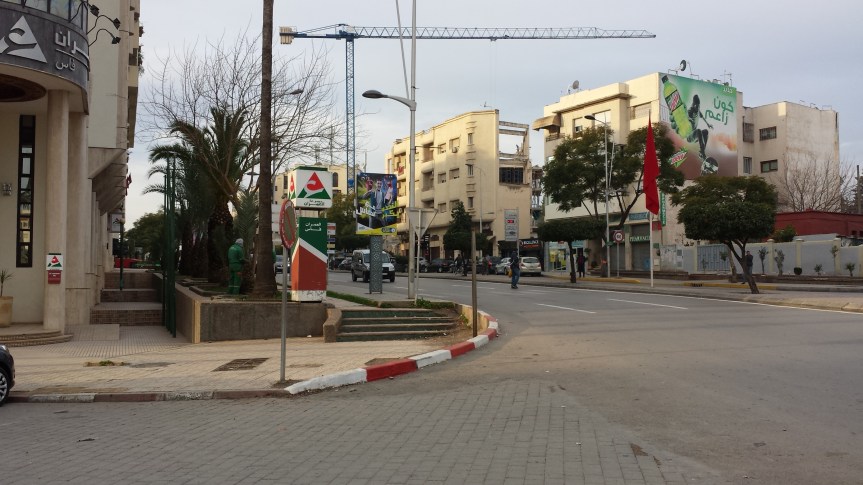
  • Horns honking around a busy intersection as other cars and pedestrians assume the right-of-way
  • Motorcycles, buses, trucks, cars, bicycles weaving in and out of each other—the screech of brakes and more horns and perhaps some yelling
  • A jackhammer of busy men working on the street
  • “سلام”
  • The scratching of a stalk broom on a sidewalk
  • The buzz of the Arabic school’s call button and consequently the opening of three heavy doors
  • “صباح الخير. لا باس؟”  “لا باس الحمد لله.”
  • The sharp sound of chairs on a bare floor and the rumble of moving wooden tables as we all pile in and settle down for a long Arabic session

Irritating?

Being immersed in a new culture reveals that some cultural customs are bad, some are neutrally different, and some are good… sometimes better than they are in our own culture.

Quite honestly, something in this culture grates on my nerves. It doesn’t happen every day, but when it does, I find it inexpressibly irritating.

As I walk along the street,  I meet passersby who look like they lead normal North African lives. Then without warning, one of these normal-looking people veers in my direction and holds out their hand for money. It’s as if seeing me, a foreigner, makes them remember they are not satisfied with their normal lives.

Irritating? Quite. I am a victim of racial profiling.

Well, today as I walked to school, I began to rethink this irritation of mine. What if, instead of looking at me and recognizing their lack of money, they looked at me and recognized their lack of something much greater, Someone much greater? What if, by seeing me (not as a foreigner, but as a friend), they realize that they are not satisfied to live a normal life?

And when that happens, will I be ready or will I be irritated to share what I have?

Ode to Marriage

The rain is banging against the tarp, filling the concrete house with a dull roar. Just the sound of it causes my bones to shiver. I promised myself a cup of coffee as long as I diligently planned the week’s English lessons. Then I opened a blank document and forgot my promise.

There is something about having a sheet of white on my screen that makes my fingers want fill it up with random thoughts. This time my random thoughts are about marriage.

What do I know about marriage? Very little since I’ve been single for nearly 30 years. Yet, being in a culture that points to marriage as necessary for one’s spiritual journey makes me contemplate this more than I would were I still in the States.

In one perspective, life begins at marriage. The unspoken idea is that one cannot be happy unless they have a significant other.

Then there is the perspective that life ends at marriage. Think about how countless movies and books end with a couple finally realizing that they are right for each other. Why do the books and movies end there?

And then, even more real to me in this culture is the perspective that once a woman is married, she becomes her husband’s servant and is bound to her home. Her only joy after marriage is having children.

At times, I’m envious of married couples who step into this new world together and get to experience things as a unit rather as individuals.

To me, that’s one of the most beautiful things of marriage: companionship. I told my classmate my thoughts and she looked at her husband and smiled: “Yes, that’s true. But once you’re married, you don’t DO as much!”

I suppose there’s a flip-side to everything. That’s why I won’t stress out about my marital status. The preparation for anything is in seeking God’s face.

These are my disconnected, rainy day thoughts.

Bread and soap operas

What do bread and soap operas have in common? Perhaps nothing. Yet recently, I’ve been beginning to wonder if there indeed is some sort of correlation.

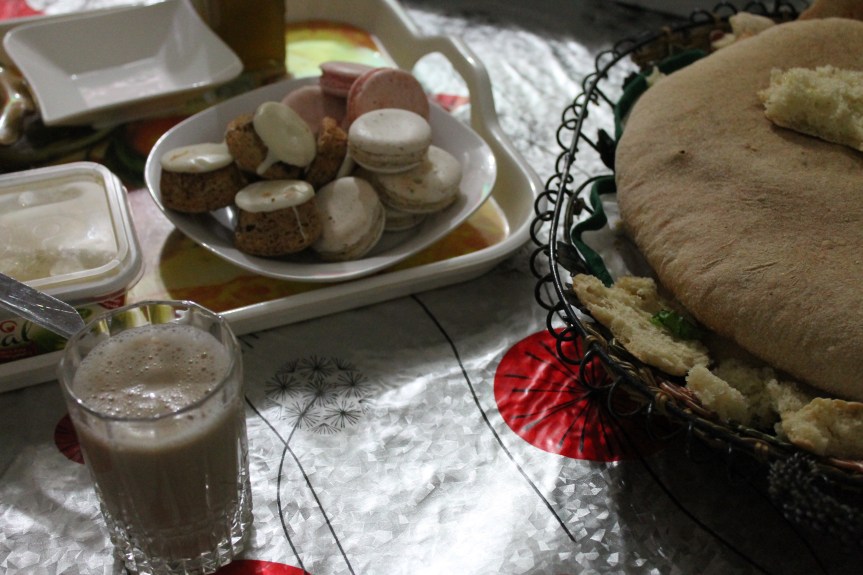
Imagine bread for every meal—breakfast, lunch, afternoon coffee time, and dinner—and soap operas, not between those meals, mind you, but before during and after those meals.

Lest you become concerned that I have just wasted a week of my life by living with a local family, rest assured that not all of my energy was spent in anticipating the next show.

More than spicing my limited vocabulary, the week marinated me in the flavor of the culture. What do their homes look like? What do they eat? What do they do during the day? How do they use a bathroom without an American toilet? How does a typical family function (or dysfunction)?

Overall, the week was culturally awakening. Now the North Africans I pass on the street aren’t just people–they belong to a home and a family…and maybe I’ve just sampled a slice of their typical day.

Having said that, I still might be able to tell you the time of day according to what soap opera is on.

A day of smells

What does a typical day in North Africa smell like? Well, this is my day in smells:

  • the cold of the morning outside of my blankets
  • the bathroom: a strange mingling of soap, wet, and a scent that creeps up the drain overnight
  • the sweet of a clean kitchen until I open the refrigerator and catch a whiff of leftovers with a hint of aged dairy
  • outside the front door, there is a deeper cold smell mixed with the trash that cats have been sorting through during the night
  • and speaking of cats, their odor lingers despite their absence–not overwhelming, just there
  • walking past several men’s cafes guarantees a pair of lungs full of cigarette smoke
  • exhaust fumes from cars, taxis, and buses
  • the smell of used taxi seats partially covered by an air freshener and the cold
  • trash, fumes, and the sweet citrus of the orange trees on the walk from the taxi to school
  • the faint smell of gas from the lounge heater
  • wood smoke seeping out of a nearby house
  • food cooking in the cafes mixed with the ever-present cigarette smoke and the scattered trash
  • rotting fruit rolling along the sidewalk, kicked and trodden upon by passersby
  • garlic and chicken for lunch and consequently garlic on my breath after lunch
  • exhaust fumes and the sharp stench of urine on my walk to the park
  • the lovely freshness in the sweet acres of green and water: herbs, damp dirt, falling leaves
  • drifting in the open taxi window on my way to teach English is cigarette smoke, meat cooking on open grills, smell of humanity, and exhaust fumes
  • the pungent scent left over on the school desks of my classroom: what I imagine to be from unwashed hands
  • dry erase markers
  • mixed scents emanating from my junior high students: perfume, body odor, energy
  • and as the darkness falls, so does the cold, again suppressing the daytime scents
  • but there is still a damp that hovers in the air
  • and there is still the soap scent lingering on my sweatshirt as I cuddle up to study Arabic before bed

Photo by Brian Jimenez on Unsplash

The tourist attempt

Today I got my first taste of the unique flavor of tourist and local culture…alone. That taste has shaken me. Upon returning home, I brewed myself a pot of coffee and put in the remainder of a carton of cream. Just try to convince me that I don’t deserve every calorie.

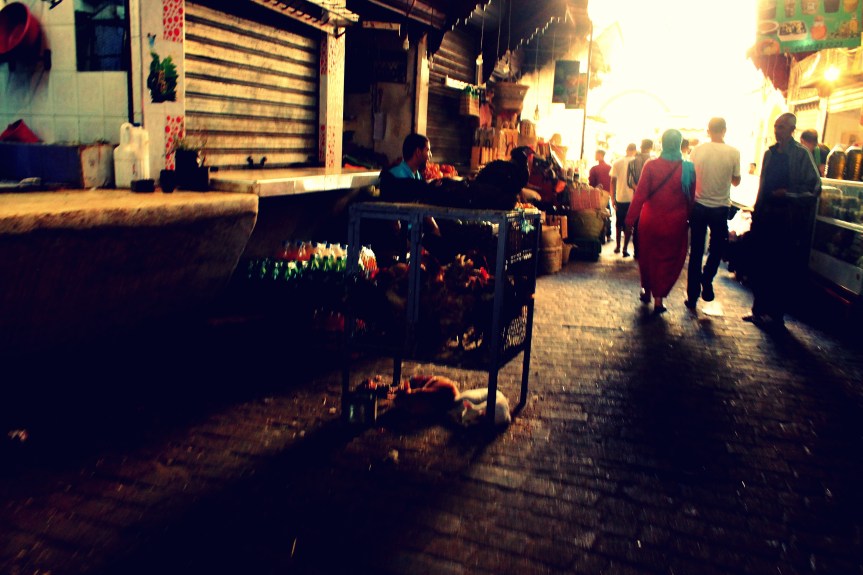
My intention was to get home from school and join some friends at the leather tanneries in the old city. They left before I got home. So I grabbed my camera, a little cash, and my phone and started after them. The brisk walk took me down familiar streets full of familiar vendors. The colors, activity, and smells are why I like the old city.

The tanneries are located at the bottom of a very long street. Although I had never been there, it was simple. I would keep walking until I met up with a group of white foreigners with cameras around their necks.

After shaking a few persistent vendors who believed that they were selling what I was looking for, I put it in high gear for the downward trek, dodging children as well as the elderly, carts, donkeys, and cats.

No, I didn’t recognize the area, but of course I wouldn’t since I’d never taken the street down so far. I was encouraged by the faint stench of the nearby tanneries. But then I came to a T. And then another T. I paled and stood up against a jewelry vendor to let the crowd press by me. The streets had disappeared into tunnels. At the call to prayer, vendors began closing up their shops with thick wooden doors.

I pulled out my phone. “Um… where are you guys?” As long as I was on my phone, passersby were less likely to approach me, right?

Fat chance. “Hiiii. How are you? What’s your name?”

The jewelry vendor tried to help me when talking with friends unveiled no solutions. Before I left, he told me to come back to his shop if I ever wanted earrings. I’ll keep that in mind, thanks.

I started back the way I had come, but the closing doors of the shops threw off my sense of direction. The landmarks were disappearing. I started down one side street, only to realize that it looked more like a public bath entrance than a street. I spun around and kept walking…and walking.

Look confident!

I turned down a promising street and marched onward. The overhead daylight was a good sign.

“Where are you going, madame? That street goes nowhere.” A schoolboy approached and promised to take me to find my friends. “It goes to the tanneries.”

I explained that I wanted to meet my friends at the tanneries, and the boy insisted on being my guide. I tried to shake him, but he refused to go…and I was beginning to realize just how lost I was. When I came face to face with a few haughty men who wanted to take me through deserted buildings to the tannery, I told the boy to take me back to the main street. I was going home.

He led me to the back streets, narrow alleyways between towering concrete walls. Something was dripping ominously. A few men wandered in and out of partially hidden doorways.

Look confident! Don’t act afraid! But if I would scream right now, who would hear me? I had no concept of how close I was to the public. This school boy was relatively harmless, but was he leading me into a trap?

It took many more little streets and uphill climbs for him to point me to the correct street that would take me home.

“Thank you!” I talked to him as I paid him and found out that he spoke several languages; what a perfect little tour guide.

I turned down his offer to go to coffee (perhaps he didn’t realize I could almost be his mother?) and scuttled toward the street. I wanted to kiss the familiar vendors and buy everything in their shops, but I charged uphill toward home.

I nearly collapsed when I stepped inside the front door. That’s why I made myself a pot of coffee. I guess I’m not cut out to be a tourist. No tanneries for me today. Maybe ever! At least without people I know chained to my wrist.

The Noisemaker

Somewhere along our street lives a tiny man, perhaps no taller than my shoulder. I can’t say for sure because I’ve never seen him. He sleeps during the day and when the neighborhood goes to sleep, he steps out of his musty little house and begins his work.

See, although I have no proof, I do have ears. Every night I go to sleep, and every night the Noisemaker awakens me.

One night he walked up and down the street making a noise like a hoarse donkey’s bray. The dogs at every house barked furiously as he came and went, back and forth, back and forth. I lay in my bed, stricken with fear because the noise sounded like what I imagined a lion’s hiss to sound like. Now, I’m not even sure that lions hiss, but that wasn’t a factor I considered in my sleep-deprived state.

Just last night, the Noisemaker borrowed a keyboard and put it on the chorus setting. He played three notes and pause, three notes and pause. At least that’s what it sounded like: carolers outside the door starting and restarting their song. AhAHah, ahAHah. This time I wasn’t afraid because I knew it was just the Noisemaker.

Sometimes he comes in pattering feet up and down the hallway. Sometimes he pretends to be the wind and bang the poles that fasten the courtyard tarp.

And I’m sure he must smile as he snuggles up in his bed about the time the rest of the world struggles to get out of theirs. And he dreams of creative noises to make when the city once again goes to sleep.

What I want to know is: does he get paid?

Update on taxis

In my last post, I mentioned how I liked to imagine myself as a taxi savvy. Well, ladies and gentlemen, the day has not arrived.

My first day of catching my very own taxi was yesterday. Perhaps the only reason any driver stopped at all was because I was a foreign target with light hair and trembling knees.

As the first taxi pulled up, I forgot to greet the driver. Instead, I stumbled over the two words that I needed to say. As we zipped down the road, I fretted that the driver would overcharge me. But I had prepared for this. I pulled out my orange sticky note and reviewed the transliterated Arabic phrases that, if correctly delivered, could save my pocketbook.

I was blessed, however. The driver began to chat with me in English and just before he deposited me on the side of the road, he tried to undercharge me. Imagine! The phrases I had reviewed were all for naught!

I was confident on my way home from school. So confident, in fact, that I when no “petit” taxi stopped for me, I decided to crawl in a “grand” one. The driver misunderstood my butchered pronunciation of my neighborhood and drove me in the opposite direction.

“Wait! No! This is wrong!” He slowed to a stop and had me repeat my neighborhood name several more times before realization dawned. “Aaaaaah!” And then he said the name with the emphasis on the second syllable instead of the first.

We cruised along in the “grand” taxi, the driver overeager to make conversation and the passenger overeager to remain in deflated silence. The driver pointed to random things along the street as we zoomed past them and projected loud words toward my side of the car, as if I was supposed to know what he had pointed at in the first place. I stared out my window.

When we arrived safely in my neighborhood, I looked at him and shrugged to indicate that I didn’t know what he would charge. He pulled out a bill from his stash as a suggestion. I laughed out loud. It was the equivalent of $10 for a ride that normally cost $1.10. Not encouraged by my response, he shrugged and pulled out a hopeful $5. I shook my head and rattled my coins then handed him $2 to compensate for riding in a “grand” taxi and getting lost. He shrugged again and then rushed to introduce himself.

So far, not one taxi driver has known of the school where I teach English. My afternoon driver was no exception. He made a phone call and tried to look at the map I gave him…upside down. I tried to direct him in Spanish while he interpreted through his French filter. He finally believed the school existed when we screeched to a halt in front of it.

The adventures in taxis are probably just beginning.


Photo credit: W.K.

Of taxis

One 24-hour period here has exposed me to a common piece of North African culture: taxis. The exposure I have had with taxis before North Africa is generally isolated to rides that cost both an arm and a leg. I believe, however, that my exposure is soon to be enhanced.

There are two kinds of taxis here: a “grand” taxi and a “petit” taxi, differing in both size and price. To flag one, hold out your finger(s) to show how many passengers would like to accompany the driver on his merry way. This way, the drivers can decide whether or not you will fit in their vehicle, depending upon the number of other passengers (if any). When (or if) the taxi squeals its worn brakes for you (and try not to leap out of the way), politely tell the driver where you need to go and he will determine whether or not he plans to venture to that part of the city. Also, it’s nice to greet the driver to show that you are not just a rich, clueless tourist.

I am not writing this from experience but from observation. Apparently, a key in succeeding in this culture is to act confident (regardless of how I feel). So I guess you could say that this is what I dream of doing someday with poise and expertise.

Yesterday morning a “petit” taxi picked us up and we were thrown into the morning traffic, swerving around a parked car and narrowly avoiding collision with a bus. The driver didn’t check his blind spots before attempting these distressing feats; rather, he trusted his side view mirrors, one so cracked that a chunk was missing. (I can’t imagine how that could have happened!)

The bright sun glared in the driver’s window and rather than adjust his sun visor, the driver pulled out a perfectly cut piece of cardboard and wedged it in the rubber window rim just above the open window.

Right now I am still just a clueless foreigner, but I may learn a lot about North African culture by riding in taxis.

A Steinway afternoon

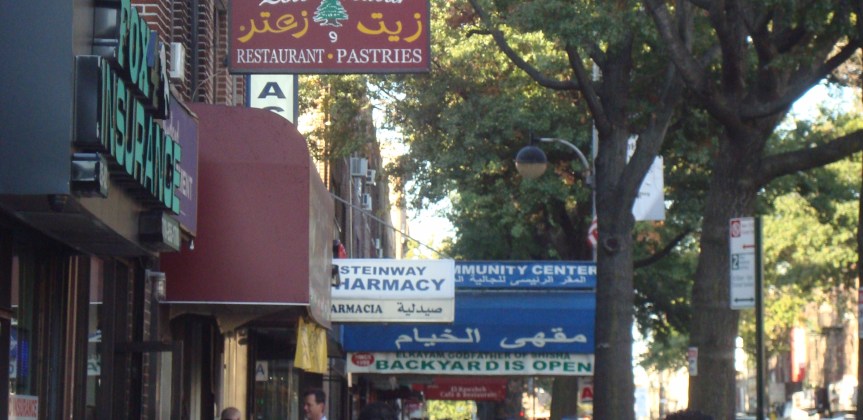
Despite the diversity of New York City, Steinway street is different for me. It feels as if God is showing me a map with a red arrow and a clarifying “You are here” hovering over Steinway Street. This is very well what my life might look like for the next year while I’m in North Africa.

What are these people really like? What are their hopes, longings, and hurts?

  • A woman escorting her aging mother to the doctor.
  • A Lebanese man selling pastries.
  • A man with a leg injury, lingering outside of the mosque.
  • An middle-aged Egyptian couple–he sipping coffee and she rattling Arabic, hoping for someone to see her beyond the Alzheimer’s.
  • A young lady with heavy, dark makeup–guarded and watchful.
  • A sales clerk turning every hopeful conversation into a potential sale.

“They don’t know! They don’t know You.”

TELL THEM.