Was it worth it?

“Was my time in Spain worth it?” This question has crossed my mind a hundred times since I started winding down my life here. Was all of the time, energy, and finances invested worth the results I see? Or rather, the lack of results? Were they worth the years of being far from the people I love best in the world? Far from my own culture and community?

Lord willing, I plan to move back to the States in just over 2 weeks. My emotions are everywhere, leaking out in goodbye tears with a friend or bouncing in sheer giddiness as I remember that I don’t have to face upcoming life transitions alone anymore.

But was my time worth it?

I came across a quote from Elisabeth Elliott that I had jotted down long ago: “[People] cannot be hustled into the kingdom of God. And it is well to remember Christ’s own descriptions of that kingdom–leaven and seed, things that work slowly and out of sight. We long for visible evidence of our effectiveness and when it is not forthcoming, we are tempted to conclude that our efforts never had anything to do with the kingdom.” (From Made for the Journey by Elisabeth Elliott)

Exactly. I have coached myself not to dwell on the question of whether or not my time in Spain was worthwhile. After all, God works in ways we can’t see and I don’t have to understand the whys of His calling. Like Elisabeth Elliott said, God’s work is often slow and hidden.

When I shared my thoughts with J,  he suggested a new perspective, one he had gleaned from an article he had read. In his unimposing way of communicating truth, he suggested that rather than asking myself, “Was the sacrifice worth it?” it’s better to remind myself: “He is worth it.”

My personal fulfillment takes a backseat to God’s glory. 

This doesn’t mean I can’t evaluate my work and make adjustments. Neither does it mean I cannot grieve my losses or my lack of perceived success. But staying stuck in my questioning grief reveals a lack of divine perspective because neither sacrifice nor success can define the worth of a kingdom endeavor. 

A life spent for God is worth it, no matter what.

J&T: A piece of our story

Besides a detailed account of our few weeks together, I haven’t written much about my relationship with J. It’s not because he has been pushed to the periphery of my life–he has been invading every nook and cranny! But I guess those were the nooks and crannies I once used to write on my blog.

Months ago, a reader asked me to tell our story. So here it is from my perspective…

We met at a wedding, our siblings’ wedding, to be exact. My older brother and J’s younger sister married each other in the summer of 2018. 

You’d think that we both would have had romance on the brain in such a setting. Yet, he was based in China and I had just moved to Spain. Our minds were on our respective work, not romance. When I think hard enough, I remember things about him from that weekend–like when I tripped on my too-long skirt and he tried to blame my clumsiness on himself–but I can’t remember what he was wearing the first time I saw him or anything of the sort. He remembers even less than I do.

At the Sunday potluck, we chatted with each other. Our conversation was enthusiastic because, as overseas workers, we could connect in ways that we couldn’t connect with just anybody. He asked to be added to my newsletter mailing list. 

I went back to Spain. He finished school and returned to China. I contacted him once about an article I was writing and he sent me some information. That was our only personal contact for five years.

His church became one of my supporting churches for two years. I was delighted because I already knew some of the congregation. I also knew his family. (When our siblings were dating back in 2017, I had made a point to travel to Ohio. Twice. And J was in China both of those times.)

In 2019, he returned to Ohio to finish his Master of Science with the intention of moving back to China. And then the pandemic happened, and he found himself planted Stateside indefinitely. Over the next several years, he made trips to Illinois to visit his sister, my brother, and our mutual nephews. I returned to Illinois as well, for a vacation or a home assignment, but our paths didn’t cross, and neither of us considered that they didn’t.

Then while I was on home assignment summer of 2023, I gave a talk at his church. J and I chatted a little that Wednesday evening, but I did a little chatting with a lot of people and nothing felt unusual. I was at the beginning of a long trip and was dealing with ongoing health symptoms I had become an expert at suppressing. Had I been a little more in tune with my surroundings that evening, perhaps I would have seen that quiet question mark above J’s head. But I continued my trip, clueless.

Still, he said nothing. Not that I was expecting him to have anything to say. In retrospect, it was as if, in my mind, he was married to China and therefore ineligible. 

Toward the end of my time in the States that summer, he and his parents came to Illinois to visit his sister… the same day I left for Indiana. 

It seemed that God was keeping us apart. And I think, in a sense, He was.

While in Indiana, I found a name for the symptoms I’d had for more than a dozen years, the symptoms that were getting progressively harder to suppress.

I started treatment after returning to Spain. Within a month, I recorded in my journal that I was beginning to feel better. I knew I wasn’t completely healed, but I was on my way. I had lots to be thankful for that Thanksgiving.

Thanksgiving was also the time that J, who had been praying for me in the meantime, sensed that the time was right. He emailed me that weekend.

I woke up at 5 a.m. to take the day’s first dose of treatment. As I crawled back into bed that Sunday morning, I saw I had an email from J. I immediately assumed that he was writing to say he was moving back to China and could I please take him off my newsletter list?

Or.

I didn’t stop to ponder; I just tapped the notification and opened the email that would change my life. Stunned, I lay in bed, lost in thought until my alarm went off. 

He didn’t get an answer right away; I had a lot to think through. The truth is, as older singles, we both valued our respective single lives. Could this really be God’s next step for us? I knew I would need to mourn that first layer of loss before I responded to his email. Finally, with both trepidation and excitement, I wrote back, mostly with questions he had given me permission to ask: What about China? How did he feel about singleness?

Our initial emails were full of questions as we tried to sort out if forward were the best direction for us.

Deep down, I had a sense our relationship would work out, which was based on what I knew about him, his family, and his church. At its core, that inner sense was: “Of course. Why didn’t we think of this before?”

We wrote back and forth for a bit and then were ready to make our relationship more official around Christmas. Our families were shocked and excited. Our friends were shocked and excited. At last, these two “permanent singles” were dating!

Starting a relationship while 4,000 miles apart wasn’t for the faint of heart, but I’ll skip over those layers for now. One month after our first official phone date and just when I was admitting to myself how much I liked him, J was nominated to become a pastor in his home church. The next Sunday, one man would be chosen by lot and ordained. 

He wrote to me on Monday morning, and all I could do was fall on my knees. 

We both had lots of feelings that week. We tried phone calls but found we didn’t have a lot of words. Tears came at unexpected moments. I wasn’t mourning; I was overwhelmed. How could I support him when I was feeling so weak myself? What exactly was the new girlfriend’s role? 

The events of that week drew us together in ways neither of us could have anticipated. Our relationship deepened to a level we would have said we weren’t ready for. We learned to trust each other. 

I watched the ordination over WhatsApp, tears flowing as J was chosen to serve as a pastor in his home church.

Then we picked up and kept going, in both praise and uncertainty.

He came to visit Spain in May. We had 19 whole days on the same continent. During that time, we finished falling in love and seriously talked about a future together.

Three months later, I spent three weeks Stateside, in my home community and his. Right in the middle of our time together, J asked me to marry him. Even though I had known it was coming soon, he managed to surprise me. (Well, he surprised both of us, but that’s another story. 😉 )

Then came the whirlwind of excited decision-making in the week before I returned to Spain. Spain is where I am now. The whirlwind hasn’t stopped and likely won’t as I close down my life here, move back to the States, and plan a wedding.

But I’m surprised to find how much joy is in the whirlwind too.


This message has been approved by J. 😉

I’m doing terrible, terrible

Estoy fatal, fatal…” I’m doing terrible, terrible. That’s how an elderly neighbor typically greets me. 

Maybe I’ve lent an ear too many times. Or, for all I know, she dumps her health issues on everyone she comes in contact with. 

Being on the receiving end of her complaints isn’t much fun. It’s hard to listen to how the doctors can’t give her any answers, about her latest trip to the pharmacy, or how her legs refuse to work (although they mysteriously carried her several blocks from home). 

She never asks how I am or what I’m doing. I doubt she even knows my name. 

I help roll her walker down the ramp from the elevator, open the door, and stop for a “Oh, uh-huh, oh that’s too bad” chat on the street. I even take her cinnamon rolls at Christmas because I know she likes them. Still, I inwardly groan every time our paths cross.

Estoy fatal, fatal…

As much as I hate to admit this, I know that sometimes I sound just like my neighbor: “Why me? Why do I have to be the one to deal with this bumpy relationship/chronic illness/broken heart/smashed dream? I’m doing terrible, terrible…”

When life doesn’t feel fair, it can be an easy slide from lament to griping, from heartache to bitterness. Even with the Spirit of God dwelling in me. 

So it’s a good thing God sends my neighbor into my life every now and then to give a face to my inward grumblings and remind me to trust that God knows what He is doing. Then, as Jen Pollock Michel writes in her book In Good Time, I can receive life with gratitude and say, “Whatever you choose to give, Lord, I embrace” (p.99).


Pollock Michel, Jen. In Good Time: 8 Habits for Reimagining Productivity, Resisting Hurry, and Practicing Peace. Kindle ed., Baker Books, 2022.

There isn’t much that separates us

The public health clinic was teeming with people. Where was she?

“Over here!” My friend waved me over to a corner of the waiting room. She rushed to explain her health problem, pointing to various body parts while keeping an eye on the door where she was to go as soon as her number was called.

My breathless mind tried to keep up with her Arabic. I was still drumming up passable Spanish vocabulary when her number was called.

We squeezed around an old shopping cart piled high with unsupervised medical supplies and stepped into the consultation room.

“What is the problem?”

I took a deep breath and launched into an unrehearsed explanation. Interpreting between two foreign languages is always a workout for me, and not a flattering one.

The lady at the desk was silent until I paused. Then she said, “You both realize that I’m a nurse, not a doctor, right?” 

Actually, no. I had never been beyond the door in this particular public health clinic.

“Look, the only thing I can do is test and see if she still has the infection.” She handed my friend one of those flimsy plastic cups we use at children’s parties for juice or Jell-O. “Urinate in here and bring it back to me.”

Apparently dismissed, we squeezed around the shopping cart and wandered around the building in search of restrooms. Misplaced people were milling everywhere in a warm, concrete facility that smelled of metal and sweat. 

We eventually found the almost unmarked restroom, nestled between consultation rooms. Then back down the long hallway we went, my friend trying to hide her cup of pee in a plastic bag she’d dug out of her purse. “There wasn’t any paper in there to wrap the cup,” she said. “I don’t want everyone here to see it.”

We wiggled around the overflowing shopping cart again. The nurse stretched on a pair of gloves, stuck a testing strip into the urine, and told us to wait outside. My friend turned and left, still holding her cup.

“Uh… can she throw away the urine?” I asked. 

While I was still verifying this with the nurse-not-doctor, my friend lost her way and, unable to read, ended up in the men’s restroom. There was an unsettled man waiting outside when I arrived on the scene. “This is for men,” he said in Arabic when my friend emerged.

We found seats in the waiting room. As much as I love to people-watch, it was hard to look around without feeling absolutely hopeless. Did anyone in the healthcare system really care about these people?

As we waited, the lady next to us asked if her number was on the screen yet. She couldn’t read; she could only hear the tone and see the digits move without understanding what they meant. I looked at her tiny slip of paper, the kind of ticket you get while waiting in line for olives at the market. It was hard to see that wisp of green-blue and not see my own personalized number on a freshly printed ticket from the private health clinic across the street. My initials followed by 524. Always the same. Always announced over the speaker while I sat in the air-conditioned waiting room. 

Her number was 254. The number on the screen was 272. “It’s past,” I explained. By a good half hour, likely. She walked up to the desk and was sent to get another number and start the process again. 

Meanwhile, my friend and I were called back into the consultation room. The overflowing shopping cart had been removed and this time we could walk in without yoga posing our way through the doorway.

The nurse told me, “Tell her that she still has an infection, but she needs to finish the week of antibiotics she got yesterday.”

Oh.

That was a piece of information I had been missing. My friend had apparently just been to the emergency room the day before, but wasn’t satisfied with the lingering pain from the infection. As if one dose of antibiotics should have removed her aching like magic.

It was hard to look at the nurse sitting at her desk and not feel absolutely hopeless for her. Was this what she dealt with day after day? Confused immigrants expecting or even demanding immediate fixes without understanding her role as a nurse, not a doctor or a magician?

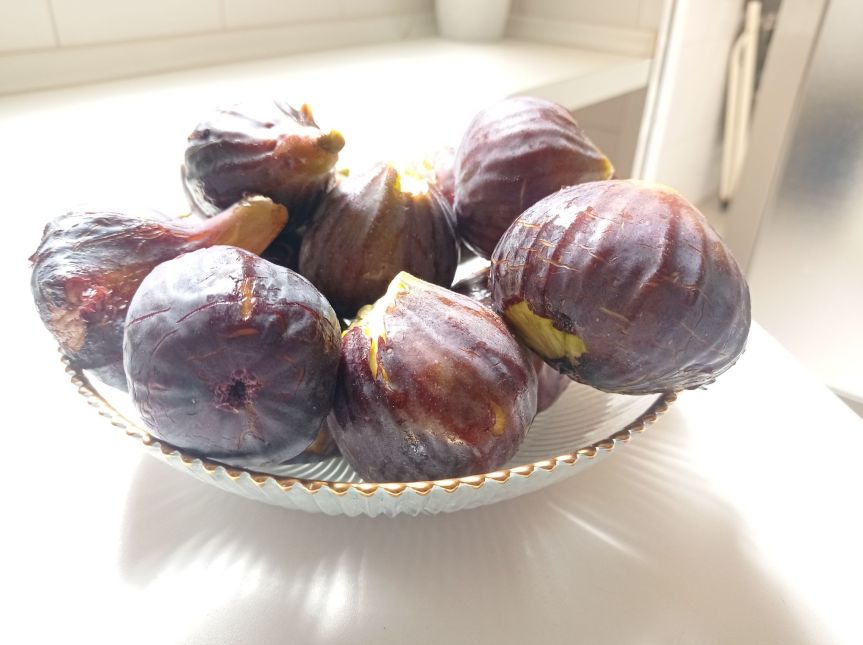
My friend and I walked toward home. She pulled me into a North African store and bought a bag of fresh figs: big, purple, and sweet. On the street again, she handed me the bag. “I got these for you because you helped me today.”

We sat on the front steps of my apartment building until the hopelessness of the morning faded with chatter and laughter. Deep down, there isn’t as much that separates us as we sometimes imagine.

A life of perpetual humiliation

I just finished reading Anthony Doerr’s Four Seasons in Rome. Someone discarded it, and I picked it up, curious. This isn’t a book recommendation unless you happen to know that you like Anthony Doerr, but Doerr’s descriptions of life on the outside of a culture cut me wide open. I didn’t know there were words for these “in but not of” feelings.

Apartness and perpetual humiliation are part of daily life for those living overseas. Sometimes we talk about it too much. Often we don’t even acknowledge it but let our frustration become part of the existing barrier, like a thick moss growing over a wall we’re trying to ignore.

We are outsiders, always outsiders, chipping at the barrier that stands between us. And there are successes! Moments when a chunk of the wall falls away and we glimpse the other side…only to find razor wire. 

“To be a nonfluent foreigner is to pass through one gate only to find yourself outside two more,” writes Doerr (p. 46). “We are humbled over and over–humility hangs over our heads like a sledgehammer… Oh, you think you’ve been here long enough to barter at the street markets? Guess what, you just spent €8 on three plastic clothes hangers” (p. 76).

After nine months in Rome, Doerr walks into a grocery store and makes an order without messing up a single syllable. “What happens?” he writes. “I get my groceries. No streamers drop from the ceiling, no strobe lights start flashing. The grocer doesn’t reach across the counter and take my face in her hands and kiss me on the forehead.” Instead, the grocer asks about his boys and speaks so quickly he can’t keep up. “…I miss 80 percent of it and sheepishly, stepping down from my throne of fluency, have to ask, ‘I’m sorry, more slowly, please?’” (p. 168)

For some, eventually the barriers do not loom so large or feel so insurmountable. But for many? “I know nothing… I never made it through the gates between myself and the Italians. I cannot claim to have become, in even the smallest manner, Roman” (p. 201).

True. Despite my efforts to integrate into the culture around me, my North American worldview remains mostly intact, placing me decidedly on the outside. 

But if we let it, doesn’t living on the outside help us accept who we are? After all, like it or not, we cannot cease being a part of something. Not being a part of the culture we’re living in is because we’re part of another, or even several. Being on the outside can help us identify our own “inside.”

Apartness and perpetual humiliation are hard, but they are also opportunities to learn and grow.* And we need these opportunities to understand ourselves.

So I will try to be grateful. Even as my neighbor gives me a list of what is wrong with my couscous. Next time, it will be better. I can promise.


Doerr, Anthony. Four Seasons in Rome. Scribner, 2007. 

*Thank you, J, for your positive spin on life to remind me to keep on growing!

And can it be…?

It’s my responsibility to choose the songs for our Sunday sunrise service. The Easter Sunday selection often falls on me, I think, or maybe it’s just a reflection of how many years I’ve been in Spain to have the selection fall on me (or a reflection of my age and coinciding inability to remember).

There is an overwhelming number of songs to choose from. The traditional hymns that make the male voices boom, “Up. From. The grave. He. Arose!” to some of the newer songs that encompass Jesus’ life and passion. I only get to choose a few, but that doesn’t stop me from snooping through other people’s Spotify playlists.

What are some of your favorites? And why?

One of mine (one of many) is “And Can It Be, That I Should Gain?” by Charles Wesley (1738). The lyrics are powerful, the music beautiful (especially with an organ!). The hymn starts with questions, evoking shame and guilt.

And can it be that I should gain
An interest in the Savior's blood?
Died He for me, who caused His pain?
For me, who Him to death pursued?

The hymn goes on to share the mystery and grit of the Savior’s death followed by the hymn writer’s own testimony of freedom and life from the living “Christ my own.” Yet, through the entire song, we are pulled back to the refrain:

Amazing love! how can it be
That Thou, my God, should die for me?

A reminder of our helplessness before God without Jesus’ death and resurrection for “Adam’s helpless race.” A reason to celebrate Resurrection Day with gratitude.


Photo by Henrique Jacob on Unsplash

Utilizing distractions

The last few weeks have both drained and filled me in ways I’m not even sure I can explain. Oddly enough, one of the things that helped me cope with overwhelming emotions was reading a chapter book to my oldest nieces and nephews, sending a chapter or two each day via voice message. My family is full of avid readers and listeners, which makes the escape of a good story enjoyable for all of us. 

Did I just use the word “escape”?

I used to think distractions were an emotionally weak way to deal with an issue. I still think that they can be just that. But they can also give time to let emotions settle. A well-timed distraction can keep us from panicking, growing numb, or tuning out. A distraction contains the issue–good or bad–for a time until we’ve worked up the strength to deal with it. 

Even when I manage to relinquish my preoccupation to the Lord, I still find it helpful to distract myself so I don’t snatch it back from His capable hands. You might find me organizing my pantry while listening to an audio book or praying aloud. Or deciding an across-town shopping trip must be done today, on foot, at tip-top speed. Or making a detailed and utterly useless list.

At some point, the issue must be addressed–the change faced, the sorrow grieved–and distractions must come to an end. We cannot heap distraction upon distraction and expect positive results.

Today as I was leafing through an old Bible study book, I saw that I had written an “escape plan,” practical steps to exchange my burdens for the yoke of Christ. “Stop. Praise. Pray. Distract. Share.” My goal had been to post these steps somewhere, but the idea got lost in the shuffle of life. Until today.

I guess I needed the reminder that distractions, useful as they are, are a means to an end and not the end themselves.

Little 2015 “poems”

In 2015, I challenged myself to a one thing every month. One month, the challenge was to write a poem a day. The challenge was that: a challenge and most of my “poems” turned into tiny definitions using the same rhythm: 8/6/7. 

I found them a few months ago while I was looking through my old journals and decided to pull out several to share with you. They’re not artistic, but they’re fun. And maybe I’ll inspire you to write your own! If you do, share them in the comments section below.

Flowers
Sweet thoughts shrouded in timely death:
Bliss to those remembered;
Tear drops to those forgotten.

TV
Exclusive members only, but
Please show brain parking pass.
Night is full of undreamed dreams.

Music
The heart’s expression put to dance.
Tones that beckon listeners.
Message in a bottle, found.

Music 2
Listening to another’s heart
In catchy rhyme and rhythm
And wishing you’d thought of that.

Blank Pages
Rolling stretches of nothingness
Packed into neat, white squares:
Deserts in languished places.

Clocks
Ever-present competitors
Daring life to vanish
Before we decide to dance.

Childhood Memories
Poignant traveling of the mind
That pinches can’t awake:
Bitter, sweet, and bittersweet.

Death
A monster posed to frustrate life;
Yet, mingled with heaven
Will strangely bring relief.

Heartbreak
Initial tears have disappeared;
Descends the selfish numb—
It’s only I who suffers!

Books
For a stolen moment letting
Reality fade and
Becoming who you are not.

Trust
Relinquishing every control
To one you believe in
Though sometimes you feel equipped.

Photo by Zaini Izzuddin on Unsplash

Growing older

Some days, I can’t wait to be old.

To push my walker to the grocery store and watch kind people step out of my way. To chat with an old friend about aches, pains and loved ones. To fumble with a cell phone–or whatever device the younger generation will be using by then–pressing one deliberate button at a time and still contacting the wrong person. To love and invest in the next generation or two…or three. To be able to lounge in an easy chair with a cup of tea and a book without anyone expecting anything else of me. To stop trying to be eternally young and just get to be who I am, wrinkles and all. To daily remember that age is a passage-way. I can even imagine myself enjoying being an elderly single–not having my own to belong to and therefore belonging to everyone.

Most days I still pull out those grays and keep limber with walks and stretches. And I forget that I’m not 18 anymore (until I meet an 18-year-old). But I want to stop dreading old age. Stop making negative predictions like, “If I’m already this feeble, I’ll never even make it to 60!”

Aging is hard. It’s not all cups of tea and good books. It can be chronic pain and loneliness. Is that what scares us?

I decided years ago that I wanted to age gracefully. Now that aches and pains have reminded me that “old age” isn’t too far away, I wonder if I have any idea what “aging gracefully” even means.

But just maybe it starts with anticipating rather than dreading the inevitable and being exactly, exactly in the age I am right now.

Another season will begin

The bony bench presses into my back. I sigh. The park is quiet. No yippy dogs. No stalker. The coast is clear. The aroma of fresh laundry wafts from the nearby laundromat. It is a welcome break from the cigarette smoke that trails behind passersby. People trickle through the park, some on their way somewhere; others just to watch those who have things to do. Birds rustle the trees. A few bicker, separating the branches with their rustling until tiny dots of sunlight reach me on the bench below.

Just this morning on my walk, I watched runner after runner pass me up. Supple-kneed young, middle-aged, and old. I used to enjoy running too, but now? How do they do that? How can that sixty-year-old zip around me when I–in my mid-thirties–had to convince myself to get out of bed this morning?

I kept walking, slow and steady. And discouraged.

The other week when I was faced with the prospect of starting a Spanish literacy class for women, I was not even just not-excited, I was dreading it, this starting something new when I hardly have enough energy for my current relationships. The class hung over my week like a black cloud until it was cancelled the day before it was supposed to start.

Now as I sit on the bench, shifting every now and then to keep my backbone from getting raw, a lady crosses the park and makes a beeline for my half-occupied bench. She sits beside me, panting.

“Are you all right?” I ask.

“I’m all right,” she answers, still panting. She lowers her head and leans on her knees.

“Are you sick?” I ask a little later, trying to prepare myself to run for help if the need arises.

“I’m pregnant.”

And with that, it feels better somehow. Why? Because we both know it is a season and in a few months, another season will begin. Hope.

And I wonder if I’m in a season too.