Deeper sorrow, deeper joy

I know how to hide my feelings from myself. I’ve had practice telling those miniature white lies about how I don’t mind or that I’m unconditionally happy and galloping through life without unwanted feelings lassoing me.

My body gives me a jolt now and then: a wrinkled forehead glimpsed in the mirror, indigestion, weight loss, fatigue. But look on the bright side, I think. I don’t really feel that stressed, weary, cranky, or conflicted. I am living the ideal life. Who in their right mind wouldn’t want to be me right now?

What I don’t remember is that shutting down my “negative” feelings also shuts down my capacity to deeply feel joy.

Earlier this month, I realized that wedding planning all day on my day of rest was not a sustainable pattern. So on my next day off, I forced myself to rest, really rest. I wrote “read” on my to-do list and that was all. As evening came, I transitioned into watching Call the Midwife. Two episodes later, I shut down my computer and cried. It was as if feeling vicariously for almost 2 hours helped to release my store of pent-up feelings.

This is where I want to be: feeling. Even if sometimes it means feeling an aching loneliness or feeling downright scared at what looms ahead. When I open my heart to feel, I experience the richness of the ups and downs of a life fully-lived. Because joy is right there too, every bit as deep… deeper even, but I can’t notice it when I’m only skimming along the top of life.

This season of life is filled with lasts and goodbyes as I prepare to leave Spain in 3 1/2 weeks. “Another last,” said my teammate when we dropped off my final guests. My guests and I had had a marvelous time, exploring and talking, processing and laughing. Their leaving set me into motion, clearing out my house and closing up my life here. It aches, but not all aches are bad.

I’m also filled with energy as I think about trading this life for several months with family and friends in my home community. And then there’s the dizzying delight of marrying J in three short months.

God meant the sorrows and joys of this season to be felt rather than ignored. So today, I choose to stay in this vibrant sense of being alive.

A life of perpetual humiliation

I just finished reading Anthony Doerr’s Four Seasons in Rome. Someone discarded it, and I picked it up, curious. This isn’t a book recommendation unless you happen to know that you like Anthony Doerr, but Doerr’s descriptions of life on the outside of a culture cut me wide open. I didn’t know there were words for these “in but not of” feelings.

Apartness and perpetual humiliation are part of daily life for those living overseas. Sometimes we talk about it too much. Often we don’t even acknowledge it but let our frustration become part of the existing barrier, like a thick moss growing over a wall we’re trying to ignore.

We are outsiders, always outsiders, chipping at the barrier that stands between us. And there are successes! Moments when a chunk of the wall falls away and we glimpse the other side…only to find razor wire. 

“To be a nonfluent foreigner is to pass through one gate only to find yourself outside two more,” writes Doerr (p. 46). “We are humbled over and over–humility hangs over our heads like a sledgehammer… Oh, you think you’ve been here long enough to barter at the street markets? Guess what, you just spent €8 on three plastic clothes hangers” (p. 76).

After nine months in Rome, Doerr walks into a grocery store and makes an order without messing up a single syllable. “What happens?” he writes. “I get my groceries. No streamers drop from the ceiling, no strobe lights start flashing. The grocer doesn’t reach across the counter and take my face in her hands and kiss me on the forehead.” Instead, the grocer asks about his boys and speaks so quickly he can’t keep up. “…I miss 80 percent of it and sheepishly, stepping down from my throne of fluency, have to ask, ‘I’m sorry, more slowly, please?’” (p. 168)

For some, eventually the barriers do not loom so large or feel so insurmountable. But for many? “I know nothing… I never made it through the gates between myself and the Italians. I cannot claim to have become, in even the smallest manner, Roman” (p. 201).

True. Despite my efforts to integrate into the culture around me, my North American worldview remains mostly intact, placing me decidedly on the outside. 

But if we let it, doesn’t living on the outside help us accept who we are? After all, like it or not, we cannot cease being a part of something. Not being a part of the culture we’re living in is because we’re part of another, or even several. Being on the outside can help us identify our own “inside.”

Apartness and perpetual humiliation are hard, but they are also opportunities to learn and grow.* And we need these opportunities to understand ourselves.

So I will try to be grateful. Even as my neighbor gives me a list of what is wrong with my couscous. Next time, it will be better. I can promise.


Doerr, Anthony. Four Seasons in Rome. Scribner, 2007. 

*Thank you, J, for your positive spin on life to remind me to keep on growing!

Foodie nights

This summer, I was encouraged to add recreational activities to my regular schedule. “What do I enjoy doing?” I asked myself. My default pleasure activity has always been reading, any free time passing with my nose in a book. But surely that wasn’t all I enjoyed.

Then I remembered that I like puttering around in the kitchen when I have purpose but no pressure. The remembrance felt like walking into the embrace of a dear friend, so when I returned to Spain, I determined to make time for recreational cooking.

Roughly every other weekend, but sometimes in another available time here or there, I plan a time for recreational cooking. I call it a “foodie night,” but mostly just to myself because, truth be told, I’m not a foodie; I just like trying a new recipe now and then without the pressure of it needing to turn out.

The foodie night process starts long before the evening I get to try out a new recipe. It starts with ideas–maybe an ingredient I see that I didn’t know I could get here in Spain, or something someone else mentions they made. Then I hunt down a recipe, gather ingredients from hither and yon around town (and invent substitutions for those I can’t find). And maybe the recipe requires a little prep beforehand. At last, foodie night arrives, and I pull out my collection of ingredients, turn on some music, and take my time.

Here’s what I’ve made so far:

  1. Miso soup ⭐
  2. Spring rolls with shrimp, cucumber, carrot, and mint dipped in peanut sauce ⭐⭐⭐⭐
  3. Miso soup again ⭐
  4. Gelatin gummies ⭐
  5. 100% Rye bread, recipe #1 ⭐
  6. Sugar-free chocolate mousse ⭐⭐⭐⭐
  7. 100% Rye bread again, recipe #2 ⭐⭐
  8. 100% Rye bread for the third time, recipe #3 ⭐⭐

Perhaps the stars say it all. They surely tell you that you’re glad you weren’t around to taste test!

I decided that miso is an acquired taste that I don’t feel like acquiring. Or maybe I chose the wrong recipes to try. Who knows? The only thing the spring rolls were missing was more shrimp. My tight-wad amount of shrimp was masked by the show-stealing peanut sauce. The gelatin gummies were a nice thought, but just tasted like bland finger Jell-O. And then began the rye bread saga. The flavor was right every time…but I was always disappointed by the incredible density that made it more chewy than pleasurable. The last loaf puffed promisingly in the oven, but collapsed when I removed it. The chocolate mousse was a modest success, but only with myself since I didn’t share it with anyone. 

Although many of these attempts didn’t turn out like I had envisioned, it doesn’t really matter. The joy of the process was exactly what I had envisioned.

My new winter coat

As I fingered my winter coat, I noticed the excellent quality of the fabric and stitching. The bus was bouncing through roundabouts; still, it was worth risking motion sickness to do a quick google search of the brand.

I wasn’t wrong. My coat was excellent quality.

But by now you’re probably wondering why I hadn’t figured this out before. After all, hadn’t I been the one to buy the coat in the first place? Well, yes, but I bought it in the same place I buy most of my clothing: a thrift shop. 

It was exactly what I wanted–just a bit long, sturdy, warm but not too warm for Spanish winters, a hood, pockets, and dark. And that hole in the pocket wouldn’t take more than 2 minutes to mend and that dog hair would wash out because, yes, it was even washable too. And who besides me would notice that scuff on the cuff?

Besides, I was past due to replace the $5 coat I had picked up at a second-hand market in North Africa seven years ago. So I bought this new coat for $12 plus tax and brought it back to Spain with me, where I was just discovering that Goodwill had offered quite a steal.

As we bounced along, I felt rather pleased with myself. And as other winter coats brushed past me, I felt even more pleased with myself. Doubtless, I had the nicest coat on board the bus. 

Yes, there was a rush of pride as I forgot how surprised I had just been to find myself the owner of something of quality. I mentally classified myself with the elite. My classy coat may not have been a luxury brand, but was subtly luxurious, nonetheless. I sat up straighter. 

And then I looked down at the skirt I was wearing and it occurred to me that it was pilling from overuse. And the sneakers poking out the bottom were smudged from all of the streets they had walked with me. Hmm. Was I the first to notice the incongruous quality of my clothing?

And then I wanted to laugh. Who cared? Who really cared? Let the world scratch their heads if they wanted to. I planned to enjoy both worlds even if I ended up looking like a walking thrift store.

At my stop, I hopped off the bus feeling like a million dollars. 

Rewarded loyalty

“I would like five carrots,” I told the market vendor as he weighed the other produce I had collected from his stall.

A moment later, he breezed back with a bag bulging with considerably more than five carrots. 

“No.” His coworker pointed to the bag and looked at me. “That’s too much, isn’t it?” He had overheard my tiny order.

I remembered the first time I had bought produce at this stall. It was the coworker who had pretended to forget to give me my change and then came back, minutes later, surprised that I was still standing there–neither oblivious nor angry. He quickly handed over the correct change without my reminding him of the amount. 

Now I found it refreshingly ironic that he was the one looking out for me. 

Long ago, I wrote about how I tend to be a loyal shopper, shopping in the same places, even when I know other places have better prices. I still do that today. On market morning, I make sure to stop at my normal vendor stalls first before picking up what I couldn’t find at other stalls. 

You may think my loyalty is blind, but that’s not fair. And this is why…

One day I was meticulously selecting the brightest pomegranates from a pile. My produce vendor noticed what I was doing and slipped over to show me how to tell when pomegranates are ready–and it has nothing to do with how rosy they were! 

Sometimes I’m offered samples of special fruits. And when I ask if new apricots are sweet, they answer honestly because they know I’ll be back even if they’re not.

The first time I made puchero, I ordered my bones and cuts of meat. The shopkeeper happily filled me with advice on preparing the dish. “Boil these bones for 15 minutes before putting them in your soup or they will make the soup too salty.”

One day I bought semolina flour for harcha. “You like harcha?” the shopkeeper asked. At my happy sigh, she disappeared to the back of the store and came back with harcha, still warm from breakfast. More than once, she has given me handfuls of mint leaves from her personal stash when there wasn’t any to sell.

Another shopkeeper refused to sell me a lone chicken breast. He quietly shook his head until I understood that it probably wasn’t the freshest chicken breast north of the Mediterranean. 

Sometimes when the fabric vendor sees me coming, he pulls out the bolts he’s pretty sure I’ll like. And if I stroll into his stall wearing something homemade, he spots his fabrics with delight.

Just the other week, my shower curtain rod was repeatedly falling down. Finally, after several days of clattering, banging, readjusting, and scratching my head, I decided a new rod was in order. But the store down the street didn’t have any. “Come back this afternoon,” he said. But that afternoon, he still didn’t have any. So he opted to get to the root of my problem–what was the problem exactly? 

As I was still making feeble attempts to explain without the proper vocabulary–”The thing in the middle of the stick…”–he began to work on something he had dug out of the dusty depths of his under-counter. Then–pop!–out came a yellowed suction cup and he told me precisely how to position it to keep the shower rod up. “You can even trim around the edges if you don’t like how it looks.” And my curtain rod has stayed up ever since. The yellowed lip of the suction cup is a happy reminder of the resourceful people who are looking out for me.

My meager loyalty has been rewarded so many times over that it has been crowded out by their generosity. In fact, I’m not even sure that my loyalty has much to do with it at all!

Ireland- part 3

Our Country Cottage Oasis awaited.

Both my friend and I were looking forward to having a place to base from for the next couple of days. A charming little cottage with great reviews and maybe even a fireplace. We had put in an order for a sturdy drizzle so we could curl up in snug armchairs with tea and a meaty book.

We found out by accident that our hostess, who lived in the cottage, wouldn’t be there to welcome us. No problem, we decided. Surely someone else would be there.

We wound through the countryside to a charming tree-lined walkway; though, admittedly, it would have been more charming had it been daylight. But we found the gate and rumbled our suitcases up the gravel driveway.

When no one answered the doorbell, we hesitantly stepped in the unlocked door. A draft sailed down the hallway to greet us. Although the entryway was dark, a welcoming glow was coming from one of the rooms. We removed our damp boots so not to leave tracks and headed toward the light. It led us to a cluttered sitting room with a pair of ghostly pink slippers residing on a carpet thick with dog hair.

We shuddered. Surely that wasn’t our room. But the rest of the cottage was dark and silent. Were we even in the right house? We tiptoed around, trying in vain to forget every Agatha Christie novel we’d ever read, because this was assuredly the perfect place for murder. “Foreign guests lured to countryside cottage…”

We found our room, at least a room that resembled the photos on the airbnb page. But could we be sure? The trash was overflowing and used towels hung on the back of the door.

My friend tried in vain to shut the patio door, the source of the draft. I set down my luggage, preparing to make myself at home. It was then that I began to notice the depth of the grime. It was also then that I began to lose my composure. We shot our hostess some questions: “Key? Washer and dryer? Wifi password?” but left out the most pressing: “Were you really expecting us? Because it sure doesn’t look like it!”

We left to grab a few groceries and, well, to evaluate our situation. Then we ate in one of the grimiest first-world kitchens I’ve ever seen, washing everything before and after we used it. A powerful odor wafted from the refrigerator, which we hoped were just the aging strawberries. I gnawed on cucumbers and broccoli, glum.

My poor friend was trying to make the best of the situation while I broke down bit by bit.

“Go take a hot shower and you’ll feel better,” she said.

She hunted down relatively clean towels in the overstuffed wardrobe in our bedroom. I went to the shower, hauling my entire suitcase with me so not to gather any extra filth by setting my clothes on her crowded bathroom furniture.

Soon, my friend heard a bellow, which happened to be the last of my expectations oozing out and spiraling down the shower drain. There was no hot water. Nor heat, as we soon discovered. We buried ourselves under blankets of questionable cleanliness which my friend had also dug out of that same overstuffed wardrobe.

My wounded sense of justice was still sending off flares when I fell asleep in a bed that was actually pretty comfortable.

My friend chose to believe that our hostess was grief-stricken, since she had mentioned she was at a funeral. Actually, over the next couple of days, even with socks laden with dog hair, we made quite a few excuses for her. She was a very nice lady, after all. Even if she did forget to clean her house. Or which amenities she had listed on her airbnb page. Or that we needed hot water and heat in an Irish November. Or that the last guest (or maybe the one before) had left a liter of milk and hummus in the window sill.

We began to refer to our country cottage as our “Hairy Haven,” a generous term for a place that wasn’t a haven at all. Although, it wasn’t a total loss for it did provide a space for bonding and quite a few opportunities for memory-making.

But there would be no curling up in front of fireplaces here. And so we slayed our dreams.


Photo by Oliver Hale on Unsplash

Pride and apathy

True love drives away laziness, that’s what a young friend learned in philosophy class. It drives away apathy too.

Then why do I grow apathetic to the woundedness that surrounds me?

Overwhelmed, that’s what I am. Overwhelmed by the dissonance of compassion and my own limits. I am one person with moderate abilities and stamina. I cannot be a superhero no matter how hard I try. My tiny contribution of self-sacrifice will not change the world.

And so I begin to seal off my heart, and what began as love is reduced to apathy.

Or was it even love to begin with?

When I fill my schedule to the brim with world-changing activities, what is my motive? Can it be love? It might be, but, if I’m honest, my motive to change the world often starts and ends with pride. And it’s a pride that turns apathetic when I refuse to be humbled by remembering my limits.

There always will be busy seasons in our lives, some longer than others, but a sustained frantic pace, even under the pretense of love is not truly loving.

Love isn’t defined by the absence of laziness or apathy. The real meaning isn’t found in the absence of something. It’s not even found in the presence of something like hard work or compassion. It is ultimately found in the Presence of Someone.

When I realize that I am not the one who must save the world, I am freed. The burden to be the savior rolls away. Finally, I can stop panicking over my limits in light of all the work that needs to be done. I am finally free to love well.

I can sit with someone who needs to cry. I can make cupcakes for a team event. I can read a captivating book. I can agree to tutor another student. I can have a friendly chat with my neighbor from the patio. I can probe deeper into the heart of a young woman who isn’t sure who she wants to be just yet. And I can do all of this, recognizing that I am just a small piece in what is happening, and, praise the Lord, I get the joy of being a piece.

I am a created being, created with limits. And that is very good. Why? Because the work does not begin and end with me but with the One who is limitless.


For an excellent resource on human limits, I recommend You’re Only Human by Kelly M. Kapic.

With the best of intentions

I weathered another round of what I assumed to be food poisoning. Tired of hanging out in the bathroom, I put on a brave face to hostess visitors, babysit, teach an English class, and drop by the neighbor’s with a plate of crepes.

But when holes were poked in my food poisoning theory, suddenly my bright shades of resiliency and selflessness took on a contaminated hue.

I had been so sure I could trace it back to those fried sardines…

I took a too-late day of quarantine to keep me from infecting the rest of the world. The next morning I dropped by the post office and the grocery store. On the way home, I noticed I was being dogged by the persistent admirer who, after a clarifying encounter months earlier, had vanished from my life. Until now. And there he was, looking bigger, older, and maybe even a little more unhinged than the last time I had seen him.

My intention to weave myself into this community’s tapestry put me in his way. Or maybe he put himself in my way. Or maybe we’re simply two clashing fibers woven side by side, which is bound to happen now and then in every community. Just wishing him away rather than confronting him probably was never the answer.

Why do best intentions sometimes sour?

My recent decision in the best interest of all turned out to be in the best interest of none… and involved a fair amount of straightening out.

I suppose it’s fanciful to believe that sacrifice can validate decisions. Still, why do some of the decisions we make, even at our own expense, turn out to be the wrong ones?

Maybe it’s because we don’t understand the big picture. Or because our decisions are not the only decisions affecting lives.

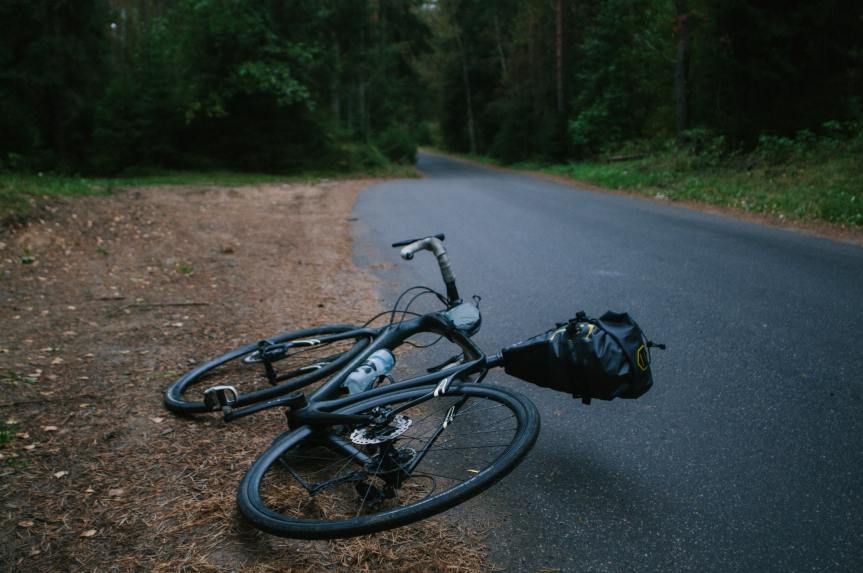
When we take a spill on our good intention bicycle, the true measure of resiliency and selflessness may be found in our ability to stand up, gently brush the gravel from the crevices of our knees and continue on our way.

And be grateful when others forgive our mistakes and miscalculations.

And thank God for the neighborly shopkeeper who is standing in his doorway to watch us safely home.


Photo by Dmitrii Vaccinium on Unsplash

The rain in Spain stays mainly in the tiles and a few other things about Spain

#1

The rain in Spain stays mainly in the tiles. If you live in a town with tiled sidewalks, you probably know what I mean. Tiled sidewalks are great as long as none of the tiles are loose. And even loose tiles are okay as long as it doesn’t rain.  

It rains. Then the sun begins to shine and a smiling you decides to go for a walk to enjoy the fresh air. You’re in high gear when it gets you: that warm splash up your ankle and along your hem. Sigh. That tippy tile was hiding a puddle of rainwater. Rainwater that had been flowing along a filthy street. 

There are some streets that I avoid after a rain because to walk along them is to feel the ground moving beneath you and hungry waves of brown water lapping your ankles. Most rainy days (and even 1-2 days afterwards) I long for drab concrete sidewalks with obvious puddles rather than the noble but surprising tile ones. 

#2

Most Spanish balconies have water spouts and people use them as they wash down their balconies. Beware, pedestrians below! Those of you who live in the city probably know what I mean, but balcony water spouts were a new concept to this country girl.

After the Saharan dust storms in March, everyone was splashing water on everything. At times, the streets flowed with orange water. My neighbor tossed a bucket at his balcony wall and seconds later heard a shout from below. Oops, he had nailed a passerby.

I think the proper etiquette is to check for any passersby before starting the flow. After that, they’ve been warned by the growing puddle on the sidewalk below the spout and if they’re unaware enough to walk within reach of your balcony spout, then that’s their problem, not yours. 

And, for the record, yes, I still get dripped on every now and then. And I just hope… hope that it was a harmless drip from someone’s squeaky clean mop bucket. 

#3

Some Spaniards set plastic water jugs on the sidewalks outside of their homes, often fastened to something with string or rope. The bottles are filled with liquid, sometimes clear, sometimes amber.

I have noticed this for years and finally asked my landlady about it. She acted like she’d never even noticed this strange habit. So I did a little research and found that the water bottles are supposed to scare away pets and stray animals from peeing in doorways or sidewalks in front of homes. Whether or not it works is up for debate, but it’s still widely practiced here. 

#4

I’m not sure what northern or central Spanish flies are like, but the ones on the coast have the ability to drive sane people mad (at least temporarily).

The lesser flies aren’t so bad, the ones that zip in jerky patterns in the center of the room and never seem to land. But the ones that I pick up by walking down the street can get my blood to a rolling boil in no time at all. 

They don’t leave me alone. I might only pick up one or two on my walk, but they follow me no matter how fast I walk. It’s like they believe they’ve found a friend and want to stick by my side–or on my nose–for the duration of my trip. I swat one away and walk a few meters, imagining that I have left him in the dust and suddenly he’s on my ear this time. The next time it’s my nose again. And then my chin. And I want to sprint down the street screaming bloody murder.

Would it hurt Spain to invest in some good ol’ American flies? Not that I ever liked American flies either, but they seem to respect boundaries a little better than coastal Spanish flies.

#5

Pepper spray is apparently only available on the black market. 

One day, I went to the police station to ask, “What can a woman in Spain do to protect herself?”

The officer’s eyebrows raised. He tried to explain how citizens were not allowed to bear arms. (Maybe I’m imagining things, but he seemed to emphasize this point when he realized I was American.)

“What about pepper spray?” I asked. 

“It’s only available on the black market.” He shrugged. Then he gave me a lecture about matching the defense with the assault. 

Right. “So how can a woman protect herself?” I repeated. 

“We are your protection.” 

“But you weren’t there when I needed help,” I pointed out. 

He sighed in assent and was quiet for a little. “Then what you need to do is report the incident.”

Right. But no pepper spray.


Well, those are a few things about life here. If you come for a visit, watch out for those loose tiles, dripping balcony spouts, plastic water bottles, pesky flies and, oh, BYOPS (bring your own pepper spray). 

Have a wonderful weekend!

You killed the Christ

On a recent read through the book of Acts, I was startled by the apostles’ boldness. “You killed the Christ,” they told their audience more than once.

The varying responses to this claim are fascinating.

Peter gave his famous sermon at Pentecost which ended with “…this Jesus whom you crucified” (2:36). The response of his listeners? “Now when they heard this they were cut to the heart, and said to Peter and the rest of the apostles, ‘Brothers, what shall we do?’” (2:37). They were cut to the heart. Convicted. And they wanted to know the steps to restoration.

Later, Peter and John made a similarly blunt claim (4:10). Their boldness astonished the religious leaders, who told them not to talk about Jesus anymore (4:18). Shhh. Now, just run along and don’t disturb the peace.

But the apostles didn’t stop being bold, which landed them in prison. “…you intend to bring this man’s blood upon us,” complained the high priest (5:28). But the apostles answered with yet another claim that the leaders had killed Jesus “by hanging on a tree” (5:30). When the council heard this, they were so angry that they wanted to kill the apostles (5:33).

Then courageous Stephen proclaimed before his accusers, “…the Righteous One, whom you have now betrayed and murdered…” (7:52).

But by now, the religious leaders had had enough. “Now when they heard these things they were enraged, and they ground their teeth at him” (7:54). And then they stoned him to death.

Each time the apostles spoke these words, their hearers had the chance to respond to the burn of the Holy Spirit’s conviction. Some were cut to the heart. Some tried to quench the Spirit’s voice. Some were enraged, gnashed their teeth, and murdered.

What about me? What about you? How do we respond to conviction?


Photo by Henrique Jacob on Unsplash